
Whether at the supermarket or in the workplace, it is a cliché that older people are frustratingly slow.
Younger generations enjoy the perception that they are fast and efficient by comparison.
But a study suggests that older people are significantly better at performing tasks that require concentration, precisely because they take their time and think strategically. Speedier young people were found to perform more badly on average.
• Forget youthful brilliance — the human mind actually peaks at 60
Researchers from the University of Glasgow compared different age groups in a task requiring focused attention — the type of task people might face when completing work projects, picking up groceries from a long shopping list or playing chess.
They asked a group of older people aged 55 to 87, and a younger group aged 18 to 27, to react to single numbers flashing up on a computer screen. The goal was to push the space bar every time a number came up but not to push it if the number was a three or a six.
The older people were slower each time they reacted to a number — by about a seventh of a second.
But they got it wrong only 8 per cent of the time, on average, while younger people were wrong 24 per cent of the time.

Participants had to press a space bar quickly and accurately
DANIEL DE LA HOZ/GETTY IMAGES
Electroencephalogram (EEG) tests recorded electrical activity in the front and central areas of the brain, which are involved in thinking about and controlling movement.
Both age groups displayed signs that they were resisting pushing the space bar out of habit — a task of concentration similar to remembering not to send an email without including an attachment.
But the brain activity of the older, slower group suggested greater self-control and that they were trying harder. They had greater disengagement between the parts of the brain which usually “talk” to each other with brainwaves to trigger movement.
Dr Simon Hanzal, who led the study at the university’s school of psychology and neuroscience, said: ‘The concentration test we looked at employs similar mental processes to many everyday tasks.
“These range from grocery shopping using a long list, where you have to pay attention not to miss out items, to playing board games like chess, or carrying out a project at work.
• When it comes to brain health, scientists say use it or lose it
“Where care needs to be taken not to slip up, older people seem to do better. Their brain activity suggests they are more motivated and that they have more patience to take their time and get it right, rather than making errors from inattention.
“This focus, we saw, could go a long way toward making up for the slight memory issues some people can experience when they are older.”
It has been suggested that older people are slow at certain tasks because they tire more easily. But researchers asked the volunteers to do the high-concentration task for 45 minutes, and older people did not display signs of fatigue or perform worse as time went on.

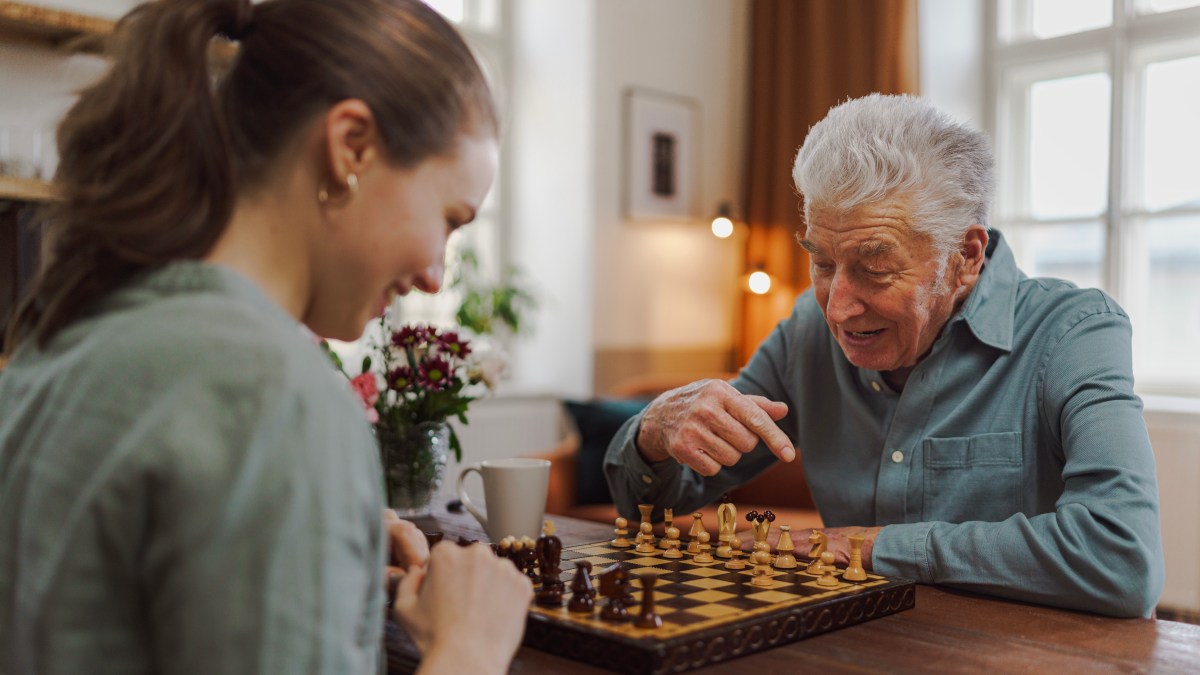
Patience was seen to help older people be more effective in the study’s task
WESTEND61/GETTY IMAGES
Instead, the EEG recordings suggest older people are slower simply because they are taking care to be accurate.
Younger people also appear to perform more badly than older people on certain tasks even if you offer a cash incentive. The researchers promised some study participants a £50 bonus payment if they got the highest score in the concentration task.
This did encourage younger people to take their time, but the people offered the cash did no better than those who were not offered it.
The study involved 18 younger people and 16 in the older group, who wore electrode caps to scan their brainwaves as they completed the test. The results are published in the European Journal of Neuroscience.