
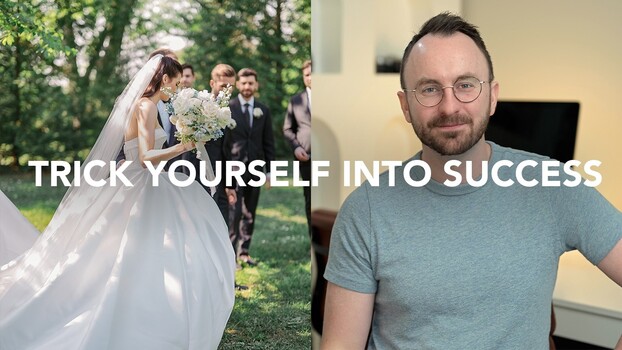
Running a wedding photography business with perfectionist habits and ADHD tendencies can wreck your focus fast. If you struggle to finish edits, send invoices, or stick to one task, this will feel familiar.
Coming to you from Luke Cleland, this candid video walks through practical ways Cleland manages distraction and perfectionism while running a wedding business. He does not claim a formal ADHD diagnosis, but he recognizes the patterns: distraction, hyperfocus, burnout cycles. Instead of trying to change his wiring, Cleland looks for ways to work with it. One of the first tools he shares is Toggl, a simple time-tracking app that helped him see how long he was actually working. By tracking hours, he noticed a pattern. If he edited for 10 or 12 hours straight, the next few days collapsed. The fix was not more effort. It was stopping earlier.
Cleland also borrows a tactic from “Atomic Habits” by Clear: shrink the task until it feels almost stupid. Instead of planning to finish an entire wedding gallery, start with importing the files. Then cull one section. Then export previews. Tiny steps remove the mental wall that perfectionism builds. He pairs that with strict task ordering. A numbered one. One, two, three. Follow the order even when something easier looks tempting. That structure keeps him from reorganizing gear or answering low-stakes emails while real work waits.
Another point he makes is blunt: do the most important task first thing in the morning. No email. No scrolling. He calls it “the one thing.” Pick the task that will move your business forward the most and work on it for a set block of time. An hour. Ninety minutes. Nothing else starts until that block is done. If focus slips later in the day, fine. The critical work already happened.
One technique stands out because it feels counterintuitive. Cleland stops working before a task is finished. He leaves a small cliffhanger. Not halfway through something messy, but close enough to the end that it creates tension. That unfinished edge pulls him back the next morning. Instead of dreading the work, he feels the urge to complete it. It also prevents marathon sessions that destroy the rest of the week. He ties this to doing something physically hard early in the day, like a winter run or a gym session. Hard effort upfront makes desk work feel lighter.
He also talks about weaponizing distraction. If a necessary chore pops into his head, he does it immediately. Make the bed. Wash the dishes. Small acts of discipline build resistance against impulsive switching later. Then there is a mindset shift: systems can change. If you crave the “perfect” workflow, you may resist adjusting it. Cleland gives himself permission to revise routines without seeing it as failure.
Finally, he lowers the bar in a smart way. Starting counts as perfection. Not finishing flawlessly. Starting. That rule breaks creative paralysis more often than you expect. He also uses the Opal app to block social media, YouTube, and even email during protected morning hours. If he wants access, he has to pause and breathe before unlocking it. That friction is usually enough to stop the impulse.
There are more details in how he structures these habits and how he keeps them from collapsing over time. Check out the video above for the full rundown from Cleland.