

The state pension triple lock is facing growing scrutiny from economists and financial analysts as projections show the policy could add billions to long-term public spending commitments.
Since the coalition Government introduced the mechanism in 2011, state pension payments have increased by 73 per cent in cash terms, delivering a real-terms gain of 21 per cent for retirees over the same period.
Real wages for working Britons increased by just eight per cent over that timeframe, creating what some experts describe as a widening income gap between those receiving the state pension and those funding it through taxation.
Dr Benjamin Caswell, senior economist at the National Institute of Economic and Social Research, said: “Why should pensioners’ incomes grow at faster rates than those funding the system?”
Analysts say the difference between pension growth and wage growth has shifted the policy away from its original purpose of poverty protection toward what some economists describe as a structural transfer of wealth between generations.
Experts argue the triple lock structure operates as a one-direction mechanism that prevents real-terms pension reductions while allowing increases during periods of high inflation or strong wage growth.
During the 2022 inflation surge, state pension payments rose in line with consumer prices, protecting pensioners’ purchasing power during a period of rising living costs.
When wage growth later accelerated as workers recovered lost income, pension payments increased again, meaning the state pension rose twice during a single economic cycle.

Economists warn policy risks placing growing pressure on public finances
|
GETTY
As of July 2025, average real wages remained below their December 2021 peak, indicating recent earnings growth largely reflected recovery rather than new real-terms income expansion.
The Office for Budget Responsibility (OBR) projects the triple lock will add £15.5billion per year to public spending by 2029-30, which is roughly three times higher than early cost estimates when the policy was introduced.
Questions around intergenerational fairness have become more prominent as the cost of maintaining the triple lock is largely funded by working-age taxpayers.
Karen Barrett, founder and chief executive of financial planners Unbiased, told GB News the lock is “widely regarded as unsustainable in the long term in its current form.”
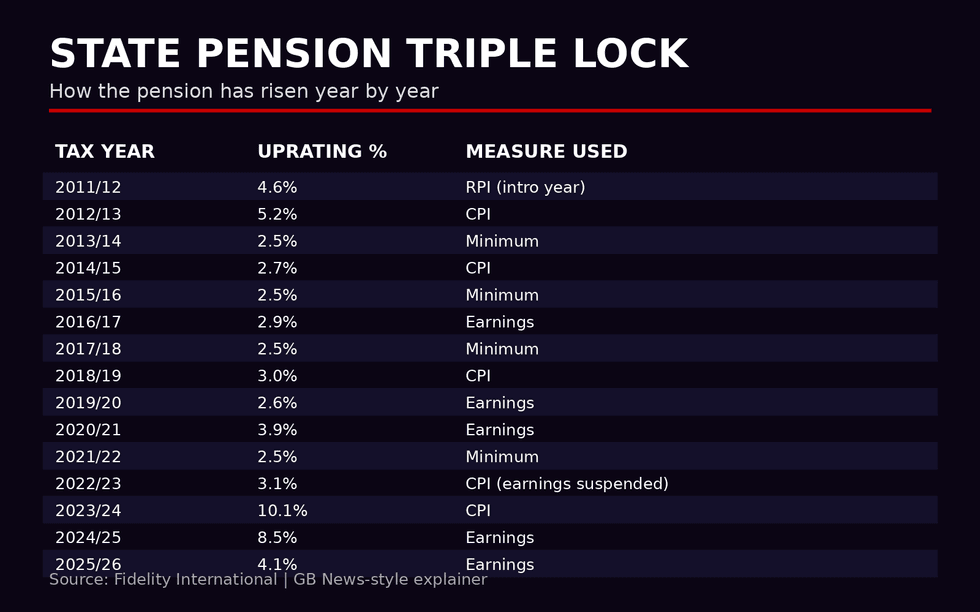 How much has the state pension risen by thanks to the triple lock? | GB NEWS / FIDELITY INTERNATIONAL
Ms Barrett said: “The triple lock could add between £5billion and £40billion a year to pension spending by 2050.”
She said analysts are increasingly examining the balance between maintaining pensioner living standards and ensuring affordability for future taxpayers.
Political considerations remain a significant barrier to reform because retirees represent one of the most electorally engaged demographic groups in Britain.
Successive Governments have been reluctant to adjust the policy despite warnings from some economists that long-term cost pressures will intensify.
Some policy proposals have included means-testing the state pension to reduce spending commitments.
Ms Barrett said: “Means-testing would require detailed assessments of income and assets, increase administrative complexity and potentially discourage private saving if people expect entitlements to be reduced.”
Several alternative policy models have been proposed to balance pension protection with fiscal sustainability.
The Institute for Fiscal Studies Pensions Review has proposed a smoothed earnings link similar to systems used in Australia.
Under this approach, Government would set a target pension level based on a proportion of median full-time earnings.
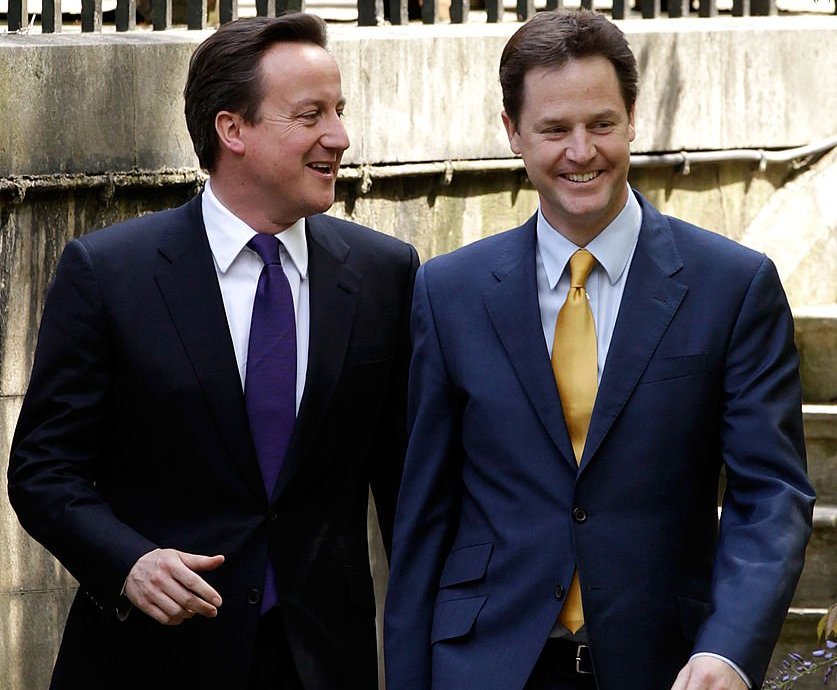
The triple lock was introduced by the coalition Government
|
GETTY
Pensions would typically rise with wages but switch to inflation increases during economic shocks before gradually returning to the target earnings ratio as economic conditions stabilise.
Dr Caswell has proposed an alternative living standards lock model.
“Earnings-linked increases would only occur when real wages exceed their previous peak.”
Economists say this model would prevent pensions rising twice during the same economic recovery cycle.
Analysis suggests that if this system had been in place since 2011, real-terms state pension growth would have been 11.7 per cent rather than 21 per cent.
Estimates suggest this could have saved approximately £13.8billion in 2024-25 alone while still maintaining pensioner income protection during periods of economic instability.