
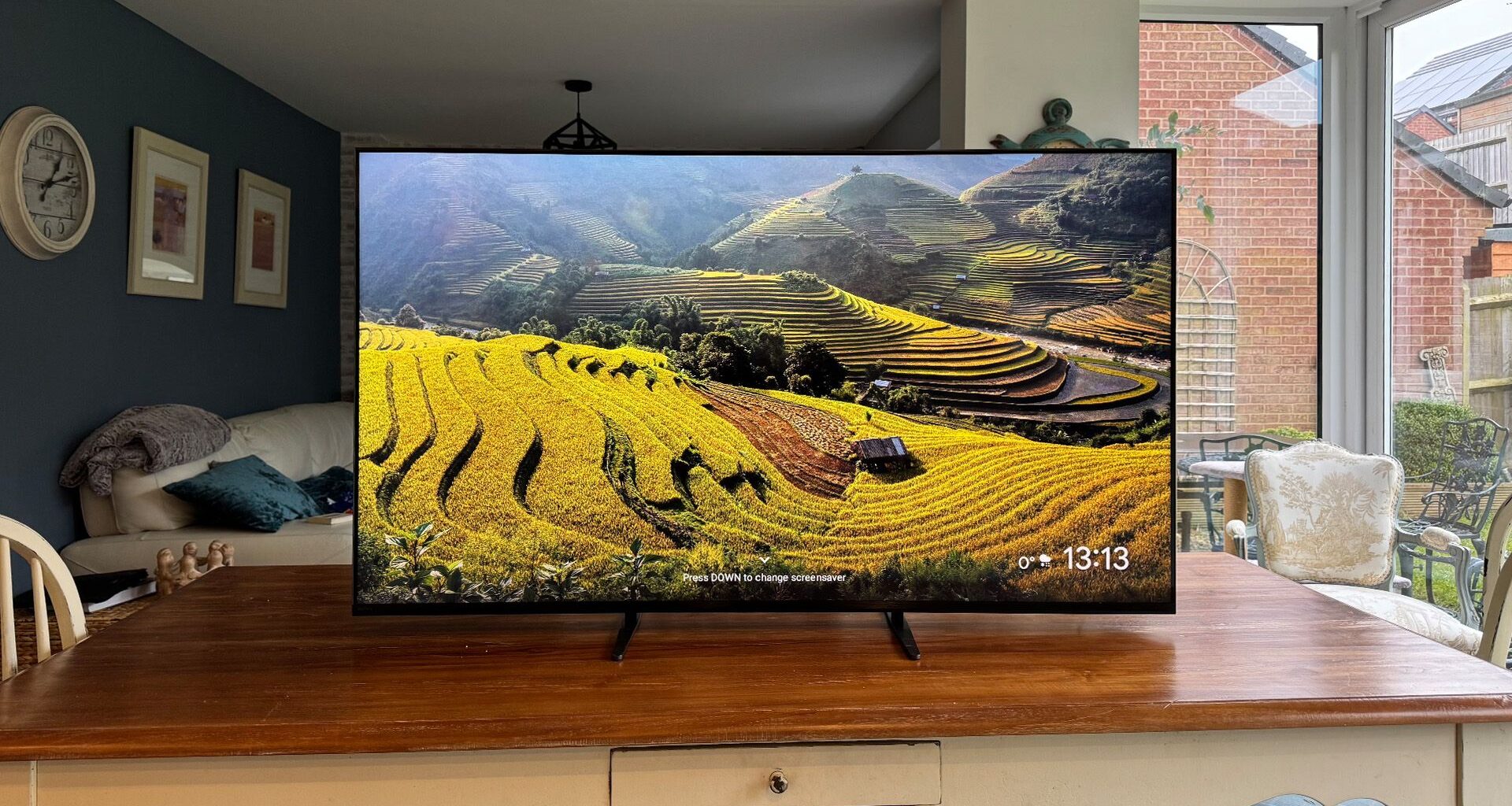
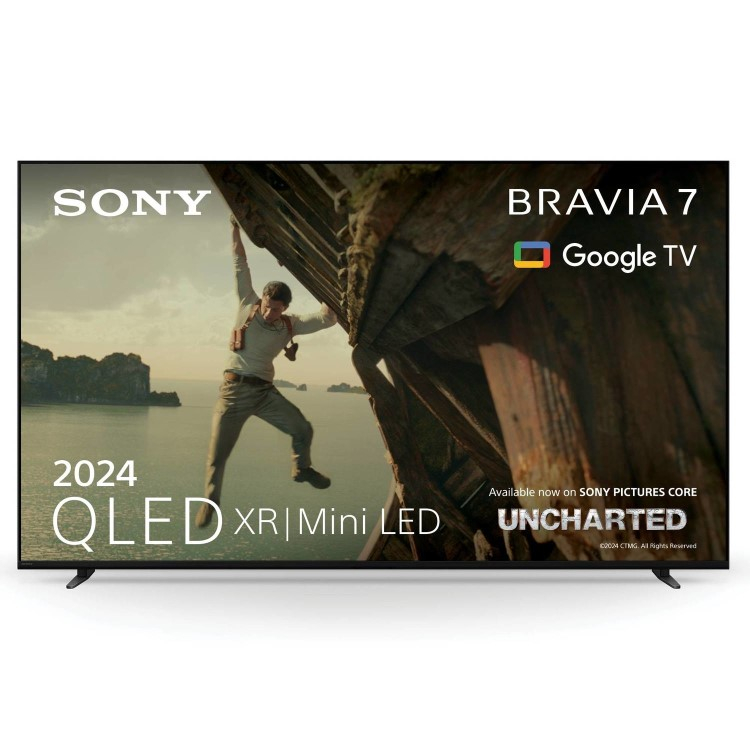
Screen size 55, 65, 75 and 85 inches (55-inch model tested)
Type Quantum Dot LCD
Backlight Mini LED (480 zones in 65-inch model)
Resolution 4K
HDR formats HLG, HDR10, Dolby Vision
Operating system Google TV
HDMI inputs 4 (2 x 48Gbps HDMI 2.1)
Gaming features 4K/120Hz, VRR, ALLM, Dolby Vision game mode
Input lag 17.9ms at 60Hz
ARC/eARC eARC
Optical output? Yes
Dimensions (hwd, without stand) 83 x 145 x 5.7cm (65-inch model)
The Bravia 7 gets far closer to Sony’s flagship Mini LED performance than expected, delivering exceptional contrast consistency, intense HDR brightness, refined colour, and impressively clean backlight control.
ProsOutstanding colour and contrastImpressively clean and convincing backlight controlGood sound qualityConsOnly two HDMIs support 4K/120Hz gamingLimited effective viewing angles
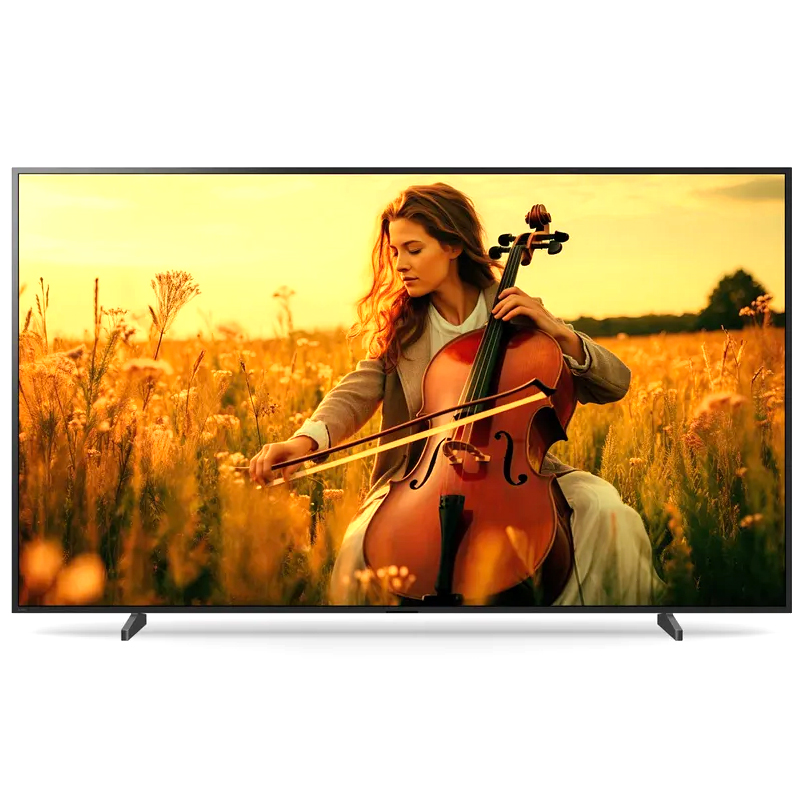
Screen size 55, 65, 75, 85 and 98 inches (65-inch model tested)
Type LCD
Backlight Mini LED (240 zones in 65-inch model)
Resolution 4K
HDR formats HLG, HDR10, Dolby Vision
Operating system Google TV
HDMI inputs 4 (x 2 48Gbps HDMI 2.1)
Gaming features 4K/120Hz, VRR, ALLM, Dolby Vision game mode
Input lag 13.3ms at 60Hz
ARC/eARC eARC
Optical output? Yes
Dimensions (hwd, without stand) 83 x 145 x 5.8cm (65-inch model)
Sony’s most affordable Mini LED TV still delivers impressively controlled contrast, vibrant yet nuanced colour, and strong overall performance for the money – even if it lacks some of the refinement of its pricier sibling.
ProsExcellent backlight controlVibrant but still natural and nuanced colourGreat value for moneyConsBacklight clouding when viewed from an angleOccasional colour slipsAlso has only two HDMI 2.1 sockets
The Sony Bravia 7 and Bravia 5 are the brand’s premium and entry-level Mini LED TVs, and they both earned five stars in their respective What Hi-Fi? reviews.
So, is it worth forking out more for the Bravia 7, or is the Bravia 5 all the TV you need?
You may like
We’ve thoroughly compared both models below to help you answer that question and figure out which Sony Mini LED TV will work best for you.
Sony Bravia 7 vs Sony Bravia 5: price
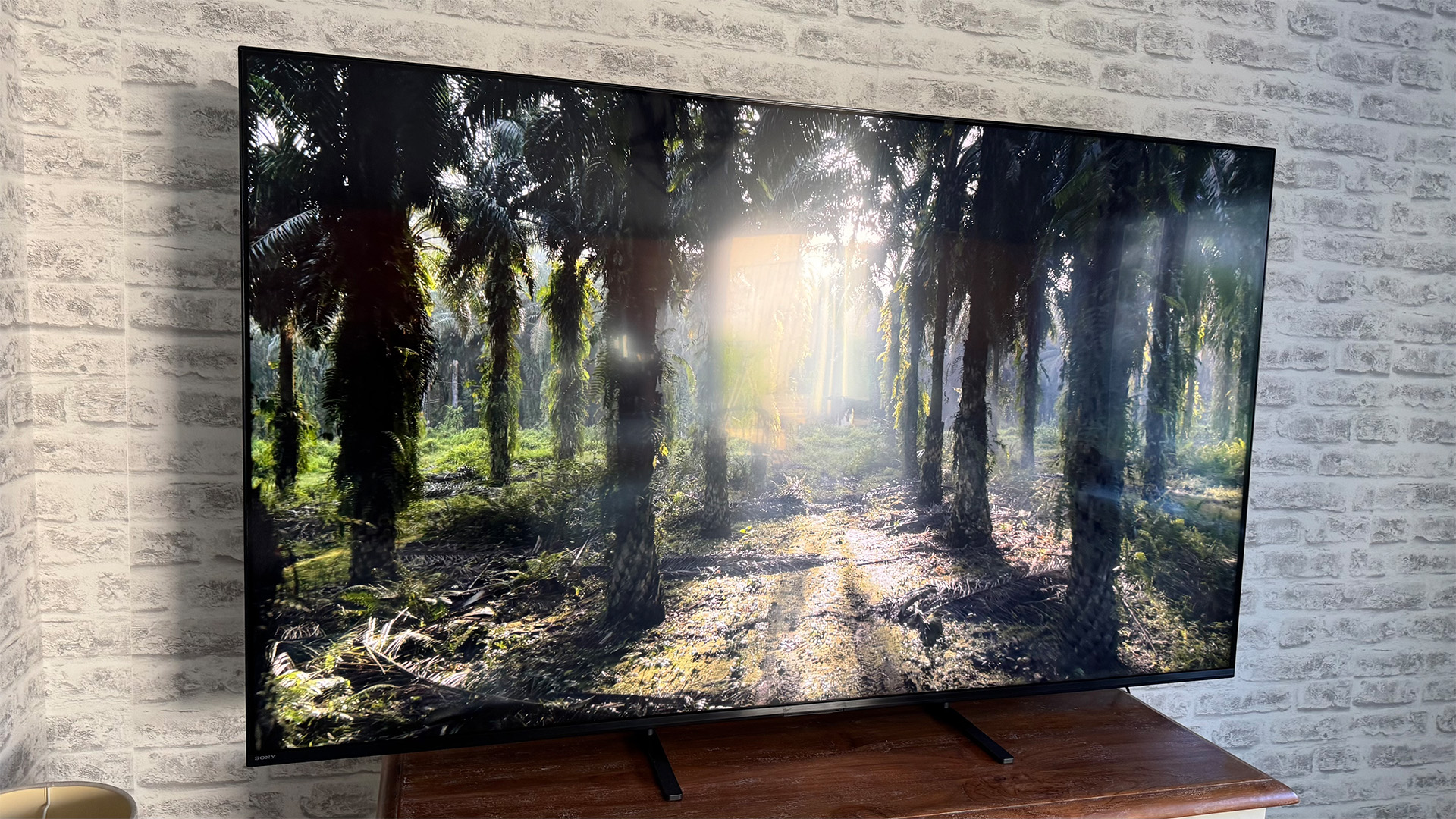
(Image credit: What Hi-Fi? / Netflix, Life On Our Planet)
While we tested the 55-inch version of the Bravia 7, we expect the 65-inch version to perform more or less identically, so for the sake of neatness, we’ll use the pricing of that bigger model.
So, the 65-inch Bravia 7 launched for £2199 / $1900 / AU$3499, but it can now be picked up for £1799 / $1200 / AU$3499.
The 65-inch Bravia 5, meanwhile, launched at £1699 / $1799 / AU$2699, but can be found for £1399 / $1400 / AU$1999 at the time of writing.
So, other than in the US, where a discounting anomaly means the Bravia 7 is currently available for less than the Bravia 5, generally speaking, the price follows the relative status of the TVs.
So, this round goes to the Bravia 5 – later, we’ll get to whether the price difference is justified.
** Winner: Sony Bravia 5 **
You may like
Today’s best 65-inch Sony Bravia 7 and Bravia 5 deals
Sony Bravia 7 vs Sony Bravia 5: design and build
(Image credit: What Hi-Fi?)
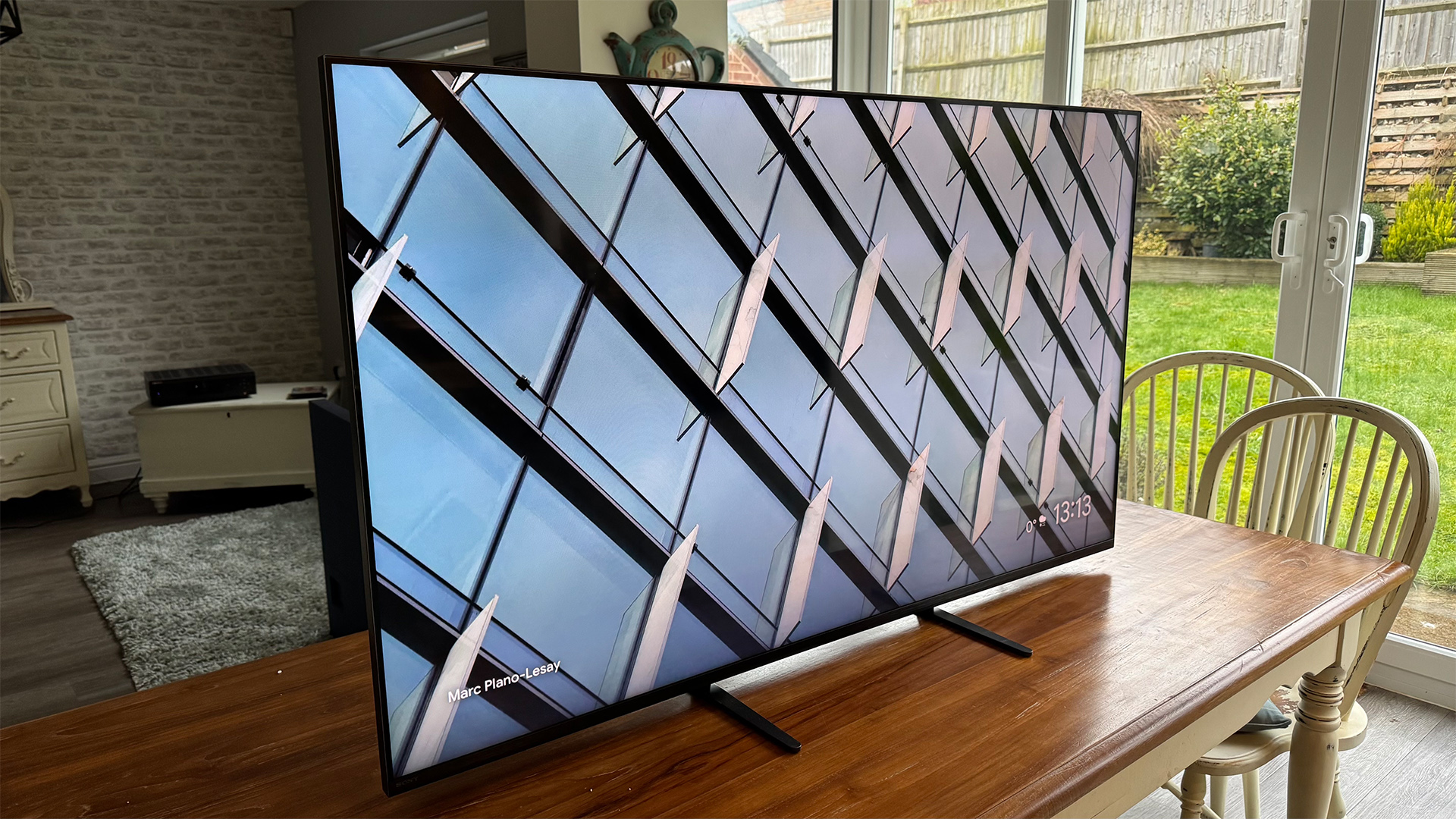
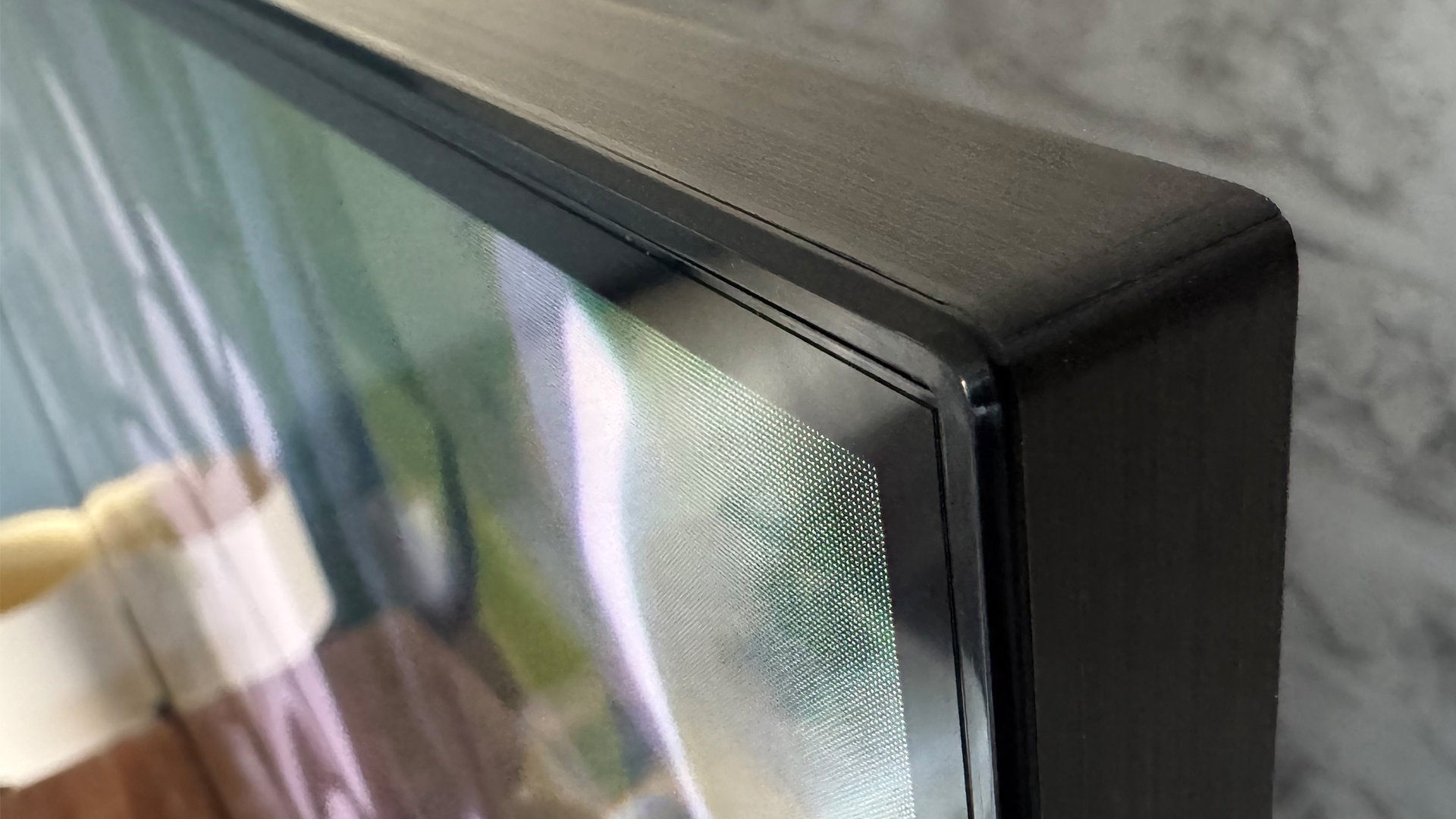
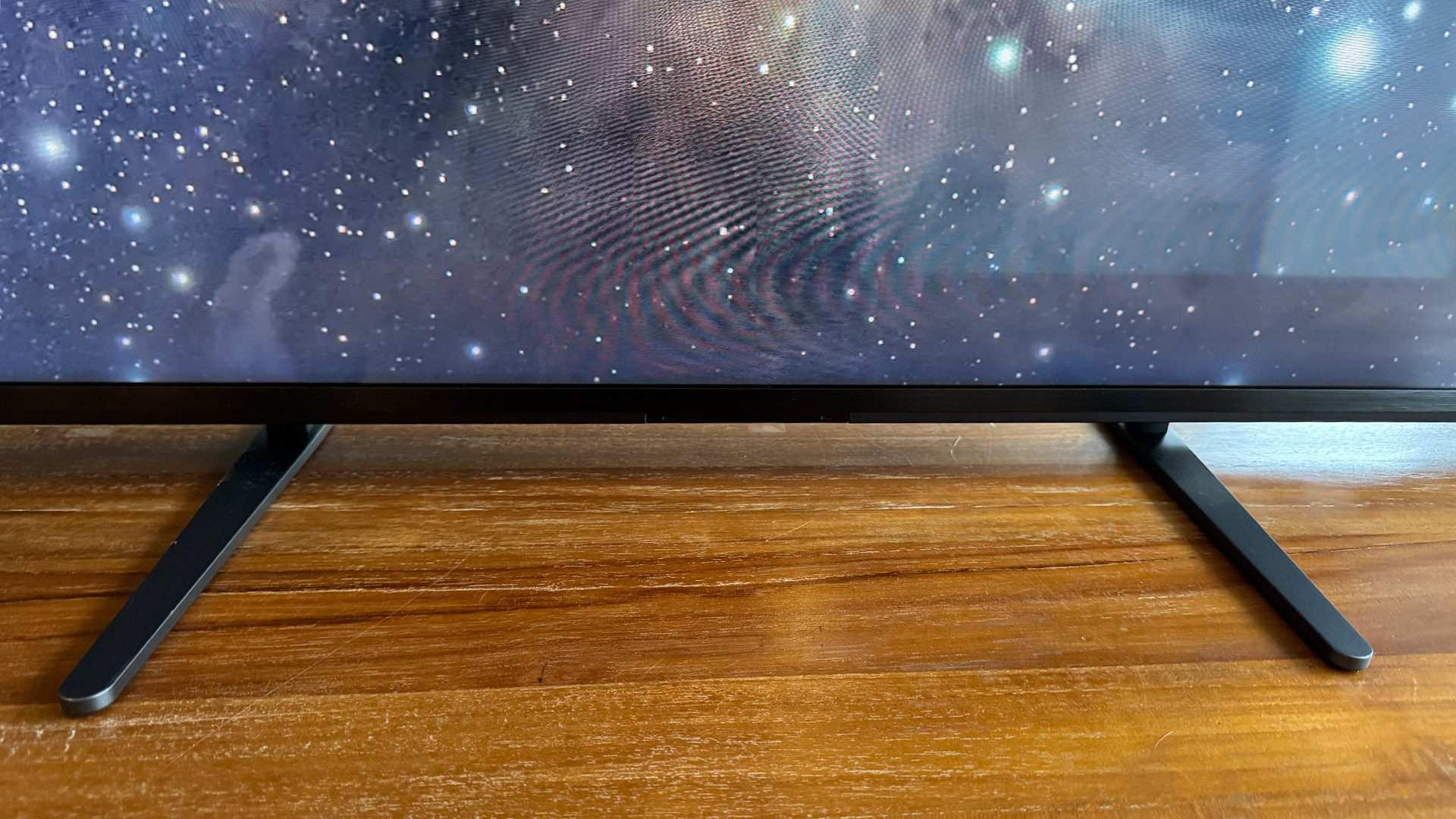
The Bravia 7’s screen and frame sit flush to one another, creating a clean, elegant look, and the overall build is more refined than you might expect at this level. The feet are particularly versatile too, offering four configurations: wide or narrow placement, and low or raised height. That flexibility makes it easy to accommodate both smaller furniture and a soundbar.
Wall mounting is also viable thanks to the relatively restrained rear profile, even if it isn’t class-leadingly slim.
The Bravia 5 is just 1mm thicker, so it’s also fine for wall-mounting, and the TV presents a reasonably premium face-on appearance thanks to its slender frame and dark grey brushed metal-effect finish.
The Bravia 5’s feet slot in without screws and offer two height positions, but lack the width flexibility of the Bravia 7.
Both TVs ship with tidy, attractive remote controls made from around 80 per cent recycled plastic, finished in an easy-to-clean polyurethane coating.
Overall, the Bravia 7’s very slightly sleeker design and superior placement flexibility give it the edge.
** Winner: Sony Bravia 7 **
Sony Bravia 7 vs Sony Bravia 5: features
(Image credit: What Hi-Fi?)
At a core level, these two TVs share a great deal. Both combine Mini LED backlighting and local dimming with Sony’s XR processing, both support HDR10, HLG, and Dolby Vision (but not HDR10+), and both run Google TV, supplemented in the UK by YouView for terrestrial catch-up services.
Sony’s streaming partnerships are also present on both sets. You get calibrated picture modes for Netflix, Prime Video, and Sony Pictures Core, along with IMAX Enhanced certification and support for IMAX Enhanced content on Disney+ and Sony Pictures Core.
Dolby Atmos is supported, and both TVs also include DTS:X, which remains a rarity at this price.
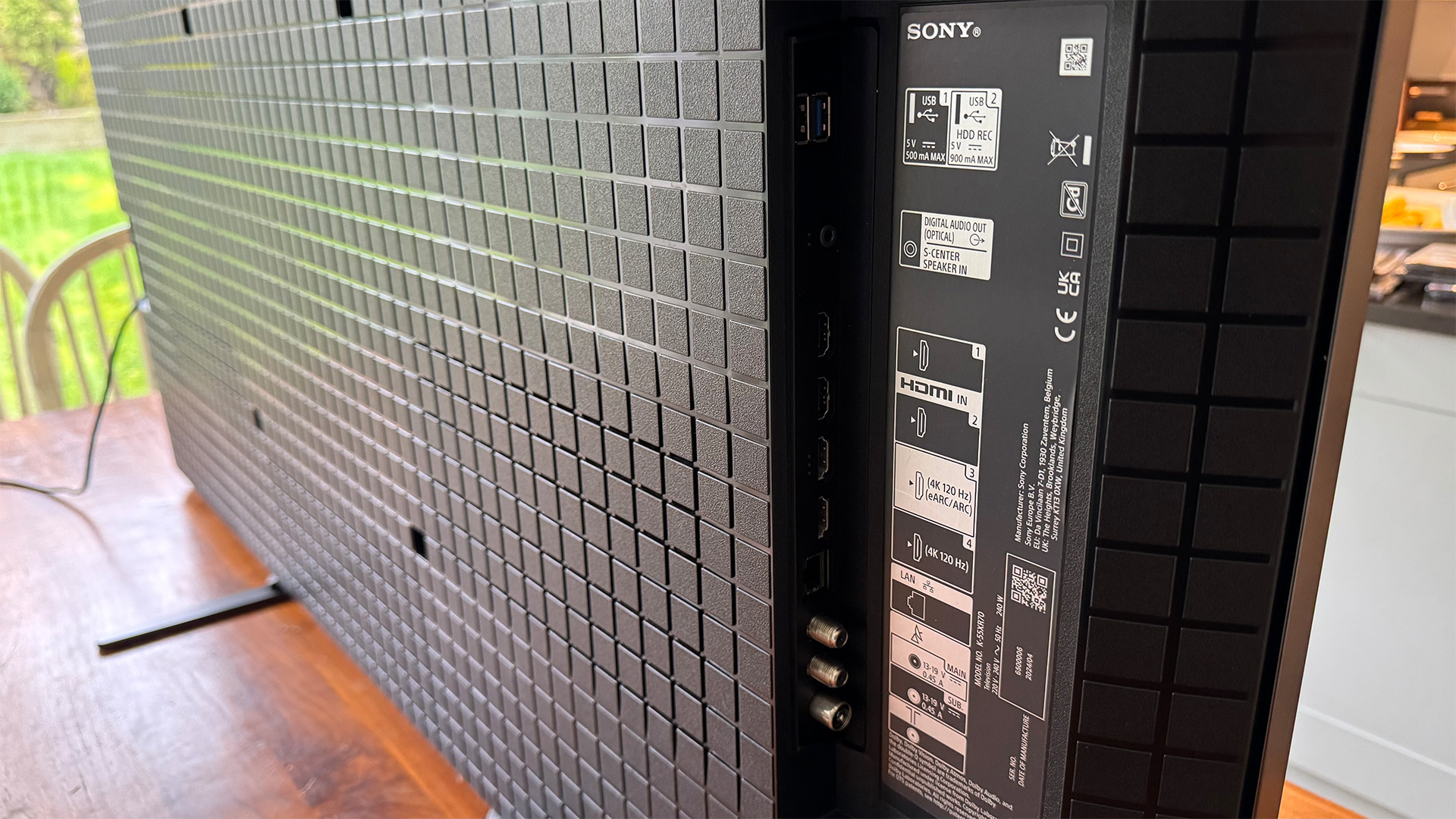
Gaming support is similarly matched on paper. Both TVs include four HDMI sockets, but only two support full HDMI 2.1 features, including 4K/120Hz, VRR, and ALLM.
Both offer a low-latency Dolby Vision game mode, and both are classed as Perfect For PlayStation 5, enabling features such as Auto HDR Tone Mapping.
The big difference is in the display technology used in the two sets.
While both have Mini LED backlights, the one in the Bravia 7 has more dimming zones (480 in the 65-inch Bravia 7 and 240 in the 65-inch Bravia 5), potentially resulting in better contrast.
The Bravia 7 also features Quantum Dots, whereas the Bravia 5 is a standard LCD TV, theoretically giving the more expensive model the upper hand in colour vibrancy.
** Winner: Bravia 7 **
Sony Bravia 7 vs Sony Bravia 5: picture quality
(Image credit: What Hi-Fi?)
This is where the Bravia 7’s higher price becomes obvious.
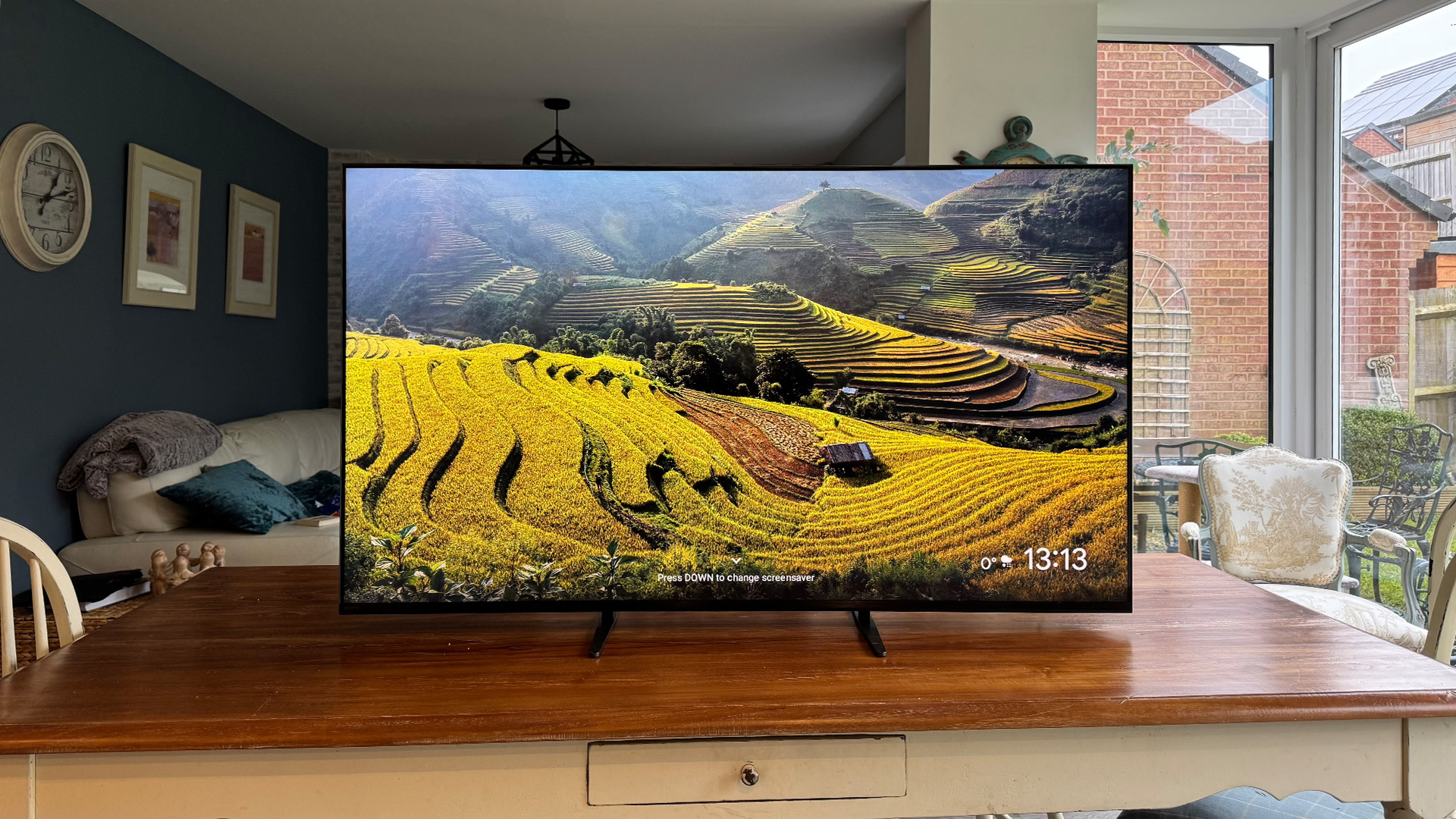
The Bravia 7 delivers picture quality that feels far closer to that of the flagship Sony Bravia 9 Mini LED efforts than its price suggests.
It produces exceptionally intense HDR whites and colours, while simultaneously delivering blacks that can look startlingly deep and convincing – at times approaching OLED-like levels.
Most impressively, it maintains this balance even in scenes that mix bright highlights with dark backgrounds.
That consistency creates a level of contrast and immersion that’s rare in mid-range TVs, ensuring that nothing about the image distracts you from what you’re watching.
Blooming is exceptionally well controlled too, with black bars above and below widescreen films remaining impressively free of greyness even when bright objects sit nearby.
Colour performance is equally strong. The Bravia 7 delivers a wide, vibrant, yet refined palette, retaining saturation in dark areas and revealing subtle light differences in bright highlights that many rivals miss.
Native 4K images look exceptionally sharp and detailed without artificial edge enhancement, while HD upscaling and motion handling remain among the best in the class.
The only real caveats are slight clouding, occasional blue colour shift during particularly complex extreme-contrast scenes, and increased blooming when viewed from wider angles.
The Bravia 5, meanwhile, is remarkably accomplished for its price. Despite having fewer dimming zones, it still manages impressively bright images alongside stable, consistent blacks, helping dark scenes look natural and three-dimensional rather than washed out.
Shadow detail is particularly well judged, and colours strike a pleasing balance between punch and subtlety in the Standard preset.
Motion handling is excellent, especially with Sony’s True Cinema option, and both native 4K and upscaled HD content retain density and texture without tipping into artificial sharpness.
However, the Bravia 5 can’t quite match the Bravia 7’s refinement. Extremely complex HDR scenes can take on a slightly cloudy appearance, very dark areas retain more greyness, and viewing from an angle increases the visibility of clouding and halos. Occasional colour quirks also creep in with challenging material.
The Bravia 5 does a great job within the limitations of its panel technology, but the Bravia 7 puts its Quantum Dots and extra dimming zones to excellent use, making it the superior performer.
** Winner: Sony Bravia 7 **
Sony Bravia 7 vs Sony Bravia 5: sound quality
(Image credit: What Hi-Fi? / Netflix, Life On Our Planet)
The Bravia 7 delivers a spacious, room-filling soundstage that projects well beyond the screen, creating a convincing sense of scale.
Dialogue is clear and firmly anchored, while Dolby Atmos and DTS:X tracks benefit from a degree of height and spatial placement.
While bass can sound a little polite during explosive moments, the speakers maintain composure and avoid distortion even at higher volumes.
The Bravia 5 focuses more on precision. It extracts impressive amounts of detail, places effects accurately, and builds a spacious soundstage that feels immersive by TV standards.
Dialogue is well elevated to screen level, and the set can play loudly without breaking down, too.
Its main limitation, though, is bass weight, which lacks both depth and impact compared with the Bravia 7.
Still, the Bravia 5’s sound remains clean, controlled, and impressively articulate for the money.
The Bravia 7 edges ahead, but either way, we recommend one of the best soundbars to properly elevate your viewing experience.
** Winner: Sony Bravia 7 **
Sony Bravia 7 vs Sony Bravia 5: verdict
(Image credit: What Hi-Fi?)
The Bravia 7 shows just how much of Sony’s flagship Mini LED DNA has filtered down to a more accessible price point.
Its exceptional backlight control, outstanding contrast consistency, refined colour, and strong processing combine to create one of the most immersive mid-range TV experiences available. Add capable sound, and it’s the more complete performer overall.
The Bravia 5, though, is far from a consolation prize. It delivers excellent picture quality for its class, strong motion handling, vibrant yet natural colour, and a generous set of features at a highly competitive price – especially if you value screen size for your money.
Both TVs earn the same top-level scores, but they arrive there by different routes.
If outright picture consistency and refinement matter most, the Bravia 7 is the clear choice.
If value and size-per-pound are your priorities, the Bravia 5 remains one of the strongest Mini LED buys around if you absolutely must have a Sony – though do also check out the TCL C7K, which is also definitely worth considering.
** Winner: Sony Bravia 7 **
Today’s best 55-inch Sony Bravia 5 and Bravia 7 deals