
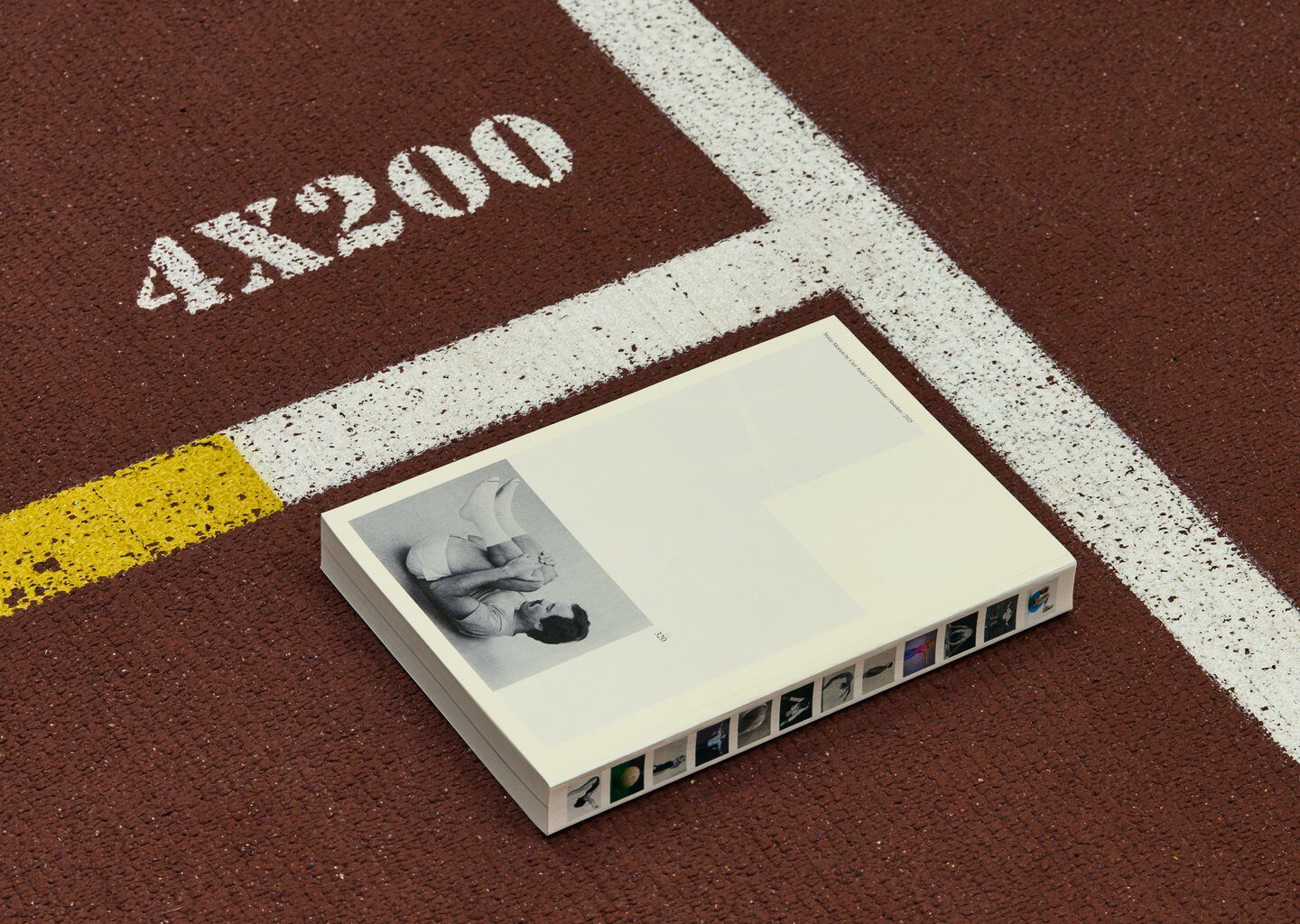
This visual investigation led Carl to collate a selection of images from the collection into a photobook: Static Motion. Published by LL’Editions and designed by Lundgren+Lindqvist, the publication re-contextualises this found imagery, encouraging viewers to look at it anew. Detached from their utilitarian beginnings, the photographs “invite new readings; at times absurd or humorous, at others unsettlingly violent or erotic”, shares Carl. “Here, they can be viewed in an alternative way and different meanings can arise.”
It’s not just the absence of instructions that changes the way we look at these images. The book’s strategic pairings across spreads create a dialogue between unrelated photographs: an image illustrating the correct way to hold a table tennis paddle is paired with a pressure technique that looks like it’s designed to tackle a migraine. Absurd and conspicuous combinations, that create new meanings when paired, these were something that quite naturally “emerged through the book’s sequencing process itself, where certain images naturally found their place and others were set aside, to serve the narrative and overall flow”, share designers Andreas Friberg Lundgren and Mónica Tomás of studio Lundgren+Lindqvist.
For the designers, the book’s layout was an intuitive process: “memory played a central role, as particular images resurfaced in our minds along the way as ideal pairings or counterpoints”, Andreas says. Despite its loose, flexible structure, one thing the pair did aim to preserve in the book was as much variety as possible. It was important that the book’s contents span across “subjects, gestures, body parts, genders, colours and layout”, says Mónica, “so that the book would be dynamic and reflect the diverse nature of the source material.”
Far from a rational framework to acquaint these images in, Carl’s aim was to highlight the sense of ambiguity and contradiction he found within many of the photographs. Essentially, the weirder the better: “When confronted with an image I wanted to find myself asking: What’s going on here?”. What once served as infographics might now function “as an index of the body’s gestures”, Carl concludes. “Or act as testimonials for limitations of the photographic medium. It’s up to each person to ponder on alternative logics and meanings.”