

4x50MP cameras, all of them pretty great (…for stills)
Motorola may have renamed its flagship, but as the ultimate model in the lineup, it will evoke comparisons to previous such offerings when it comes to camera chops. There was no Ultra in 2025, and the Edge 60 Pro, like the Edge 50 Pro before it, was a notch below the 50 Ultra from 2024. It is precisely the 50 Ultra then that the Signature is the closest to being a spiritual successor in the imaging department.
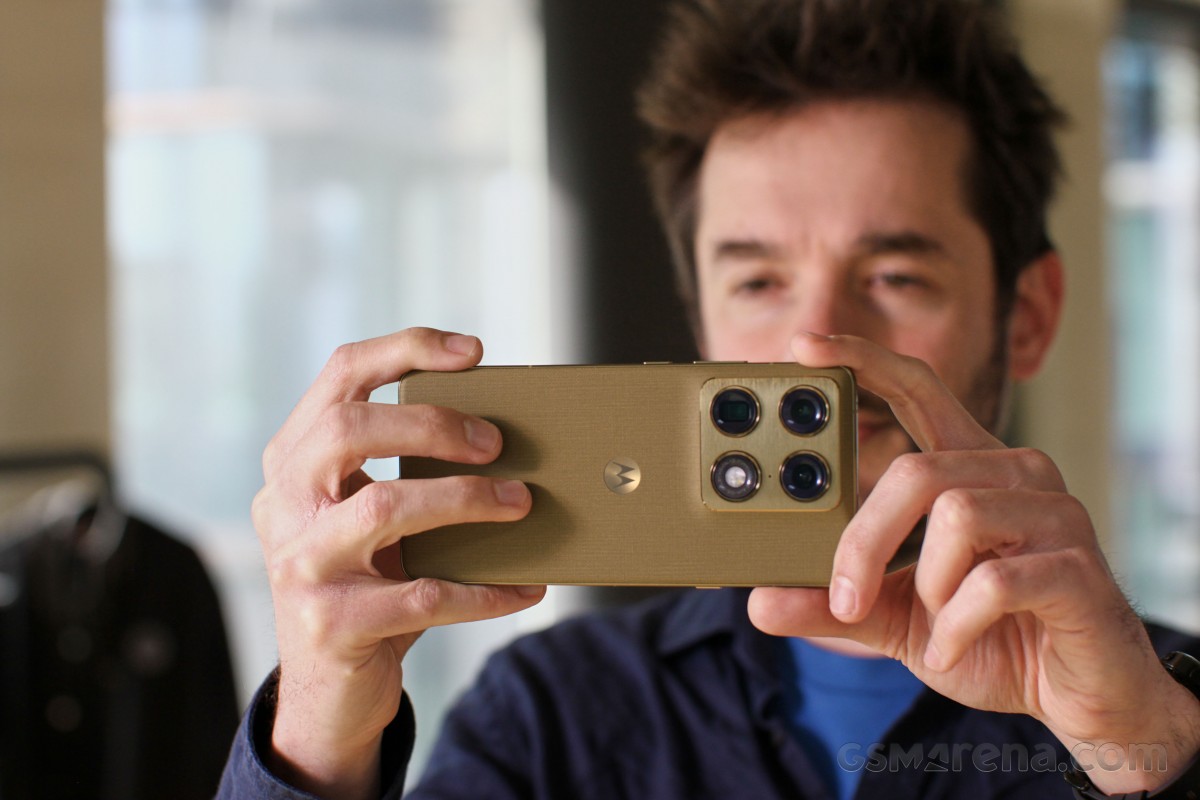
Indeed, the Signature’s configuration is very similar to that of the 50 Ultra from two years ago, with some sensor tweaks here and there. There’s a triple setup on the back with a large-sensor main camera, a very wide ultrawide camera, and a 3x zoom telephoto, all three of them 50MP. Also 50MP is the AF-capable selfie camera. Pretty promising.
The main camera now uses a 1/1.28″ Sony sensor in place of the similarly-sized OmniVision one on the 50 Ultra. It’s paired with a stabilized 24mm-equivalent lens with an f/1.6 aperture – a high-end setup overall.
The telephoto camera maintains that 3x zoom and the sensor size (1/1.95″ vs. 1/2.0″ isn’t really a difference), only it’s now a 50MP sensor in place of the 64MP one on the old Ultra. It’s got OIS too, of course, but also very close focusing.
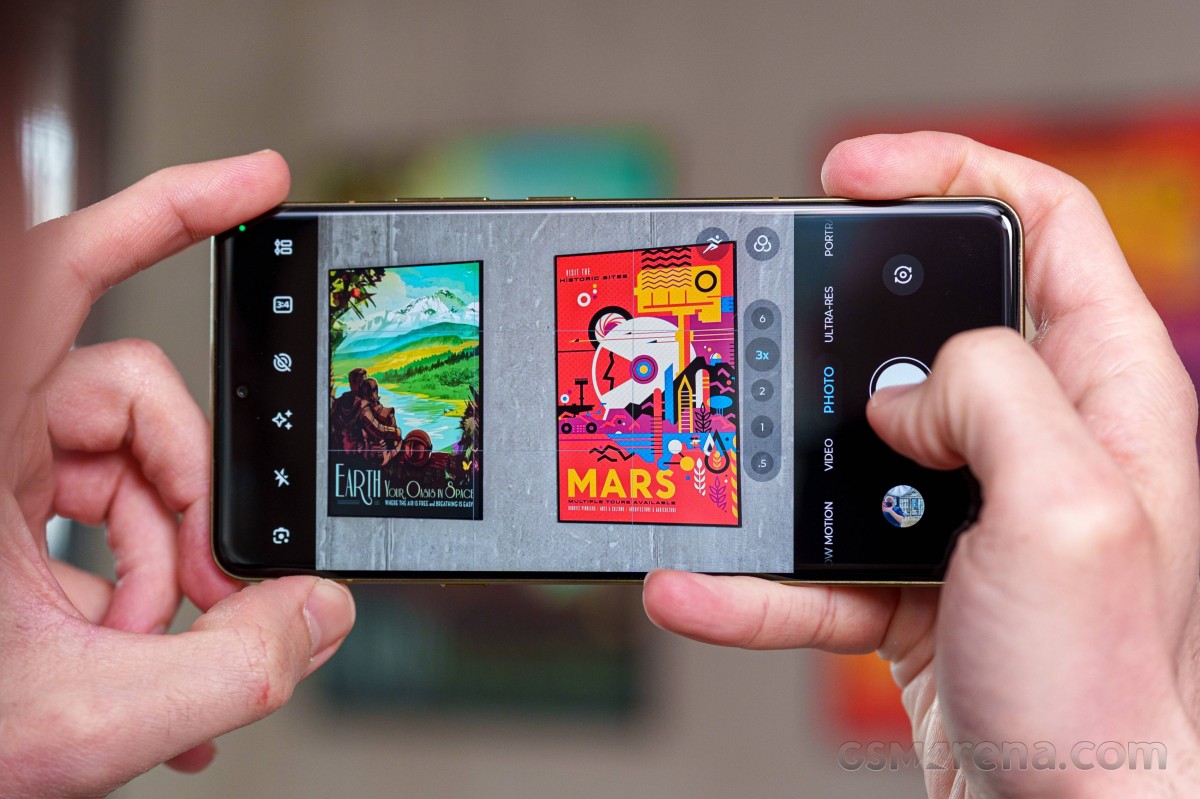
The ultrawide camera continues to be wider than most, with its 12mm-equivalent lens. Its 50MP sensor is the Samsung JNS, an evolution of the JN1 found in the Edge 50 Ultra. Autofocus is also on the menu.
On the front, we’re back to Sony. The last of the four 50MP sensors we have on board is the smallest, but 1/2.93″ isn’t half bad for a selfie camera. This one too features autofocus, showing that the Signature is serious about its selfies too.
Wide (main): 50MP Sony LYT-828 (IMX 09A, 1/1.28″, 1.22µm-2.44µm); 24mm, f/1.6, OIS, multi-directional PDAF (10cm – ∞); 8K30/4K60 video recording.
Telephoto 3x: 50MP Sony LYT-600 (IMX 882, 1/1.95″, 0.8µm-1.6µm); 71mm, f/2.4, OIS, multi-directional PDAF (14cm – ∞); 8K30/4K60.
Ultrawide: 50MP Samsung ISOCELL JNS (S5KJNS, 1/2.76″, 0.64µm-1.28µm); 12mm, f/2.0, PDAF; 4K60.
Front camera: 50MP Sony LYT-500 (IMX 816, 1/2.93″, 0.6µm-1.2µm); 23mm, f/1.9, PDAF; 4K60.
Daylight photo quality
Main camera
The Signature’s main camera is doing a very fine job during the day. We’re getting excellent dynamic range with well-developed tonal extremes even in difficult overcast weather. The auto white balance is on point, outdoors and in, and the color output is easy to like. Detail is very good, with only a hint of too much sharpening with random textures. The shallow depth of field is also worth mentioning, mostly as an advantage, particularly given the nicely smooth rendition of out of focus areas.












Daylight samples, main camera (1x)
That comes into play with photos of people where you’d want to have some separation between subject and background, though it’s not the most pronounced effect especially if you go for wider framing (and thus longer subject distance). Portrait mode does help enhance the background blur and it deals very well with messy hair too. Skin tones are looking great, and facial detail is rendered well too – no complaints.








Human subjects, main camera: Photo mode, 1x • Portrait mode, 24mm
Images saved in the nominal 50MP resolution aren’t really any more detailed.




Daylight samples, main camera (1x), 50MP
The 2x zoom 12.5MP shots, on the other hand, are quite respectable, offering good sharpness and detail rendition. There are better implementations of 2x zoom from a 23-24mm main camera, but the Signature’s are above average, is what we’re saying.











Daylight samples, main camera (2x)
That sort of extends to the portraits too. Detail is good and the 2x/50mm focal length works well for tighter framing. The in-between 35mm zoom level that you get in Portrait mode is also not half bad either.












Human subjects, main camera: Photo mode, 2x • Portrait mode, 35mm • Portrait mode, 50mm
Telephoto camera
The 3x telephoto camera is а touch more muted in its color presentation – not to a point of looking dull, but not quite enthusiastic either. White balance remains dependable though. Dynamic range is also great. Detail is very good, with a similar rendition of foliage to that of the main camera – reasonably natural.












Daylight samples, telephoto camera (3x)
You can also expect high-quality people shots at 3x zoom, with very good facial detail rendition and lifelike skin tones. The 70-ish millimeter focal distance lends itself well to headshots and the perspective is great. There’s plenty of natural subject separation too. The 85mm Portrait mode zoom level returns more or less the same quality detail, and it’s a viable option of you prefer even tighter framing and some added computational blur.








Human subjects, telephoto camera: Photo mode, 3x • Portrait mode, 85mm
The 50MP files aren’t any more detailed than the 12.5MP ones.




Daylight samples, telephoto camera (3x), 50MP
Again, the 6x normal-res photos are looking substantially better at 1:1 than the 3x 50MP ones. They do have a bit of a digital, heavily-sharpened rendition of grass and similar textures, but even so, they’re super good enough.








Daylight samples, telephoto camera (6x)
Ultrawide camera
The ultrawide camera’s images have some minor flaws, but we’d label them excellent nonetheless, especially considering just how extreme the coverage is thanks to the 12mm lens. Detail is great for this kind of camera and dynamic range and color rendition leave no grounds for complaint either. There’s no 50MP mode for this camera, which doesn’t really matter, we reckon.











Daylight samples, ultrawide camera (0.6x)
Close-ups
The Signature’s telephoto camera can focus as close as around 14cm, meaning it can capture some nicely detailed close-ups.







Close-up samples, telephoto camera, 3x
Its very reasonable 6x performance enables you to get even larger reproduction, at the expense of a small drop in pixel-level detail – which may be a sensible trade-off depending on the use case.







Close-up samples, telephoto camera, 6x
Selfies
The Signature’s excellence continues on the front, where the selfie camera is producing top-class results. Yes, it can use a nudge in vibrance, but even with its current more reserved color output its photos look good, plus they have wide dynamic range and great detail. Close-ups are also superb and low-light performance isn’t too shabby either.








Selfie samples
Low-light photo quality
Main camera
The main camera’s night-time photos in full auto mode are very good. Exposures are just right, shadow development is great, highlights are well preserved. Detail is excellent too. What’s not so great is the tendency for low-light shots in certain conditions to be lacking in vibrance – the first three shots on the second row could very well use a boost.










Low-light samples, main camera (1x)
Most phones struggle at 2x from their main cameras at night, and the Signature is no different, with darker scenes ending up on the soft side. Still, if you encounter a better-lit facade, you can get a pretty decent result in terms of detail.








Low-light samples, main camera (2x)
Telephoto camera
The telephoto camera doesn’t mind darkness either. We’re getting an excellent overall look – dynamic range is great, white balance is reliable, colors are nice (if, again, somewhat lacking in pop). Detail is very good for the most part, with some slight softness in the shadows of darker scenes.











Low-light samples, telephoto camera (3x)
Zooming in further, you’d be looking at 6x shots that are still decent, if no longer quite praiseworthy.








Low-light samples, telephoto camera (6x)
Ultrawide camera
Once night sets in, the ultrawide loses some of the polish it showed in the daytime, but remains a competent performer. It’s got very good dynamic range, accurate white balance with good saturation levels, and pretty good detail unless you focus on the relatively soft shadows.










Low-light samples, ultrawide camera (0.5x)
Photo quality verdict
The Motorola Signature is thoroughly capable as a stills camera. The particularly wide ultrawide cam can do crazy perspectives and is excellent in good light, solid at night. The primary camera is excellent at its native focal length in both daytime and at night, and does alright at 2x zoom. The 3x telephoto is a notch below the best at night, does great during the day, and excels at closeups. Both of these cameras also capture great photos of people. The selfie camera also takes top-class photos of people on the other side of the phone.
Video quality
All four cameras of the Signature can record video up to 4K60, while the main camera and the telephoto on the back also allow 8K30 capture. There’s no 24fps setting for any resolution, and there’s no Pro video mode to be found either.
As usual, you can choose between the h.264 and h.265 codecs with the more efficient h.265 being the default. You get Dolby Vision recording capability – it’s a toggle that’s available for all quality settings, no limitations. Similarly, there’s always-on video stabilization in all resolution/frame rate combos. There’s also a ‘Horizon lock’ stabilization that limits you to 1080p30 on the ultrawide.
You can check out the playlist below, which includes multiple video samples.
Daylight videos from the Signature are a bit of a mixed bag. The main camera’s clips are much too contrasty for our liking. It was, admittedly, a weird day lightwise, but you’ll want to capture videos on weird days too, and we tweaked the results in post a little bit to get more sensible contrast levels without much negative effect – so it can be done. Detail is alright, but not really good-good. The telephoto is in the same boat with its contrast tuning, unfortunately, and it too isn’t class-leading in terms of detail. In contrast, the ultrawide’s contrast setting is more sensible, but detail is also not great on it.





Motorola Signature video screengrabs, daylight: 0.5x • 1x • 2x • 3x • 6x
Low-light video quality isn’t too hot either. The high contrast doesn’t seem to be that big of deal here, not on the main camera and not on the telephoto, with both doing respectfully in terms of dynamic range. Detail is pretty meh on both of them, though. The ultrawide goes softer still, and it’s pretty rough in its highlight rendition. Usable stuff, just not great stuff.





Motorola Signature video screengrabs, low light: 0.5x • 1x • 2x • 3x • 6x
On a more positive note, the Signature’s video stabilization is excellent. All three cameras produce super-steady footage when shooting from a fixed position, and they pan smoothly. Walking shake is also ironed out expertly.
Video quality verdict
In contrast to the Signature’s exemplary stills performance, video recording is more of a middle-of-the-road affair. The phone’s clips are plagued by needlessly high contrast on the main and telephoto cameras during the day, and only so-so detail both day and night. The ultrawide is on the softer side in all conditions. Stabilization is excellent throughout though, for what it’s worth.