
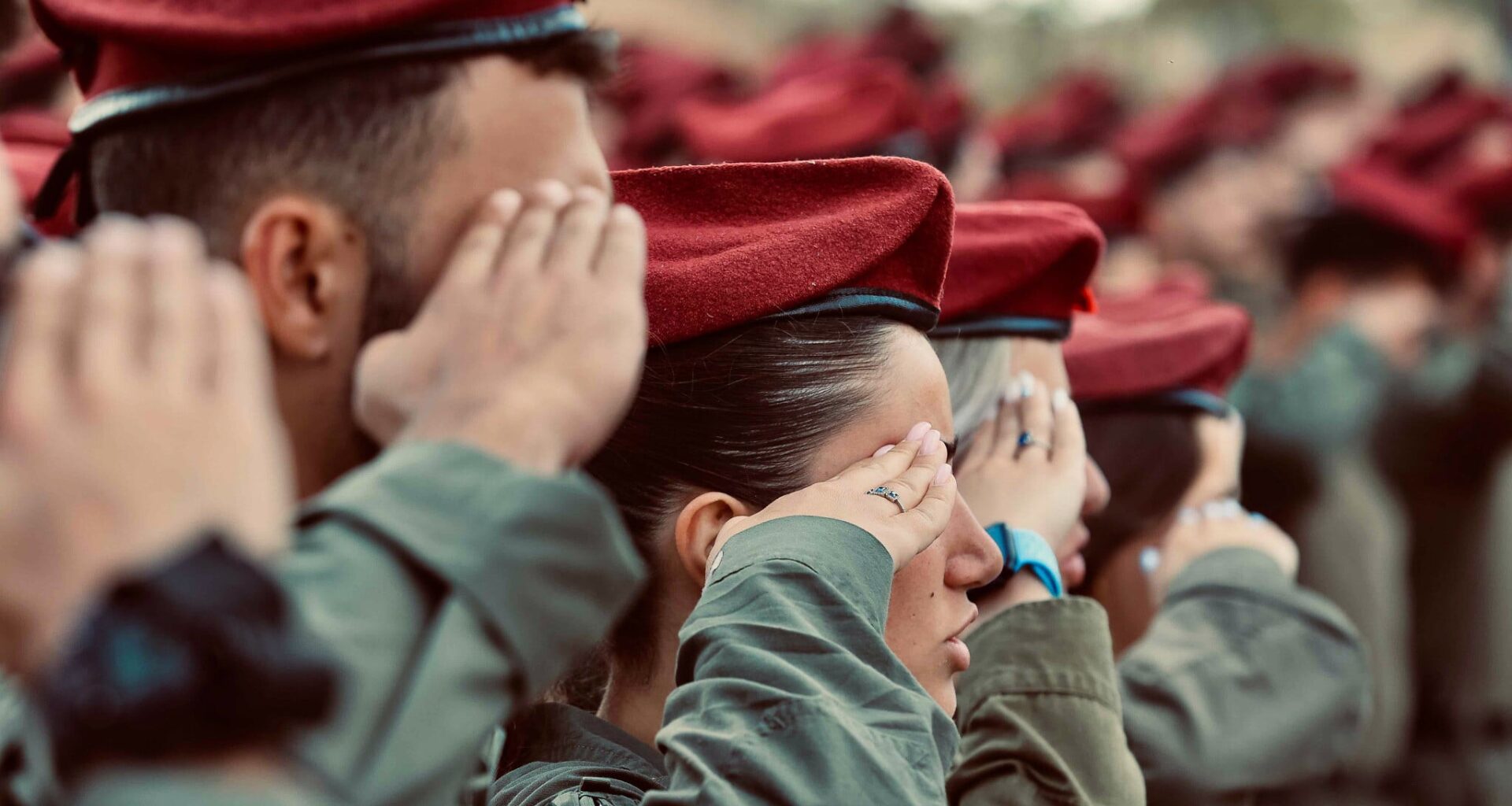
It is impossible to know exactly what motivated the violent mob that converged upon two soldiers in Bnei Brak on Sunday, forcing them to run and hide in fear for their lives before being rescued by police.
Authorities have indicated that the uniformed squad commanders from the Education and Youth Corps were in the ultra-Orthodox stronghold to visit a recruit who was set to enlist in their unit next month, a standard practice.
Their presence, though, set off false rumors that they were there to arrest a draft dodger or forcibly draft a young religious man. Such hearsay has sparked rioting elsewhere in the past.
So the fact that both soldiers were female may not have been a central factor egging their attackers on.
Yet Sunday’s melee was more than just the most recent battle in a war being waged by an ultra-Orthodox community seeking to cut itself off from the rest of society.
Get The Times of Israel’s Daily Edition
by email and never miss our top stories
By signing up, you agree to the terms
With the place of women in the military under fresh assault from some corners of society, as the ranks of female soldiers, including those from religious backgrounds, continue to swell, the riot was also a manifestation of the toxic fraying of the consensus around the Israel Defense Force’s push for gender equality.
More women joining up
Since the establishment of the State of Israel, young women, from the age of 18, have been obligated to enlist in the IDF. Those claiming a religious lifestyle are exempted, though they also have the option of serving the nation’s civilian needs as part of what is known as National Service.
According to data provided by the IDF to the Movement for Freedom of Information, the recruitment rate among female graduates of secular schools has remained stable over the last decade, standing at approximately 92 percent.
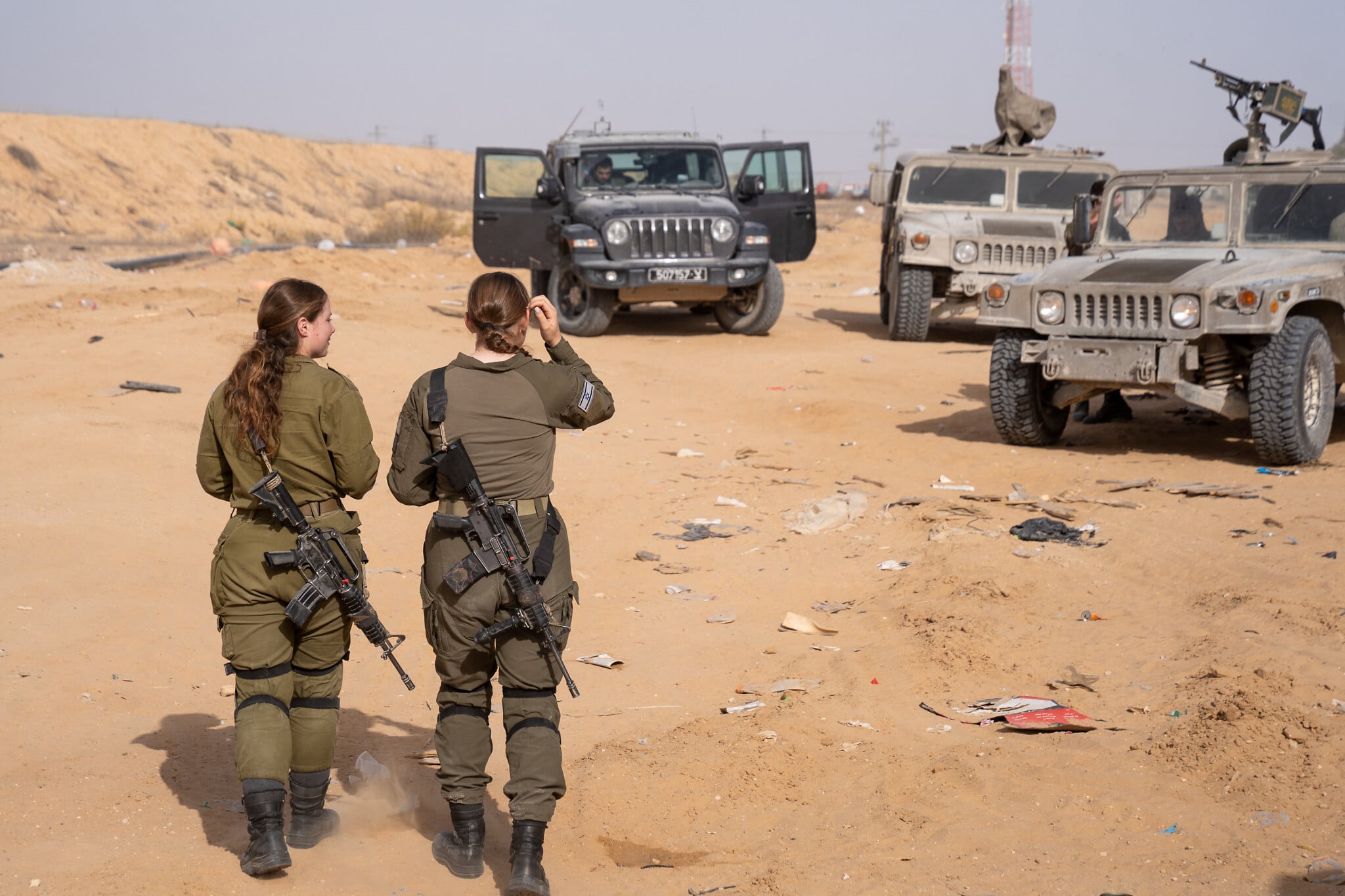
Female soldiers with the IDF Artillery Corps are seen on the border of the Gaza Strip, December 8, 2025. (Emanuel Fabian/Times of Israel)
However, the last several years have seen young women coming from national-religious backgrounds increasingly joining their secular counterparts, rather than signing up for the civilian corps.
According to the data, between the years 2018 and 2025, the rate of women identified as part of the national-religious community enlisting in the IDF rose from 25% to 31%. This upward trend began even earlier, despite aggressive campaigns by conservative rabbis against women serving – especially in combat roles.
Though there is some overlap in belief and practice, the national-religious community is distinct from the ultra-Orthodox community in several key ways. While both are God-fearing, those who count themselves as national religious are usually more willing to engage with secular society, including in education, employment, and culture. As a whole, the community is ardently Zionist and supports the military.
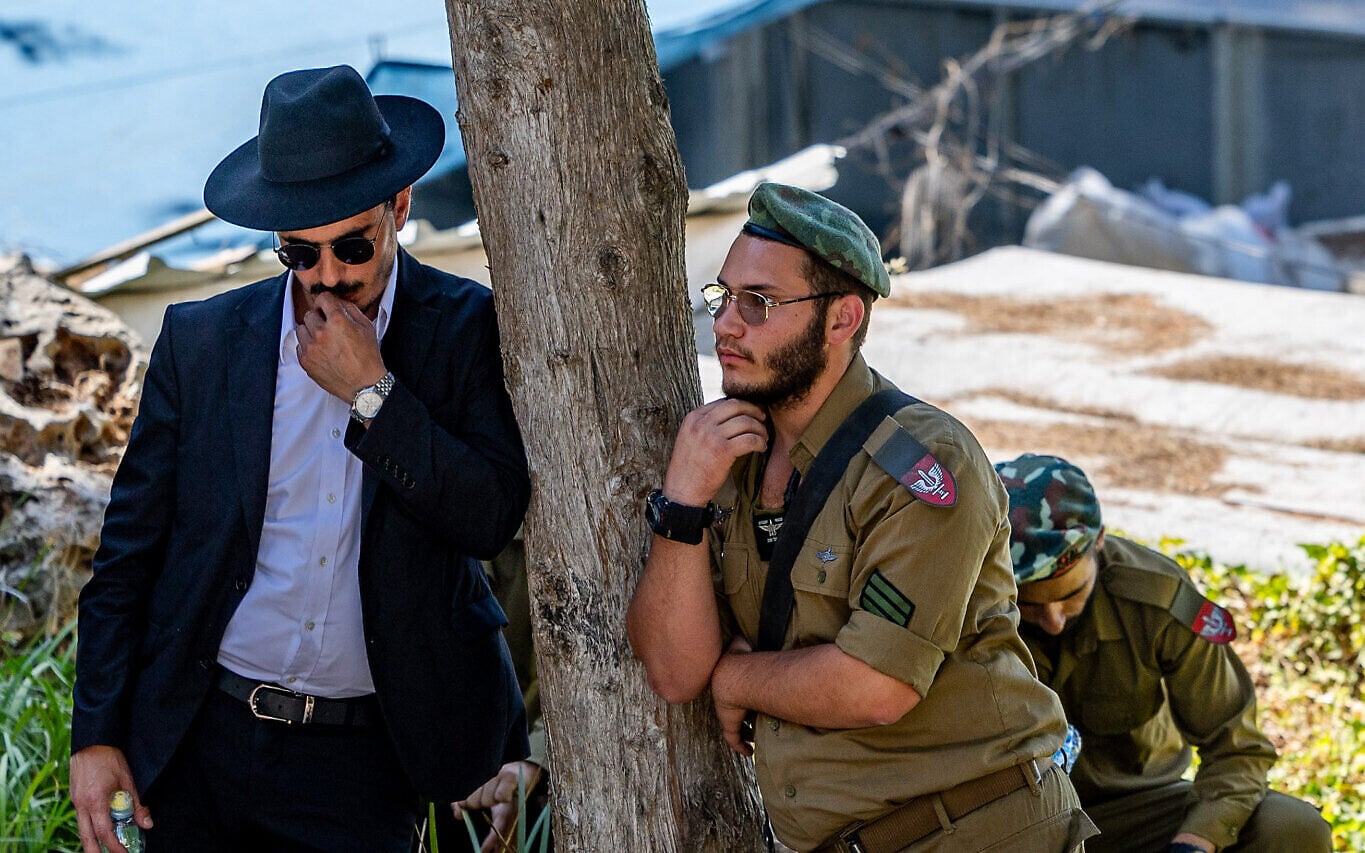
Family and friends of Staff Sergeant Moshe Shmuel Noll attend his funeral at the Mount Herzl Military Cemetery in Jerusalem on July 9, 2025. (Chaim Goldberg/Flash90)
The ultra-Orthodox, by contrast, generally seek to separate themselves from the rest of society to protect their religious mores, including strict adherence to gender roles. Many parts of the community reject Zionism, prize the study of Jewish texts over gainful employment, and refuse military service, including when that means, for men, ignoring the requirement to serve.
According to official data, only 0.3% of women who graduated from the Haredi educational system serve. Among men, the number is only slightly higher.
Woman warriors
The Bnei Brak skirmish followed a wave of media attacks against female combat service in recent weeks. For the detractors, the problem is not merely the draft itself, but the fact that more and more young women are staffing combat units.
The question of combat service has been at the heart of public discourse since the landmark 1995 High Court ruling in the case of Alice Miller, which stated that the IDF must allow women equal rights in applying for pilot training in the Israeli Air Force.
Miller, an aerospace engineer with a civilian pilot’s license, did not pass the screening for the pilot’s course following her legal victory, but she opened the door for dozens of women who have since marched into prestigious pilot and naval officer courses. Simultaneously, women began integrating into combat roles in the Border Police and the Ground Forces.
Data provided by the IDF to The Times of Israel shows that in 2015, 7.2% of combat soldiers were female. By 2025, that had skyrocketed to 21.2%.
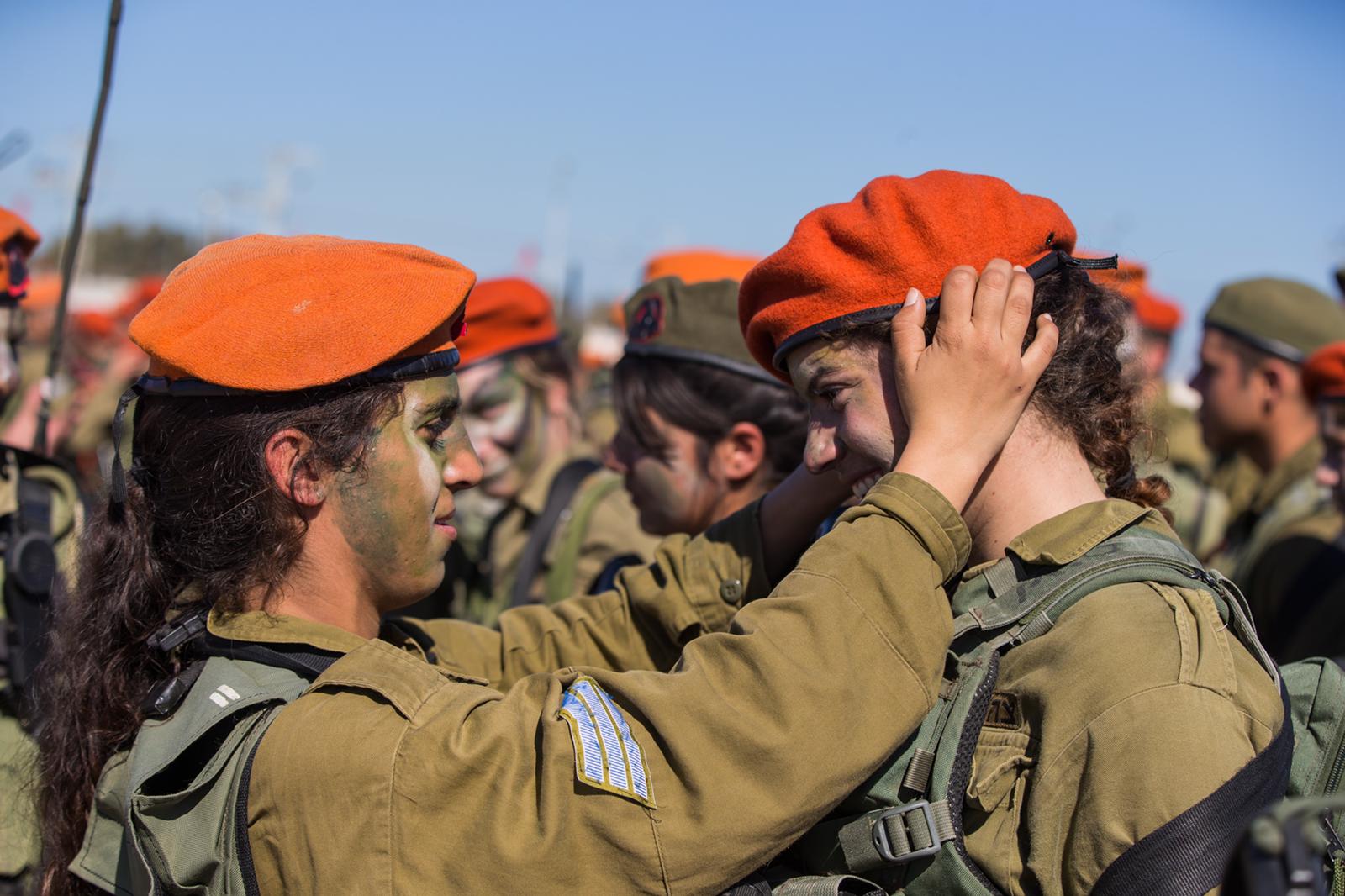
Female soldiers at the end of their course in the IDF Search and Rescue Brigade. (Israel Defense Forces)
It was not until October 7, 2023, however, that most Israelis were exposed to instances of female soldiers engaging in combat, as troops from the Border Defense Corps, Artillery Corps, Border Police, and the Home Front Command’s Search and Rescue battalions fought off invading Hamas-led terrorists across southern Israel. Many paid the ultimate price for their heroism.
A total of 32 female soldiers, not all of them on duty, were killed during the October 7 onslaught. They include 16 female surveillance soldiers killed at the IDF’s Nahal Oz base.
For five hours during the onslaught, from 8 a.m. to 1 p.m., the female commander of the Caracal mixed-gender light infantry battalion, Lt. Col. Or Ben Yehuda, was the most senior officer on the ground.
Ben Yehuda, 37, rushed with the fighters under her command early on October 7 to the Sufa military post and helped hold the line against hundreds of terrorists, while repelling infiltrations into the outpost and nearby kibbutz of the same name. Only in the afternoon did commando units link up with her, and together they rescued about 30 Nahal Brigade soldiers who were besieged in the Sufa outpost’s mess.
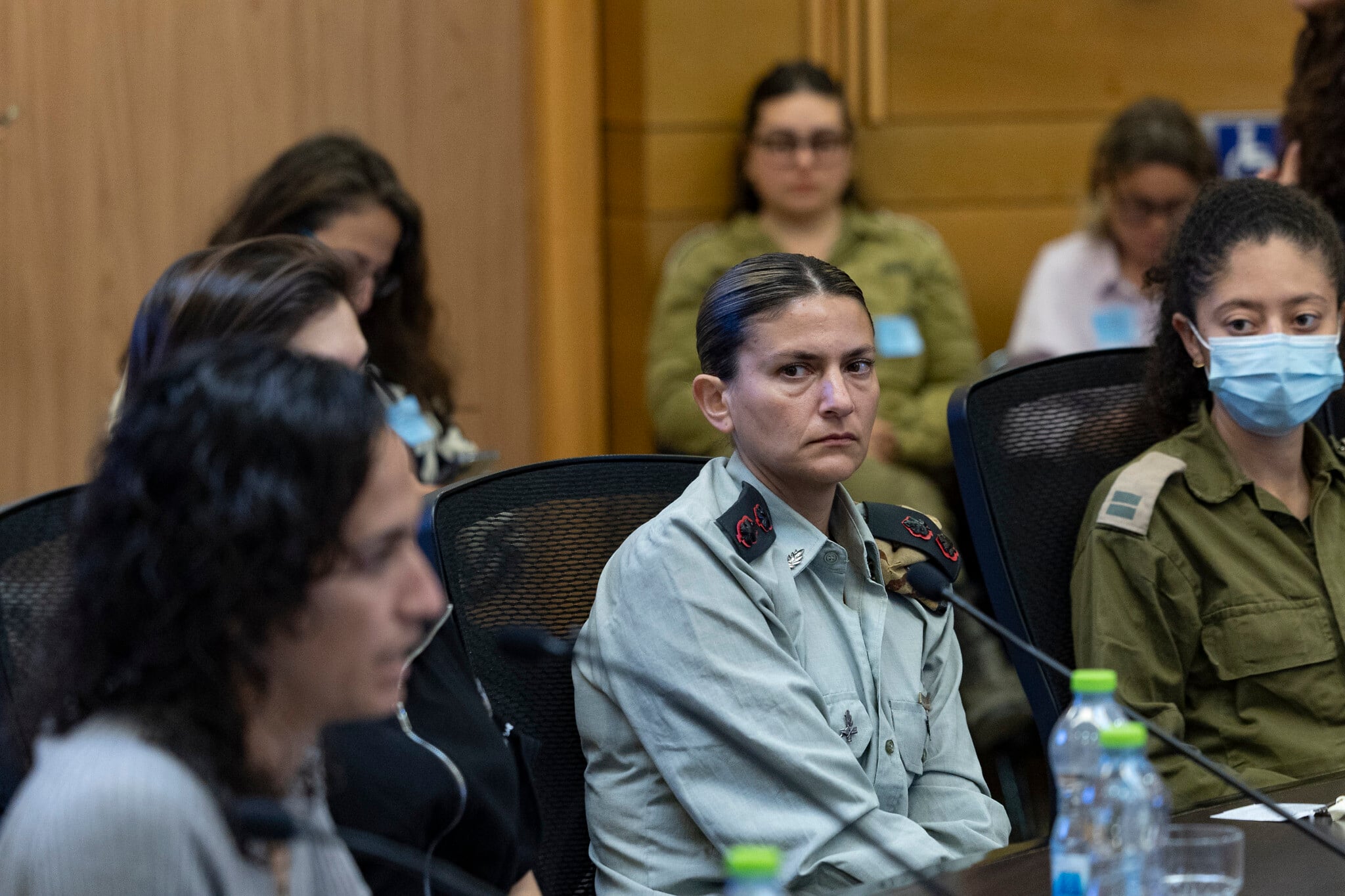
Lt. Col. Or Ben Yehuda (center) attends a conference in the Knesset, on February 16, 2026. (Oren Ben Hakoon/ Flash90)
Elsewhere along the border, Caracal’s all-female tank crew won plaudits as what may have been the first such unit worldwide to engage in active combat.
Many more stories are less well-known:
At the Zikim base, female officers and staff commanders were among those who partook in the fight, saving 90 recruits. Three were killed.
At the Urim base, female soldiers and officers from the Home Front Command and the Combat Intelligence Collection array also engaged terrorists. Six were killed while attempting to fight them off, including the operations room officer.
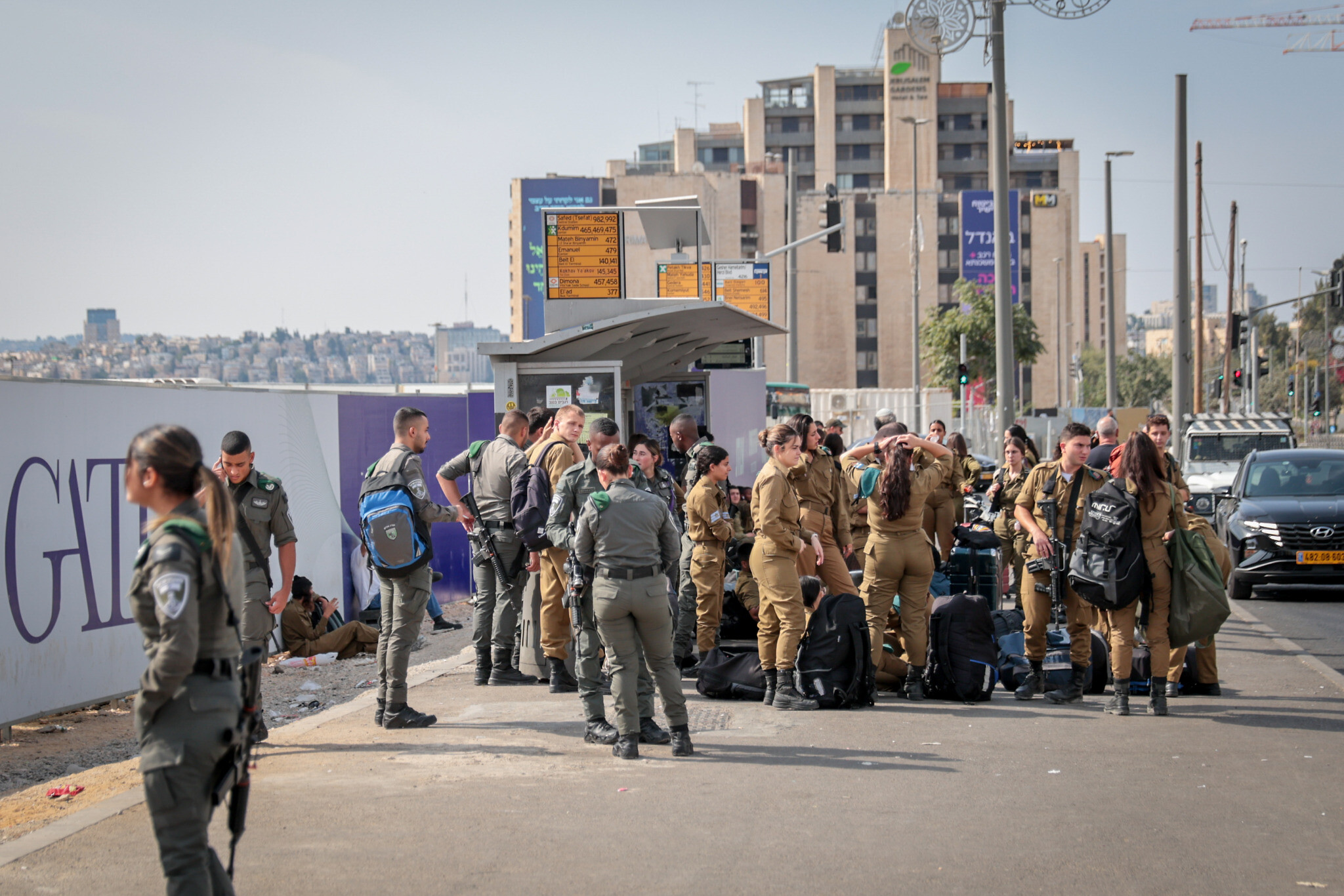
Israeli soldiers wait for a bus at the entrance to Jerusalem, while heavy fighting takes place in the Gaza Strip, October 8, 2023. (Noam Revkin Fenton/Flash90/File)
A female officer, the commander of an Iron Dome battery, helped shoot down hundreds of rockets that morning and was killed alongside two of her soldiers while trying to retrieve more interceptors.
An officer in an elite Artillery Corps drone unit protected unarmed female soldiers in a bomb shelter at the Nahal Oz base, shooting at a terrorist and saving those inside.
And though they have gotten little attention, hundreds of women from various units also filled combat roles inside of Gaza during the ensuing war.
In the tank
Despite this reality, conservative opinion leaders view Ben Yehuda specifically as a symbol of everything they believe is “incorrect” in the modern IDF.
Recently, a number of features against Ben Yehuda were published in media outlets identified with the right-wing, including Channel 14 — a network staunchly aligned with Prime Minister Benjamin Netanyahu — and “Olam Katan,” a religious pamphlet distributed at synagogues on Shabbat. Both are owned by Yitzhak Mirilashvili.
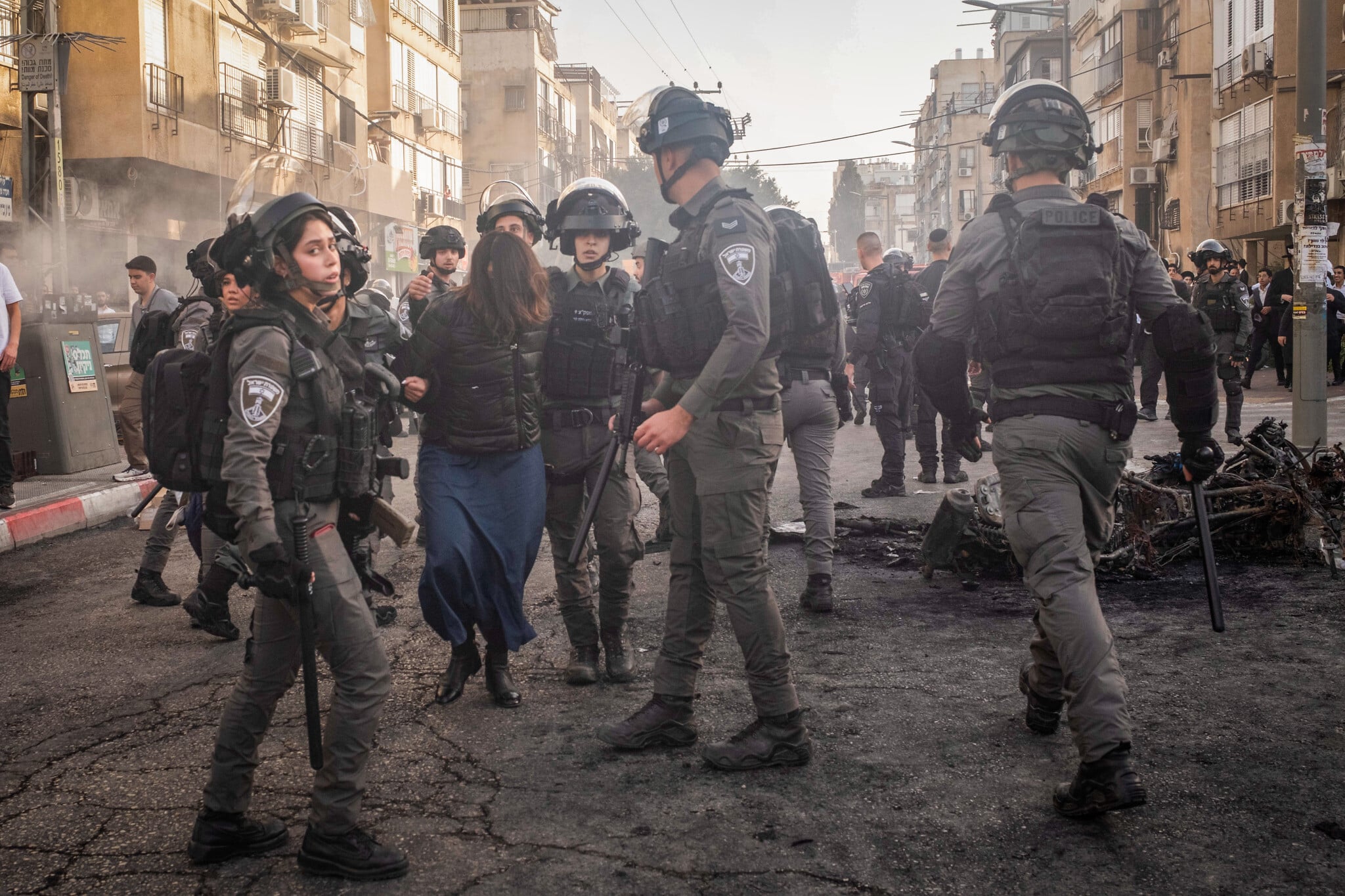
Police in Bnei Brak following an assault on two female soldiers, February 15, 2026. (Oren Ziv/Flash90)
Channel 14 aired a 40-minute “special investigation,” in which Naama Zarviv, chairwoman of Shovrot Shivyon, a female-driven organization that advocates against gender equality, claimed that Ben Yehuda was promoted solely because she is a woman. Zarviv claimed that male company commanders who served under her reported to the organization that the officer “does not meet the operational standard.”
The claim is baseless. When Ben Yehuda was leading the Caracal battalion, only female company commanders served under her, not men. As for her supposed lack of qualification, Ben Yehuda was decorated with a citation from the chief of the Southern Command back in 2014 for her performance under fire on the Egyptian border.
Another figure starring in these publications is Aviad Gadot, a Haredi Zionist rabbi who leads far-right religious nationalist organizations that are working to remove women from combat service and from the IDF entirely. Gadot claims that joint service in tanks pushes religious men away from military service.
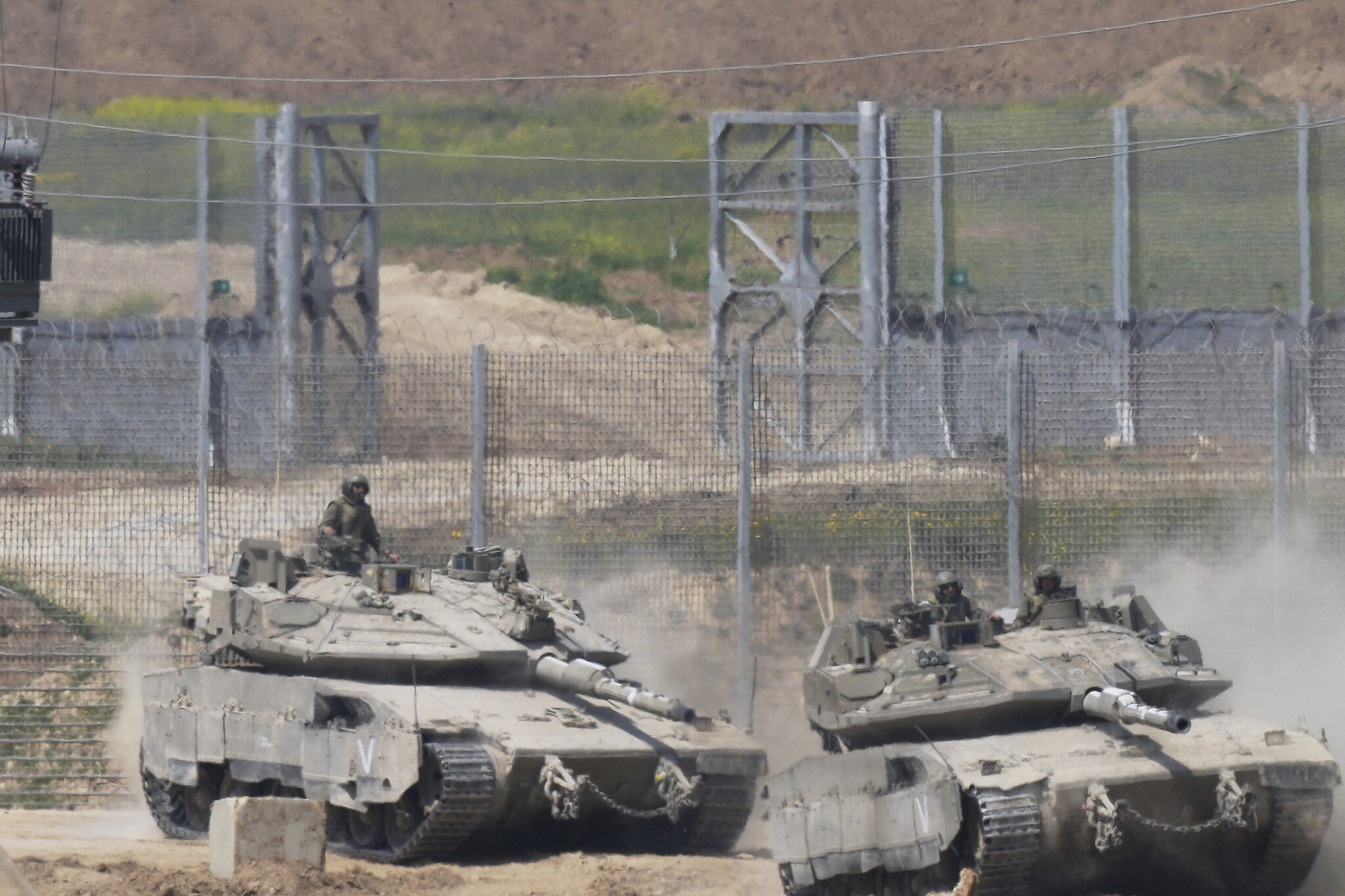
Israeli tanks maneuver on the border with the northern Gaza Strip as seen from southern Israel, March 18, 2025. (AP/ Ohad Zwigenberg)
Reality tells a different story. The IDF does not operate mixed-gender tanks. Moreover, there is only one all-female tank company in the Border Defense Corps’ Caracal Battalion; it is not in the Armored Corps.
On October 7, 2023, Col. Shemer Raviv, the regional brigade commander and originally a paratrooper, joined the tank commanded by company commander Karni Gez, and was assisted by the female fighters inside. In an interview this reporter conducted with Raviv for a book on women in warfare, he recounted that the female soldiers saved his life while he tried to fight a large group of terrorists south of Route 232.
The false attacks forced IDF Spokesperson Brig. Gen. Effie Defrin to publish an unusual tweet featuring a photo of himself and his daughter, a recently released combat soldier, in which he rebuffed the claims against Ben Yehuda.
הבת שלי, אלה, שירתה כלוחמת בחיל הים. עוד לפני גיוסה לא הייתה לה התלבטות, היא ביקשה שירות קרבי ומשמעותי, ואני ליוויתי את הבחירה הזו בגאווה גדולה. גאווה על הדרך, על המאמץ, על הרצון לתרום למדינה ועל העשייה המבצעית לאורך השירות כולו.
בשנת 2015 קיבלה סא״ל אור בן יהודה (אז סרן) צל״ש… pic.twitter.com/Y6s0VMi5lO
— דובר צה״ל אפי דפרין – Effie Defrin (@IDFSpokesperson) February 2, 2026
The battle over the Armored Corps comes on the heels of a claim, also in Olam Katan, that female fighters have “taken over” the Artillery Corps, where they constitute about 20% of the force, and have “ruined” it for religious men.
But unlike tanks, activity in the Artillery Corps is mostly conducted in open spaces rather than closed confines; therefore, the integration of female fighters in that force is more extensive and poses fewer religious issues.
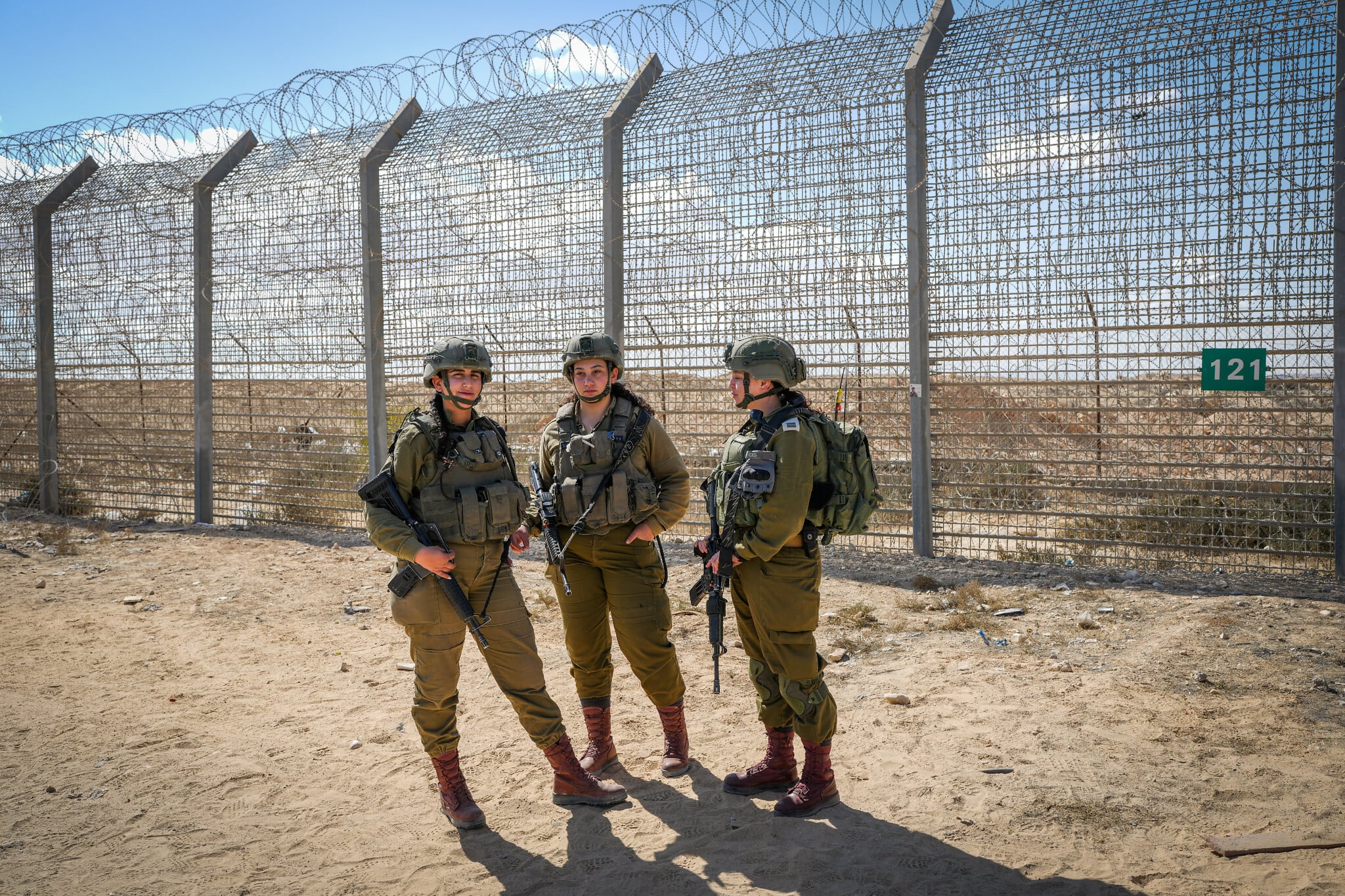
Soldiers stand at the Nitzana Border Crossing area in southern Israel, February 14, 2024. (Erik Marmor/Flash90)
Those waging war against female troops are not stopping, though. Recently, an AI-generated video was distributed purporting to show that female paramedics serving alongside male soldiers in APCs in Gaza harms “family sanctity” for religious men in fatigues.
These campaigns resurface every few years, but have yet to make much headway: The rate of young women – both secular and religious – seeking combat roles remains on the rise, and they are proving their necessity on the battlefield each and every day.