
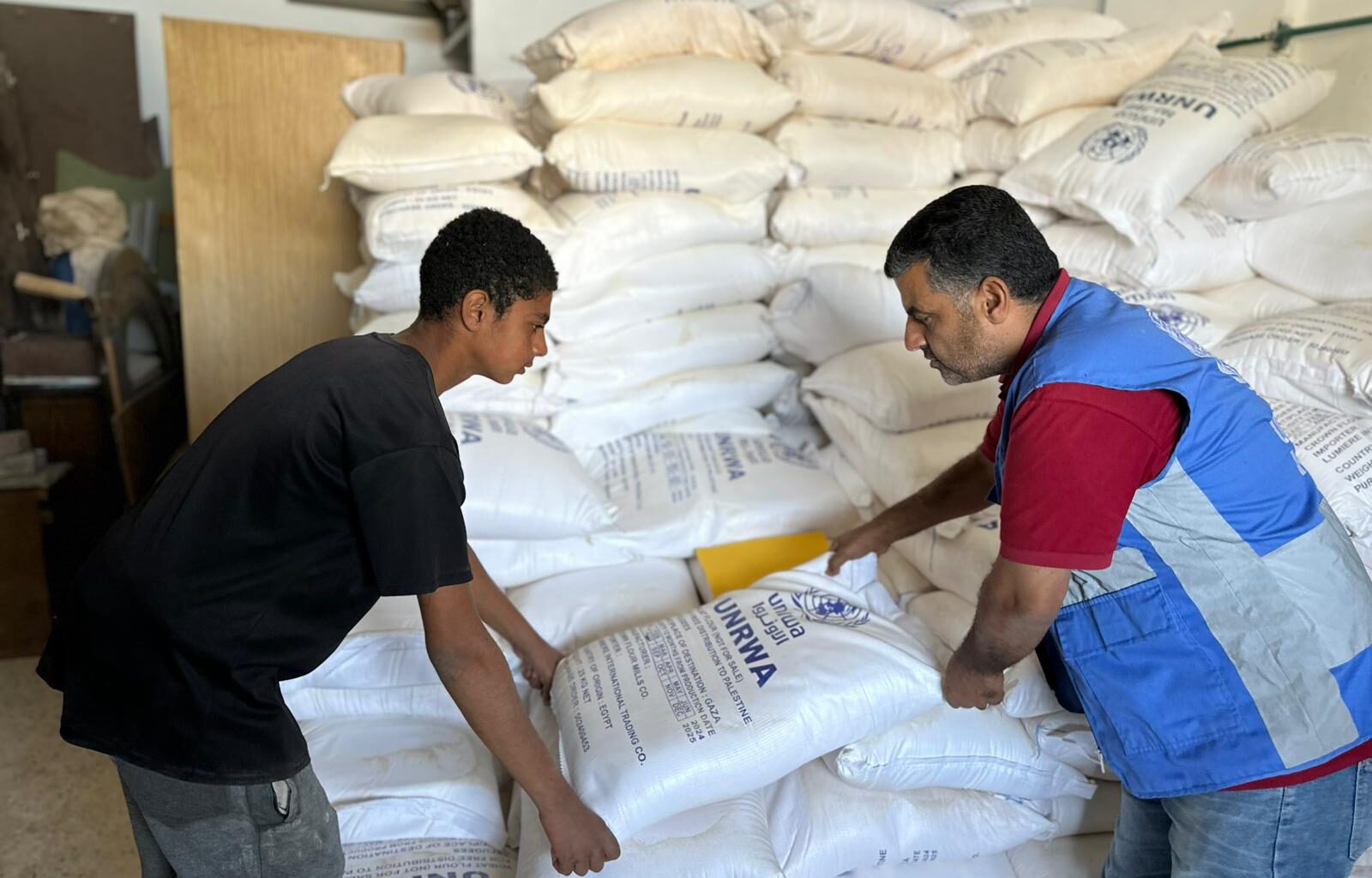
On 1 March, 37 international humanitarian organisations working in Gaza and the West Bank face licence revocation unless they comply with a demand to hand over sensitive personal data on Palestinian staff and their families to Israeli security authorities during active conflict.
Israel continues its military strikes in Gaza, killing more than 550 Palestinians in Gaza since the ceasefire was announced on 10 October last year, according to UN agencies and Palestinian authorities.
The organisations affected include Médecins Sans Frontières, the Norwegian Refugee Council, Save the Children and others that collectively provide a significant part of Gaza’s food assistance and support the majority of its remaining medical facilities.
Their expulsion would not merely disrupt services.
It would fundamentally alter the character of humanitarian action that is supposed to be guided by the UN principles of humanity, impartiality, neutrality and independence.
Data to a belligerent party
According to a 2 January statement signed by 53 international humanitarian organisations, under European data protection law, transferring detailed personal information about staff and their families to a belligerent party raises profound legal and ethical concerns.
Israel is already accused before international courts of having violated the universally accepted principles of the conduct of war under the Geneva Conventions. UN agencies and Palestinian authorities report that more than 500 humanitarian aid workers have been killed in Gaza since October 2023.
Médecins Sans Frontières says that 14 of its own staff have been killed.
Healthcare Workers Watch reports that 95 medical personnel remain detained by Israeli forces, many arrested while working in hospitals or ambulances.
Against this background compelled disclosure of staff data is not a neutral regulatory measure. It is coercion through administrative means, carrying significant risks for the personnel in question.
Organisations now face an impossible choice: violate legal obligations under applicable domestic law and duty of care toward staff, or cease operations in a territory experiencing catastrophic civilian harm and desperate need for humanitarian assistance.
Humanitarian space not only collapses through brutal military action. It also erodes through paperwork.
Legal red lines
Registration requirements that cannot safely be met. Data demands that cross legal red lines. Licencing regimes that transform independent actors into controlled subcontractors.
If independent organisations are pushed out, something more than aid delivery disappears. So does an independent witness. These organisations document conditions, brief governments, inform parliaments and provide credible reporting to the media.
Israel has barred independent international media access to Gaza for nearly two and a half years. In this context, the presence of international NGOs increases the political cost of international humanitarian law violations. The removal of international NGOs strips away visibility and protective scrutiny at a moment when both are urgently needed.
This development also creates a precedent with global implications.
Western governments routinely — and rightly — condemn administrative strangulation of humanitarian actors in Myanmar, Sudan, Syria and elsewhere. They insist humanitarian access must not be conditioned on political submission.
If they acquiesce here, they will struggle to maintain credibility elsewhere. What is normalized in Gaza will not remain confined to Gaza.
Some argue security concerns justify robust oversight. Security concerns are legitimate. But oversight must be proportionate and consistent with international law.
Demanding family-level biodata from aid workers in an active war zone goes far beyond reasonable vetting. It blurs the line between security screening and political control.
Israel’s intelligence services already maintain extensive knowledge of who works for these organisations. The new registration requirements appear designed primarily to demonstrate control – a tactic more commonly associated with scrupulous authoritarian regimes than democratic states.
The broader legal framework matters.
As an occupying power, Israel may control borders and visas for international personnel.
It does not have unlimited authority to regulate — and certainly not to eliminate — humanitarian operations within occupied territory.
Under the Geneva Conventions, humanitarian relief must be allowed and facilitated. Administrative measures that effectively expel large segments of the humanitarian system violate both the letter and spirit of international humanitarian law.
EU and Western leverage
Western governments still have leverage. They are major donors. Many OECD countries, including numerous EU member states as well as the UK, Norway, Canada and Australia, recognise Palestinian statehood.
The European Union has both legal standing and moral authority: Article 2 of its Association Agreement with Israel designates respect for human rights as “an essential element” of the treaty.
The EU could invoke this clause to suspend economic cooperation, at least partially, until Israel reverses course.
Yet legal authority without enforcement capability changes little on the ground. Israel has grown accustomed to European joint statements with no effect.
Given the appalling absence of robust collective European action, the hard truth is that only the United States commands sufficient leverage to compel the Netanyahu government to reverse this decision.
Yet Donald Trump’s track record on respecting humanitarian principles is nothing but shameful. It was his administration that established, together with Israel, the now defunct Gaza Humanitarian Foundation — a completely discredited operation where more than 1,000 Gazans were killed when desperately trying to access the few available and heavily militarised food distribution points.
But make no mistake. Preventing the administrative expulsion of humanitarian organisations serves the interests of all seeking stability and peace in Gaza and beyond.
The collapse of independent aid operations undermines any viable peace framework, further destabilises the region, and damages allied credibility globally.
United Nations Security Council Resolution 2803 adopted Trump’s Gaza plan, the second phase of which is about to start, according to the US president.
How can the bodies established under this plan, including the recently-announced ‘Board of Peace’, begin their work while the independent humanitarian presence in Gaza and the West Bank is being systematically dismantled?
Those who care about the diplomatic credibility of the West should make this calculation clear to the political leaders, notably in Washington and European capitals.
This debacle can still be prevented, but only robust pressure on Israel can prevent it, and the window closes on 1 March. If the Western governments remain silent, they will own the consequence. And the consequence will not be abstract.
When 37 internationally-respected organisations are expelled because they refused to hand over staff family data in a war zone, that fact will be documented. It will be memorialised. It will be cited in parliamentary inquiries, shareholder resolutions and eventual legal proceedings. It will become a fixed data point in every future assessment of who defended humanitarian space and who acquiesced to its dismantling.
Political leaders who remain silent are not neutral. They have chosen a side — not with those providing relief, but with those obstructing it.
This moment is not only about Gaza.
It is about whether humanitarian action remains an independent pillar of international responsibility or becomes a discretionary instrument of political convenience and unchecked power.