
Art fair season is in full swing. Events in the next few weeks include Frieze LA (February 26-March 1), Arco Madrid (March 4-8) and Tefaf Maastricht (March 14-19), following the past month’s coinciding Art Basel Qatar (February 5-7), 1-54 Marrakech (February 5-8) and Delhi’s India Art Fair (February 6-9).
A private jet presumably helps ease some of the logistics but, for most VIPs, such dates are mostly meaningless. In-crowd events, including museum tours and art-fair openings, are organised before the official public dates, while VIPs can also ignore any ticket prices as their entry to all is free.
Preloaded programming is the norm, with drinks and nibbles to keep the build-up mood high. In Los Angeles next week, Frieze’s VIP events begin on the Monday before Thursday’s official fair opening, with a private view (and cocktail) from the local artist Zenobia Lee of her exhibition at Sea View Gallery — ahead of a showing of her sculptures, made from materials that reflect Caribbean histories, which will be in the more business-like confines of the actual art fair.
 ‘Banana leaf as a case for modernity’ (2025) by Zenobia Lee, which will be in the Focus section at Frieze LA 2026 © Courtesy of the artist and Sea View Gallery
  Detail from ‘Poeisis’ (2025), a sculpture by Zenobia Lee, also on display at Frieze’s Focus section © Courtesy of the artist and Sea View Gallery
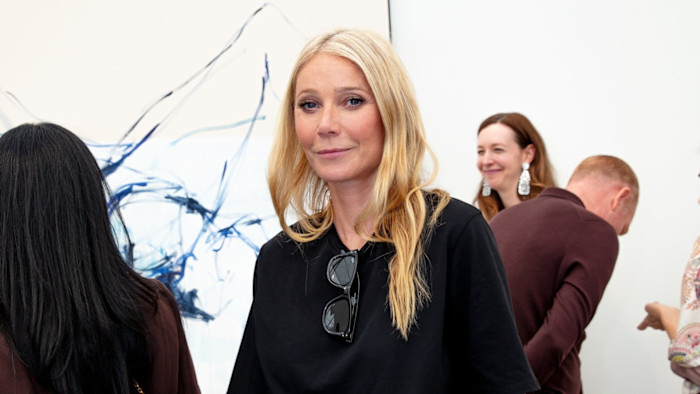
Frieze says that its VIP ticket holders account for more than 40 per cent of expected visitors to the Santa Monica fair, which last year recorded 30,000 total attendees, despite the city’s recent and devastating wildfires. These included the likes of the actors Adrien Brody and Gwyneth Paltrow as well as Hollywood film and TV veterans Oliver Stone and James L Brooks. Art-collecting royalty was also out in force, including LA’s Rosetta and Balthazar Getty, Miami’s Jason and Michelle Rubell and Chicago’s Gael Neeson.
Fair organisers emphasise that an art world VIP isn’t necessarily rich or famous. “VIP can mean something very broad. It includes museums, collectors, art advisers, curators, foundations — everybody who’s engaged in the art world in a meaningful way, who plays a role in the lives of the artists, the galleries and the museums,” says Brooke Kanter, Frieze head of VIP, Americas. Rival fair group Art Basel seemed to be thinking along similar lines when it decided last year to stop using the term “VIP”, opting instead for “collector and institutional relations” to reflect the broader base.
 Adrien Brody at Frieze Los Angeles in February 2025 © Casey Kelbaugh/CKA
 Oliver Stone at last year’s Frieze © Nina Fernandez/BFA.com
Whatever they are known as, keeping them happy is something that art fairs take very seriously in an increasingly competitive industry. Persuading a gallery to exhibit at their shows, for a significant percentage of annual income and in straitened times, relies on bringing the right visitors, and buyers, to their booths. Frieze’s VIP team numbers 37 (including consultants) and, while previously these were centralised and headed by one person (Kanter), they are now separated to serve the three regions — the Americas, Asia and Europe, the Middle East and Africa — to service Frieze’s current roster of eight fairs.
People wake up early in LA. They go for a hike, they get their Erewhon smoothie and then they come to the fair
Christine Messineo, Frieze
The move acknowledges too the regional differences among VIPs, including within the US. In Los Angeles, for example, “people know that what we’ve laid out takes into consideration traffic patterns and the timings of getting from one location to the next”, says Christine Messineo, Frieze director of Americas. For instance, Tuesday’s VIP activities are all in downtown LA — including visits to the Museum of Contemporary Art and The Broad — while Wednesday’s circuit is more central. In New York, Messineo notes, “there’s more independence, they don’t need the itinerary as much”.
 ‘The Controller’ (2025) by Clare Woods, being shown by Night Gallery at Frieze LA © Courtesy of the artist and Night Gallery, Los Angeles. Photography by Nik Massey.
 Untitled (2024) by Bosco Sodi, which will be at Olney Gleason’s booth at Frieze this year © Courtesy of Olney Gleason
Angelenos trend earlier too. So, while Frieze’s fairs in London, New York and Seoul have their first VIP entry at 11am, in Los Angeles this is at 10am. “People wake up early in LA. They go for a hike, they get their Erewhon smoothie [a pricey viral hit] and then they come to the fair,” Messineo says.
Frieze LA exhibitor David Maupin, the co-owner of Lehmann Maupin gallery who grew up in Los Angeles, finds differing attitudes when it comes to the art that VIPs want to see. “In LA, people are looking for new things, they particularly like discovery,” he says. “It is a bit of a misconception that you see more stars and movie people [at a fair’s opening] in LA, but you do get more agents, producers, people who are not recognisable but are part of Hollywood.”
Their average spend tends to be lower than in the art market centre of New York, he says. The Lehmann Maupin booth at Frieze LA is anchored by works by the Venezuela-born Loriel Beltrán, who is “a younger artist, less expensive and a good entry point,” Maupin says. Beltrán’s abstract works, which separate poured paint into panel-like layers creating a chromatic optical effect, are priced between $20,000 and $100,000 this week — though the gallery will also have pricier works from its programme (up to $300,000).
 ‘MLV (Fragments)’ (2024-25) by Loriel Beltrán, on display at the Lehmann Maupin booth © Loriel Beltrán. Courtesy the artist and Lehmann Maupin, New York, Seoul and London and Central Fine, Miami Beach
At the heart of all activity is the VIP opening day of a fair, for which a balance needs to be struck between being buzzy and a pleasant experience. At Frieze London in 2022, some of its more discerning (and still social-distancing) VIPs found it too much of a crush, while also not enjoying having to queue to get in. Last October, Art Basel’s Paris edition added an even more selective pre-VIP-day slot, called Avant Première, for the weightiest of spenders to have more space and time with gallery owners. This had the desired effect as multi-million-dollar sales were immediately reported back.
Staggered openings go some way towards avoiding a crush and reflect a hierarchy of VIPs (the earlier the better). Art fair organisers are reluctant to define who gets into which slots, though eyewitness evidence at Frieze London suggests that its first visitors are those with the most influence and purchase power, such as museum directors, their patrons and curators as well as private collectors. To the last slot of the day (6pm) come more high-heeled fashionistas, primed to post an Instagram shot before dinner.
Fair organisers are keen for would-be VIPs to consider getting on board outside their annual events. “We find different moments for different audiences,” Messineo says. Frieze runs a membership programme called Frieze Connect which offers talks, gallery tours and studio visits as well as “premier access” to fairs (individual membership starts at £990 per year). Behind it all, Kater says, is an acknowledgment that, while the art fair is a convening point, “we don’t think that the only thing people are doing in any city is coming to Frieze”. Whenever they do, they will find that the art is the same all week — but the people on view will have changed.
February 26-March 1, frieze.com
Find out about our latest stories first — follow FT Weekend on Instagram, Bluesky and X, and sign up to receive the FT Weekend newsletter every Saturday morning