
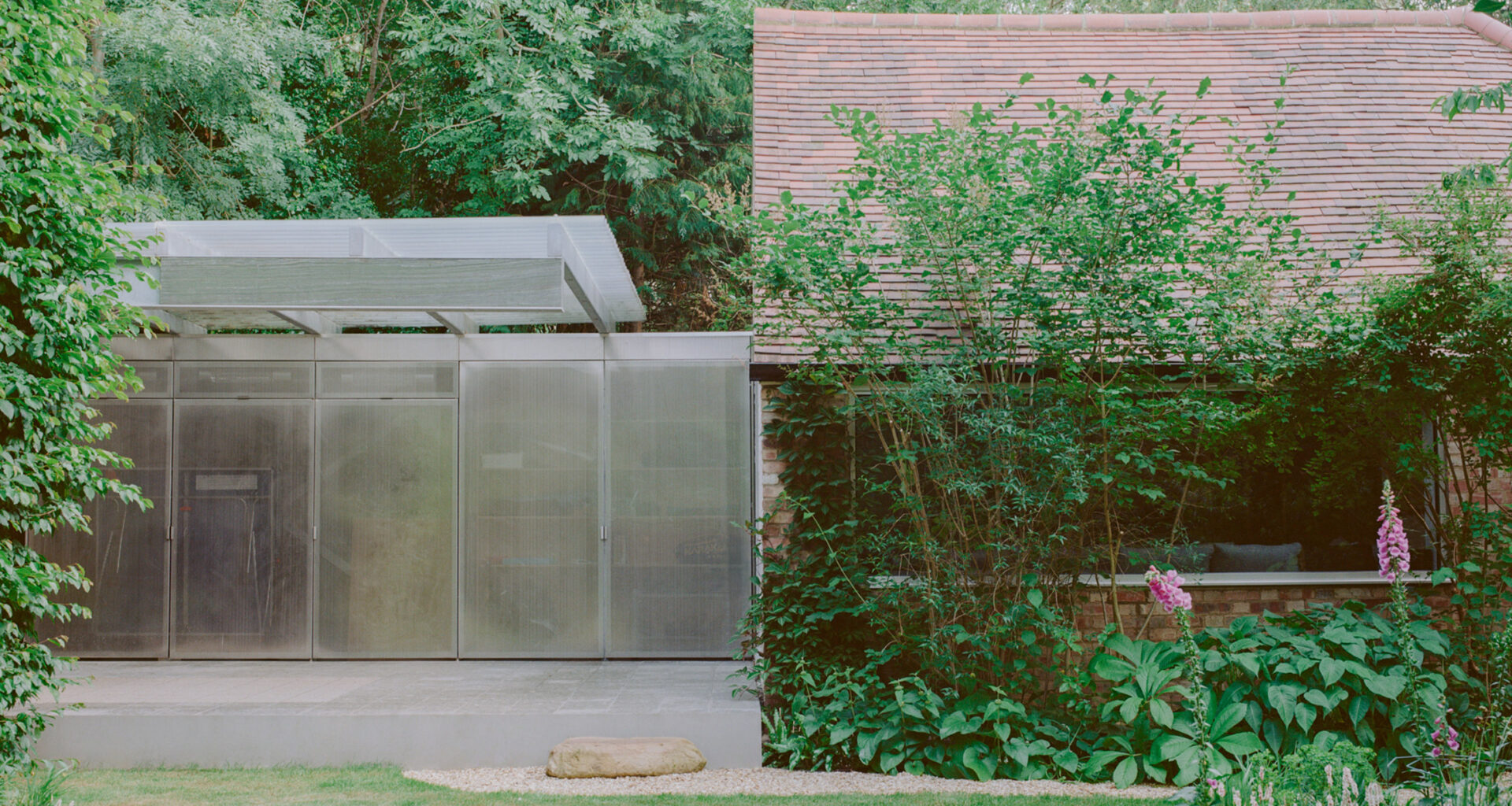
A built-in “cabinet of curiosities” housing a collection of records, books and artworks forms the spine of this outhouse extension in London by local studio Neiheiser Argyros.
Named Exeter Road Pavilion, the project involved converting the Victorian outbuilding in the garden of a north London residence into an annexe for the client, an art collector and DJ, where they could house their collection and host gatherings.
Neiheiser Argyros said it chose to approach these requirements as “a single architectural problem rather than two separate tasks”.
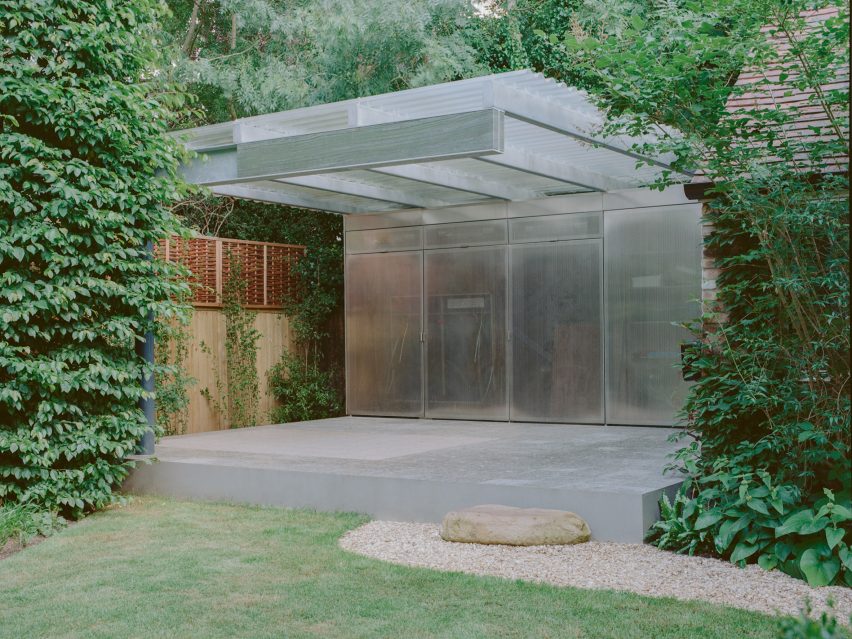 Neiheiser Argyros has completed a metal extension to a home in London
The studio created a 20-metre-long built-in storage unit, described as a “contemporary cabinet of curiosities”.
Beginning as wardrobes opposite the sleeping area, this cabinet extends to become the housing for a kitchenette and a storage space for records, artworks and books within the living area.
Once in the adjacent patio, the cabinet houses weights, a ping-pong table and garden games while also acting as a structural element, supporting a steel-framed canopy topped with sheets of corrugated polycarbonate.
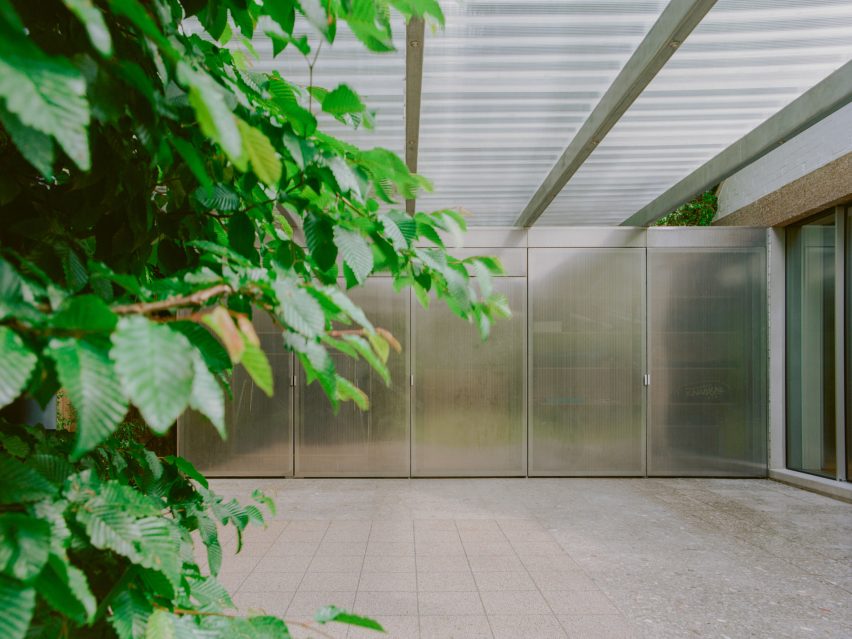 It features a 20-metre-long built-in “cabinet of curiosities”
“We started the project imagining the design as a kind of cabinet of curiosities, or wunderkammer, where a seemingly random collection of unrelated objects is collected and stored, allowing the visitor to curate their own connections and categories,” the studio’s co-founder Ryan Neiheiser told Dezeen.
“We wanted the cabinet to be both opaque, to create a quiet and unifying gesture in the space, and transparent – subtly revealing the curious objects contained within.”
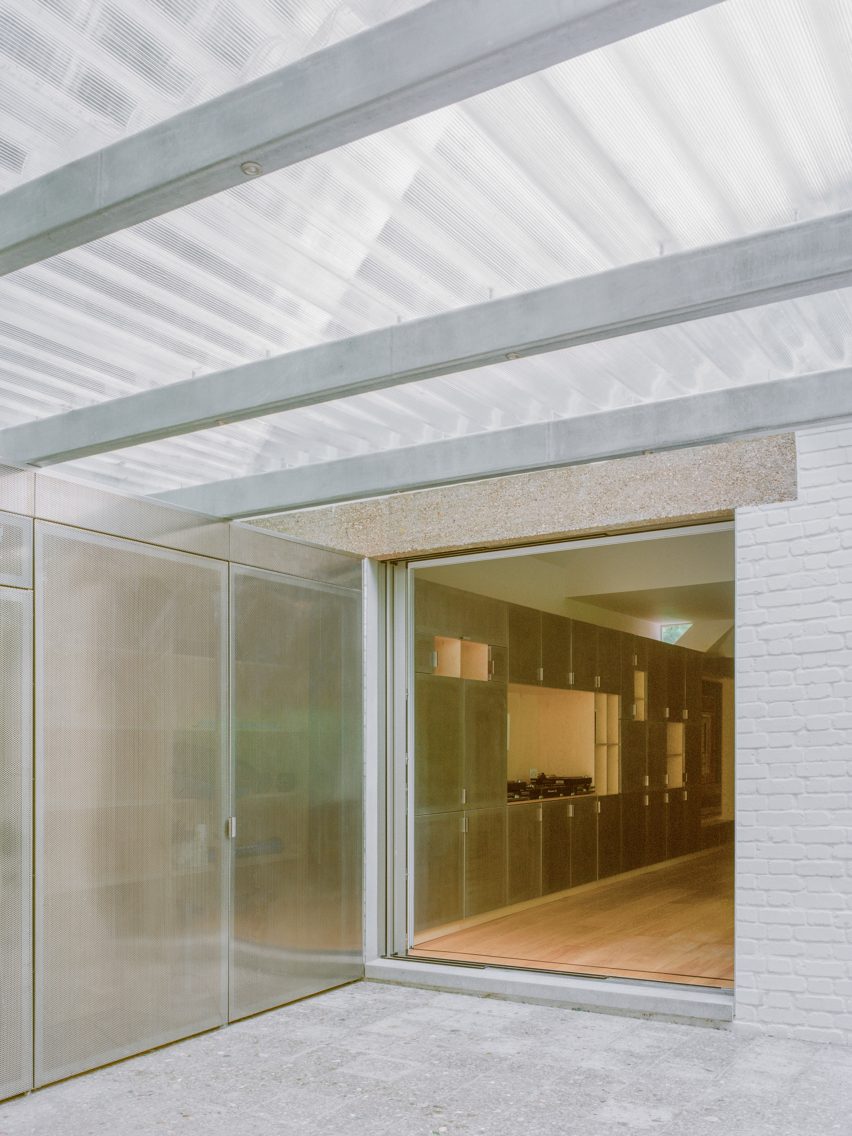 A steel-framed canopy with sheets of polycarbonate shelters the patio
A long corridor alongside the cabinet connects the interior Exeter Road Pavilion, creating an open connection between the living room, study and sleeping area, which sits next to an enclosed bathroom.
The front of the cabinet has been finished in perforated steel.
Benjamin Wilkes updates London home with vinyl-filled music room
This has also been used to create large doors in the garden area and smaller compartments in the living space, alongside a number of wood-lined niches for open storage and display.
For the garden canopy, one of the corner columns was removed and replaced by a block of green marble and tension rods that counterbalance the structure, representing what Neiheiser terms the “codependence” between the project’s uses.
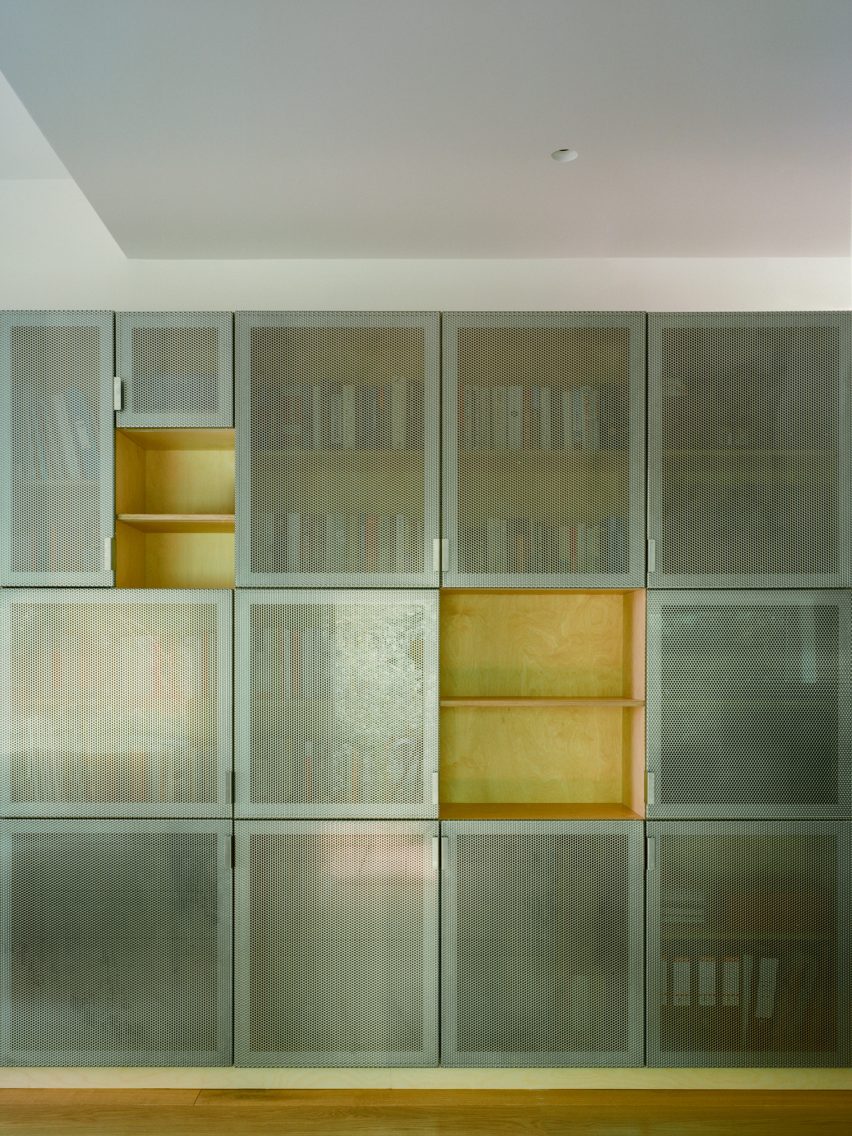 The front of the cabinet is finished in perforated steel
“There’s a certain elegance and efficiency in the storage directly supporting the canopy, but we also wanted to introduce something a bit unexpected; a productive tension between them, holding them in relation through a sense of precarious balance,” Neiheiser said.
“In this, we were inspired by the work of artists Fischli & Weiss, particularly their photographic series depicting carefully poised everyday objects, caught in the fragile instant before collapse.”
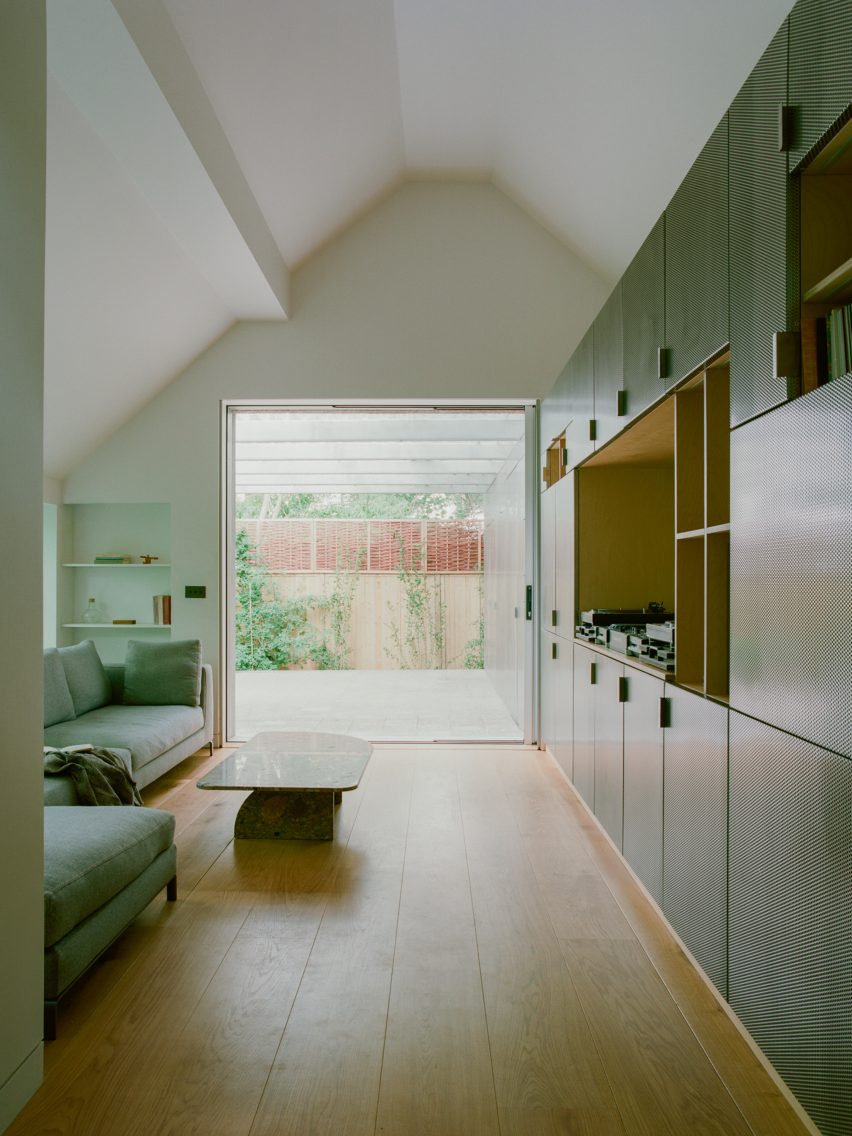 There are wood-lined shelves
“There is a provisional codependence between the different elements of the project – existing outbuilding, storage cabinet, canopy, structural column, and plinth,” added Neiheiser.
Elsewhere in London, Neiheiser Argyros previously extended a Victorian terrace with a stained timber extension topped by a garden terrace.
The studio also used perforated metal to disguise London Underground vents at the faceted North Greenwich Sculptural Screen.
The photography is by Lorenzo Zandri.