
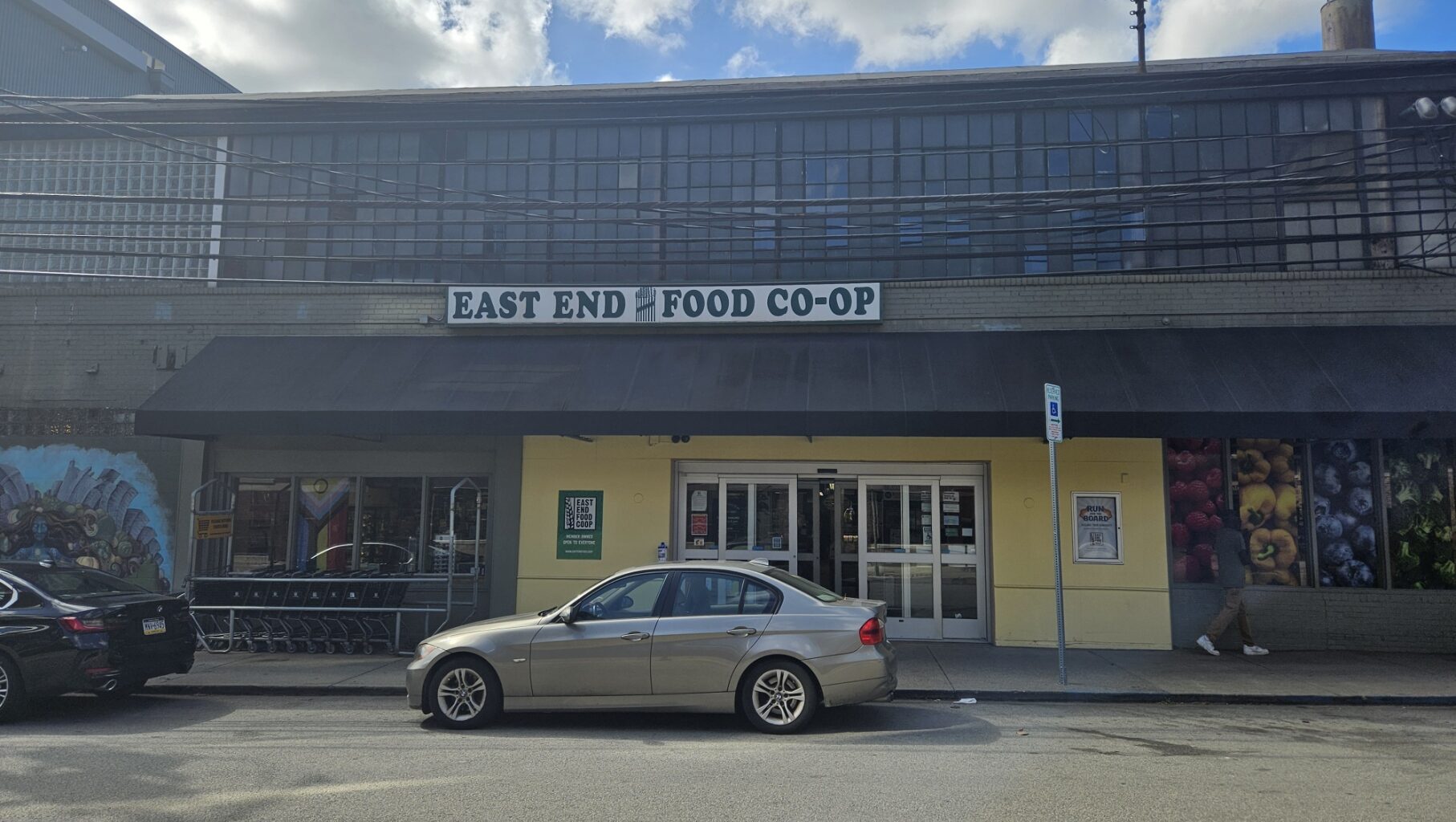
The East End Food Co-op’s board of directors has approved a motion creating an advisory referendum asking its members if “Israeli sourced products” should be removed from the grocery store.
The 5-3 vote in favor of the non-binding referendum was preceded by a vote on a binding referendum asking members the same question. The motion for a binding referendum failed in a 6-2 vote. Both votes were taken at a Feb. 16 board meeting.
The board’s president, Tom Pandaleon, voted in favor of both referendums and said the board will work with a “sense of urgency” to “structure the nature of the advisory referendum.”
EEFC members, he said, “should look forward to hearing from us fairly soon,” adding that some follow-up should be expected by the next board meeting.
The Feb. 16 board meeting followed a Feb. 9 special virtual meeting of EEOC members during which five people spoke in favor of the binding resolution and five spoke against it. That meeting was not open to the public.
During the Feb. 9 meeting, Hope Anne Nathan, a member of the Jewish community, spoke against the referendum. Nathan has been a member of the co-op since the early 90s, is a former employee of the co-op and served on the store’s board of directors.
She said that despite the board’s attempts to create a welcoming atmosphere at the virtual meeting, those in favor of the referendum would “thumbs down” speakers they didn’t agree with and posted Palestinian flags and other pro-Palestinian emojis through the meeting’s chat function.
Nathan’s statement to the board spoke of her commitment to the co-op, her position as both a Zionist and someone opposed to the government of Israeli Prime Minister Benjamin Netanyahu, and her opposition to the referendum, calling it “vague and open to interpretation.”
Like others who spoke at both meetings, Nathan touched on the sense of solidarity and community the co-op is intended to foster, noting that a boycott targeting one group of people would chip away at that solidarity.
“Those people you drive away will be leaving because they feel Jews aren’t fully welcome here,” she said. “Is that really the image the co-op wants to project?”
Offering an alternative to the boycott, she suggested that endcaps could be created highlighting Israeli and Palestinian products the co-op carries.
Nathan told the Chronicle that if the co-op banned Israeli products, she would probably stop shopping at the store, noting that her trips there have already been reduced.
Congregation Beth Shalom Rabbi Seth Adelson also spoke at the special meeting and, like Nathan, noted the loss of community that has already taken place over the potential ban, adding that many Jewish members have already stopped shopping at the co-op due to their discomfort.
A ban on Israeli products, he said, would be “ineffective virtual signaling” and would ignore other countries involved in conflicts whose products remain on the store’s shelves.
“Let’s call this what it is: an attempt to exclude and stigmatize Jewish people,” Adelson said.
During the Feb. 16 board meeting, more than two dozen people spoke, with at least seven people speaking in favor of the resolution. Many of those interested in passing the referendum said it would allow the members’ voices to be heard. A few fell into anti-Israel tropes, claiming the Jewish state was committing genocide.
Board member Jeremey Kahn was one of several who spoke against the binding referendum. He said that while there is no doubt that a “terrible tragedy” is occurring in the Middle East, and that passions are high on both sides of the argument, “it appears we disagree on who or what is primarily responsible for the tragedy, and more importantly, we disagree about the role of a co-operative grocery store in Pittsburgh, Pennsylvania, in the broader effort to respond.”
He pointed out that the co-op is governed by a board and that “democratic governance does not equate to simple majoritarianism.”
The organization’s bylaws, he noted, do not require a vote on the referendum and requires the board to consider the wider “legal, financial and community impacts of its decisions.”
Kahn also argued that a decision in support of the referendum would further alienate members of the store, making them feel unsafe because of their identity and that, rather than create closure, the referendum would “deeply widen division.”
Pandaleon, the board’s president, spoke in favor of both proposed referendums, saying that he looked at co-ops in other cities that have had similar discussions.
“None of them have gone out of business. They are thriving,” he offered, before saying, “I am in favor of a referendum either way.”
Pandaleon began the meeting by saying he decided to “disallow a motion for no referendum,” explaining later in the meeting that while the board doesn’t follow Robert’s Rules of Order — a standard manual of parliamentary procedure guiding organizations to conduct meetings fairly and orderly — he did consult the manual and said it “counseled against having motions not to do something.”
After the vote in favor of the non-binding resolution, Kahn addressed the board, saying he offered a “constructive process” that would lead to a “boycott” policy, but that he was not allowed to make the motion by Pandaleon.
The need for a boycott policy codified in the co-op’s bylaws was endorsed by other board members. In her comments, Nathan, too, said there was a need to amend the organization’s bylaws to better legislate petitions to the board.
The issue of banning Israeli products at the East End Food Co-op has been discussed since at least July 2024, when the store’s union, UE Local 667, voted to endorse the BDS movement against Israel. It spent more than a year gathering 500 signatures required by the store’s bylaws to present a petition for a referendum to the board.
It is unclear how the union will react to the rejection of a binding referendum and what the board might do if the non-binding resolution indicates those voting would prefer to ban Israeli products from the store. PJC
David Rullo can be reached at drullo@pittsburghjewishchronicle.org.