
Star Trek is known for throwing some high-concept sci-fi at fans, but sometimes the series has had to borrow a few tricks from the soap opera genre of TV. And no staple of soap opera television is more infamous than a sudden, shocking, character death – well, almost nothing.
33 years ago, Star Trek aired an episode that had fans quaking over one of the franchise’s best characters being killed off. However, by the time the end credits rolled, some fans were rolling their eyes at what the show had done. But to many other fans, it became one of the best episodes of Star Trek they had seen.
Star Trek’s “Tapestry” Is A Classic Tale That Gets A Brilliant Sci-Fi Remake
 CBS
CBS
“Tapestry” is an episode of Star Trek: The Next Generation that first aired on February 15, 1993. The series was halfway into Season 6 (Episode 15), and was at the height of its popularity – that’s worth noting, as TNG already had episodes that were considered sci-fi classics, and topping its own heights was becoming the show’s biggest challenge.
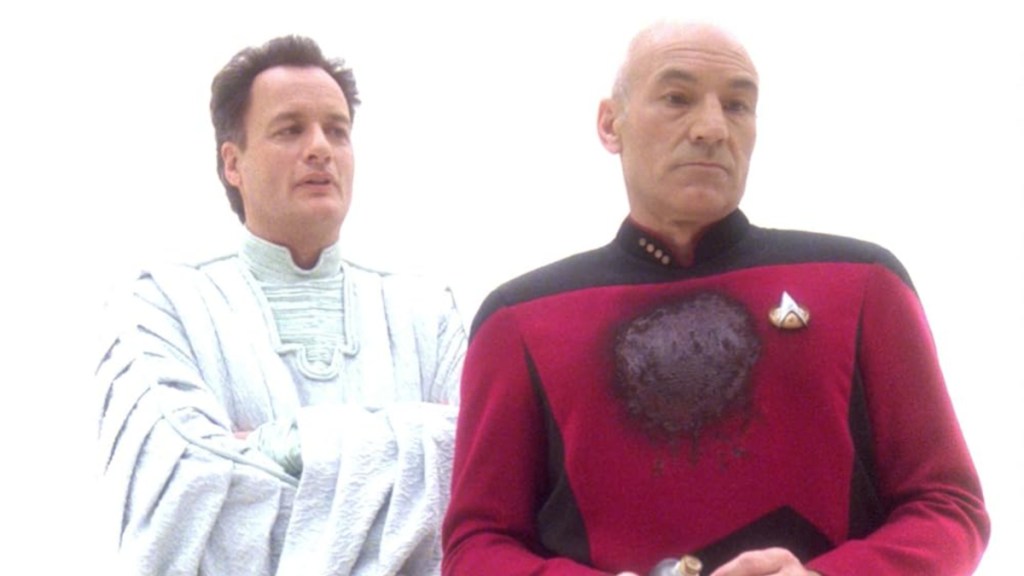
Writer Ronald D. Moore (Battlestar Galactica) came up with what is ostensibly a flip on the Christmas classic, It’s A Wonderful Life. The episode opens by shocking viewers with the “death” of Captain Jean-Luc Picard (Patrick Stewart), whose artificial heart is fatally injured by a terrorist attack while on a diplomatic mission. Picard finds himself in a sort of cosmic purgatory where he’s greeted by his persistent rival, the cosmic entity known as “Q” (John de Lancie). Q tries to convince Picard (and the audience) that Picard is dead and about to move on; Picard laments the course of events that first left him with the artificial heart, and so Q gives him the chance to change events and live out a different life.
At first, Picard jumps at the chance and changes his younger self’s brash attitude and outlook on life; however, correcting his flaws too early and side-stepping his potential life mistakes leaves Picard in a very different present-day scenario, where he is an unremarkable low-rank Starfleet officer who has lived an unremarkable life. Knowing the consequence (but embracing his life as precious and unique), Picard chooses to keep his original fate and welcomes the fatal attack with a laugh. Instead of death, Picard awakens in sick bay, wondering if Q had really played some cosmic game with him, or if he had a near-death hallucination.
Understand, at the time Star Trek: The Next Generation aired “Tapestry”, the television viewing audience wasn’t nearly as savvy about the rules and conventions of TV as we are today. The episode teases Picard’s death twice, and it definitely seems like it might be for keeps when the Captain makes the climactic choice to accept his fate. Even when the death fake-out is taken away, the episode still serves as a powerful sci-fi parabell about the nature of life, and accepting the imperfect choices (and consequences) that shape us into who we are. It did its job well enough to be regarded as more than just an episode of Star Trek: The Next Generation, but rather as a compeling sci-fi story all its own – the kind that viewers could discuss as a though-provoking “What If?” to consider about their own lives.
It’s for that reason that “Tapestry” is one of the easier standalone episodes of Star Trek: The Next Generation to recommend to sci-fi fans who are looking for an interesting way into the series and its core appeal, without being weighted down by the larger lore. Also, from a cinephile’s standpoint, sci-fi TV has rarely been better than when Patrick Stewart was trading rounds of dialogue and debate with John de Lancie, and “Tapestry” is a perennial reminder of why.
You can stream Star Trek: The Next Generation episodes on Paramount+. Discuss your favorite ones with us over on the ComicBook Forum!