
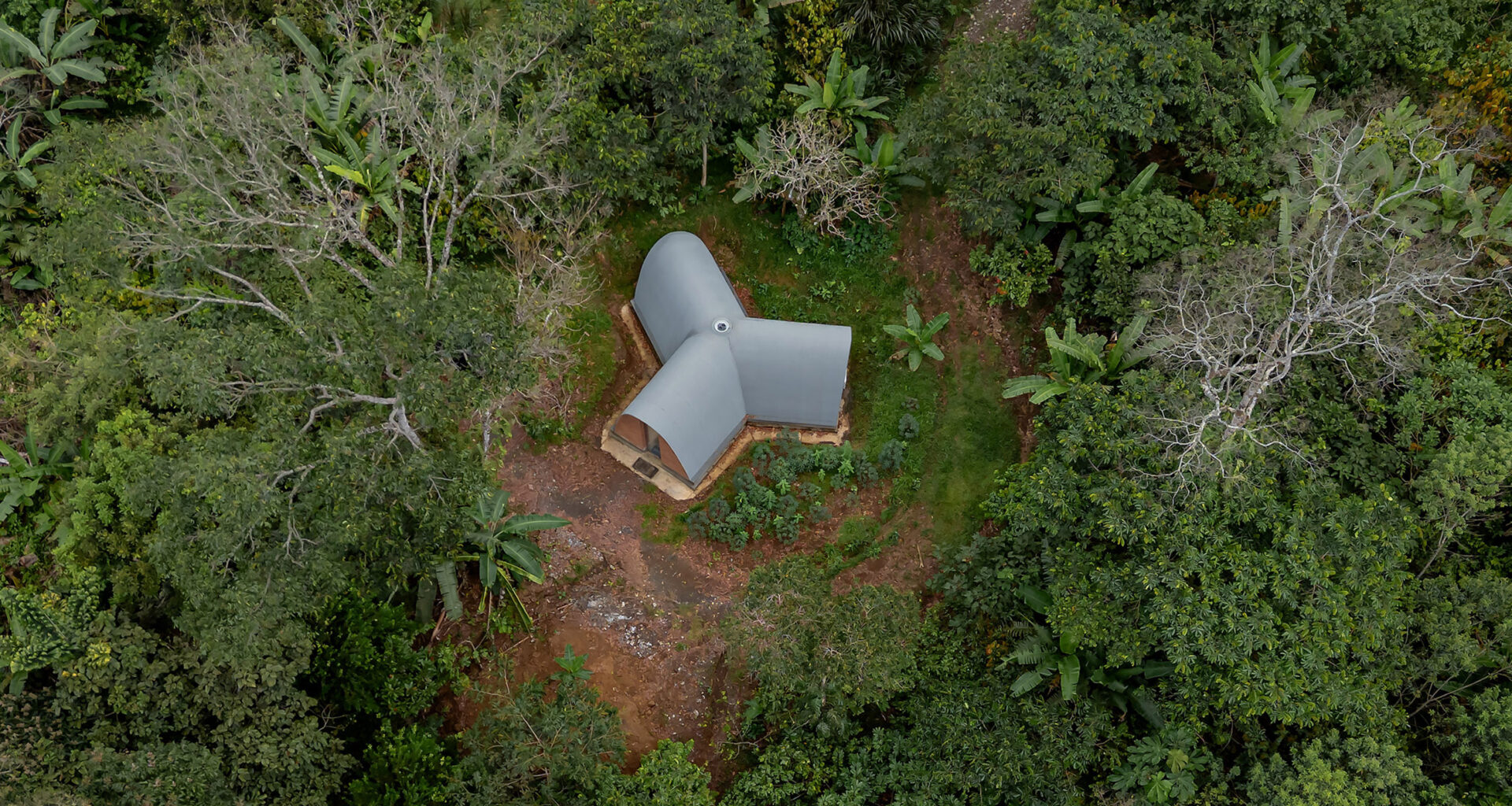
Ecuadorian studio Al Borde Arquitectos has completed a compact laboratory in the Amazon using vaulted adobe construction for local community research to “break external chemical dependency”.
The Witoca Lab was completed in February 2025 in Huaticocha, Provincia de Orellana, Ecuador. The 46-square metre (495-square foot) research facility is located in the buffer zone of the Sumaco Biosphere Reserve.
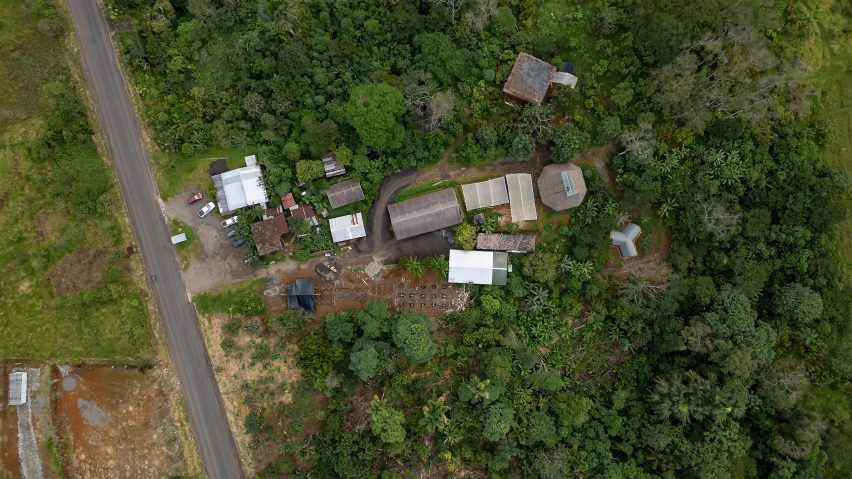 Al Borde Arquitectos has completed a three-pointed adobe lab in Ecuador
The lab produces antagonistic microorganisms that discourage pests from damaging the Amazon’s coffee and cocoa production.
Its location within the Ecuadorian Amazon allows the Witoca community to assume a strategic role in the region and protect local farming operations.
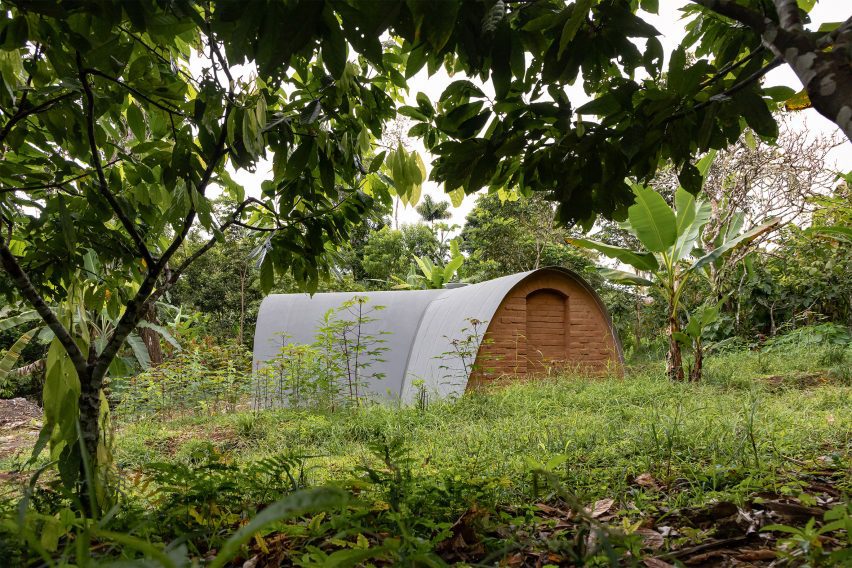 The lab develops pest repellent for the Amazon’s coffee and cocoa production
Rather than being open for ventilation like much Amazonian architecture, the laboratory is closed off with vernacular materials to protect the delicate biological research within.
Using local soil and following the natural topography, the lab minimises its environmental impact while meeting the high-tech standards of its program.
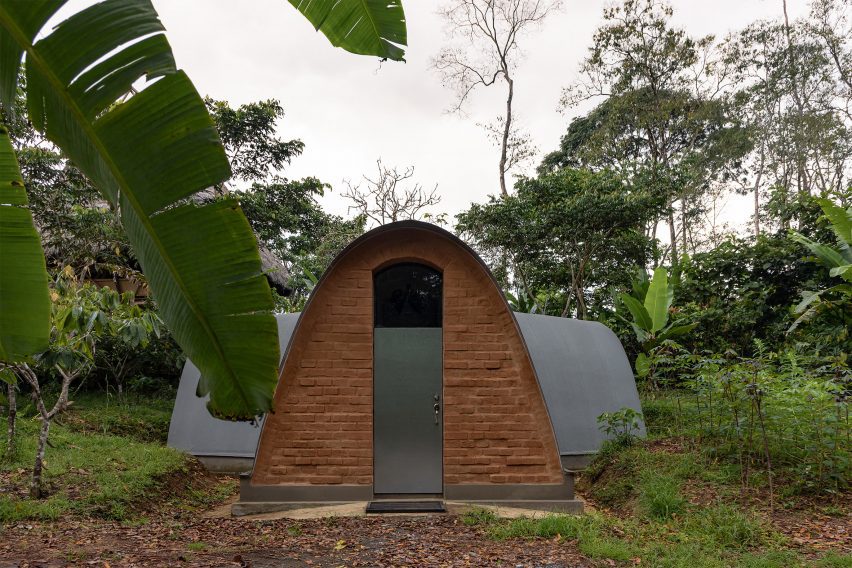 In contrast to traditional local architecture, it is completely sealed to be biosecure
“The design provides a hermetic, biosecure environment by utilizing the high thermal mass of adobe vaults as a passive engine,” Al Borde Arquitectos, which is based in Quito, Ecuador, told Dezeen.
“This system naturally stabilises interior temperatures for microorganism production, meeting strict technical requirements within the extreme Amazonian climate.”
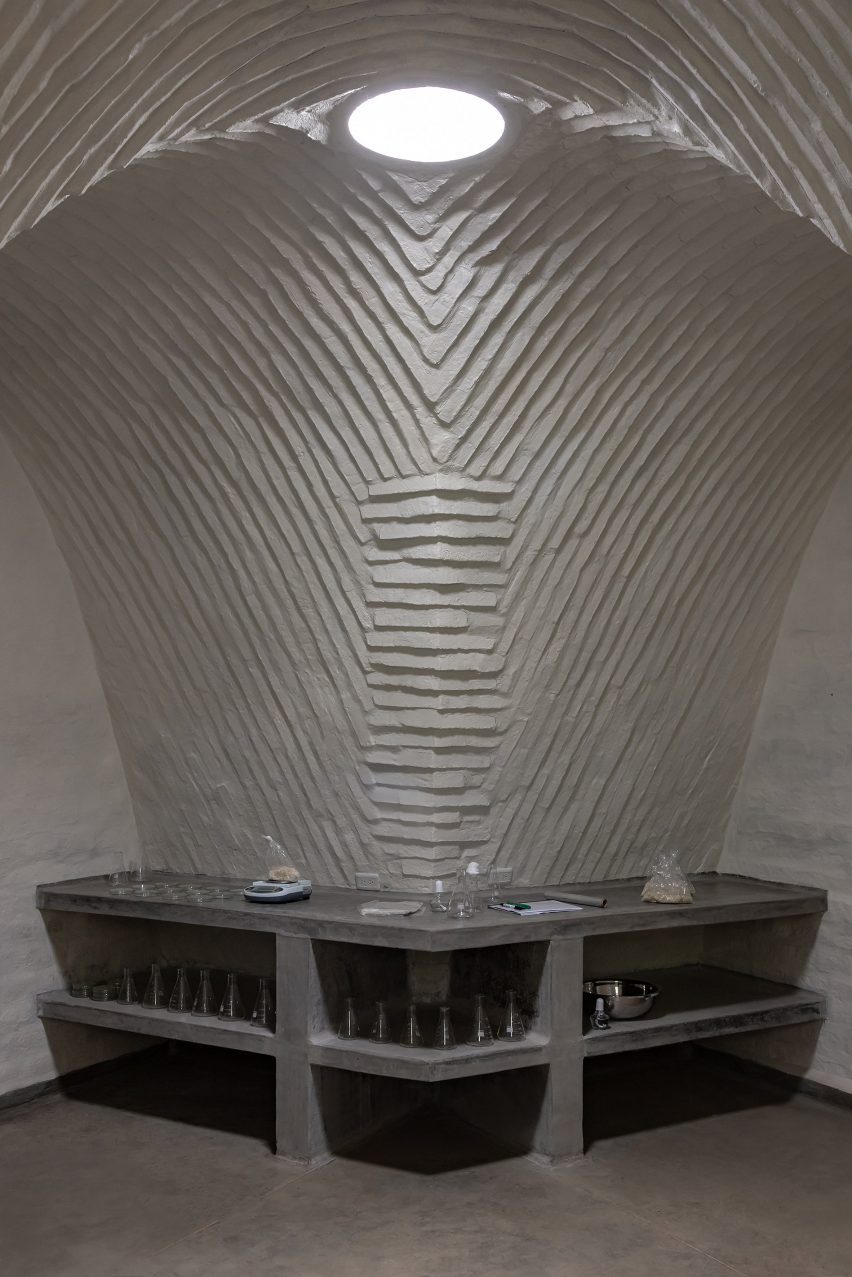 Local soil was used in its construction
The building consists of a raw-earth structure with an exterior asphalt membrane to protect against tropical rains finished with washable paint on the interior to meet laboratory hygiene standards.
Three symmetrical, parabolic arches intersect to form a Y-shaped plan. The east-facing vault serves as the main access point, while the other two are separated off for reproduction and incubation, converging in the center for the primary laboratory space.
Quito museum sets children’s play area within historic factory
“The layout is driven by sterilisation and biosecurity flows,” the studio said. “This modular arrangement ensures the strict isolation of biological processes while maintaining a domestic and rural scale.”
Structural engineer Patricio Cevallos and master builder Miguel Ramos trained local farmers on-site to construct the specialised earthen vaults in the humid jungle without technical literature.
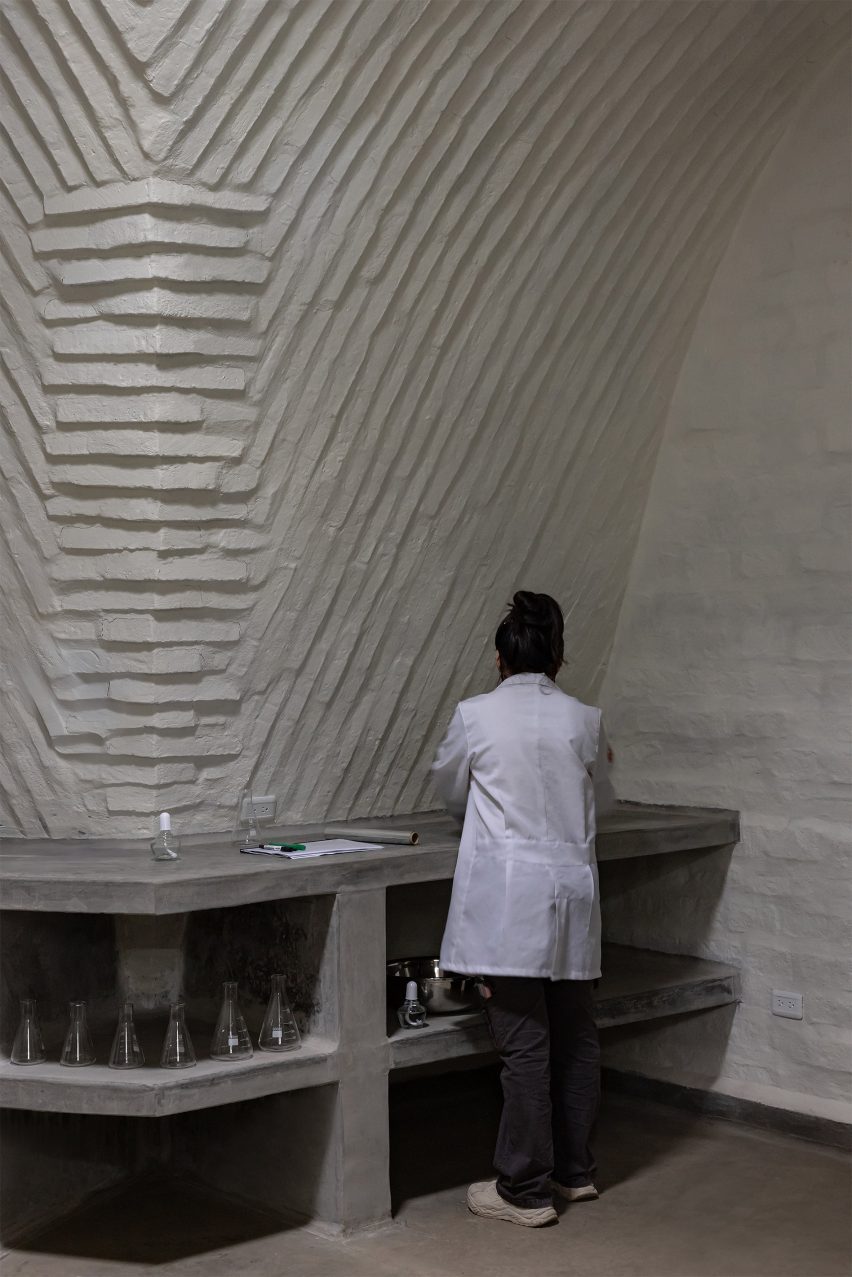 Three parabolic arches intersect to form the structure
“We developed soil mechanics protocols for Amazonian clay and validated the Lak’a UTA structural system – originally developed by architect Raúl Sandoval – which is built without formwork,” the team explained, noting that it used a scalable construction technique that can be adapted for larger-scale infrastructure.
While Al Borde provided technical stewardship, the lab was a community-led initiative for Witoca’s productive project, and its greatest accomplishment is the confirmation that architecture can be a tool for territorial sovereignty, according to the studio.
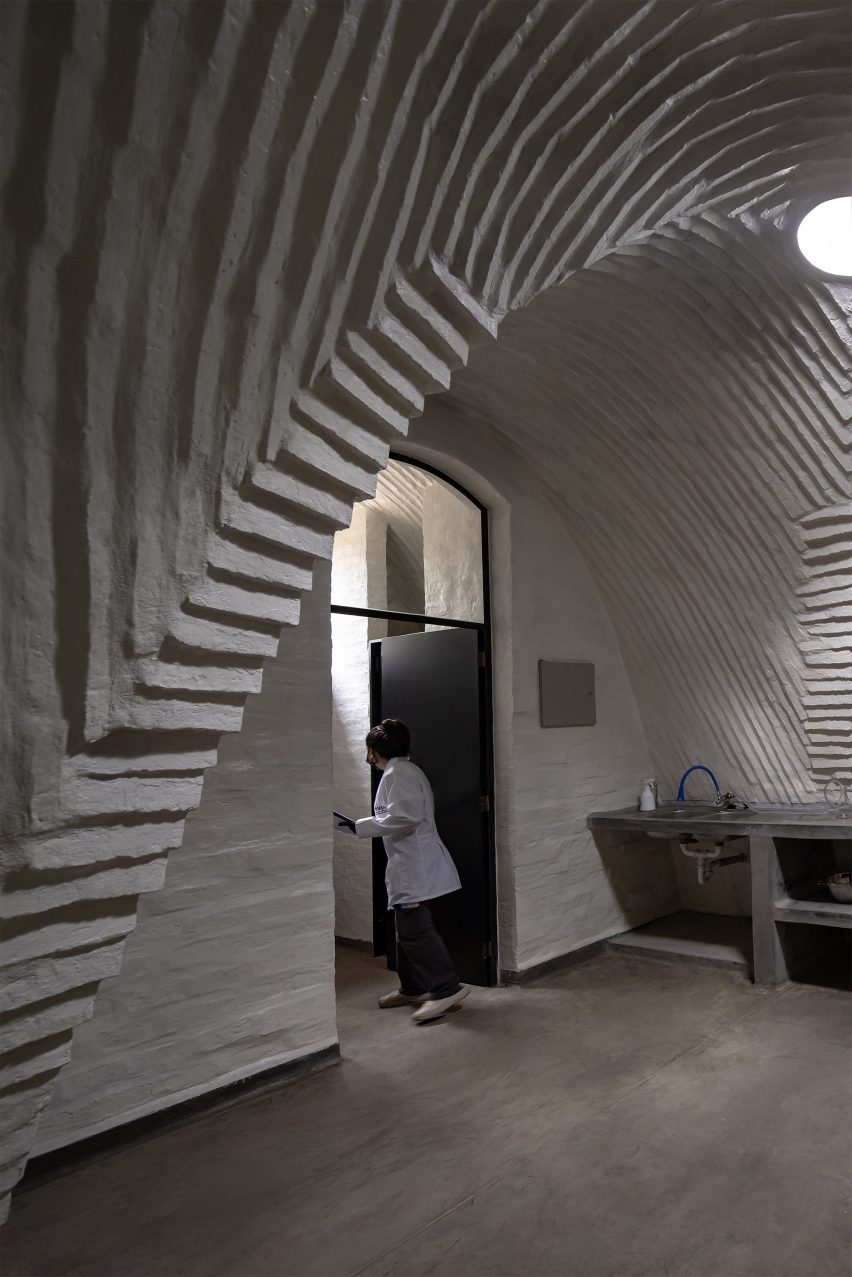 Local farmers were trained on-site for the construction
“Success lies in the community’s autonomy,” the studio said. “They now operate the facility to produce their own bio-inputs, breaking external chemical dependency.”
Founded in 2007 by David Barragán, Pascual Gangotena, Maríaluisa Borja and Esteban Benavides, Al Borde Arquitectos is an award-winning studio working to design energy-conscious projects.
Previously, the studio completed an observation deck with a cement-coated canopy overlooking the Cerro Blanco Protected Forest, a rammed earth-and-glass house outside of Quito and a renovated 18th-century home with suspended sleeping spaces in La Esperanza.
The photography is by JAG Studio.
Project credits:
Architects: Al Borde
Collaborators: María Fernanda Heredia, Emilie Spitz, Javier Almendarez, Carolina Quishpe, Andrea Raos
Structural engineering: Patricio Cevallos
Construction: AsoAmazonas & Al Borde
Commissioned by: Witoca
Supported by: CEFA Ecuador (Comité Europeo para la Formación y la Agricultura), FIEDS (Fondo Ítalo-Ecuatoriano para el Desarrollo Sostenible) & Alstom Foundation