
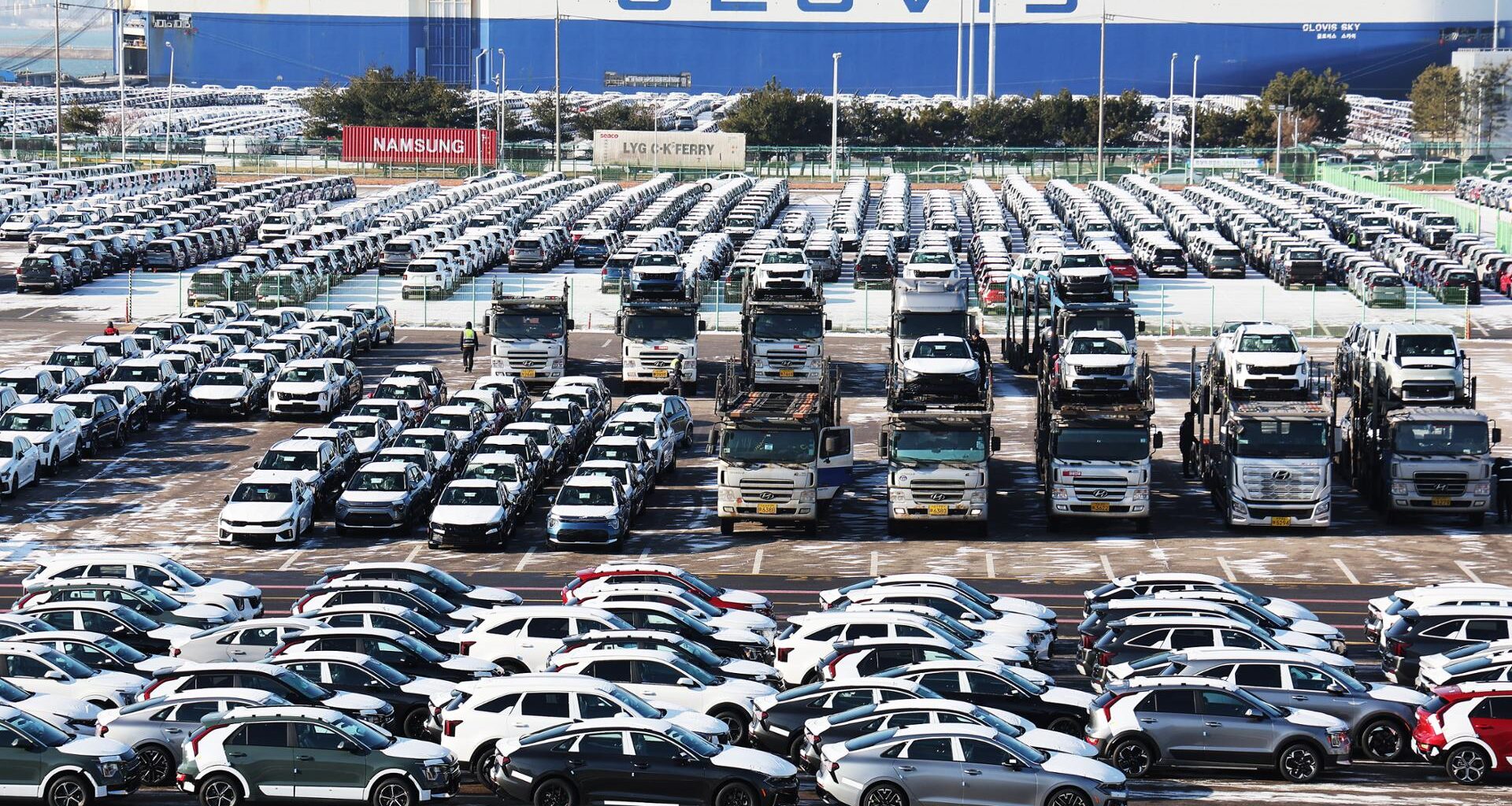
Vehicles await export at a port in Pyeongtaek, Gyeonggi Province, Jan. 27. Yonhap
Korea fell to ninth among U.S. import partners last year, as its market presence eroded under tariffs imposed by the Donald Trump administration, the Korea International Trade Association (KITA) said Wednesday.
According to KITA, which analyzed trade data from the U.S. Department of Commerce, the United States imported goods worth $113.4 billion from Korea from January to November 2025, down 5.9 percent from a year earlier.
The amount represented 3.6 percent of total U.S. imports — the ninth-largest share — falling two notches from 2024, when Korea accounted for 4 percent.
The figure marks the lowest level since KITA began compiling related data in 1988. Korea previously ranked sixth or seventh every year since 2009.
Mexico, Canada, China, Taiwan, Vietnam, Germany, Japan and Ireland ranked ahead of Korea.
The drop is largely due to Korea’s greater vulnerability to sweeping U.S. tariffs, which allowed Taiwan and Ireland to overtake it.
In particular, Taiwan, a direct competitor to Korea in the semiconductor foundry sector, jumped to fourth place from eighth in 2024, accounting for 5.6 percent of total U.S. imports, up from 3.6 percent a year earlier.
Taiwan faces a temporary 20 percent reciprocal tariff due to the lack of a trade deal with the U.S., but its exports of semiconductors have been largely unaffected because chips — its main export — are subject to separate product tariffs.
By contrast, Korea’s key exports to the U.S., including vehicles and steel, are subject to higher tariffs, significantly impacting the country’s ranking.
Japan, whose trade structure is, similarly to Korea, centered on advanced manufacturing industries such as automobiles and semiconductors, also fell to seventh place from fifth last year.
“Uncertainty in the trade environment is growing amid U.S. tariff policies and rising protectionism, but the government will prioritize national interests in talks with Washington and build a resilient trade structure through diversification of export items, markets and trading entities,” Industry Minister Kim Jung-kwan said in a briefing earlier this month.