
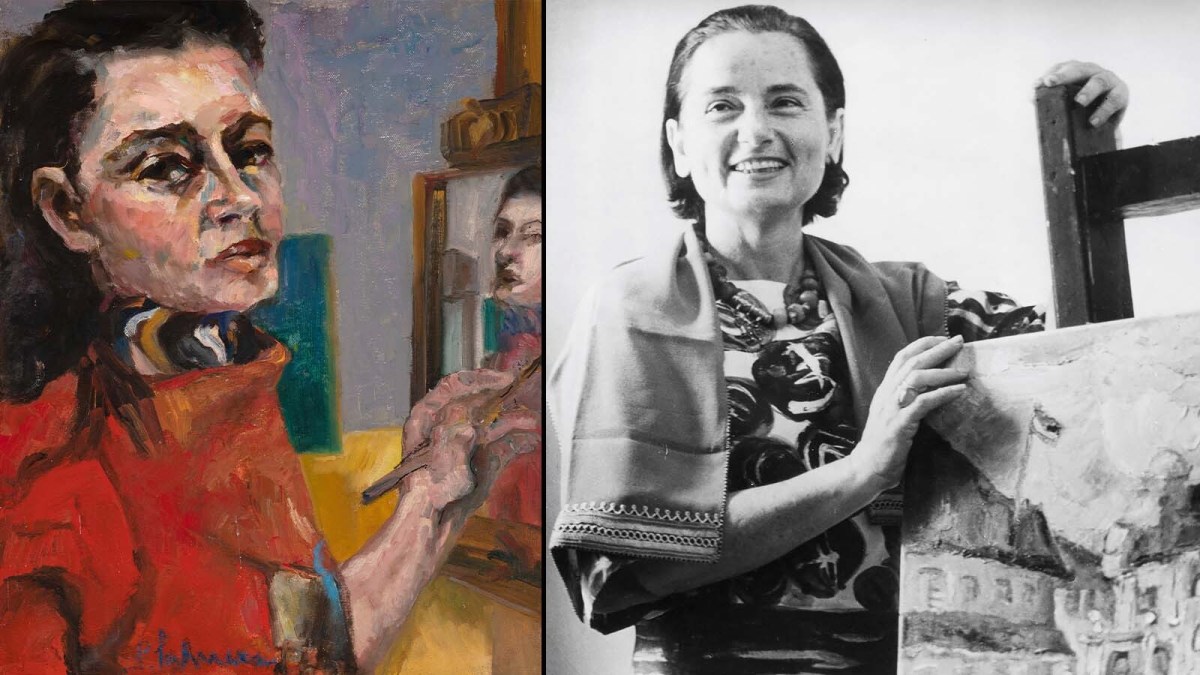
I never thought that a call from my grandma Suzi asking me to help to move some of her paintings would change my life. It was January 2015. I was 20 at the time. She was 93. And when I say my grandma asked me, it wasn’t really asking me, it was telling me. That was her way. Our brief conversation would lead to us becoming business partners… not your average co-founder duo.
Soon I’d be spending months photographing, archiving and measuring every painting, etching or drawing she did. I’d log each work in a giant Excel spreadsheet. When we went out she’d ask me to take photos of people because she wanted to paint them. We’d plan exhibitions and meet curators from the world’s biggest museums. In 2019 the Rijksmuseum in Amsterdam acquired one of her paintings for its permanent collection. The nearby Stedelijk museum followed, and now her first institutional solo show in over 50 years has just opened at the Singer Laren museum, just outside the Dutch capital.
My grandma never spoke to me about being a self-taught artist while I was growing up. What I knew much more about were the events that shaped her early life. I knew about how she’d lost her father when she was 13 and how she had to leave school so she could also help her mother with the family’s art and antiques shop. She described how this was the “real preparation for life” and where she became interested in painting, cataloguing postcards of works by artists including Goya and Matisse.
• Read art reviews, guides and interviews
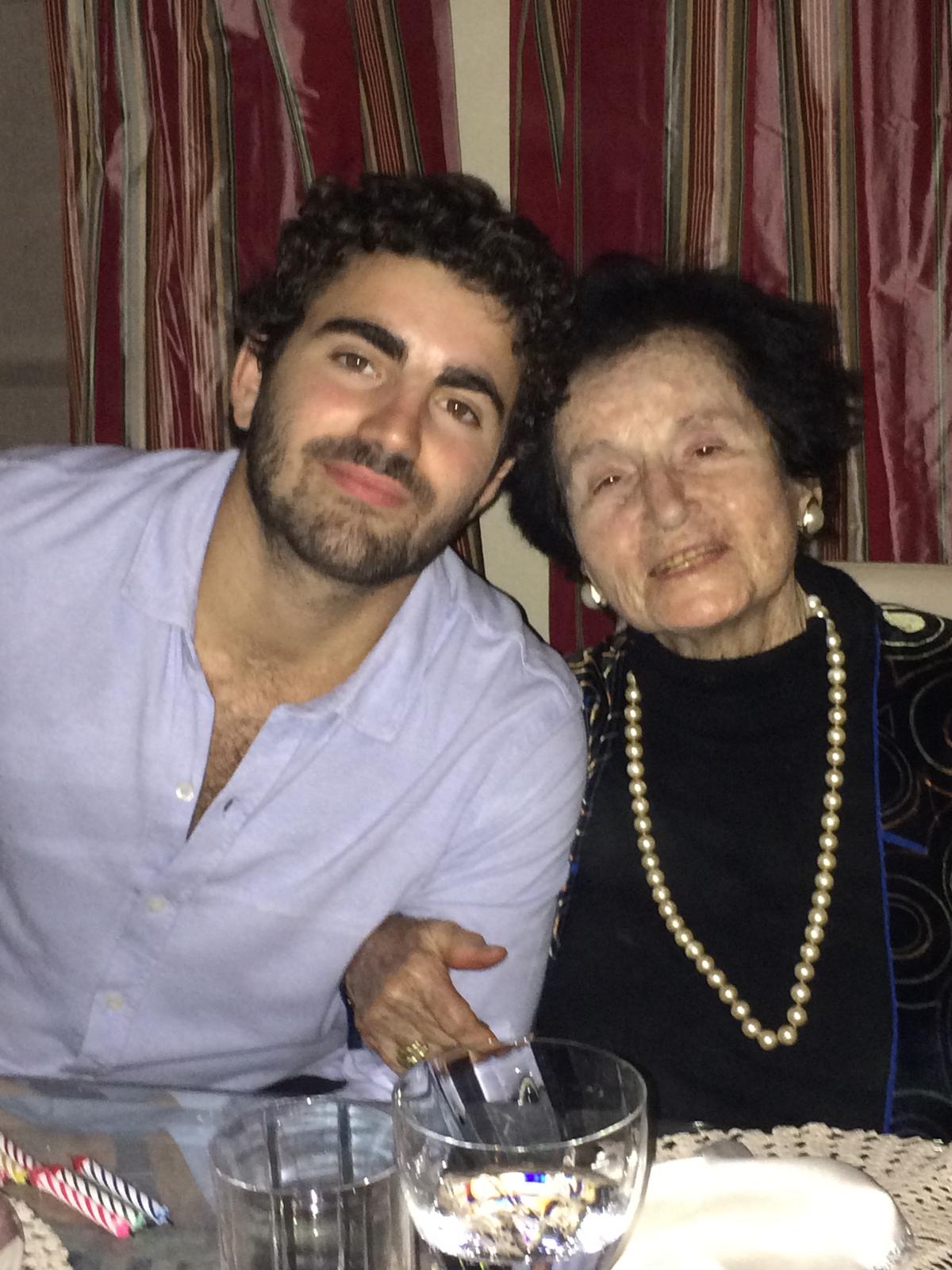
Matthew with his grandmother, Suzanne
I knew about her escape from the Netherlands in 1940, aged 17. She was born in Budapest but moved to Rotterdam in 1939, to marry Heinz, a Dutch grain trader, who lived there. They’d been married for six months before Henri Roy, the French interior minister and a friend of Heinz, sent a telegram asking the couple to come to Paris under the pretence that he needed to discuss a government grain order. They arrived in France with an overnight bag.
Days later, the Nazis invaded Holland. Their home and Heinz’s office were bombed. On the run, the couple then managed to board the last ship out of Europe, which was heading to a Dutch colony in the West Indies. “We kept kosher on board and all we ate was lentils,” my grandma told me. The journey to Curaçao took four weeks. They started a new life — and my grandma started to paint. “I didn’t know the patois language the locals spoke. I had to find a language that was more than words,” she told me.
I loved hearing about my grandma’s life. She spoke with a distinct Hungarian accent and had an unmistakable laugh. When I think of her now I still picture her wearing the bright red bucket hat she rarely took off in her final years. I don’t know why but I equate it with her optimism and quiet resilience.
I was often at her house, whether it was for tea and Jaffa Cakes or to pick her up before Shabbat dinners at my parents. I’d also be summoned to fix her CCTV camera, which she bought to make sure no one stole her 2010 Honda Jazz, a vehicle I’d never considered a high-risk target. But she did, and that’s what mattered. She was still driving around well into her nineties.
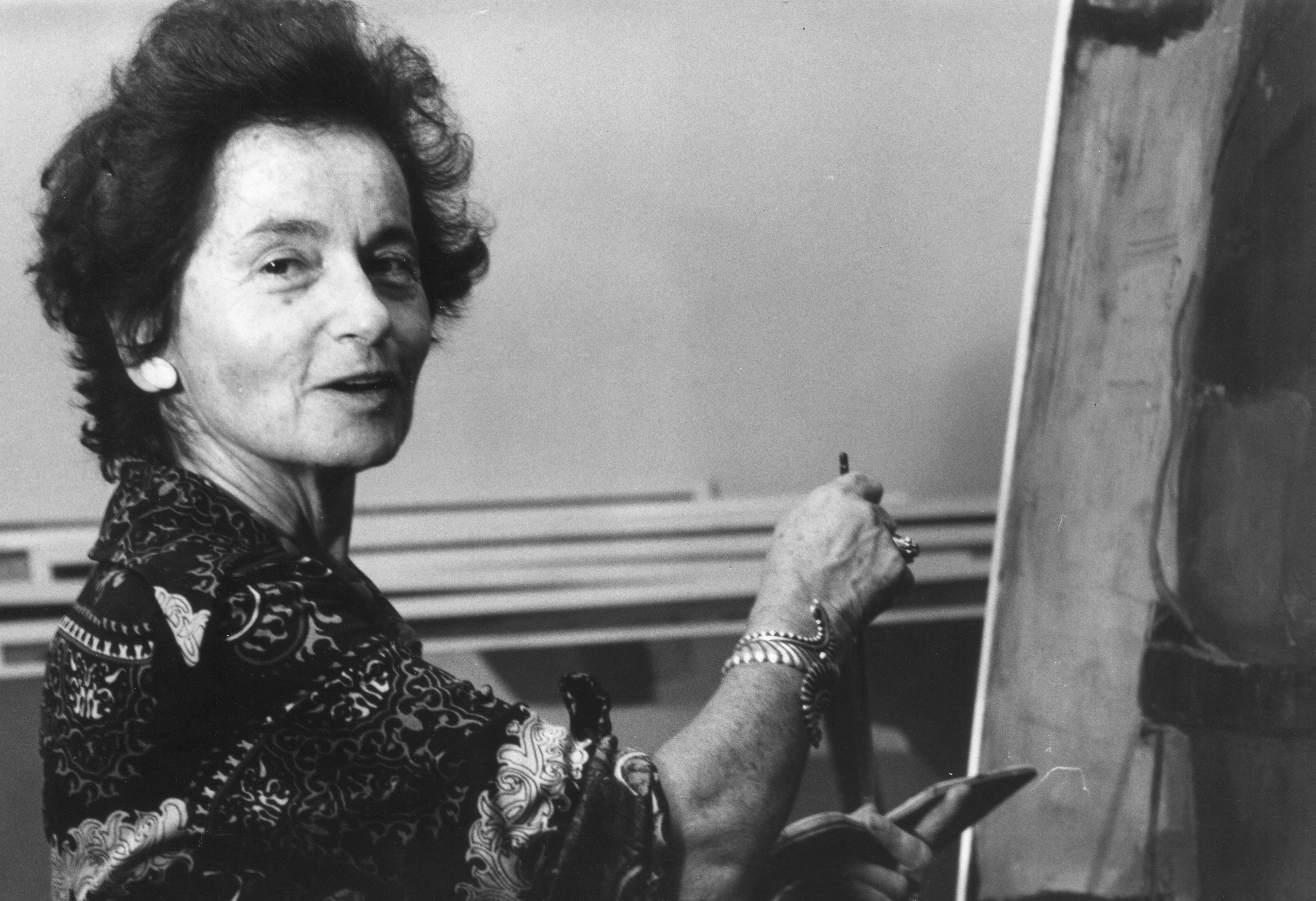
Whenever I went round I was drawn upstairs to her art studio. There were easels scattered around the room. Palettes of watercolours, tubes of oil paints and acrylics were spread across a big white table. There were stacks of art books, sketch pads on the floor, paintbrushes in old jam jars. The pungent smell of turpentine filled the small space.
• ‘He asked to be paid in paintings’ — the Times critic and his collection
I assumed that when she asked me to help her to move some paintings, I’d be in her studio. But I found myself in rooms I’d never been into. The spare bathroom was a makeshift storage facility for her work. I remember clambering into the bath to retrieve a portrait. In the study paintings were leaning precariously against radiators, others were covered in dust. There were paintings that had been sent from Curaçao in their original wrapping paper. They hadn’t been touched for 35 years.
I knew I’d discovered something important that day. My grandma had the makings of a globally known artist. I had a youthful confidence that I could help her to become one, even though I knew so little about art. I was midway through my year abroad and a few days later I was on a plane to Argentina. But in the months that followed I thought a lot about my grandma’s art.
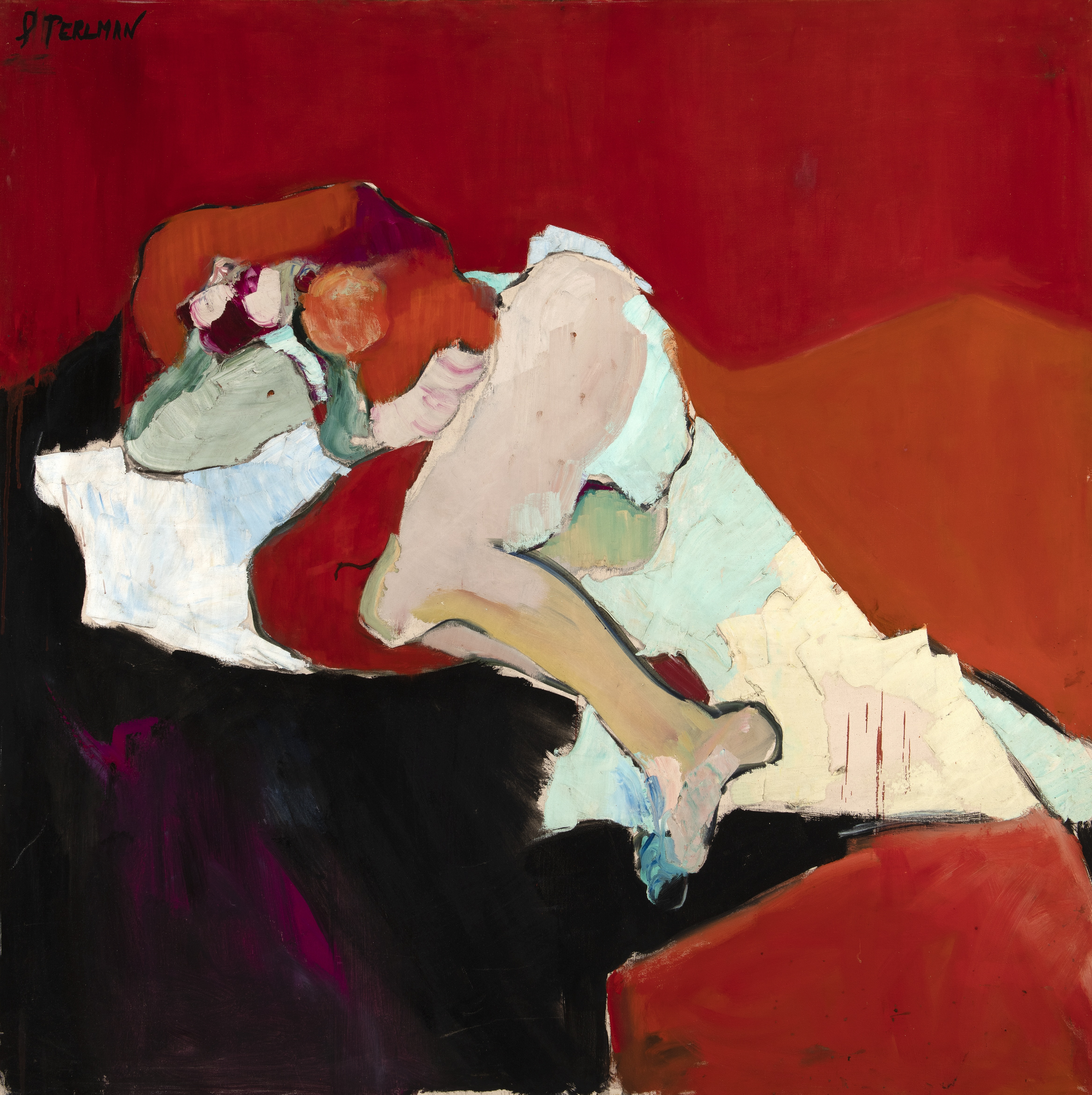
Red Nude, 1970, by Suzanne Perlman
When I got back to London for my final year of university, I started asking my grandma questions: why did she paint? Why figurative? Why abstract? Did she go to art school? How did she know when a painting was finished? I recorded her responses on my phone. She told me about how she chose her landscapes as carefully as her portraits, that she wanted to convey the social and economic concerns of people on the island. She told me about taking her first class at the Art Students League in New York in 1955, when abstract expressionism was in full force. She returned throughout the Sixties to continue her studies and worked with the American modernist Sidney Gross. In 1961 and again in 1963 she trained with the great Austrian expressionist Oskar Kokoschka at his legendary School of Seeing.
I decided to get to work. I called anyone I knew in the art world to tell them what I was doing. Their response was: how sweet, you must really love your grandma. I kept going anyway. My grandma made it clear to me that she didn’t see herself as an underappreciated artist. Her paintings had been exhibited since the Sixties and she’d been awarded the Officer of the Royal Order of Oranje Nassau, the Dutch equivalent of a knighthood, in recognition of her outstanding contributions to art. Her exhibition at the Boundary Gallery in London had been reviewed by major publications, including The Times. And in 2000 her painting depicting Auguste Rodin’s sculpture was installed in the House of Lords. So I wasn’t surprised that when, some years later, I told her the Rijksmuseum was adding her painting to their permanent collection, her response was “about time”.
• America’s cultural meltdown — inside Trump’s war on the arts
Every week I went to a different museum, talking to whoever would listen. I thought I could charm the right person, introduce my grandma to them and it would all work out. I felt a bit like a door-to-door salesman — except that no one could keep me out. I managed to persuade curators to come to my grandma’s house for studio visits. I watched with admiration as she interacted with them, remaining completely herself. That’s how she approached life. She didn’t change for anybody. When we’d go on walks she’d refer to the man who cleaned the streets in her neighbourhood not just as a street cleaner but a “street hygienist” and would always make a point of chatting to him.
It wasn’t lost on me that these moments were precious and that one day she wouldn’t be here. I’d have to tell her story for her. But I didn’t know enough yet. I started to read more books about art, taking inspiration from Van Gogh’s sister-in-law who made him famous after he died. My grandma and I decided that our initial goal was to get her a solo exhibition. We found a 24/7 printing shop on Curzon Street where we haggled a price to make catalogues featuring 20 of her paintings.
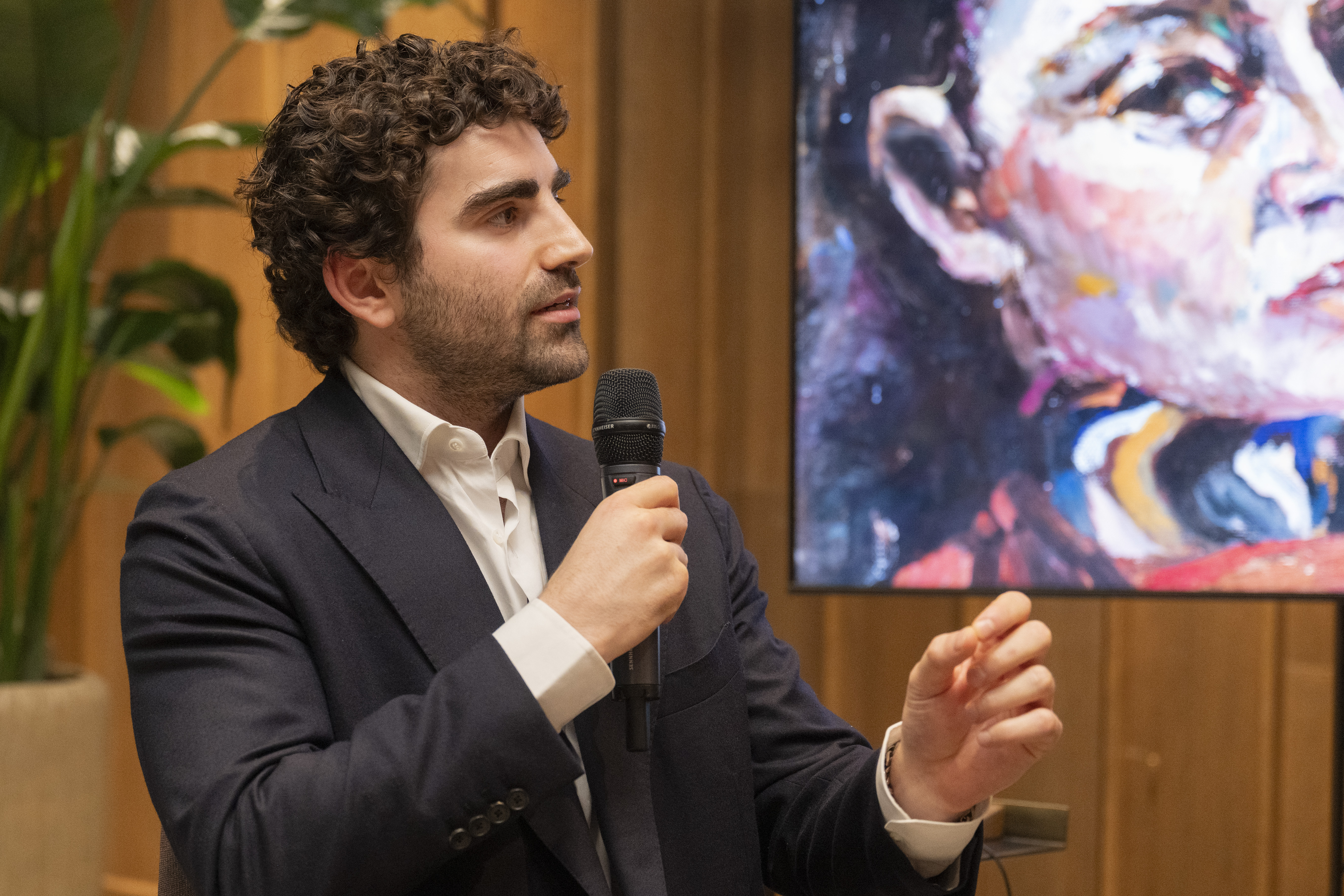
Matthew in Amsterdam this year
I researched forthcoming art fairs and found out about one in Rotterdam, where my grandma had once lived. The art on show didn’t feel close enough to her style of work so I took a train to Amsterdam. At the city’s visitor information centre I asked where I could learn more about art from Curaçao. They suggested the Tropenmuseum (now the Wereldmuseum) but when I arrived, the floor devoted to the Dutch West Indies was closed. On the way out I went into the gift shop and asked the shop assistant if she had any recommendations of where I should go. “Actually,” she said, “a professor from the Erasmus University in Rotterdam is giving a talk about art from the former Dutch colonies. Why don’t you go?” There I met an artist from Curaçao who was also at the talk. The conversation was brief but it was what I’d been waiting for. She introduced me to two women from the Rijksmuseum. I immediately called my grandma and put her on speakerphone so she could talk to them. “What an amazing woman. How old is she?” they asked after the conversation. We exchanged details and stayed in touch.
I’d been trying to make something happen for a few years when, in early 2018, I was sitting with my dad. He suggested contacting the Dutch embassy in London. I called them and they put me in touch with the cultural venue they oversee: the Dutch Centre. After a few meetings they were keen to go ahead with a four-month solo exhibition, a mini retrospective featuring works from Curaçao, the US and London. My grandma was 95. I had to build three walls of plywood just so we could display all her paintings. I invited the two women I’d met in Amsterdam to the show. They came — and a year later they told me that the Rijksmuseum wanted to add one of my grandma’s paintings to their permanent collection. They also connected me with the Stedelijk museum, which acquired two paintings in 2021. Two of her paintings were then sold in a Sotheby’s auction for nearly 15 times more than the estimate.
“What I’m doing is not just about art, it’s about refusing to let something — or someone — disappear,” says Matthew
My grandma died in August 2020. She was there to hand over the painting to the Rijksmuseum but missed out on seeing the many successes that followed. Her solo exhibition in the Netherlands has been years in the making. In deciding which of her works to include, I wanted to know about any painting my grandma had sold and to whom so I could buy them back. All of these works are now part of the exhibition.
I also produced a 300-page book to go alongside the show, featuring six essays from art historians, academics and writers. I chose each contributor carefully, one of whom I tracked down after finding a book she wrote about Georgia O’Keeffe in an Airbnb I stayed in. I’d long admired Skira, a world-leading art publisher. After one phone call with them, they told me that my grandma was exactly the type of artist they want to champion. After some more meetings we agreed a deal. I spent months going through the boxes of papers my grandma left behind, reading letters she sent to her husband, her brother and her sons. I approached it all with great care, seeking out every clue. She also took lots of photographs that showed where she’d been at various points in her life.
The official publication date for the book is in April but we had a special run printed for the exhibition. They sold out on the opening day and I received an email from the museum requesting another batch.
What I’m doing is not just about art, it’s about refusing to let something — or someone — disappear. My plan is to keep pushing so that more museums show her work and more people learn about her story so that they too pursue their interests against the odds. In her final years my grandma remained very astute and vital. But she mainly did sketches, because painting required too much emotional effort. Her last painting was a portrait of me.
Suzanne Perlman’s exhibition at the Singer Laren museum in Amsterdam runs until June 28. For tickets, go to singerlaren.nl. To pre-order the book, go to waterstones.com
@suzanneperlmanestate