
Key Takeaways:
Registration, not annexation: The Israeli cabinet approved resuming land registration in Area C — an administrative process, not a sovereignty declaration.
Ignored legal history: Jordan froze land registration (1948–1967) and barred Jews from registering property, leaving a lasting legal vacuum.
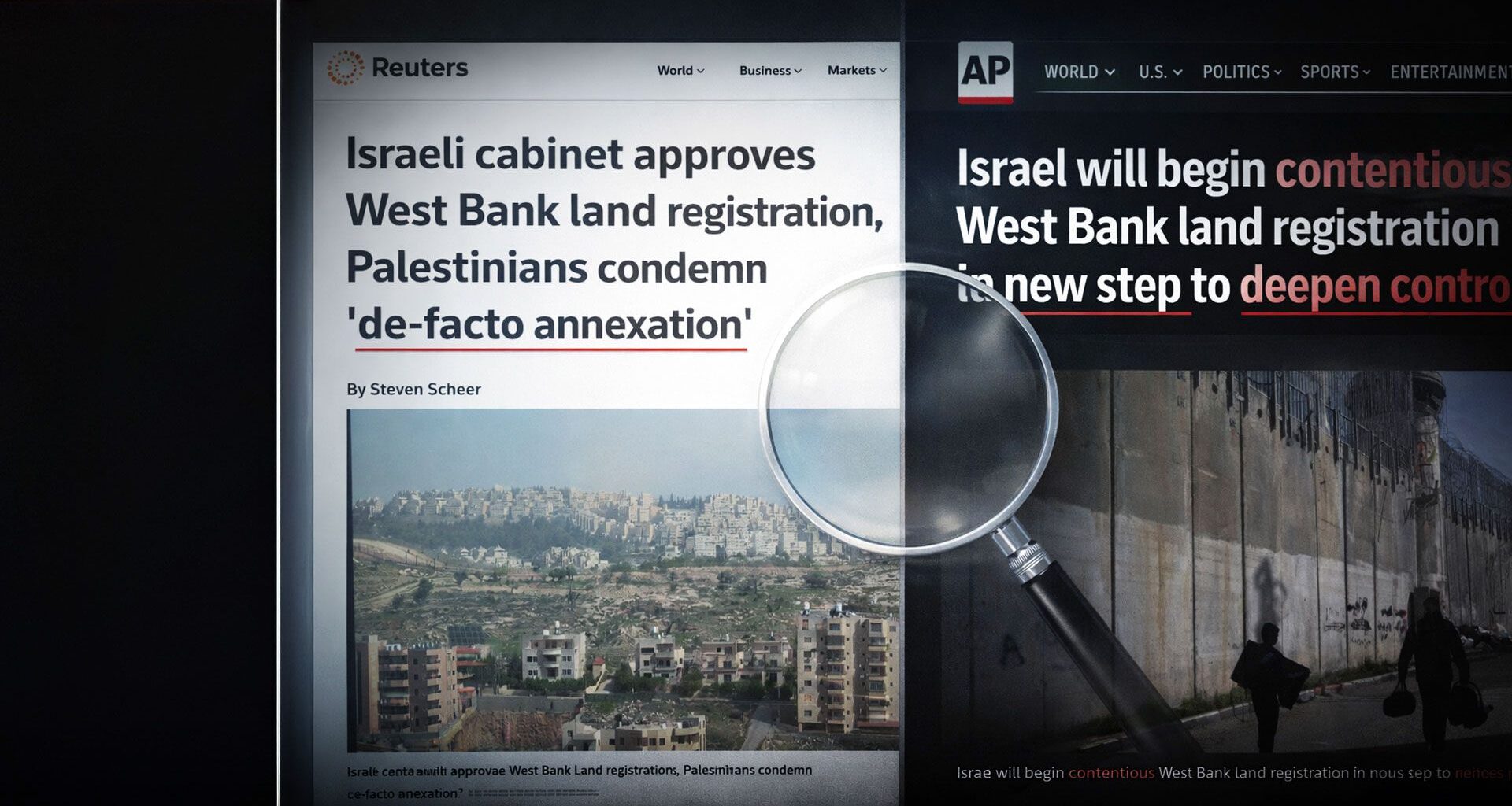
Missing context in coverage: Much reporting framed the move as annexation while overlooking the historical and legal background.
Israel’s cabinet this week has approved a move that immediately drew widespread condemnation. Palestinians called it de facto annexation. The United Nations warned it could entrench occupation. Headlines framed it as another step toward formalizing Israeli control over the West Bank.
However, the policy itself, along with its legal history, is more complex than many of the initial reactions suggested. And all the loud critics omitted it.
The dry facts are straightforward: Israel’s cabinet approved the resumption and expansion of land registration procedures in parts of the West Bank which are under full Israeli military and civilian control (Area C). The process, known as land settlement, involves formally surveying, mapping, and registering land ownership in official records.
Yet much of the coverage has avoided a basic question: Why was Israel unable to complete land registration until now? The answer leads back to a decades-old discriminatory framework imposed under Jordanian rule between 1948 and 1967.
The Omitted Background
As detailed in a recent legal analysis, between 1948 and 1967, when Jordan controlled the area, it halted land registration and imposed restrictions that prevented non-Arabs from registering land ownership in the territory. The freeze left vast areas in legal limbo, without clear, updated ownership records.
When Israel took control of the West Bank in 1967, it did not complete a comprehensive land settlement process. For decades, registration remained partial or frozen, creating uncertainty for both Palestinian and Israeli residents. That uncertainty has fueled disputes, litigation, and political accusations from all sides.
The Jordanian regulations barring Jews from legally registering land ownership in the territory were based on nationality and identity. In other words, Jews were categorically excluded because they were Jews.
By contrast, inside Israel proper, Arab citizens can and do register land in their names. Property registration is not restricted based on ethnicity or religion. And that’s how it should be.
Critics who describe Israel’s move as inherently racist rarely acknowledge that the pre-existing framework effectively codified discrimination against Jews.
So the cabinet decision that seeks to resume and systematize land registration under Israeli administration is correcting a historic discriminatory flaw. Resuming land registration does not, in itself, transfer sovereignty. It creates formal records of ownership in an area whose final status remains subject to negotiation.
Related Reading: Israel’s Legalization of Outposts and Settlement Construction: An Explainer
Context Matters
Whether the move is politically wise is a separate question. But describing any land registration as automatic annexation collapses legal procedure into a political narrative.
International criticism focuses on the broader conflict and the fear that administrative steps could harden facts on the ground. That concern is real and widely shared. At the same time, the legal vacuum created decades ago has consequences of its own. Leaving land unregistered indefinitely, in a discriminatory manner, also shapes reality, often in opaque and legally uncertain ways.
There is a difference between formal annexation and administrative land settlement. There is also a difference between maintaining a discriminatory freeze and reopening a process that, at least formally, applies to all residents.
Readers deserve to understand both the political stakes and the legal history. Without that context, the story is reduced to slogans about annexation on one side and criticism on the other.
But reality, as usual in the West Bank, is rooted in layers of law, history, and competing claims that do not fit neatly into a single headline.
Liked this article? Follow HonestReporting on Twitter, Facebook, Instagram and TikTok to see even more posts and videos debunking news bias and smears, as well as other content explaining what’s really going on in Israel and the region. Get updates direct to your phone. Join our WhatsApp and Telegram channels!