
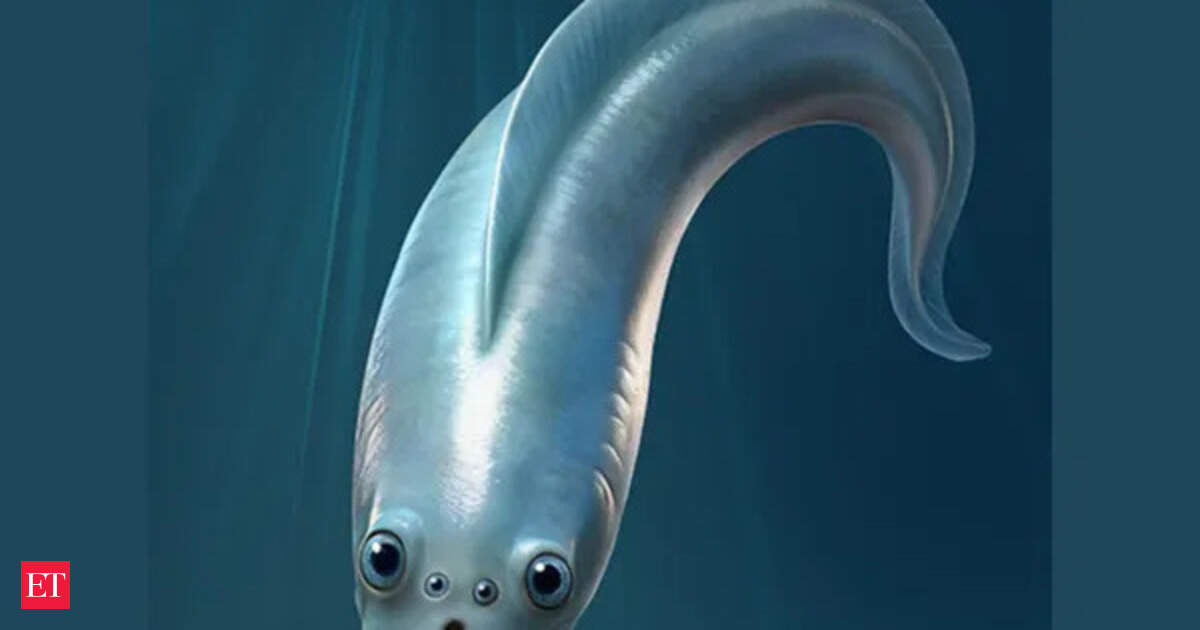
The evolution of vertebrates is a story that stretches back over half a billion years. Among the most remarkable discoveries are fossils of myllokunmingiids, prehistoric jawless fish from the Cambrian period, which suggest that early vertebrates may have had four eyes. Fossil evidence from more than 518 million years ago indicates that the prehistoric fish genus myllokunmingiid possessed not merely a pair of lateral eyes but an extra pair in the center of their head. These discoveries shed light on the visual sophistication of early vertebrates and offer hints to the evolutionary origins of the pineal gland, a deep-brain organ in modern humans sometimes termed as the “third eye.”
Discovery of the Oldest Known Vertebrate The myllokunmingiid is a prehistoric fish that lived near modern-day China and represents the oldest recognized fossil vertebrate. Researchers analyzed 10 specimens, which includes six of H. ercaicunensis and four other unidentified myllokunmingiids, all excavated from the Chengjiang Formation, a fossil-rich place preserving the diversity of Cambrian marine life.
“This changes how we think about the early evolution of vertebrates,” stated co-author Jakob Vinther of the University of Bristol, U.K. “It turns out our ancestors were visually sophisticated animals navigating a dangerous world.”
 Live Events
Revealing the Four Eyes“Fossil eyes are incredibly rare, you wouldn’t expect something as delicate as an eye to survive for hundreds of millions of years,” described Professor Emeritus Sarah Gabbott from the University of Leicester, U.K. “Yet under the right conditions they can, and when they do, they open a rare window into how extinct animals saw and experienced their world.”
Microscopic and chemical examinations disclosed two large lateral eyes and two smaller median eyes in the middle of the head. All four eyes were “camera-type eyes,” which is similar to those discovered in contemporary vertebrates, which means they developed images using light. The researchers discovered melanosomes, organelles that generate and store melanin, in all four eyes. Circular structures resembling lenses were also detected, suggesting that the eyes could form comprehended images, not merely determine light.
The Pineal Gland: The Ancient “Third Eye”Modern vertebrates lost the central pair of eyes, but traces endure as the pineal gland, situated deep in the brain, which controls sleep by generating melatonin in response to light. Sometimes termed as the “third eye,” it can still determine light in certain species of fish, amphibians, and reptiles.
“What we’re seeing is that the pineal organs began as image-forming eyes,” cited Professor Peiyun Cong of Yunnan University, China. “Only later in evolution did they shrink, lose visual power, and take on their modern role in regulating sleep.”
Why Four Eyes EvolvedThe study indicates that the additional eyes offered an evolutionary benefit during the Cambrian explosion, a duration when large predators like squid-like radiodonts and marine worms appeared. This deep predator-prey dynamic could have driven “sensory repertoire innovation” in both predators and prey. A second pair of eyes probably aided myllokunmingiids to identify threats, navigate their habitat, and survive in the dangerous Cambrian “Dark Forest.”Evidence from Kunming FossilsFossils from the Kunming region of China preserved two myllokunmingid species with four black spots on the head: two lateral eyes and a central pair on top.Earlier , researchers believed the median pair were nasal capsules, but electron microscopy disclosed melanosomes, confirming they were real eyes capable of developing images. Vinther commented that the fossils were “quite exciting to show that we have melanin preserved that goes that far back (518 million years).” Lens impressions led to the conclusion“so they felt like they were eyes,” stating, “The animal had two big eyes on the side and two small eyes on the top, and both of them were camera eyes.”FAQs:
Q1. What does “four-eyed vertebrates” mean?
It refers to ancient jawless fish that had two additional eyes on top of their heads. These were completely functional and helped expand their visual field.
Q2. When did these four-eyed vertebrates live?
They lived during the early Cambrian period, almost 518 million years ago.