
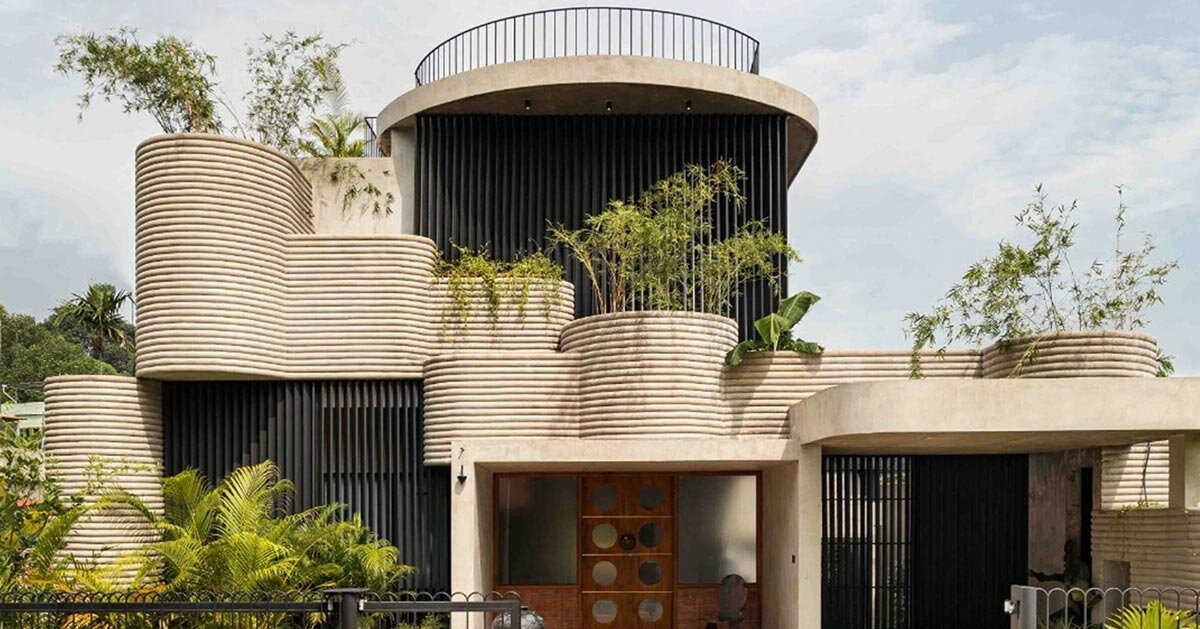
TROPIBOX KOCHI HOUSE translates personal memory into space
Tropibox Kochi House is conceived by Tropical Architecture Bureau as a residence in Kochi, India, that translates personal memory into spatial organization. The client, a chef, sought to reinterpret the atmosphere of a modest childhood home within a contemporary architectural framework. Central to the brief was the creation of a generous kitchen positioned as the social core of the house, supported by intimate living areas and garden spaces that maintain a continuous relationship with the outdoors.
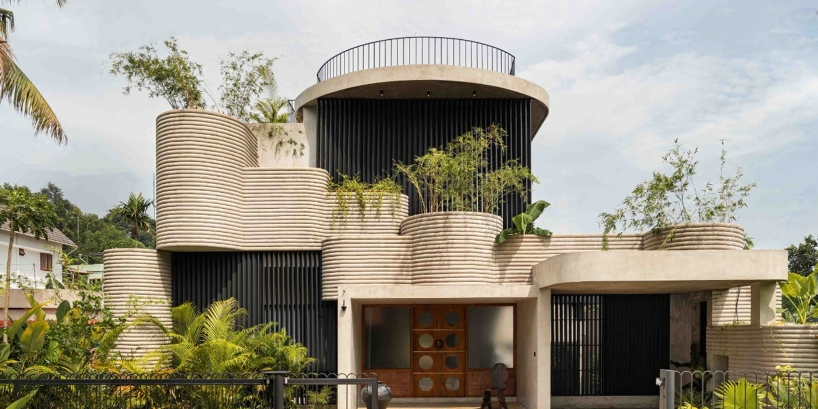
The house follows an L-shaped plan responding to the site’s sloped topography. An introverted exterior facade conceals an open internal arrangement structured around courtyards and controlled openings. Public functions are located on the ground floor, while private areas occupy a mezzanine level, establishing a clear vertical separation between communal and personal zones. A double-height dining space forms the spatial anchor of the project. Positioned at the center of the layout and illuminated by a circular skylight, it connects the kitchen, living areas, courtyards, and pool. This central volume organizes circulation while reinforcing visual continuity across interior and exterior spaces. Natural light enters through skylights, courtyards, and large openings, contributing to passive illumination and cross-ventilation.
all images courtesy of Tropical Architecture Bureau
Tropical Architecture Bureau uses Locally sourced materials
The material palette selected by studio Tropical Architecture Bureau combines locally sourced natural stone, cement plaster, wood, exposed concrete, and metal. This selection reduces transportation-related emissions while aligning with regional construction practices. The materials also contribute to thermal moderation and long-term durability. Wood is used extensively in doors, built-in furniture, and detailing, introducing warmth and tactile continuity. Black metal joinery and expansive glazed frames provide structural definition and visual transparency. Cane, textiles, and ceramic elements introduce softer textures, producing a layered interior environment that balances solidity with refinement.
Greenery is embedded directly into the architectural envelope through integrated planter systems. The planter construction includes a structurally supported base with layered components for plant health and water management. A growing medium sits above gravel drainage layers, with a perforated pipe system ensuring water circulation. An overflow control regulates excess water levels, and foundation chains provide structural anchoring where required. This layered system combines drainage efficiency, structural stability, and vegetation growth, allowing facade planting to function as both environmental buffer and architectural element. Through its spatial configuration, material selection, and integration of landscape systems, Tropibox Kochi House aligns domestic life with climate responsiveness and everyday use.
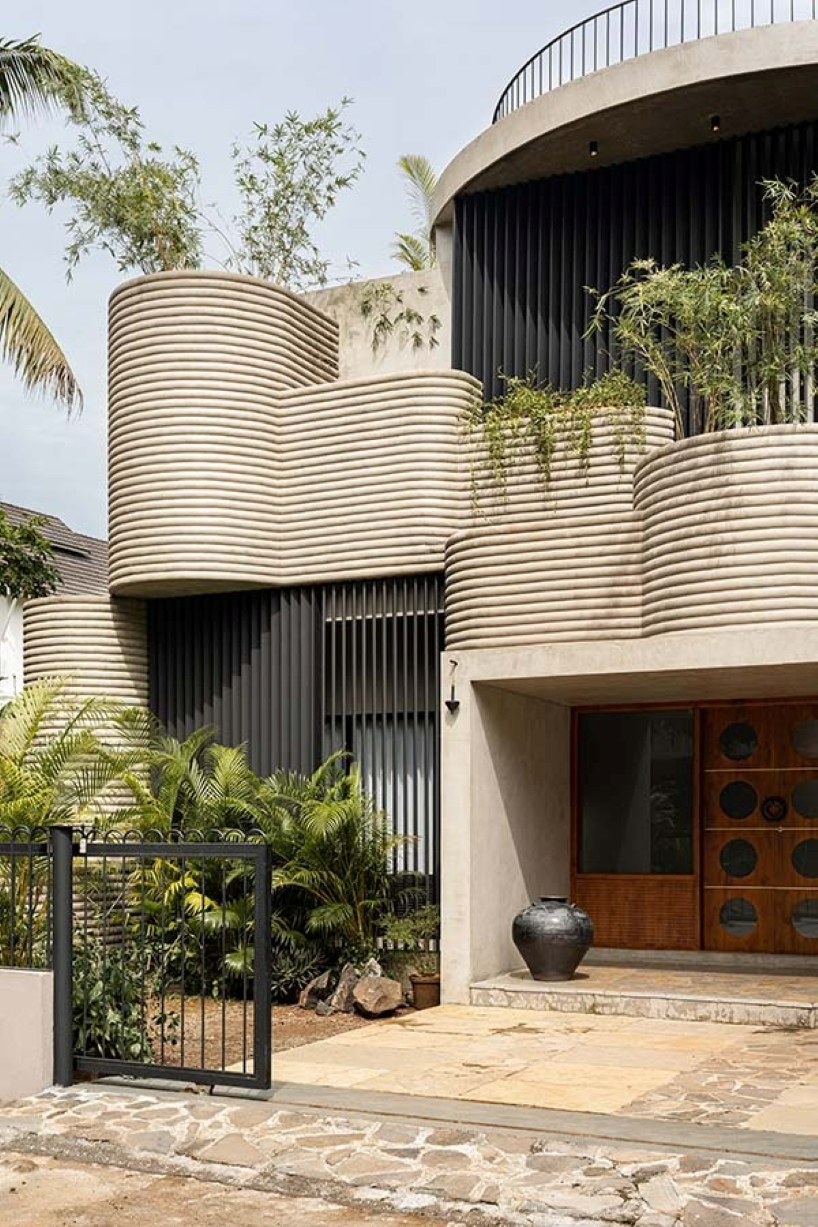
Tropibox Kochi House by Tropical Architecture Bureau in Kochi, India