
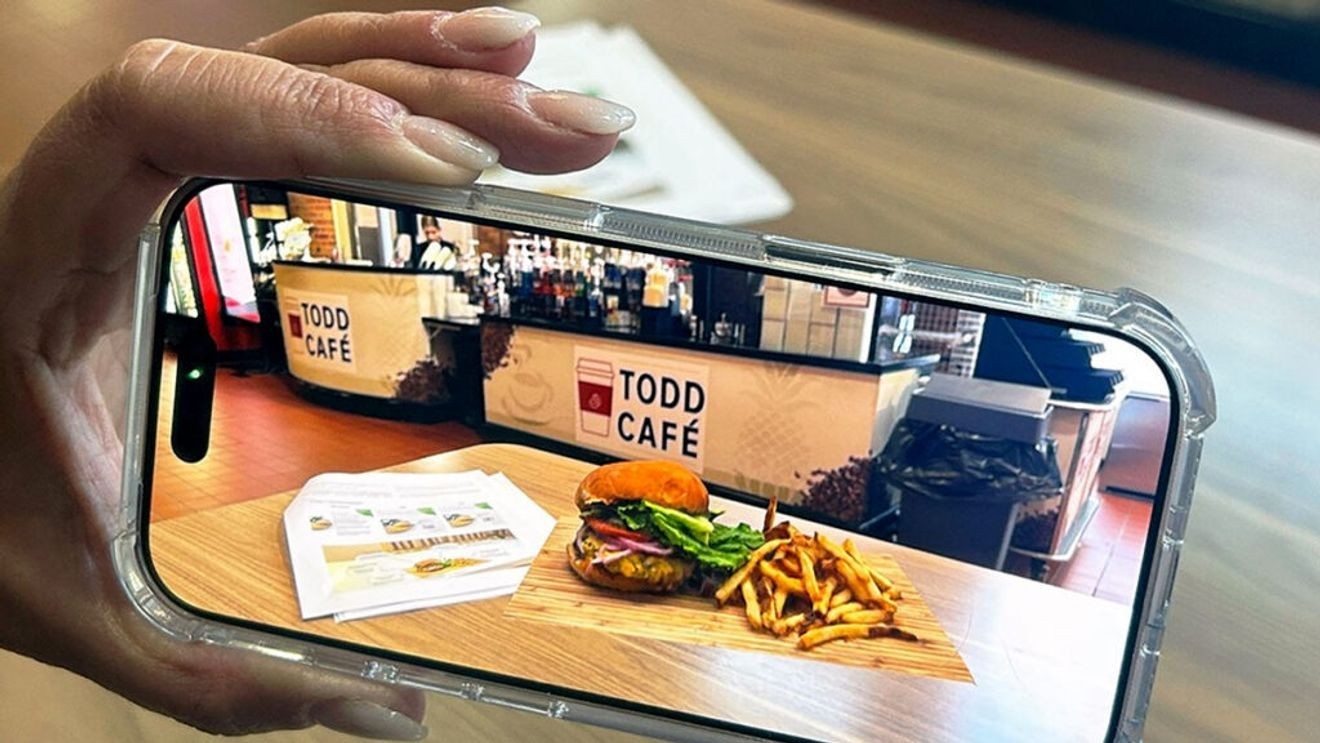
EVERETT, Wash. — Restaurants looking to stand out in a crowded marketplace may want to take a closer look at augmented reality.
New research from Washington State University suggests that adding augmented reality, or AR, technology to restaurant menus can significantly boost customers’ interest in visiting and encourage them to spread the word to others.
The study, published in the International Journal of Hospitality Management, found that diners who viewed menus using AR reported stronger intentions to visit a restaurant and were more likely to share what they learned, compared with those who saw traditional printed menus or QR-code menus.
The research was led by Soobin Seo, a professor of hospitality business management in WSU’s Carson College of Business. Her team examined whether AR could improve how restaurants present farm-to-table information, such as where ingredients are sourced and how food is produced.
“Consumers increasingly want transparency about where their food comes from, but the way that information is presented really matters,” Seo said. “Augmented reality allows restaurants to share that information in a more vivid, interactive, and engaging way.”
In the first of two experimental studies, participants were shown one of three menu formats at a simulated local restaurant: a traditional printed menu, a QR-code menu, or an AR menu. The AR version allowed users to view a three-dimensional food item on their smartphone and tap on individual ingredients to learn where they were sourced.
Participants who used the AR menu said they felt more immersed in the experience and believed they learned more about the food and its origins. They also reported a higher likelihood of visiting the restaurant and sharing the information with others.
“These immersive experiences help people pay closer attention and feel like they’re actually learning something,” Seo said. “That combination appears to drive stronger interest in the restaurant itself.”
A second study looked at how AR menus might affect perceptions of chain restaurants with different brand images. Researchers compared responses to AR-based farm-to-table information from Panera Bread, which is often viewed as healthier, and McDonald’s, which is more commonly associated with fast food.
Although AR menus improved perceptions for both brands, McDonald’s saw a larger increase in perceived healthiness and visit intentions than Panera Bread.
“When expectations are low, transparent and interactive information can have an outsized impact,” Seo said. “For brands that aren’t typically associated with farm-to-table practices such as fast-food restaurant chain brands, AR disclosures may help offset negative perceptions.”
The researchers also found that AR menus worked best when the technology fit with a restaurant’s overall brand image, underscoring what Seo called the importance of “strategic fit” when adopting new tools.
While augmented reality menus are still relatively uncommon, Seo said the technology is becoming more affordable and accessible, even for independently owned restaurants.
Beyond marketing advantages, the researchers say AR menus could also promote sustainability by encouraging restaurants to be more transparent about sourcing and to build stronger relationships with local producers.
Co-authors of the study include Jiyoon (Jennifer) Han, an assistant professor of hospitality and tourism management at the University of Massachusetts Amherst’s Isenberg School of Management, and Elizabeth Howlett, a professor of marketing at WSU. The research builds on Han’s doctoral work at WSU, completed under Seo’s guidance.