
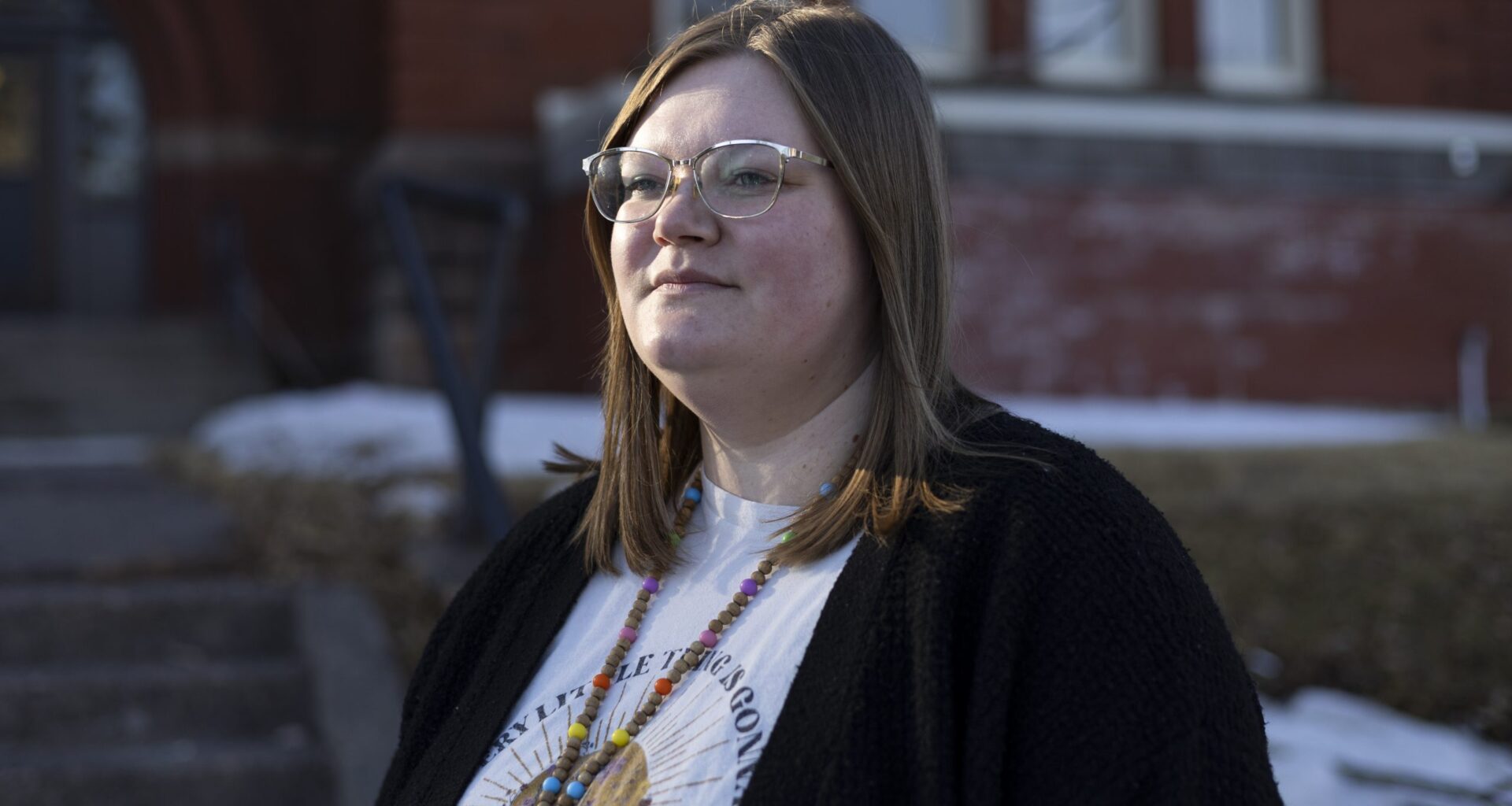
Kayley Spencer is not unemployed, nor is she reduced to irregular independent contractor work.
In fact, Spencer is the executive director of a nonprofit child care center in Duluth, Lakeside Early Learning, where she supervises 14 full-time and 15 part-time staff.
Still, Spencer cannot afford health insurance, either for herself or her employees.
“Child care operates at razor thin margins,” Spencer said.
Spencer thought this year might be different. Then she shopped for insurance through MNsure, the marketplace that stemmed out of the Affordable Care Act and is run as an independent state agency.
“I was really open to any plan. I was all the way through the application process, filtering out for the most affordable. But they were all too much.”
When the enrollment period opened Nov. 1, MNsure officials warned that enrollees’ monthly premiums would soar 57% due to the expiration of a federal subsidy, among other cost factors.
Enrollment closed Jan. 15, and, according to MNsure, 139,251 Minnesotans signed up, an 8% drop compared with 2025.
Given the eye-popping increase in monthly premiums, this 8% dip seems modest.
But the decline does not account for tens of thousands Minnesotans who signed up for a less encompassing plan. Plus, it is too early to know how many people will lose coverage for not making premium payments.
“What I suspect and fear is that as we get further into the year, the number of Minnesotans who do not have coverage will climb,” said Libby Caulum, CEO for MNsure.
State Rep. Erin Koegel, DFL-Spring Lake, will convene the Minnesota House Commerce Finance and Policy Committee Wednesday to look at the future of MNsure.
Here is an early glimpse of how MNsure enrollment is changing.
Why did people opt out of MNsure?
To review, people are on the 12-year-old MNsure program because they do not get health insurance from their employer.
They also make too much to qualify for the state’s Medicaid program, or MinnesotaCare, which offers health plans to residents who make less than 200% of the federal poverty level.
For example, Spencer (and her employees) make too much in yearly income to qualify for Medicaid or MinnesotaCare, making a plan through MNsure their most apparent choice for health care.
(If they so desire, individuals can directly negotiate with insurers to get a health insurance plan instead of buying one on the exchange.)
MNsure does have two subsidies of its own. One is a state fund called Reinsurance, which uses taxpayer money to cover pricey claims MNsure enrollees file with their insurer.
Another is a federal advanced premium tax credit, which has been around since the start of the Affordable Care Act as a carrot for people to buy insurance.
However, a third subsidy, the federal enhanced premium tax credit that started in 2021, sunsetted at the end of 2025.
Related: Inside the nightmare winter for Minnesota child care providers
The record-length federal shutdown in the fall was due to Democrats (and some Republicans) demanding an extension of the enhanced premium tax credit. But Congress reached a compromise that axed the subsidy extension.
“Because Congress allowed the enhanced savings to expire, we heard from many consumers who felt priced out of the marketplace,” Caulum said.
The cheapest plans Spencer found were Bronze packages with $350 monthly premiums. Between running her nonprofit and paying for rent, Spencer said that health care needed to be squeezed.
At age 29, Spencer said that she is in good health and is “just hoping illnesses pass.”
Traditionally, MNsure, and insurers on the exchange such as Blue Cross Blue Shield and Medica, rely on young, healthy enrollees like Spencer to help pay for those who use health care more.
“When people make the really difficult decision to go without insurance, it has implications for the whole health system,” Caulum said.
Who decided to stay on MNsure?
Beki Cook has a condition called hereditary angioedema in which her tongue can swell to the point where she can’t breathe.
In 2025, she paid $1,000-a-month for a plan she bought for herself and her twin sons that covered a drug for her condition, called Orladeyo.
Had Cook stayed in the same plan for 2026, it would have cost her $1,400-a-month. She switched to a plan that costs $1,200 a month.
However, Cook’s doctor advised her to go on a different medicine, Takhzyro, because Orladeyo “wasn’t working as the doctor hoped, but now I can’t get the new medication covered,” she texted.
Cook said that she is currently going through an appeals process with her insurer.
All told, 25,931 enrollees switched plans for 2026, according to MNsure, an 87% leap in the number of people who changed plans compared with 2025.
Related: Minnesota’s Affordable Care Act marketplace is about to become unaffordable. What happened?
There is evidence that those who switched sought to save money. According to MNsure, 10,101 of these enrollees reduced their plan enough to change “medal levels.”
Over 6,400 individuals moved from a Silver to a Bronze plan, which typically means a higher deductible and copay but smaller premium payment.
Compared with 2025, there was a 112% increase in the number of 2026 enrollees who moved down a medal level, per numbers provided by MNsure.
Still, these figures suggest that the majority of Minnesotans did not change their plan, even with premiums set to climb.
“It is hard to know what consumer behavior drove people not to make a change,” Caulum said. “Switching health insurance plans can feel really intimidating at times.”
Caulum is looking ahead to data likely to be available in mid-March that shows how many current MNsure enrollees paid their first 2026 premium.
Meanwhile, the enhanced credits that helped MNsure enrollees are today a political afterthought. U.S. Sen. Bernie Moreno, an Ohio Republican who pushed for extending the subsidies, said this month that any deal to resuscitate them “is effectively over.”
Editor’s note: This story was updated on Feb. 18, 2026, to correct Kayley Spencer’s name.
Related