

Australia’s unemployment rate remained at 4.1 per cent in January, the same as in December, in seasonally adjusted terms.
Economists say the numbers suggest that the labour market remains relatively tight and the economy is still operating close to capacity.
They say it will keep the possibility of further interest rate hikes in coming months in the picture.
According to Bureau of Statistics data, the number of employed people increased by 17,800 in January.
RBA governor grilled over rising inflation
Full-time employment rose by 50,000 people, which was partly offset by a fall of 33,000 people in part-time employment.
In trend terms, which smooths out seasonal volatility, the unemployment rate even declined a little in January, from 4.2 to 4.1 per cent, to a nine-month low.
“From the Reserve Bank’s perspective, the failure of the labour market to weaken means it will not be able to shift its gaze away from upcoming inflation data,” David Bassanese, BetaShares chief economist, said.
But Treasurer Jim Chalmers said it was good to see Australia’s labour market holding up in the face of challenging global conditions.
“Under our government, we have seen the lowest average unemployment for any government in 50 years,” he said in a statement.
“As the Reserve Bank Governor said last week, the state of the labour market is good news for our economy, especially compared to other countries grappling with much higher unemployment,” he said.
The debate about employment and inflation
In recent weeks, RBA officials have been trying to remind politicians in Canberra that low unemployment is a positive thing.
RBA governor Michele Bullock told senators last week that the health of the economy was a mixed bag.
“Everyone’s been focusing on the negatives, but we’re in this position because the economy is actually doing okay,” she said.
“It can’t grow really strongly because productivity’s not growing, but the labour market is holding up, it’s still a little bit tight, and this is good news — in fact, it’s much better news than some countries overseas have seen with their labour markets,” she said.
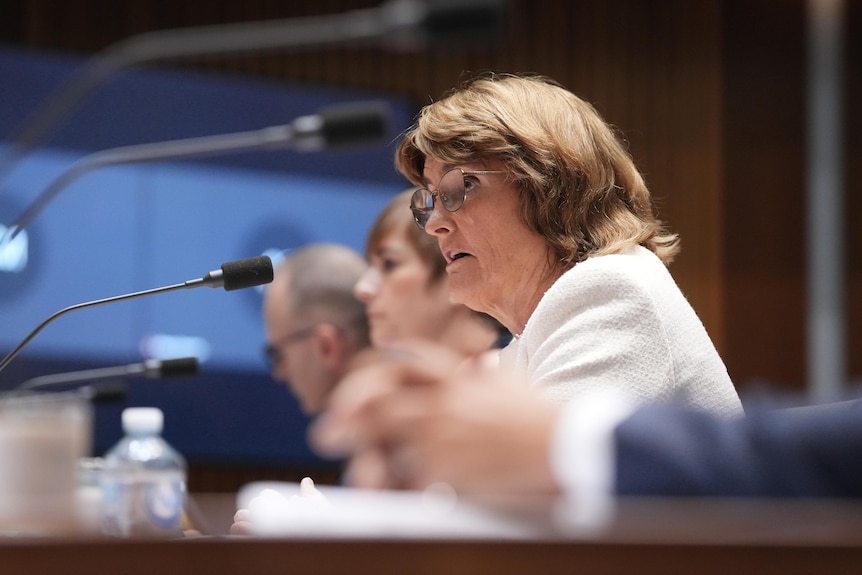
Michele Bullock speaking at the economics committee in Canberra on February 6. (ABC News: Matt Roberts)
RBA deputy governor Andrew Hauser has spoken similarly.
But he has said that RBA’s strategy for dragging inflation down while keeping unemployment as low as possible has left Australia’s economy very finely balanced, and perhaps more susceptible to demand shocks.
“We had a different policy strategy to other countries,” he said last week.
“We didn’t raise interest rates as far up during the COVID inflation boom, and that meant we were slower to bring them down as well.
RBA deputy governor defends central bank from critics
“The consequence of that, and I think it’s fair to say, is this economy is closer to balance than many of the other economies you might have in mind.”
In recent weeks, some economists have been arguing that the RBA’s inflation-fighting strategy has been a failure and the RBA needs to lift interest rates much higher to drag inflation back down, even though that could lead to much higher unemployment.
Other economists have been more sanguine about the RBA’s strategy, saying it is worth keeping things in perspective.
But even still, last week Governor Bullock was accused by Nationals senator Matt Canavan of ‘gaslighting‘ Australians about the true health of the economy.
“I think people are only going to get angry in this country if they’re gaslit into thinking the economy is okay, when their lived experience is absolutely terrible right now,” he said.
Ms Bullock said she took exception to that comment.
“Now I understand that some people are doing it tough. I do understand. I get letters and I read them,” she replied.
“But that is not to say that you can’t recognise that there are some parts of the economy that are doing well and the labour market, I think, has been a really positive thing for this country.”
Job fears in the era of AI
Senator Canavan’s point may have touched a nerve because many Australians have been complaining about the difficulty of finding suitable work in this economy.
Many also fear that artificial intelligence, or AI, is coming to take their jobs.
Melbourne-based solutions architect Ron Skruzny is one of many workers worried about the AI revolution.
“I have applied for probably about 50 jobs, thereabouts, in the last year. So it’s just, yeah. A bit frustrating,” he told the ABC.

Ron Skruzny has been looking for a job for months, and is worried about the impact of AI. (ABC News: Daryl Torpy)
He has spent a lifetime designing back-end systems so customers can log-on safely to their favourite websites — something artificial intelligence is now being trained to do at lower cost than hiring people like Ron.
“A lot of the time you’re restricted to 9 to 5 operations,” he said.
“If you’ve got AI there driving it, that means you’d be able to then do it 24/7, which often is benefit not only to the company, but also to customers and clients, whether it’s the business or people who want to get things done out of hours.”
Real wages growth goes backwards
Job advertisements have been on the rise recently for workers in manufacturing, transport and construction.
But data from employment website SEEK shows the going has been tough for IT workers.
“I think there’s a lot of probably underemployment, that kind of thing, where people just saying ‘Oh, giving up. It’s too hard’,” he said.
“And I do know of others similar to me who are trying to find jobs, not necessarily in the same area as me, but they’ve been looking for quite a while as well. So it is tight.”
What does it mean for interest rates?
After cutting interest rates three times last year, the RBA lifted rates earlier this month, from 3.6 per cent to 3.85 per cent, in response to inflation picking up again in the second half of 2025.
Economists says there is a high chance the RBA will lift rates again in coming months, with many saying it could happen in May.
RBA lifts interest rates by 0.25pc
“Prior to today’s release, markets were expecting the next cash rate increase to occur in late 2026,” BDO chief economist Anders Magnusson said on Thursday.
“A sustained unemployment rate at 4.1 per cent makes that timing look optimistic. A raise in May has now become likely, and possibly even as soon as March.”
“While the RBA will likely wait for confirmation from further inflation data before acting again, today’s labour market result increases the likelihood that further tightening comes sooner than markets have been pricing in,” he said.
The Bureau of Statistics will publish its next round of monthly inflation data next week, which is important from the RBA’s perspective.
Marcel Thielant, head of Asia-Pacific at Capital Economics, said today that the low level of unemployment would keep pressure on the RBA in coming months.
“With wage growth remaining stubbornly high and trimmed mean inflation well above the upper end of the RBA’s 2-3 per cent target band, the case for further [interest rate] tightening by the bank therefore remains strong,” he said.