
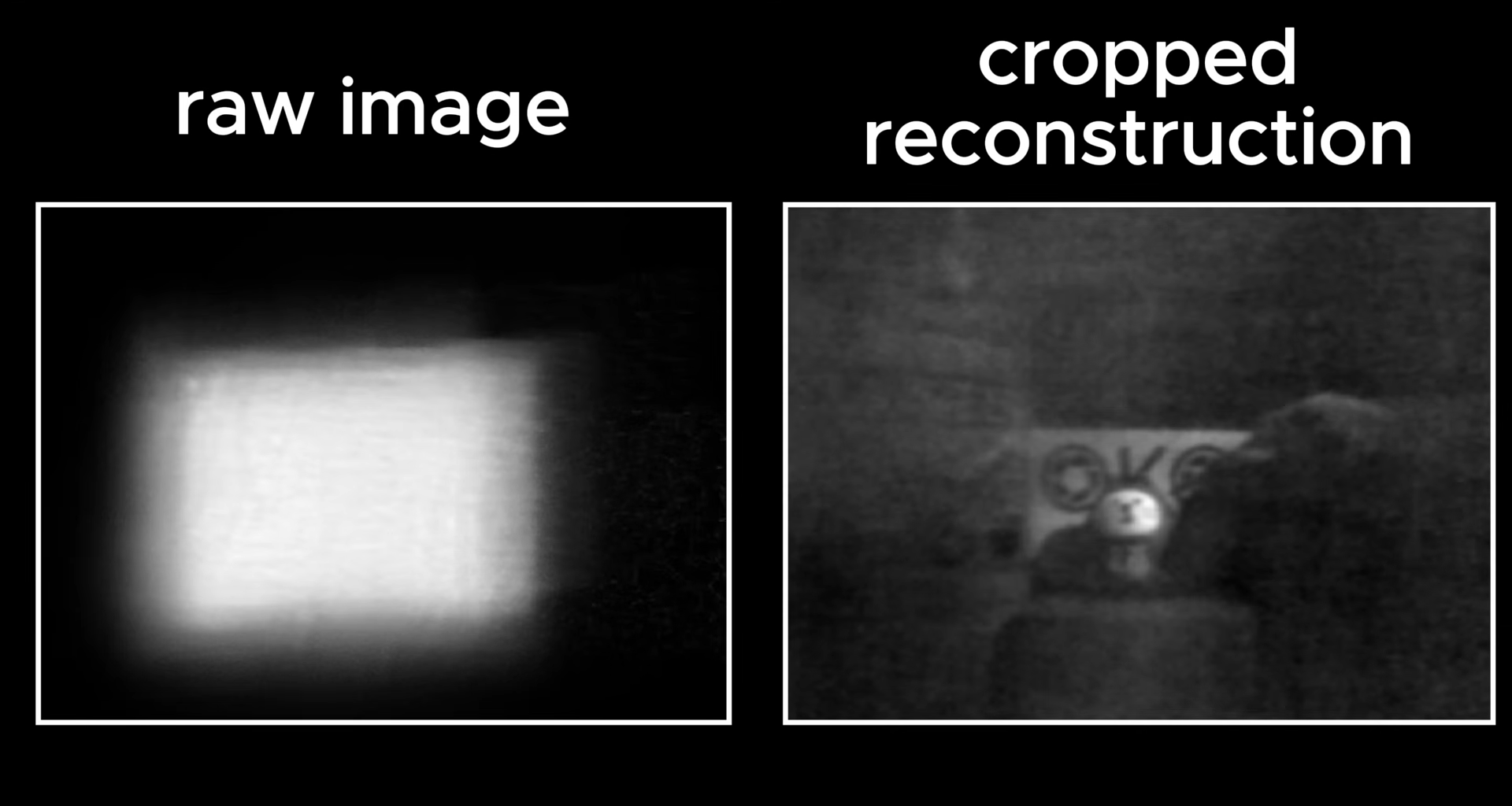
Typically, when we want to take images, we use an image sensor paired with some sort of lens assembly to make a picture that’s sharply in focus. However, [okooptics] is here to show us there’s another way—using Scotch tape in place of a typical lens element.
If you just put Scotch tape over an image sensor without a lens, you’ll just get a blurry image, whatever you point it at. With the right algorithms, though, it’s possible to recover an image from that mess, using special “lensless imaging” techniques. In particular, [okooptics] shows how to recreate the so-called coded aperture techniques which were previously demonstrated in [Laura Waller]’s DiffuserCam paper.
It’s complicated stuff, but the video does a great job of breaking down the optics into understandable chunks. Armed with a Raspberry Pi HQ camera covered in a small amount of Scotch and electrical tape, [okooptics] is able to reconstruct a viable image from what initially looks like a blurry mess of nothingness, with the aid of the right deconvolution maths. It’s all about understanding the point spread function of the tape versus a regular lens, and figuring out how to fight off noise when reconstructing the image.
We’ve featured previous work from [okooptics] before, too, like this impressive demonstration of light transport and reconstruction. Video after the break.