
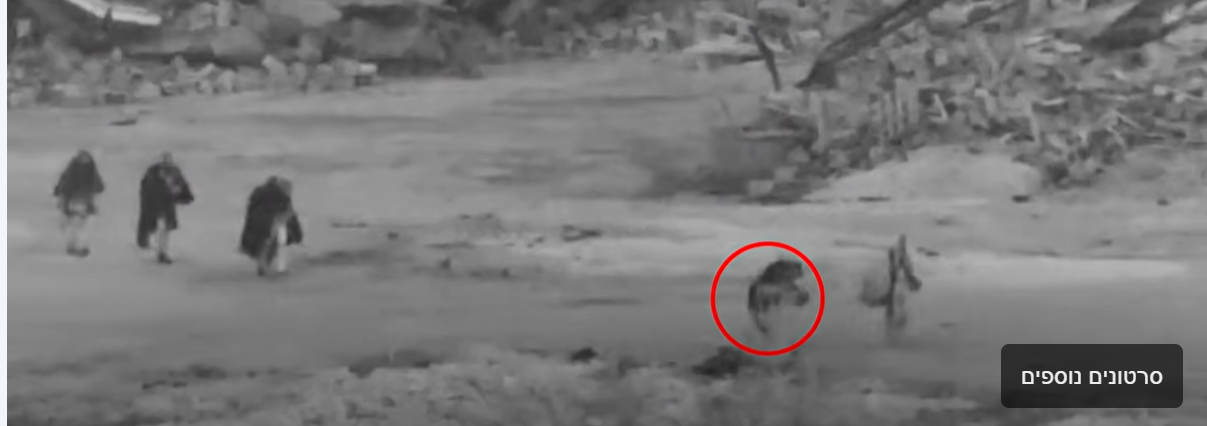
 Hamas terrorists in the northern Gaza Strip trying to escape from tunnels
(IDF spokesperson, February 13, 2026)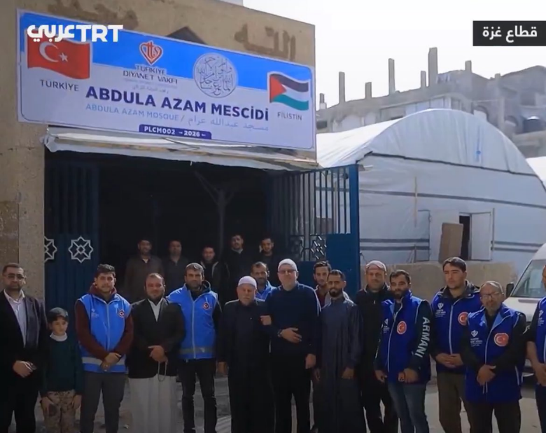 Inaugurating the Abdallah Azzam Mosque (TRT Arabic, February 15, 2026)
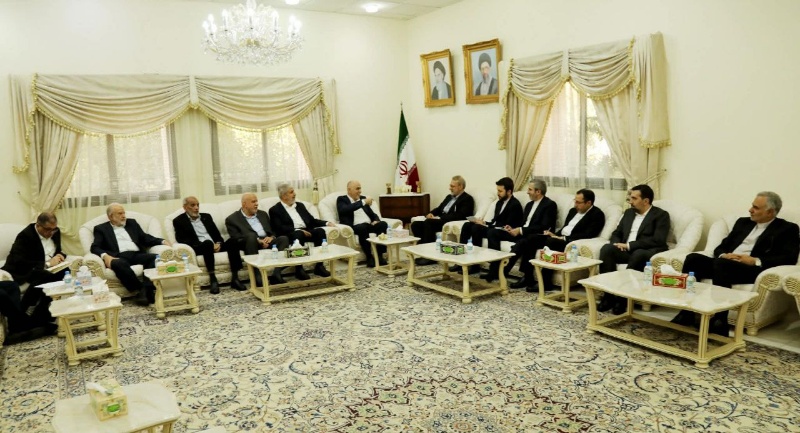 The meeting between the Hamas delegation and the Iranian official (Hamas Telegram channel, February 11, 2026)
IDF forces continued operating within the Yellow Line in the Gaza Strip to locate and destroy weapons and terrorist facilities. They eliminated terrorist operatives from Hamas and the Palestinian Islamic Jihad (PIJ) in response to a violation of the ceasefire agreement after the terrorists emerged from a tunnel in an area under IDF control in the northern Gaza Strip.
Doctors Without Borders announced it had suspended its activities at Nasser Hospital in Khan Yunis due to the takeover of the hospital by “armed men.”
Members of the technocrat committee for administering the Gaza Strip called for the full authority required to carry out their duties, amid concern that Hamas was attempting to impose its presence on the committee’s work by integrating its personnel into the new security forces.
As the Muslim religious month of Ramadan approaches, Hamas government employees in the Gaza Strip have been protesting the delay in the payment of their salaries.
Hamas figures met in Qatar with the head of Iran’s Supreme National Security Council and expressed solidarity with Tehran. The spokesperson of Hamas’ military wing warned that any attack on Iran would be considered an attack on the Islamic nation.
A Hamas delegation met with the commissioner of the Peace Council to discuss implementing the second phase of the ceasefire agreement. Hamas said no official decision had been made to freeze the use of weapons and added that any foreign force entering the Gaza Strip had to operate solely to maintain peace and to separate the population from Israel.
Turkey is expanding its involvement in the Gaza Strip by constructing mosques and schools.
Palestinians condemned the Israeli government’s designation of land in Judea and Samaria as state lands.
The prime minister of the Palestinian Authority (PA) said the past year had marked international diplomatic momentum in favor of the Palestinians.
The IDF
IDF forces continued to operate within the Yellow Line and attack in various areas of the Gaza Strip. They located weapons, destroyed terrorist facilities and eliminated terrorists who approached the line or attempted to cross it to attack the fighters. On February 14, 2026, at least two-armed terrorists were eliminated. They had apparently emerged from a tunnel near the forces within the Yellow Line in the northern Gaza Strip. In response, the forces attacked in various locations, eliminating Hamas and PIJ terrorist operatives, including a senior commander in the military production unit of PIJ’s military wing and Gazans who participated in the October 7, 2023 terrorist attack and massacre (IDF spokesperson, February 10–17, 2026).
Hamas terrorists in the northern Gaza Strip trying to escape from tunnels
(IDF spokesperson, February 13, 2026)
Hamas Uses Humanitarian Facilities for Terrorist Purposes
Doctors Without Borders announced it had suspended all non-urgent medical activities at Nasser Hospital in Khan Yunis as of January 20, 2026, due to concerns over maintaining the neutrality of the medical facility and security violations which had worsened in recent months following the ceasefire, including reports from patients and staff about the presence of armed and sometimes masked operatives within the hospital compound, intimidation of patients, arbitrary arrests of patients and even suspicion of the transfer of weapons inside the hospital. According to the organization, their activity created a serious security threat to staff and patients and undermined the provision of safe, impartial medical care (Doctors Without Borders website, February 9, 2026). The announcement may have been an attempt to improve the organization’s image after the Israeli Coordinator of Government Activities in the Territories (COGAT) revealed that among the organization’s employees had been Hamas and PIJ terrorist operatives to whose families the organization transferred payments after their deaths, and therefore its activity in the Strip was halted (COGAT X account, February 8, 2026).
The Hamas ministry of the interior claimed it was making a continuous, intensive effort to ensure there would be no armed presence on hospital premises, especially of family members entering hospitals, to preserve health facilities as purely humanitarian spaces which had to be free of armed confrontation or display of weapons. The ministry also allocated a police force for deployment, field monitoring and taking the necessary legal measures against lawbreakers, claiming it was determined to fulfill its responsibility and planned to take stricter measures to ensure order inside and around hospitals (Telegram channel of the Hamas ministry of interior and national security, February 14, 2026).
A social media activist opposing Hamas in the Gaza Strip claimed there were Hamas command and control centers inside the Nasser, Shuhada al-Aqsa, Shifa and al-Ahli hospitals, as well as in some smaller medical centers. He added that some Hamas “journalists,” such as employees of the Hamas newspaper al-Risalah, monitored the activities of all opponents of Hamas on social media and sent the information to Hamas for the enforcement of security measures (Facebook page of Mua’man al-Natour, February 15, 2026).
The situation in the Gaza Strip
Turkey continues to increase its presence in the Gaza Strip. Mahmoud Matar, deputy minister of the Hamas ministry of education, and representatives of the Turkish al-Sanabel charity inaugurated the al-Sanabel School in western Gaza City (Facebook page of the Directorate of Education in West Gaza, February 10, 2026). The Turkish Diyanet Foundation inaugurated three new mosques in the Gaza Strip in preparation for the month of Ramadan, including one named for Abdallah Azzam, the Palestinian preacher considered the mentor of al-Qaeda founder Osama bin Laden (TRT in Arabic, February 15, 2026). The IHH, which was designated by Israel and other countries as a terrorist organization, began distributing baskets of vegetables to displaced families in shelters and camps (IHH Gaza Facebook page, February 16, 2026).[2]
Inaugurating the Abdallah Azzam Mosque (TRT Arabic, February 15, 2026)
The King Salman Humanitarian Aid and Relief Center inaugurated a new operating room at al-Khair Hospital in Khan Yunis as part of Saudi Arabian aid to improve health services in the Gaza Strip. Operating rooms and maternity wards in three hospitals, al-Khair, al-Awda and Friends of the Patient (asdiqa’ al-marid) were upgraded to strengthen civilian medical treatment in difficult humanitarian conditions. The new operating room is expected to serve more than one million Palestinians, including the displaced in the al-Mawasi area, and to provide general surgical services as well as gynecological and urological care (al-Arabiya channel, February 9, 2026).
Jamil Suleiman, director of al-Rantisi Children’s Hospital in Gaza City, said the hospital was admitting an increasing number children with severe symptoms of a mysterious virus treated as acute pneumonia, with many requiring intensive care despite a shortage of beds, equipment and resources. He said the identity of the virus was unclear but was neither coronavirus nor seasonal influenza, adding that the main age group was five to ten years, but there were also younger children. He claimed that a shortage of laboratory testing materials was delaying accurate diagnosis and the formulation of a targeted treatment (al-Risalah, February 14, 2026).
The United Nations Development Programme (UNDP) began clearing a massive wartime landfill which had replaced Firas Market in Gaza City. The head of the UNDP office in Gaza, Alessandro Mrakic, estimated the volume of solid waste at more than 300,000 cubic meters and its height at 13 meters. It was created after municipal crews were prevented from reaching Gaza’s main landfill in the Juhor al-Dik area near the border with Israel, which is now under full Israeli control. Over the next six months, the UN agency plans to transfer the waste to a new temporary site prepared south of Gaza City and built to environmental standards. The site covers 75,000 square meters and will also receive daily waste collection (Reuters, February 11, 2026).
Civilian Governance
Hamas government employees reported an ongoing delay of salary payments, having already gone two months without receiving wages, as economic pressure rises ahead of the month of Ramadan when expenses increase. The employees said the receipt of wages was a basic right and not a favor, and that nonpayment directly harmed children and family stability (Facebook page of Muhammad Sami Nassar, February 12, 2026; Facebook page of Dr. Alaa al-Hindi, February 12, 2026).
The Hamas ministry of social development announced the launch of the national shelter management system project, intended to map and centralize data on shelter centers and register residents accurately to improve the humanitarian response. The ministry said the move was intended to address the absence of a central database and duplicate registration. It called on international organizations and donors to support the shelter centers in light of a shortage of basic facilities (Facebook page of the Hamas ministry of social development, February 16, 2026).
Security Governance
Ghassan al-Dahini, commander of the Popular Forces militia in eastern Rafah, operating in cooperation with Israel, said the militia had begun taking action to disarm Hamas. He claimed disarmament would begin in March 2026, but his men had already gradually begun the process, neutralizing tunnels, considered the most important weapon, then weapon production facilities, shells and rockets and finally small arms. He further claimed that in the future no unlawful weapons would be brought into Rafah and smuggling activities will be handled strictly (Facebook page of Ghassan al-Dahini, February 12, 2026). Al-Dahini claimed his men has taken control of smuggling along the border using UAVs (Facebook page of Ghassan al-Dahini, February 12, 2026).
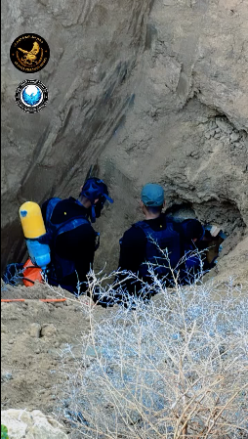
The Popular Forces militia in Rafah exposes tunnels
(Facebook page of Ghassan al-Dahini, February 12, 2026)
On the night of February 13, 2026, exchanges of fire were reported between members of militias opposing Hamas and operatives of the “resistance”[3] in the al-Zeitoun neighborhood in Gaza City. An Israeli UAV reportedly attacked to assist the militia operatives (Telegram channel of Hamas’ Sahm Unit 103, February 13–14, 2026). Subsequently, the Rada Force of Hamas “resistance security” claimed its operatives has prevented a terrorist attack by gangs of Israeli collaborators after luring a group into an ambush, but intervention by “occupation aircraft” provided cover for their withdrawal (Telegram channel of the Rada Force, February 14, 2026).
The Rafah Crossing
Following the reopening of the Rafah Crossing for movement between the Gaza Strip and Egypt, urgent appeals and requests for exit permits on humanitarian grounds began:
Palestinian students accepted to or studying at universities abroad, who remained stuck in the Gaza Strip during the war, appealed to the chairman of the National Committee for the Administration of the Gaza Strip, Dr. Ali Shaath, asking to be allowed to leave on humanitarian grounds. They argued that closed crossings and travel complications endangered their lives and could cause them to lose academic years (Telegram channel of Hazem Rafah Crossing, February 10, 2026).
Palestinian women stuck in the Gaza Strip appealed to Shaath to be included on humanitarian travel lists for family reunification, claiming that many children had not seen their fathers for more than two years (Telegram channel of Hazem Rafah Crossing, February 11, 2026).
Foreigners with residency permits stuck in the Gaza Strip appealed to Egyptian President al-Sisi, PA chairman Mahmoud Abbas and official bodies to expedite their inclusion on exit lists from the Strip (Telegram channel of Hazem Rafah Crossing, February 12, 2026).
Egyptian foreign ministry spokesperson Ambassador Tamim Khallaf told diplomatic editors that Egypt was committed to keeping the Rafah Crossing open in both directions (Middle East News Agency (MENA), February 12, 2026).
“Sources” said a Hamas delegation led by the head of its political bureau, Khalil al-Hayya, met in Cairo with Nikolay Mladenov, the commissioner of the Peace Council. Al-Hayya noted the need to complete the second phase of the ceasefire agreement and said Israeli violations had to stop (Ultra Palestine, February 14, 2026). He also noted the need to begin the activity of the committee for the administration of the Gaza Strip, claiming Hamas was prepared to transfer authority. He added that the activity of the international stabilization force would be limited to the borders of the Strip only and the force would not operate within Gazan territory (Ultra Palestine, February 17, 2026).
Following Indonesia’s announcement that it would send soldiers to the international stabilization force, Hamas spokesperson Hazem Qassem said any force entering the Strip had to have a limited, well defined, clear role, maintaining peace and separating Israel from the Palestinian population, supervising the ceasefire and ensuring full implementation of the peace plan, without interfering in internal affairs (Shehab Agency, February 11, 2026).
Hamas figure Osama Hamdan said the mediators had not given Hamas a draft or official proposal regarding the weapons of the “resistance,” and the movement had not made any official decision to freeze its weapons. He said Hamas’ position remained without change, that “resistance” was a right as long as the “occupation” continued. He also claimed that the Palestinian public rejected guardianship and would not accept having international forces replace the Israeli army, but said Hamas had told the Indonesian government that the role of an international force had to be on the borders of the Gaza Strip to create a buffer with Israel, adding that an international stabilization force was meant to prevent attacks on Palestinians (al-Jazeera Mubasher, February 11, 2026).
The National Committee for Administrating the Gaza Strip
The National Committee for Administrating the Gaza Strip said it would not be able to carry out its responsibilities effectively unless it were granted the full administrative and civilian authorities required to carry out its duties, in addition to police powers, adding that responsibility required empowerment which would enable it to operate efficiently and independently. That would open the door to serious international support for reconstruction, pave the way for a full Israeli withdrawal and contribute to the restoration of normal daily life. The committee added that its top priorities were currently ensuring the free flow of aid, beginning reconstruction and laying the groundwork to strengthen the unity of the people, noting that the move had to be based on specific transparent understandings which could be implemented and monitored in accordance with the 20-point plan and UN Security Council Resolution 2803. The committee also said it would act with responsibility, professionalism, transparency and accountability to preserve the Gazans’ dignity and to enable all national forces to contribute to rebuilding, and called on the mediators and all parties to expedite the resolution of outstanding issues to enable an orderly, reliable transition without further delays (X account of the National Committee for the Administration of the Gaza Strip, February 14, 2026).
“Sources” said Hamas insisted on merging its “security operatives” into the mechanisms which would be under the committee’s supervision, and which the committee opposed. They said that further complicated the committee’s ability to properly fulfill its duties and accused Hamas of seeking to impose its presence, one way or another, on the committee’s work. They said Hamas continued to make new appointments to the leadership of its security mechanisms to sabotage the plans prepared by Sami Nasman for managing the security portfolio on behalf of the committee (al-Sharq al-Awsat, February 14, 2026).
Turkish Foreign Minister Hakan Fidan met in Ankara with the chairman of the National Committee for the Administration of the Strip, Dr. Ali Shaath, committee member Sami Nasman and the Palestinian ambassador to Turkey. They discussed developments in the Gaza Strip and the need for assistance and shelter for thousands of homeless families. An agreement was reportedly reached with the Turkish foreign ministry to provide the committee with an initial shipment of 20,000 caravans to provide dignified, urgent temporary shelter. They also discussed what would be necessary to make it possible for the national committee to fulfill its role as soon as possible (Facebook page of Dr. Ali Shaath, February 14, 2026).
A “knowledgeable source” said the committee had asked members of the Peace Council to intervene with Israel to allow the entry of about 3,500 caravans obtained from donors and located in areas adjacent to the Strip. According to the report, Israel, which received detailed information about the caravans, refused because the caravans were made of wood and iron, materials Israel considers can be used to military purposes, and demanded they be made of fiberglass (al-Quds al-Arabi, February 12, 2026).
Egyptian Foreign Minister Badr Abdelatty met in Cairo with a delegation from Fatah’s Central Committee, which included Azzam al-Ahmad and Rawhi Fattouh. He said his country supported the National Committee for the Administration of the Strip as a temporary framework for managing daily affairs and meeting basic needs during the transition period, in preparation for PA’s return to the Strip in accordance with UN Security Council Resolution 2803 of November 2025 (Anadolu Agency, February 11, 2026).
The head of the Hamas department of national relations “abroad,” Ali Baraka, met with Hassan Ataya, a member of the PIJ political bureau, to discuss the latest developments in the Palestinian arena. The main topics were the Israeli cabinet decision regarding settlement in Judea and Samaria, the continuation of the “siege” of the Gaza Strip and the prevention of the entry of humanitarian aid, allegations of abuse and humiliation of travelers at the Rafah Crossing and the prevention of the entry of the National Committee for the Administration of the Strip. They called for uniting ranks on a “national, democratic basis” and demanded that the mediators, the American administration and the international community take action immediately to stop the fighting (Hamas Telegram channel, February 10, 2026).
The chairman of the Hamas leadership council, Muhammad Darwish, and a delegation from the movement’s leadership including Khaled Mashaal, Nizar Awadallah, Hussam Badran, Sami Khater and Bassem Na’im, met in Doha with Ali Larijani, secretary of Iran’s Supreme National Security Council. They reportedly discussed developments in the Gaza Strip and the region and the escalation in east Jerusalem and Judea and Samaria. Darwish expressed Hamas’ solidarity with Iran and its opposition to aggression against Iran, saying aggression against Iran or another regional country would undermine regional stability and security. Larijani briefed them on internal developments in Iran and contacts with the Americans, while noting Iran’s support for the Palestinians (Hamas Telegram channel, February 11, 2026).
The meeting between the Hamas delegation and the Iranian official
(Hamas Telegram channel, February 11, 2026)
After the meeting, Abu Obeida, spokesman for the Hamas military wing, said Hamas and the Palestinians expressed their solidarity with Iran, its leadership, government and people, and reiterated that any attack on Iran would be considered an attack on the Islamic nation and a violation of the sovereignty of a Muslim state which was part of the “resistance.” He added that the threats, attacks and siege of Iran were attempts at revenge for Iran’s support of the Palestinians (Hamas official Telegram channel, February 11, 2026).
Counterterrorist Activity
This past week IDF forces continued counterterrorist operations throughout Judea and Samaria. They detained more than 100 wanted Palestinians and suspects involved in terrorist activity, including an accomplice to a terrorist who carried out a shooting in which three Israelis were killed in January 2025, two suspects who attempted to infiltrate the community of Karmei Tzur, Palestinians who threw Molotov cocktails and those involved in smuggling illegal residents into Israel. The forces seized weapons and lathes for manufacturing weapons, and confiscated more than three million shekels (about $966,000) intended for financing terrorist activity, and exposed two terrorist networks operated by a network in Lebanon, which planned to carry out an attack (IDF spokesperson, February 10–17, 2026).
Hamas condemned Israel’s decision to deport two terrorists living in northern Jerusalem and revoke their Israeli citizenship. Hamas called it another step in the Netanyahu government’s policy to promote the Judaization of Jerusalem, uproot Palestinians and annex Judea and Samaria and Jerusalem, in violation of international law (Hamas Telegram channel, February 11, 2026).
Friction between Jewish Settlers and Palestinians
There were violent clashes between Jewish settlers and Palestinians in the Palestinian village of Talfit near the Tapuah Junction. After Palestinians approached an illegal outpost established by Jews in Area B, a violent confrontation began during which an Israeli civilian was injured. In response, Jewish settlers went Talfit and smashed the windows of seven Palestinian vehicles (Israeli media, February 13, 2026). Hamas was “shocked” at the “brutal attack” by the settlers [allegedly] together with IDF forces, which included damage to property, intimidation of civilians and live gunfire which caused injuries (Hamas Telegram channel, February 13, 2026).
Palestinians condemned the Israeli government’s decision to designate lands in Judea and Samaria as Israeli state lands. The PA called it a threat to security and stability, a dangerous escalation and a violation of international law, and part of annexation plans aimed at entrenching the occupation. The PA called on the international community, particularly the United States and the UN Security Council, to exert pressure on Israel to halt its activities (Wafa, February 15, 2026). Fatah said Israeli attempts to impose legality on annexation in Judea and Samaria would not add legitimacy. The movement called the decision a “falsification of history” and a violation of law and international agreements (Wafa, February 15, 2026). Hamas represented the decision as an attempt to impose Judaization settlement by force contrary to UN resolutions (Hamas Telegram channel, February 15, 2026).
The chairman of the Palestinian Authority, Mahmoud Abbas, met in Oslo with Norwegian Prime Minister Jonas Gahr Store. They discussed developments in the Palestinian arena and strengthening bilateral relations. Mahmoud Abbas praised Norway’s position supporting Palestinian rights and emphasized its recognition of the State of Palestine and continued political, economic and humanitarian assistance (Wafa, February 11, 2026).
Muhammad Mustafa, PA prime minister Palestinian Authority, participated in the 39th African Union Summit held in Ethiopia. Speaking at the summit he said the past year had marked international diplomatic momentum in favor of the Palestinians, including through the establishment of the International Coalition for the Implementation of the Two-State Solution and a Saudi-French initiative to convene an international conference based on UN resolutions and the Arab initiative, which increased the number of states recognizing the [so-called] “State of Palestine” to about 160. Mustafa claimed the Palestinian people needed solidarity measures and international efforts to realize their freedom and self-determination, adding and that the Gaza Strip was an integral part of Palestine, the people were one and the national project was one. He called for removing obstacles erected by Israel to the implementation of the second phase of the agreement, including the work of the temporary committee for the administration of the Strip, to ensure he continuity of service, organize the humanitarian effort and early recovery. He claimed that despite the ceasefire, Israel continued to violate understandings and had killed more than 500 Palestinians since its declaration (Facebook page of the office of the PA prime minister, February 14, 2026).
The chairman of the Palestinian National Council, Rawhi Fattouh, condemned the visit of the president of the German Bundestag, Julia Klockner, to the Yellow Line in the Gaza Strip under Israeli control without visiting other parts of the Strip or Judea and Samaria. He called it a “selective visit” which did not reflect the situation of Palestinians under the occupation, and said Germany was ignoring Israel’s “crimes and ongoing violations against Palestinians.” He called on the German parliament and international bodies to adopt a balanced position, visit all the occupied territories without restrictions, listen to victims and hold Israel accountable instead of settling for partial visits which he claimed “whitewashed the occupation” (Facebook page of the Palestinian National Council, February 13, 2026).
PA minister of foreign affairs and expatriates, Farsin Shaheen, met on the sidelines of the Munich Security Conference with UNRWA Commissioner General Philippe Lazzarini. They discussed the humanitarian situation of the Palestinian people, particularly in the Gaza Strip and the continuation of UNRWA’s activity. It was noted that the international community was responsible for protecting UNRWA and all components of support, and for enabling it to continue its functions, since was “irreplaceable’ (Facebook page of the PA foreign ministry, February 15, 2026).
The PA Security Forces
Palestinians were angry when, during a PA security force operation in the town of Tammun, the son of Samar Samara, who was wanted by Israel, was killed and his sister was injured. Local residents closed the schools in protest and burned tires in the streets (Telegram channel of Tammun al-Ekhbariya, February 15, 2026; Quds Agency, February 16, 2026). Hamas claimed the security mechanisms had committed a crime and demanded that all those involved be brought to trial, the immediate release of political detainees and the cessation of the persecution of Palestinians (56…Hamas Telegram channel, February 15, 2026). The governor of Tubas said a committee of representatives of the ministry of the interior and commanders of the security forces had been appointed to investigate the incident (Tubas Governorate Facebook page, February 15, 2026). The preventive security forces expressed their condolences and said they were fully responsible for what had occurred, including all security and humanitarian aspects, while maintaining principles of transparency and accountability to strengthen public trust (Wafa, February 16, 2026).
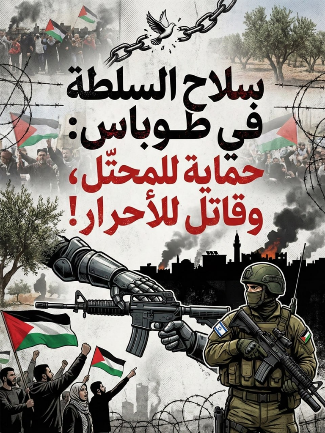
A post on the social networks. The Arabic reads “The weapons of the PA in Tubas: protect the occupier and kill free people” (Telegram channel of Akhbar Jenin, February 15, 2026)
[1] Click https://www.terrorism-info.org.il/en to subscribe and receive the ITIC’s daily updates as well as its other publications.
[2] See the October 2025 ITIC report, The Turkish IHH, which led the Mavi Marmara flotilla, operates in the Gaza Strip and is involved in its reconstruction
[3] Hamas and the other terrorist organizations operating in the Gaza Strip.
Related Articles