
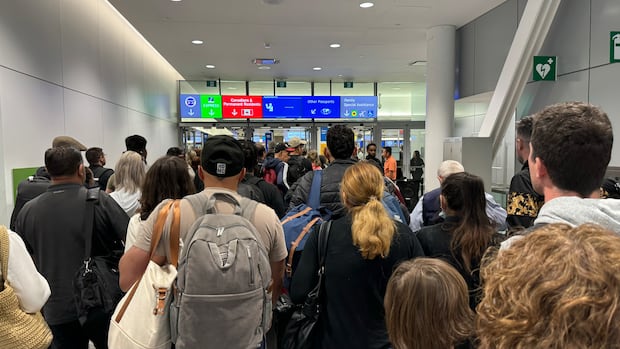
As Canada opens up to China, it should do more to ensure that the country doesn’t use the opportunity to increase transnational repression against members of the Chinese diaspora living here, warns a veteran national security expert.
Phil Gurski, a former analyst with the Canadian Security Intelligence Service (CSIS), said the service has a large security screening branch which already screens some citizenship and immigration applications. He said it should screen visitors from China to reduce the possibility of Chinese government agents slipping in.
Experts and a public inquiry into foreign interference have pointed to China as one of the largest sources of transnational repression in Canada, with government agents engaging in activities like surveillance of members of the Chinese diaspora, online attacks and threats against family members back in China.
“If there are visitors coming [from] the People’s Republic of China, they should be vetted through CSIS,” Gurski told reporters on Parliament Hill on Tuesday. “It has its own intelligence sources, it has alliances with its counterparts around the world. If CSIS comes up against information that indicates somebody is not being truthful, or forthcoming, in their background or their intentions in coming to Canada, they should be denied entry.”
In an interview, Gurski said the government should increase CSIS’s resources to allow it to screen all visitors to Canada from China in all categories.
In its most recent public report, CSIS said it received 538,100 referrals from the immigration department and the Canada Border Services Agency to screen applicants for refugee status, temporary resident visas, permanent residency and citizenship. The report did not say how many of those applications came from people from China.
Marie Lamensch, global affairs director for the Montreal Institute for Global Security, said Chinese “secret police stations” still exist in Canada and a lot of Chinese government agents have come to Canada to intimidate members of the Chinese diaspora.
In 2022, human rights group Safeguard Defenders reported that the Chinese government had set up “police stations” around the world, including in Canada. The RCMP investigated but concluded its probe into alleged Chinese police stations in the Montreal area in 2025 without laying charges.
Defenders of the locations have maintained that they were simply offering services to the Chinese-Canadian community.
“It is important for us to keep an eye on the people from China who come here in order to make sure that they aren’t intimidating members of the diaspora,” Lamensch said.
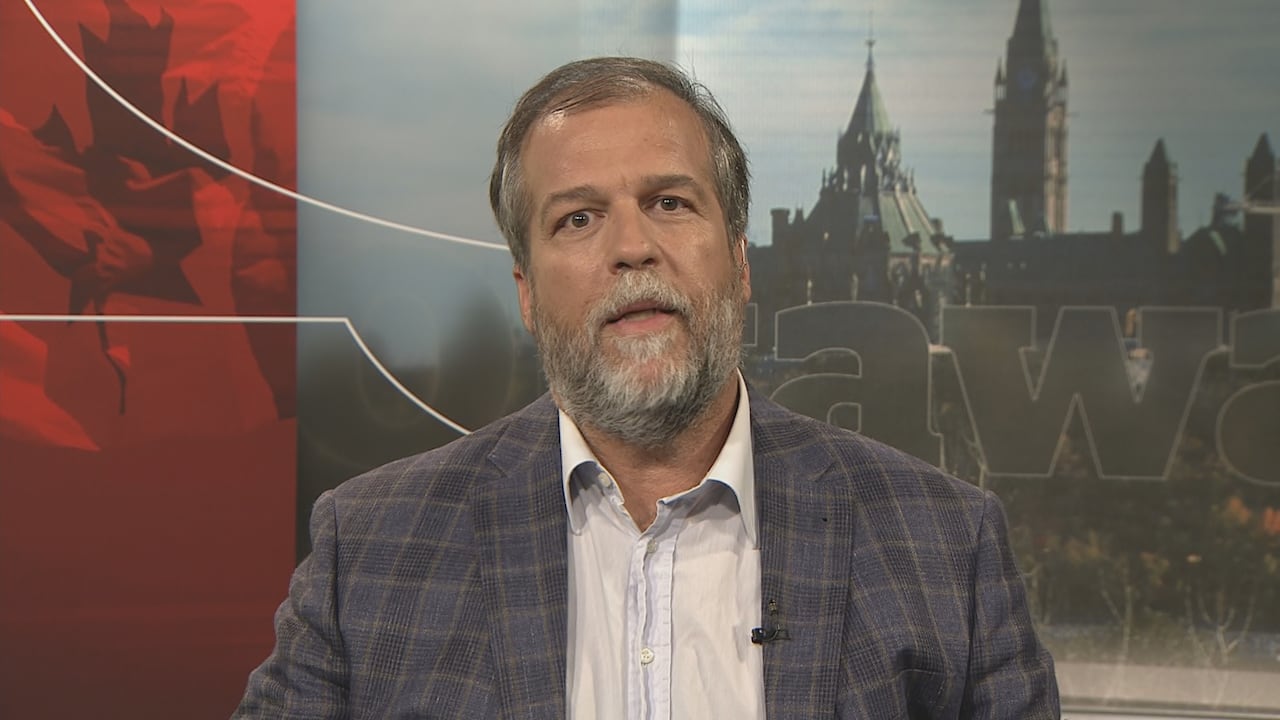 Phil Gurski, former CSIS analyst, says CSIS could vet visitors from China to reduce the chance of Chinese government agents entering Canada to engage in transnational repression. (CBC)
The comments come as the Montreal Institute for Global Security (MIGS) launched a new 71-page report co-authored by Gurski and Lamensch, taking a closer look at transnational repression by several different countries that is taking place in Canada.
It says foreign states are increasingly targeting individuals on Canadian soil “through intimidation, surveillance, digital harassment, coercion of family members abroad and, in some cases, plans for physical harm.”
The report calls for stronger protection for those targeted by transnational repression from foreign countries, more robust laws, a government-wide strategy to counter it and collaboration with other countries.
In January 2025, an inquiry headed by Justice Marie-Josée Hogue concluded in its final report that transnational repression in Canada was a “genuine scourge” and that the People’s Republic of China was the “most active perpetrator of foreign interference targeting Canadian democratic institutions.”
Hogue said this kind of foreign interference went “well beyond” the scope of her inquiry’s mandate.
“But what I have learned about it is sufficient for me to sound the alarm that the government must take this seriously and consider ways to address it,” Hogue wrote in her final report.
The MIGS report also comes as Public Safety Minister Gary Anandasangaree has recently nominated former British Columbia Chief Electoral Officer Anton Boegman as Canada’s first Foreign Influence Transparency commissioner. The government has also published draft regulations to set the stage for a foreign agent registry listing those who have made arrangements to work in Canada as agents on behalf of foreign governments.
Boegman is scheduled to appear before the House of Commons Procedure and House Affairs Committee on Feb. 26 to respond to questions from MPs about his nomination.
Kyle Matthews, executive director of the Institute, said its report is coming as economic threats from the U.S. are prompting Canada to increase economic ties with countries like China and India, which have engaged in transnational repression in Canada. He said it also comes as the U.S. government has cut funding to a number of organizations that have been monitoring transnational repression around the world.
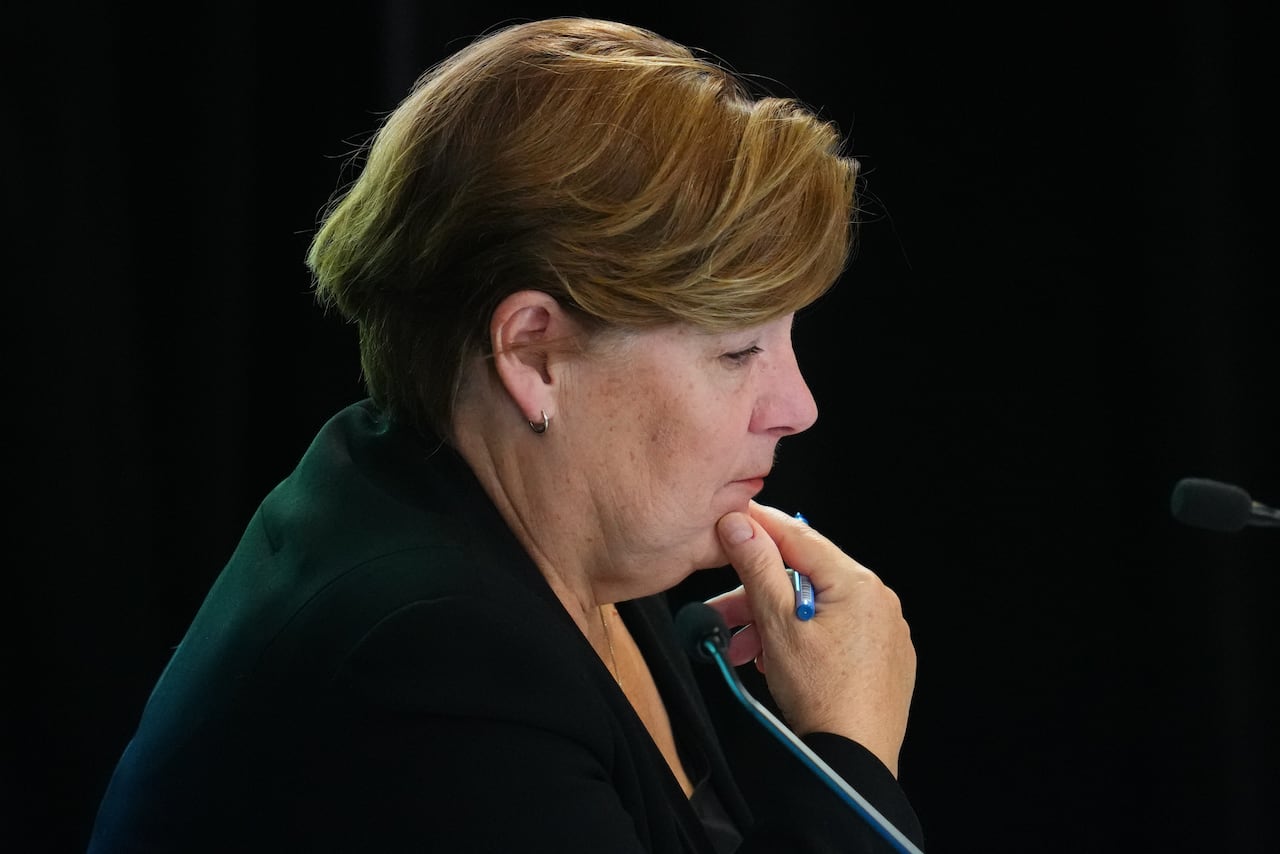 Justice Marie-Josée Hogue warned that transnational repression in Canada was “a scourge.” (The Canadian Press)
In its report, which provides an overview of transnational repression efforts in Canada by different countries, the Institute said Canada has “underestimated the scale and sophistication” of transnational repression, allowing “foreign governments to operate with relative impunity, exploiting Canada’s openness and its limited preparedness to this growing threat.”
“Emerging technologies such as social media and deepfakes have made the threat even more insidious and attribution more difficult,” says the report.
While China is believed to be one of the most active countries in engaging in transnational repression in Canada, the report also outlines activities conducted by Russia, India, Algeria, Iran, and Rwanda.
The report details how transnational repression can fall between the cracks. While the government has now named a foreign interference coordinator in the Public Safety department, it says no one agency is responsible for countering transnational repression. Depending on the nature of the activity, it could be referred to CSIS, the RCMP, the Centre for Cyber Security, the Communications Security Establishment (CSE) or the Canada Border Services Agency.
“The lack of comprehensive guidelines makes reporting particularly complicated, causing frustration among diaspora communities, as follow-up has not been systematic,” says the report. “Several targets of transnational repression have reported reaching out to Canadian authorities with little response.”
It said many targets of transnational repression are hesitant to come forward or fear retaliation against relatives abroad.
The report also outlines a series of recommendations from cooperation within the G7 to new technological tools to track transnational repression.
“Canada needs to confront this evolving threat by closing gaps in policy and enforcement, strengthening legal protections, and ensuring that those targeted have access to meaningful support.”