
Your support helps us to tell the story
From reproductive rights to climate change to Big Tech, The Independent is on the ground when the story is developing. Whether it’s investigating the financials of Elon Musk’s pro-Trump PAC or producing our latest documentary, ‘The A Word’, which shines a light on the American women fighting for reproductive rights, we know how important it is to parse out the facts from the messaging.
At such a critical moment in US history, we need reporters on the ground. Your donation allows us to keep sending journalists to speak to both sides of the story.
The Independent is trusted by Americans across the entire political spectrum. And unlike many other quality news outlets, we choose not to lock Americans out of our reporting and analysis with paywalls. We believe quality journalism should be available to everyone, paid for by those who can afford it.
Your support makes all the difference.Read more
A specific brain region, dubbed a “parenting hub”, has been linked to the diverse paternal behaviours of male mice, from devoted care to aggression towards pups.
Changes within this area, alongside varying levels of a particular gene, correlate with distinct parenting styles in male African striped mice.
These rodents display a wide spectrum of involvement, both in the wild and in labs; some actively groom and nestle pups, while others ignore or even attack them. The study found the brain’s medial preoptic area (MPOA) became significantly more active when male mice encountered a pup.
But not all mice showed the same brain activity, with those who are caring towards pups showing higher levels of neuron activity compared to male mice who were more “standoffish” or hostile.
open image in gallery
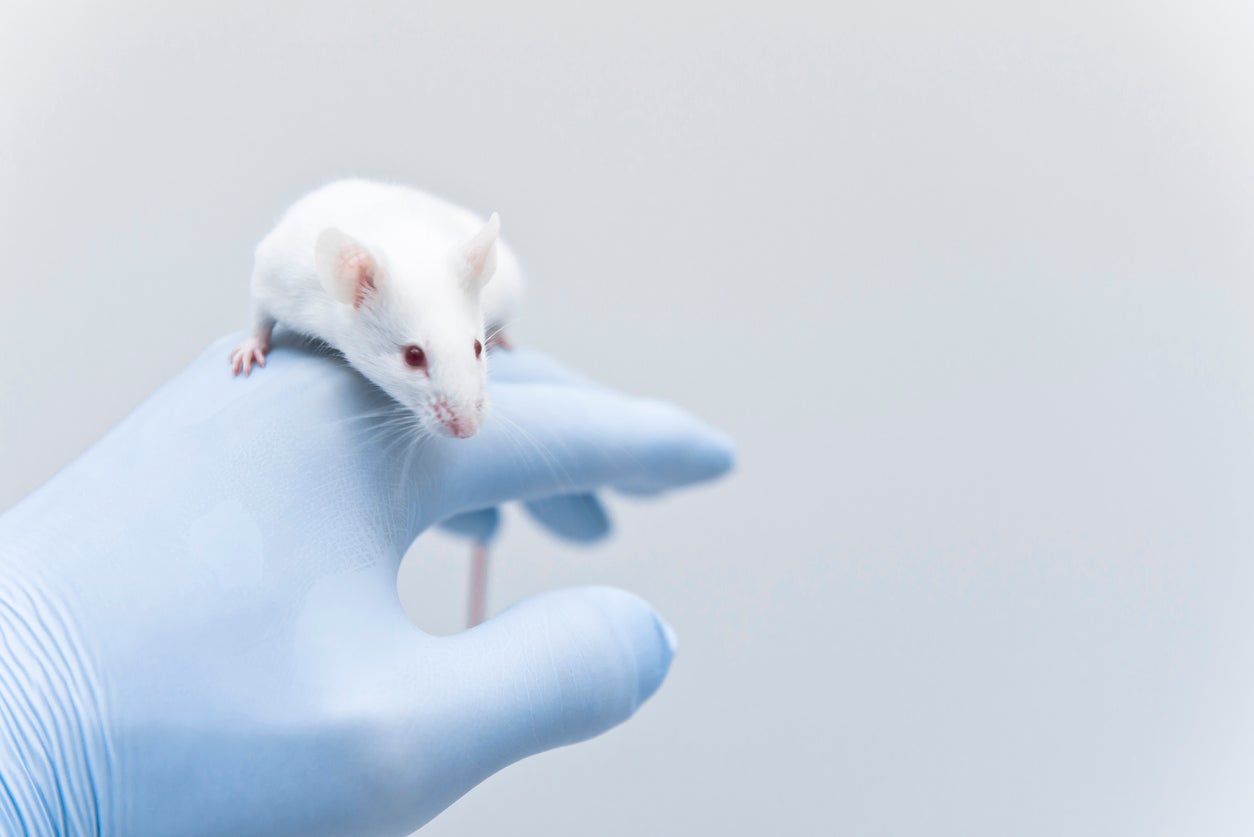
A study into the behaviour of mice found they have a ‘parenting hub’ in their brain (Getty Images)
Researchers also found that males who spent more time caring for pups had lower levels of a specific gene called Agouti in their brains.
“Agouti is better known for its roles in skin pigmentation and metabolism, so discovering this previously unknown role in the brain for parenting behaviour was exciting,” said Dr Forrest Rogers, a postdoctoral researcher at Princeton University in the US.
The researcher team also found that certain environmental conditions influence Agouti levels in the MPOA, which in turn affected behaviour toward pups.
If males lived alone, they had low levels of Agouti and were more likely to become nurturing adults, the researchers said.
But male mice that lived in groups had higher levels of Agouti, and devoted half as much time to childcare.
High levels of Agouti appeared to suppress neural activity in the MPOA, the research team report in the journal Nature.
The scientists also used gene therapy to artificially boost Agouti levels in the brains of mice.
They found that when males re-encountered pups after treatment, they showed less interest in pups than they had before, with some even becoming aggressive.
The scientists also found that making changes to the environment also led to changes in levels of Agouti.
They moved some males from communal living arrangements to solitary spaces and found that Agouti levels dropped and males took more interest in pups.
“Our findings point to Agouti as a potential evolutionary mechanism that allows animals to integrate environmental information, such as social competition or population density, and adjust the balance between self-preservation and investment in offspring,” said co-author Dr Ricardo Mallarino, associate professor of molecular biology at Princeton.
The MPOA and the Agouti gene are both found in humans and striped mice, but the team cautioned that it remains unknown whether these mechanisms can change paternal behaviour in people.