
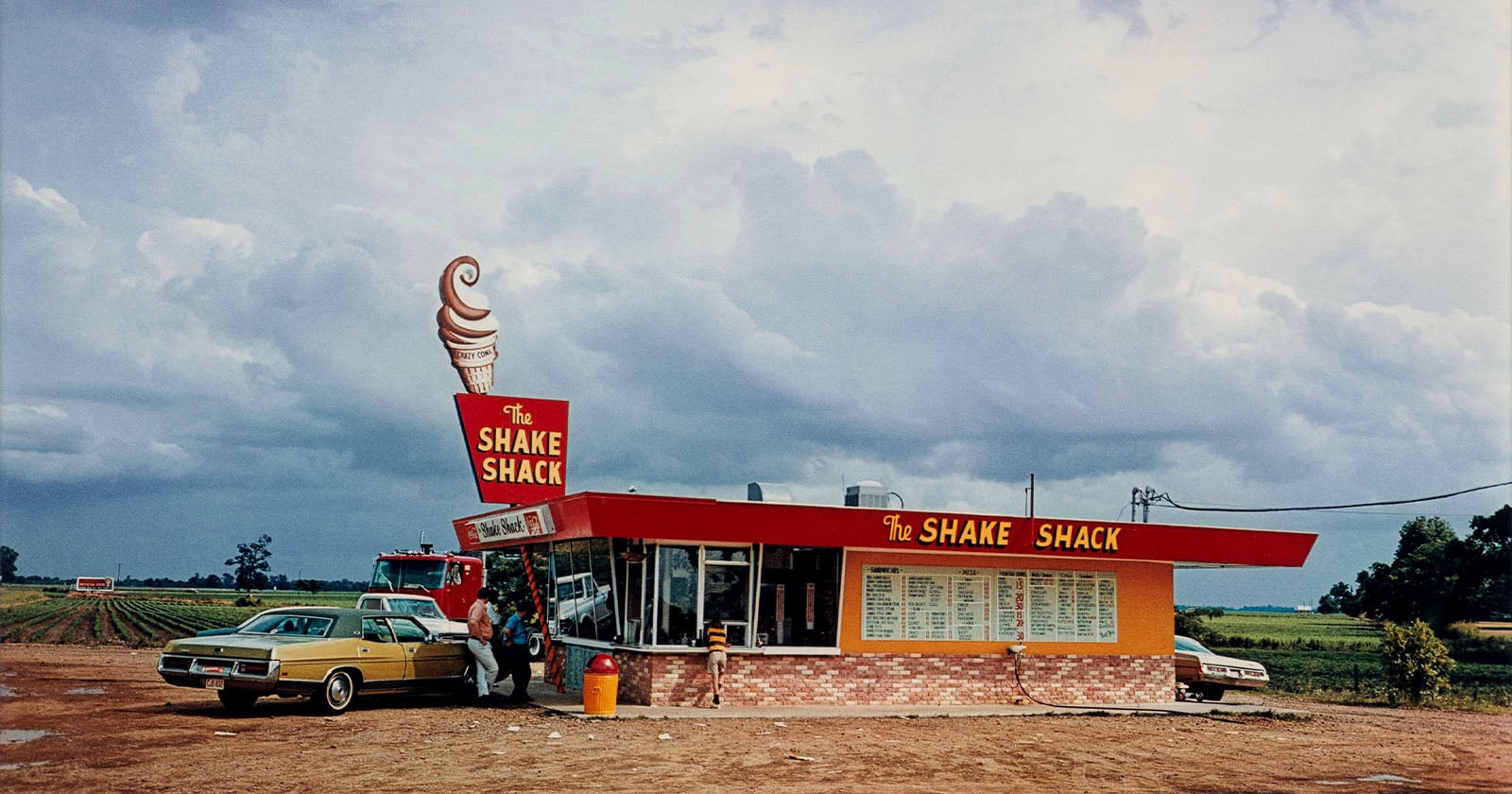
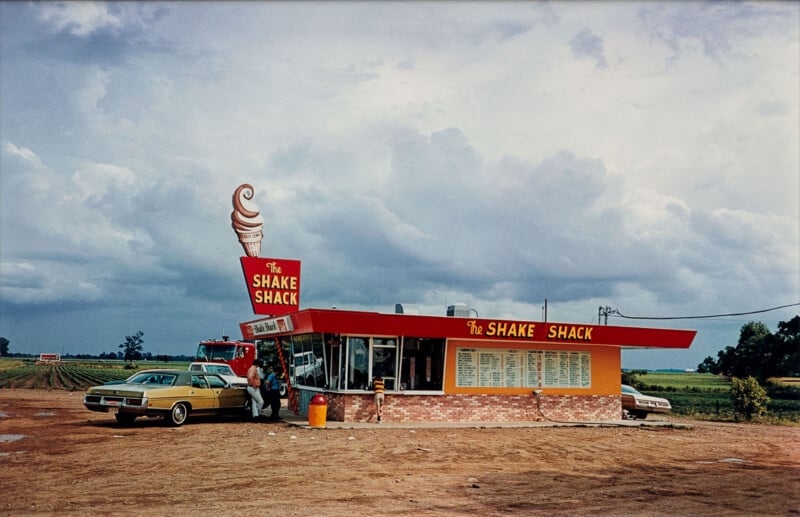
 William Eggleston, Untitled, 1970. © Eggleston Artistic Trust. Courtesy Eggleston Artistic Trust and David Zwirner
For his new show, The Last Dyes, William Eggleston and his team used up the last remaining dye-transfer materials to make new prints of the iconic photographer’s work from the 1970s.
Eggleston, famed for his photos of the American South twinged with a Technicolor pop, is arguably the most important color photographer of all time. His 1976 show at the Museum of Modern Art left some critics aghast; at the time, serious art photographers were supposed to use black and white.
Eggleston’s subject matter also prompted a crack in the status quo: some of his best-known photos are of ceilings. Critics of the day denigrated his work by comparing it to photos taken by everyday folk. But it’s all part of what Eggleston calls his “war with the obvious”.
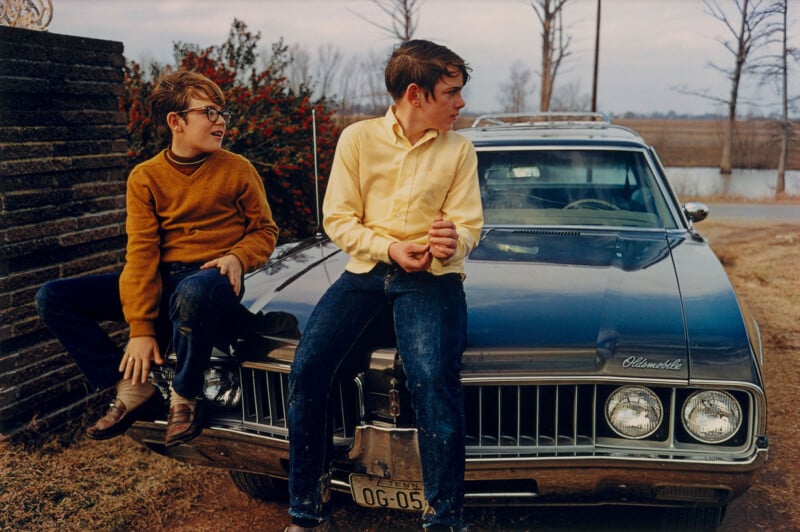 William Eggleston, Untitled, 1970. © Eggleston Artistic Trust. Courtesy Eggleston Artistic Trust and David Zwirner
 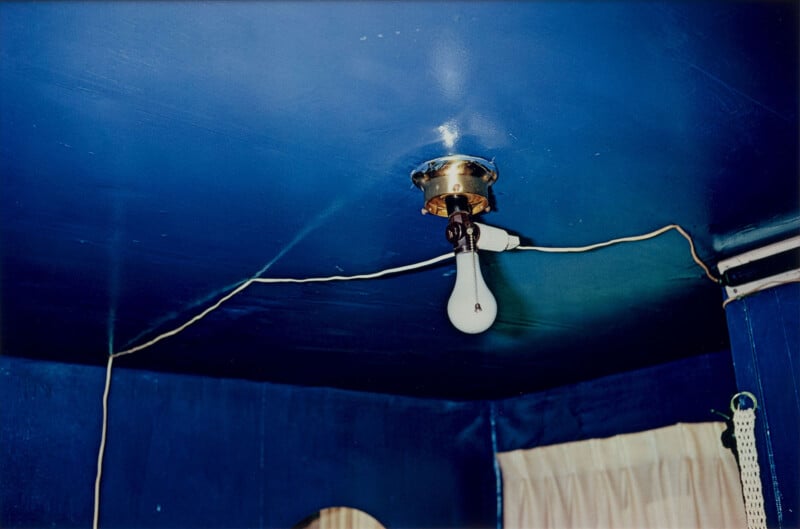 William Eggleston, Untitled, 1973. © Eggleston Artistic Trust. Courtesy Eggleston Artistic Trust and David Zwirner
 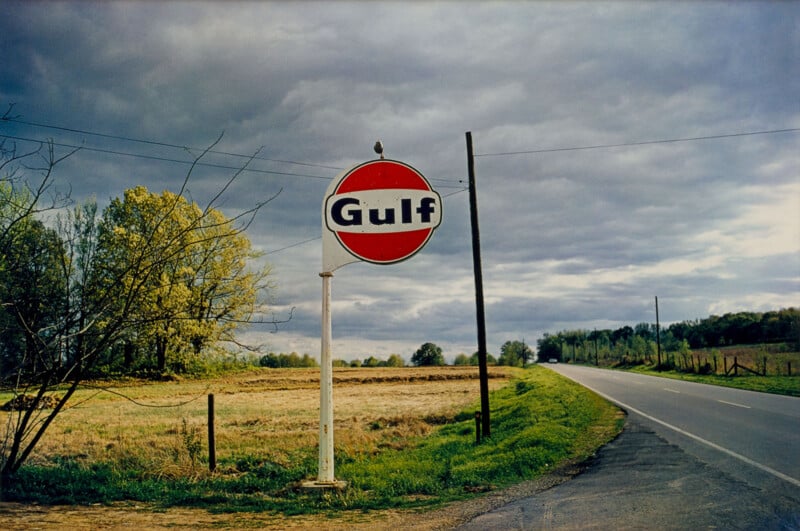 William Eggleston, Untitled, 1972. © Eggleston Artistic Trust. Courtesy Eggleston Artistic Trust and David Zwirner
The Last Dyes, curated by Eggleston’s two sons, is on now at the David Zwirner gallery in New York. It constitutes the last major group of photographs ever to be produced using the dye-transfer printing method.
The dye-transfer process and materials were developed by Kodak in the 1940s, primarily for fashion photography and commercial use. More akin to offset printing, the dye-transfer process is a technically advanced undertaking done by hand in which the original image (Eggleston primarily used Kodachrome slide film) is split into three separation negatives, which are then enlarged onto three film matrices — a transparent cell coated with a light-sensitive emulsion — as positive images.
Each of the three film matrices is immersed in a dye bath of cyan, magenta, and yellow, respectively, with the gelatin on the matrices holding the dye. One at a time, the individual matrices are pressed and rolled onto a special fiber paper that is highly receptive to the dyes, resulting in the final color photograph that has a richness of tonal depth and color saturation that Eggleston adores.
In the early 1990s, Kodak stopped producing the dyes, paper, and matrix film used in the process. At that time, Eggleston and the renowned dye-transfer specialists Guy Stricherz and Irene Malli — who have printed Eggleston’s works for the last 25 years — began acquiring the remaining available dye-transfer materials, using the last significant quantities of them to produce these final photographs.
The Guardian notes that married couple Stricherz and Malli are among the few remaining practitioners of this costly, painstaking craft. Producing a single batch of 10 prints required six to eight months.
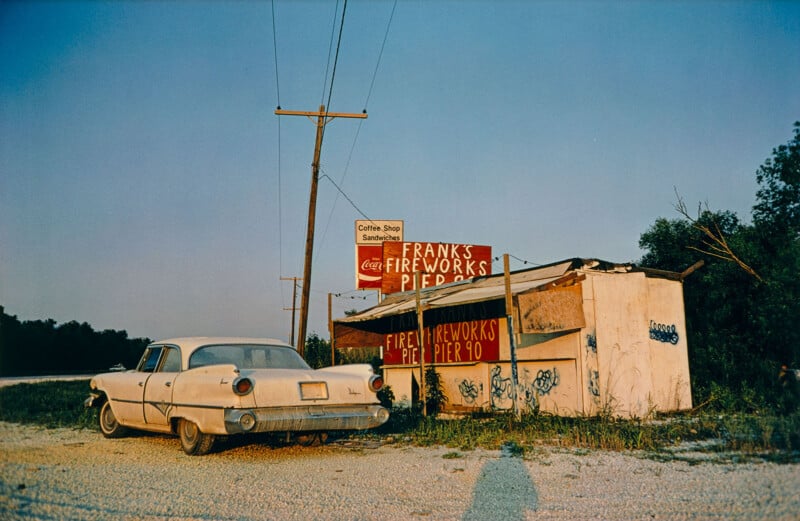 William Eggleston, Untitled, 1971. © Eggleston Artistic Trust. Courtesy Eggleston Artistic Trust and David Zwirner
 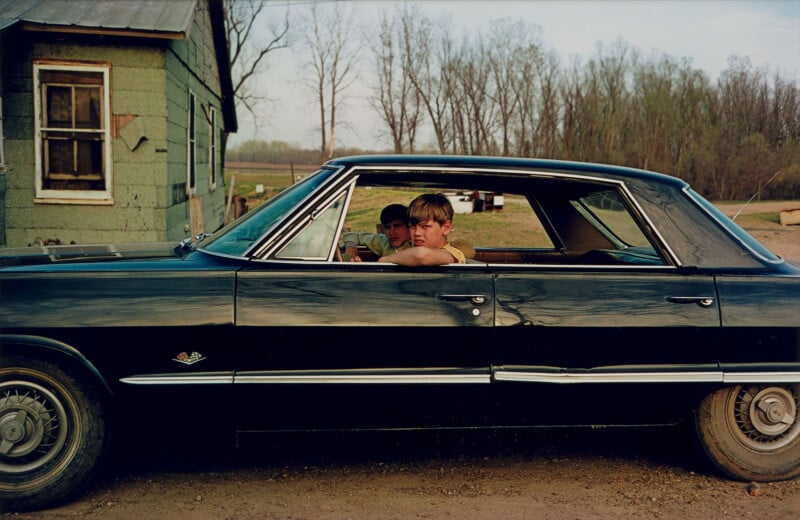 William Eggleston, Untitled, 1971. © Eggleston Artistic Trust. Courtesy Eggleston Artistic Trust and David Zwirner
The works on view in New York are from Eggleston’s celebrated Outlands and Chromes series, as well as several images that were first shown in the artist’s notorious exhibition of color photography at The Museum of Modern Art, New York, in 1976.
Eggleston, in consultation with his sons William and Winston, chose this group of images for his final dyes as a representative selection of the immense photographic project he undertook between 1969 and 1974 during his travels through the American South.
“David Zwirner is pleased to announce The Last Dyes, an exhibition of new dye-transfer prints by William Eggleston, opening at the gallery’s 533 West 19th Street location in New York,” reads a press release.
“Eggleston pioneered the use of dye-transfer printing for art photography in the 1970s, and—as the title suggests—these photographs are the final prints ever made of Eggleston’s images using this analog process.”
The exhibition runs until March 7.