
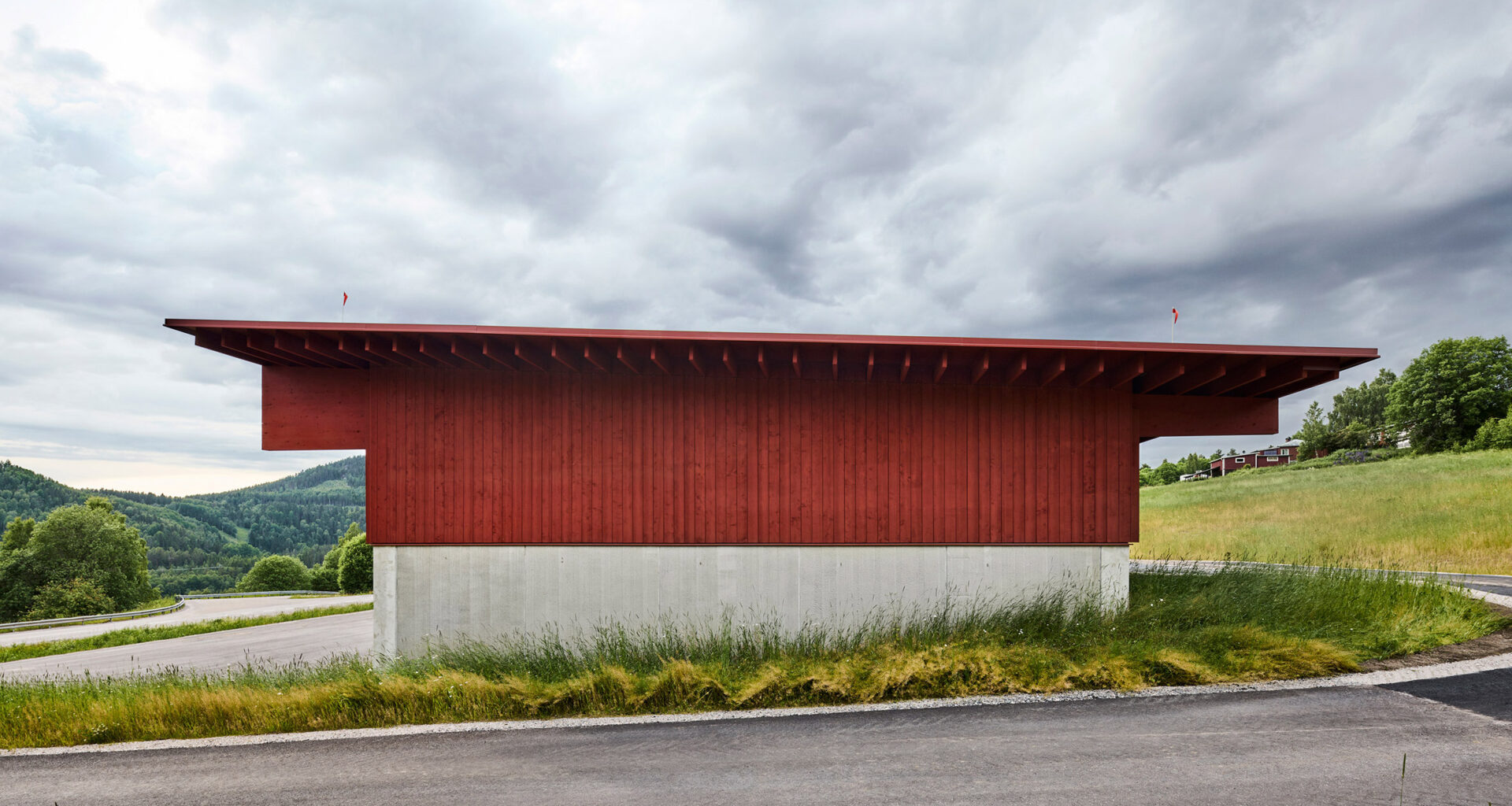
Stockholm studio Kod Arkitekter has created a fire station in Sweden, cladding it in bright red-stained wood to help establish it as a local landmark.
Located in the rural village of Liden, the building was designed to strengthen safety in the area, accommodating 24 part-time firefighters with a speciality in forest fires and navigating challenging terrain.
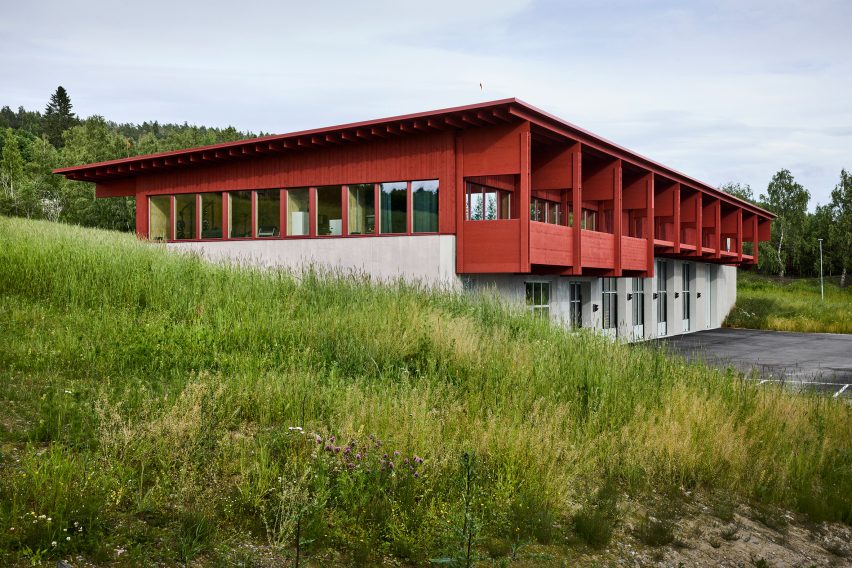 Kod Arkitekter has created a fire station in Liden
Kod Arkitekter modelled the distinctive hue of its cladding on Falu red – a common treatment seen on wooden buildings throughout Sweden, historically achieved using pigments from copper mines in Falun.
This ensures it complements the local context while also making it visible from the nearby highway, National Road 86.
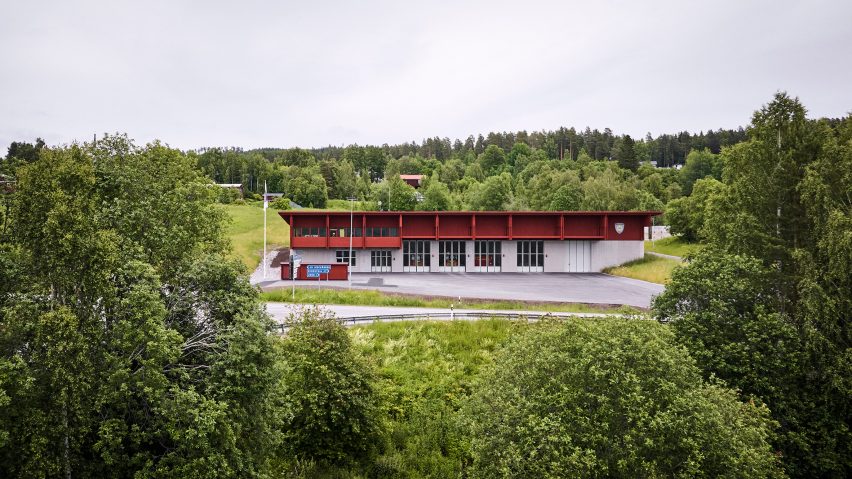 It is distinguished by the Falu red finish of its facade
“The colour was present from the very first sketch,” the studio told Dezeen.
“Buildings painted with Falu red are very common in the Swedish countryside, particularly for modest dwellings and functional structures such as barns and agricultural buildings,” it continued.
“So while the form of the building is not traditional, its Falu red finish connects it to the cultural landscape in which it sits. The colour also contrasts strongly with its surroundings – green grass in summer and white snow in winter.”
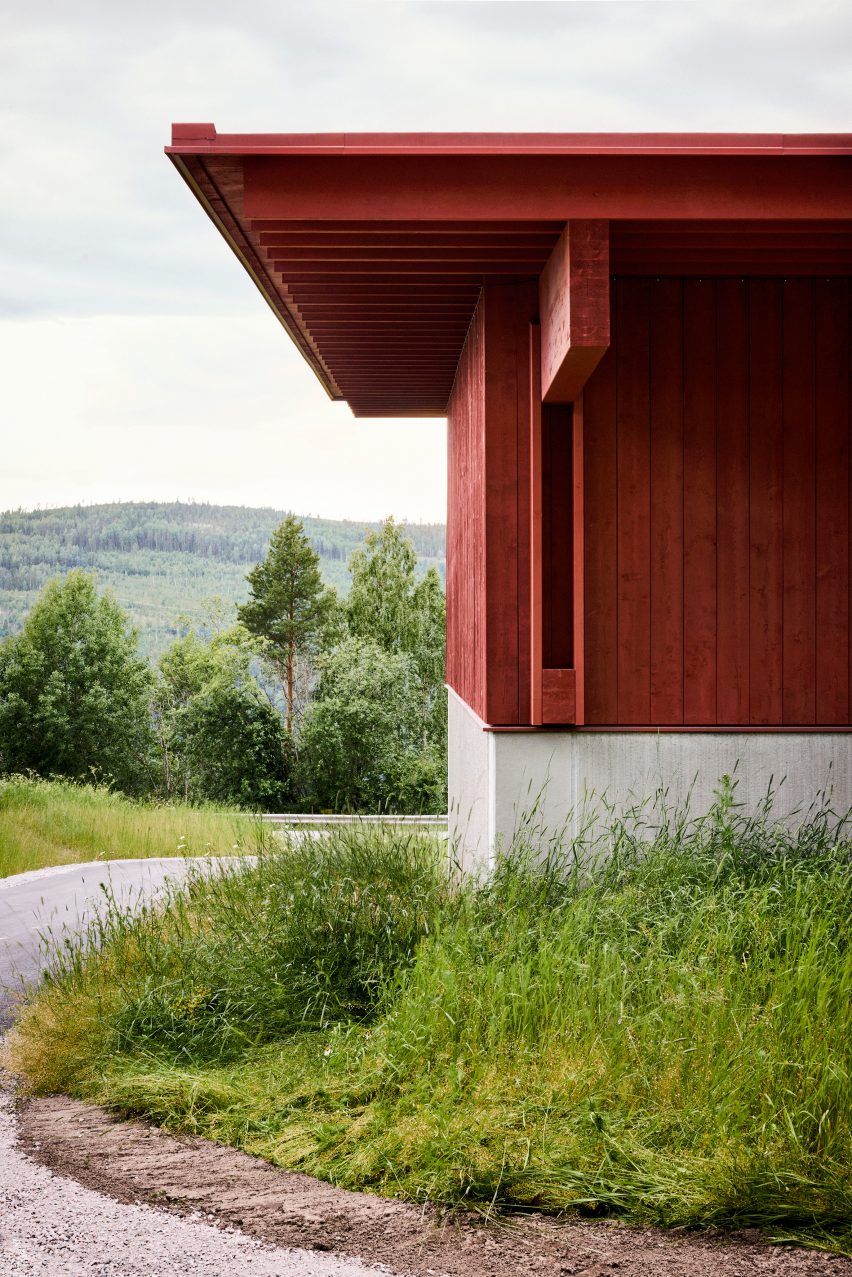 It is designed be a landmark in the area
The site of the fire station in Liden was selected for its proximity to the highway, which Kod Arkitekter said will help ensure “rapid emergency response”.
It is partially sunken within the landscape to help level off its sloped site, which sits within a river valley, ensuring an adequate forecourt for the manoeuvring of fire engines.
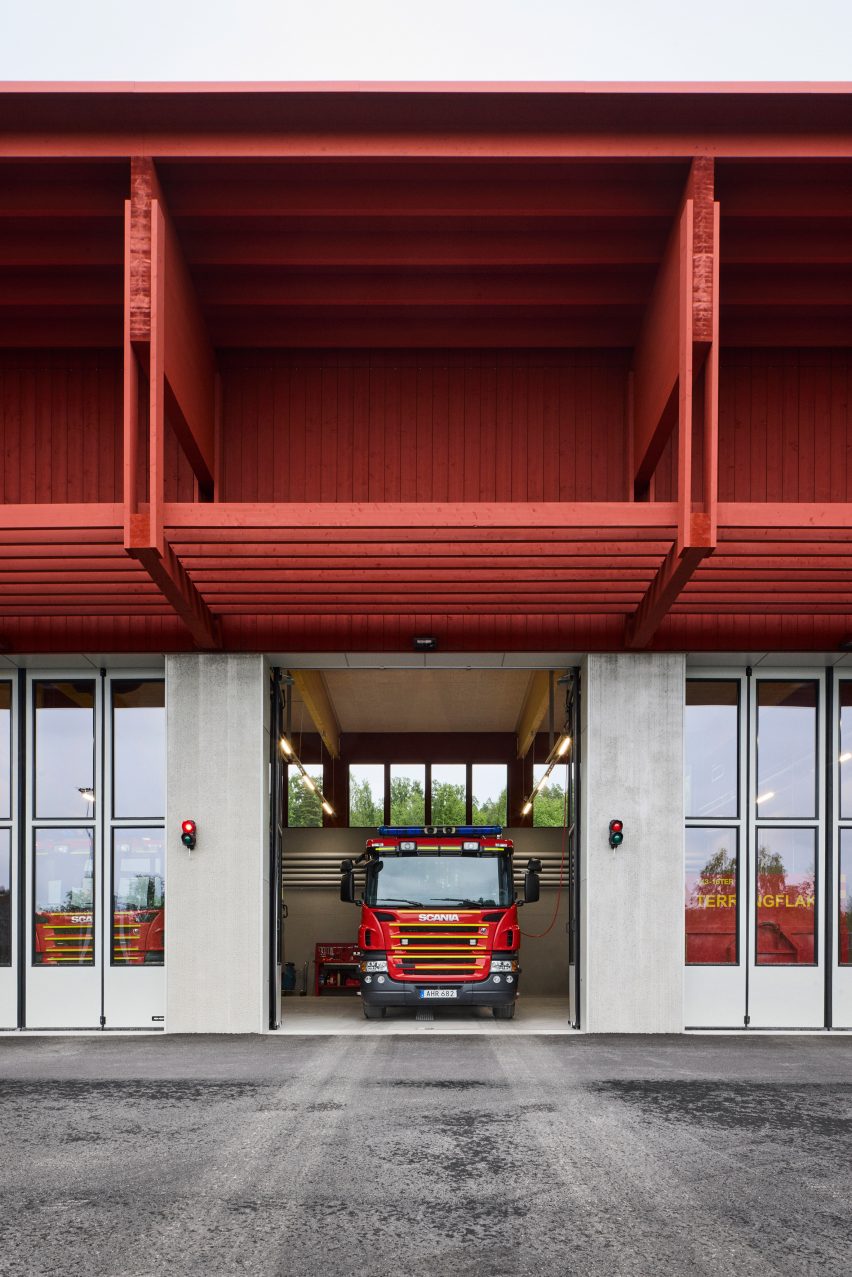 The building has a concrete base
The forecourt connects to the station’s main space – a large apparatus and vehicle hall in which fire engines and boats are stored, around which the building was designed.
This space, which is fronted by large doors, sits alongside a wash bay, changing rooms and workshop spaces for the 24 firefighters. Staff areas are positioned on the first floor above.
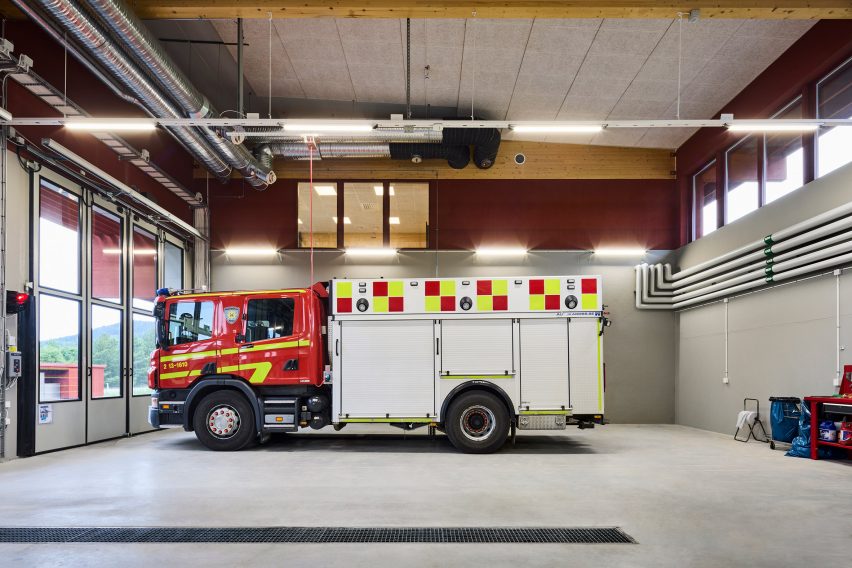 It is designed around a large vehicle hall on the lower level
The base of the building, which sits within the landscape, is made of concrete, while the upper level is formed from glue-laminated timber (glulam).
Kod Arkitekter left the glulam structure exposed to help add rhythm to the exterior. According to Kod Arkitekter, the use of concrete and timber reflects what a “deliberately limited palette of materials and colours”.
Bornstein Lyckefors Architects builds vibrant red cabin as a retreat for a Swedish family
“The sharp boundary between concrete and wood is a key aspect of the design, and to reinforce this, we chose to keep the material palette as restrained as possible,” said the studio.
“From the outset, we worked with a simple form closely tied to its function. We made the decision to open the building towards the valley and to let the exposed glulam beams define its rhythm and become its architectural signature.”
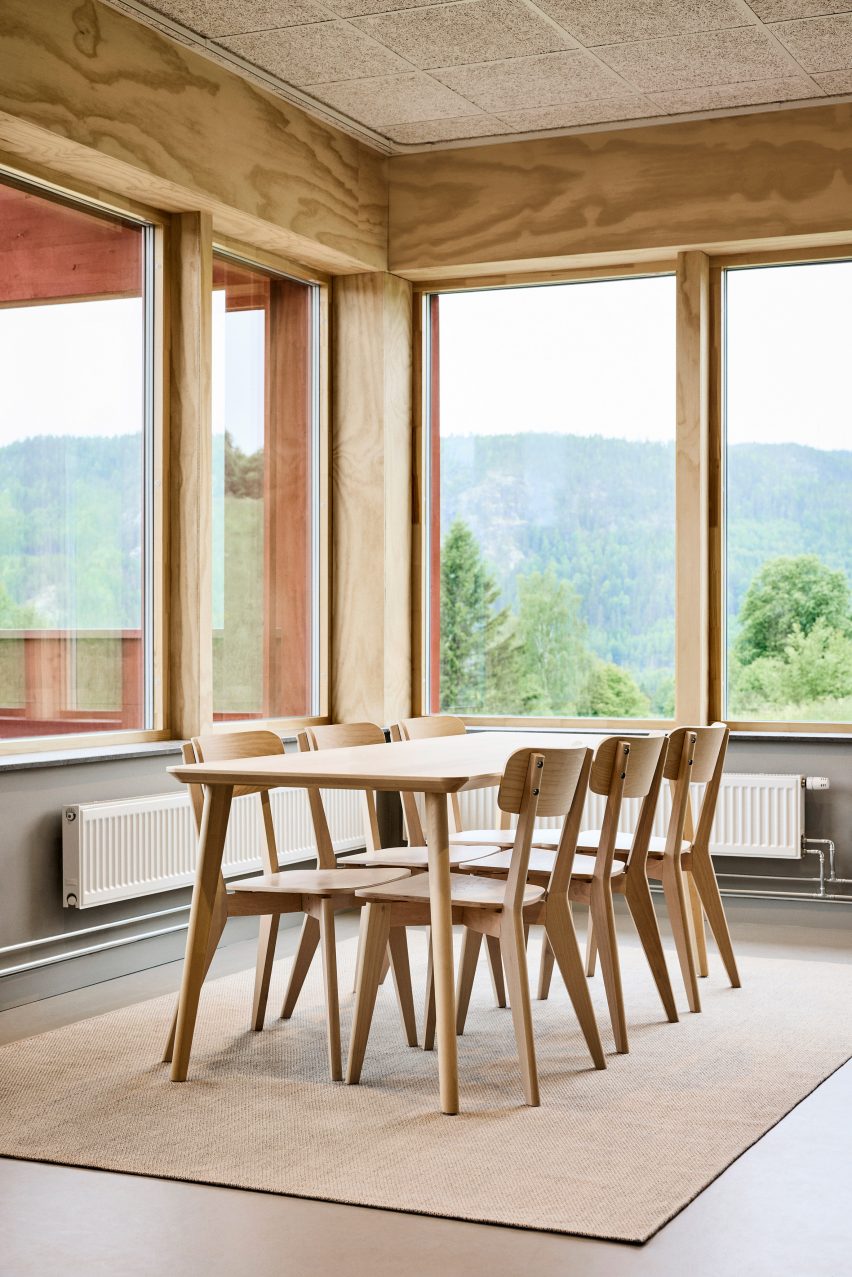 Staff areas are on the top floor
On the first floor are a staff gym, training facilities, and a suspended balcony, which all take advantage of the views of the surrounding landscape thanks to their elevated position.
These spaces are lined with plywood and red fittings, designed to complement the exterior and create “a warm and supportive atmosphere” for staff, the studio said.
Other fire stations featured on Dezeen include a perforated metal building in Germany by Wulf Architekten and one in California that Wittman Este crafted from prefabricated steel modules.
The photography is by Måns Berg.