
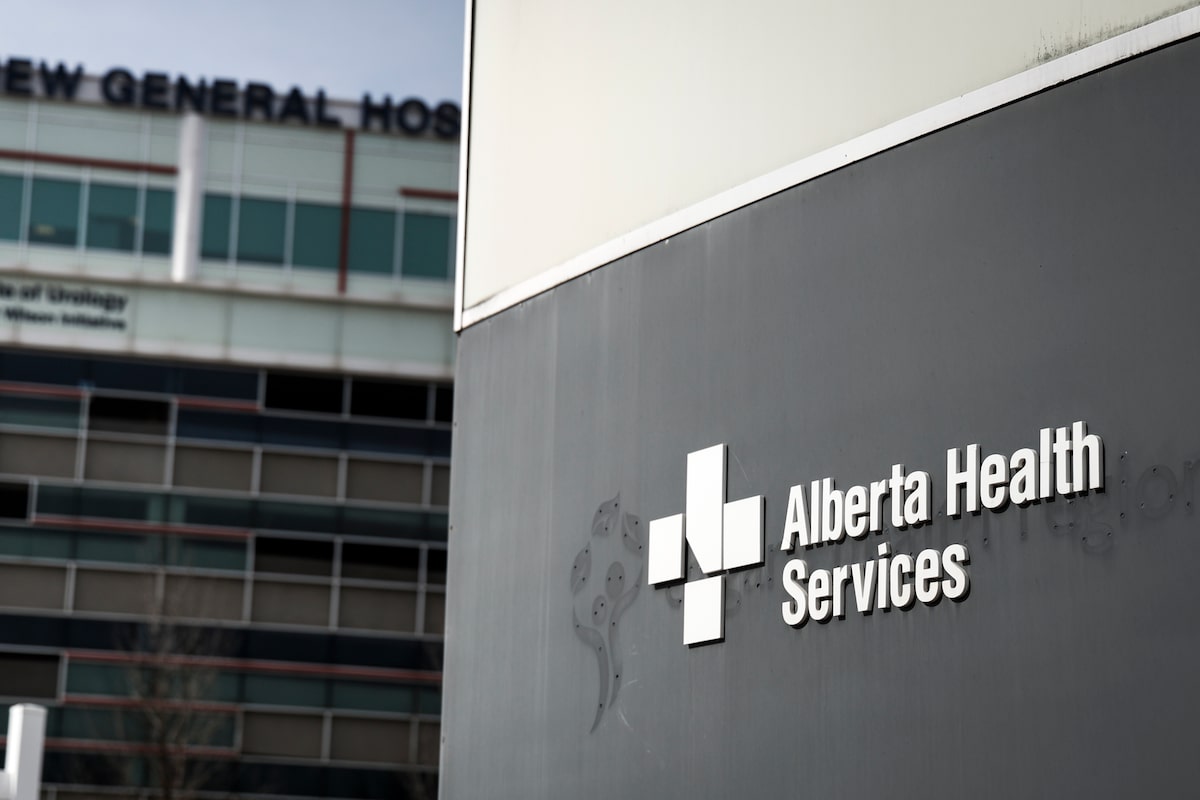
The Rockyview General Hospital in Calgary in March, 2025. Premier Danielle Smith championed the health authority’s $70-million contract to import the drugs in 2022, but the deal has caused years of headaches.Jeff McIntosh/The Canadian Press
Alberta Health Services has destroyed roughly half of the children’s medication imported by the province from Turkey after approaching expiry dates scuttled plans to donate the entire stockpile of drugs to Ukraine and other countries.
The provincial health authority, in a statement to The Globe and Mail, confirmed it had donated about half of the 1.45 million bottles of acetaminophen and ibuprofen it had in storage, and in December sent the remainder to the Swan Hills Treatment Centre. The facility, which disposes of hazardous waste through either incineration or chemical treatments, destroyed the medicine at a cost of $718,000, according to the statement.
Premier Danielle Smith championed the health authority’s $70-million contract to import pediatric drugs during a shortage of over-the-counter children’s medication in 2022. But the deal caused years of headaches for her government and is now among several transactions being investigated by the RCMP and Alberta’s Auditor-General, which are conducting separate probes related to the province’s health care procurement practices.
The painkillers sat in storage for years. In June, 2025, Ms. Smith confirmed that Alberta had signed an agreement to ship the unwanted inventory to countries in need.
But Health Partners International Canada, the charitable organization that orchestrated the donation, could not absorb the entire stockpile, which was set to expire in the first three months of this year.
Former AHS board member seeks contempt ruling against lawyer linked to alleged harassment
HPIC “identified challenges” in donating the 1.45 million bottles after it delivered “preliminary shipments” to recipients, Holly Budd, a spokesperson for Alberta Health Services, said. The primary constraints, she said, were the expiry dates and logistical difficulties in getting the drugs to the countries in need.
“After exhausting all avenues to donate the remaining medicine, AHS disposed of the remaining medicine following appropriate procedures,” Ms. Budd said.
The health authority said it paid $478,000 to store the acetaminophen and ibuprofen between 2023 and 2025.
Sam Blackett, a spokesman for the Premier, said Alberta Health Services made the call to dispose of the medication and covered the cost out of its budget. The destruction was “not out of the ordinary,” he said in a statement.
“AHS has measures in place to limit future disposal and reduce waste, consistent with its approach to other medications, such as the COVID-19 vaccine.”
Ms. Smith and her government in late 2022 wanted to provide Alberta relief from the North American shortage of pediatric painkillers. Alberta Health Services, in turn, signed a $70-million deal with Edmonton’s MHCare Medical Corp. to import five million bottles of children’s acetaminophen and ibuprofen manufactured in Turkey.
But Health Canada, in early 2023, approved the import of just 1.5 million bottles of the medication as the national supply shortage eased. MHCare delivered 1.47 million bottles, most of which arrived weeks after the supply crisis dissipated, and the health authority paid the company just shy of $70-million related to the deal.
In May, 2023, health officials determined the acetaminophen could increase the risk of clogging feeding tubes for neonatal patients. They ordered hospitals to stop using it. The health authority distributed just a small fraction of the imported medications to hospitals and pharmacies.
Former head of AHS says she has faced campaign of intimidation since lawsuit against Alberta
MHCare, its owner Sam Mraiche, and the drug deal have been under a fresh wave of scrutiny since Athana Mentzelopoulos, Alberta Health Services’s former chief executive, alleged the government interfered in the awarding and administration of contracts in favour of private firms. In a wrongful-dismissal lawsuit, Ms. Mentzelopoulos alleges the government fired her on Jan. 8, 2025, because she was probing deals tied to Mr. Mraiche and others.
Her allegations led the RCMP and provincial Auditor-General, among others, to review the agency’s procurement practices.
The government denies the allegations, countering that it fired her for incompetence.
None of the allegations have been tested in court. MHCare and Mr. Mraiche are not party to the lawsuit and deny any wrongdoing. Mr. Mraiche’s lawyers did not return messages seeking comment.
MHCare, in a letter released last year, defended the quality of the drugs it delivered to Alberta.
“The truth is that these medications are completely safe, as confirmed by health regulators, when used as directed at the recommended dose. The only instances of concern ever cited have involved improper utilization of the medications,” the letter said.
A year ago, Adriana LaGrange, then the province’s sole health minister and now one of four cabinet members overseeing care, signed off on a plan to donate Alberta’s 512 pallets of unwanted medication to Ukraine, a strategy first reported by The Globe in March, 2025.
Months later, Ms. Smith confirmed the donation deal for the pediatric drugs.
“We’ve just signed an arrangement with a private non-profit to use the remainder of that product in war-torn areas of the world where they don’t have access to medicine,” the Premier said during a call-in radio show on June 28. “I think the first batch has gone out to some African countries and we’re pleased that somebody is going to be able to make use of it.”
Jackie Cousins, a spokeswoman for Health Partners International Canada, told The Globe her organization accepted 217 pallets – fewer than half of what Alberta Health Services had on hand – last summer. The amount was “carefully determined to ensure full utilization,” she said in a statement in October.
The medication was distributed in Malawi, Zambia, Eswatini, Pakistan, Liberia, Iraq, Ukraine and Lebanon, Ms. Cousins said.
Raymond Wyant, the retired Manitoba judge the Premier appointed to investigate whether the province’s health care procurement practices aligned with the government’s policy objectives, anticipated that a “large portion” of the imported medicine would end up being trashed.
“Alberta taxpayers have paid a significant price for products that, for a variety of reasons, have not benefitted Albertans,” his October report said.
The Swan Hills Treatment Centre, which is about 240 kilometres northwest of Edmonton, destroys waste using two process facilities, according to its website. Organic waste – arriving as solids, liquids or sludges – is incinerated at temperatures of up to 1,200 C. Acid gases and particulate matter are scrubbed from the resulting flue gases, and bottom ash and fly ash are deposited in landfill cells on its site.
Inorganic liquids, meanwhile, are chemically neutralized and filtered to remove solids. The solid residue is stabilized into an inert compound and placed in the landfill cells. The treated liquid is injected 1,800 metres below the surface into a geological formation.