
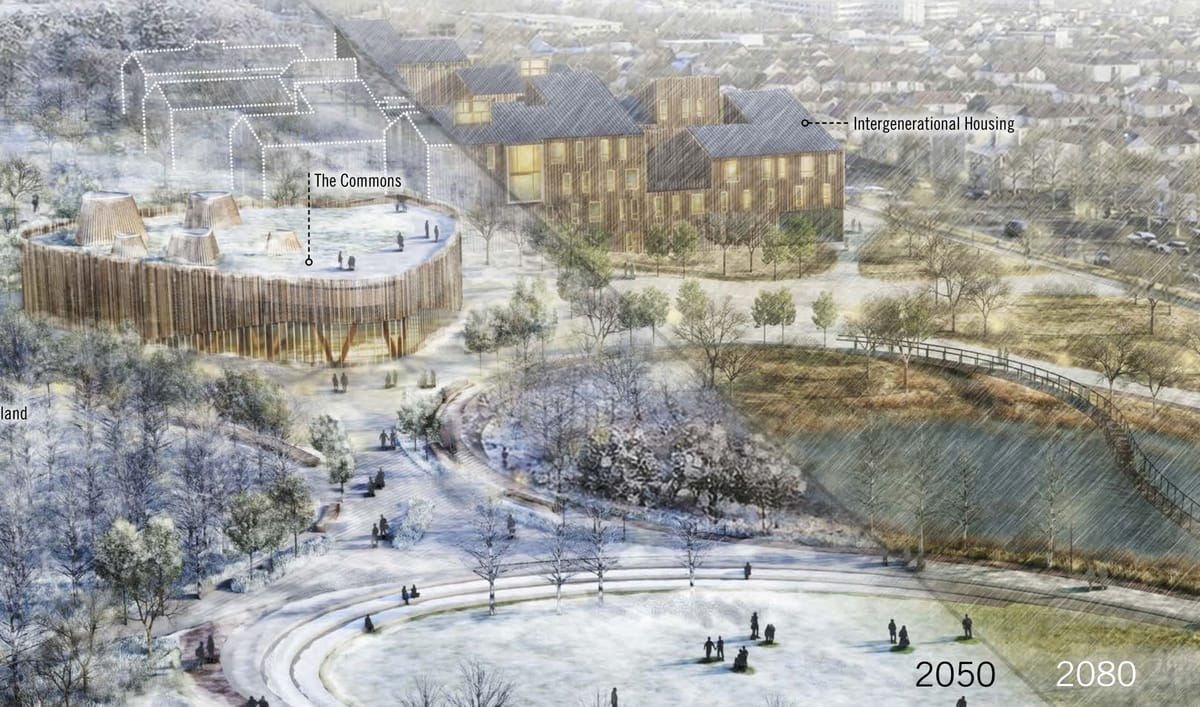
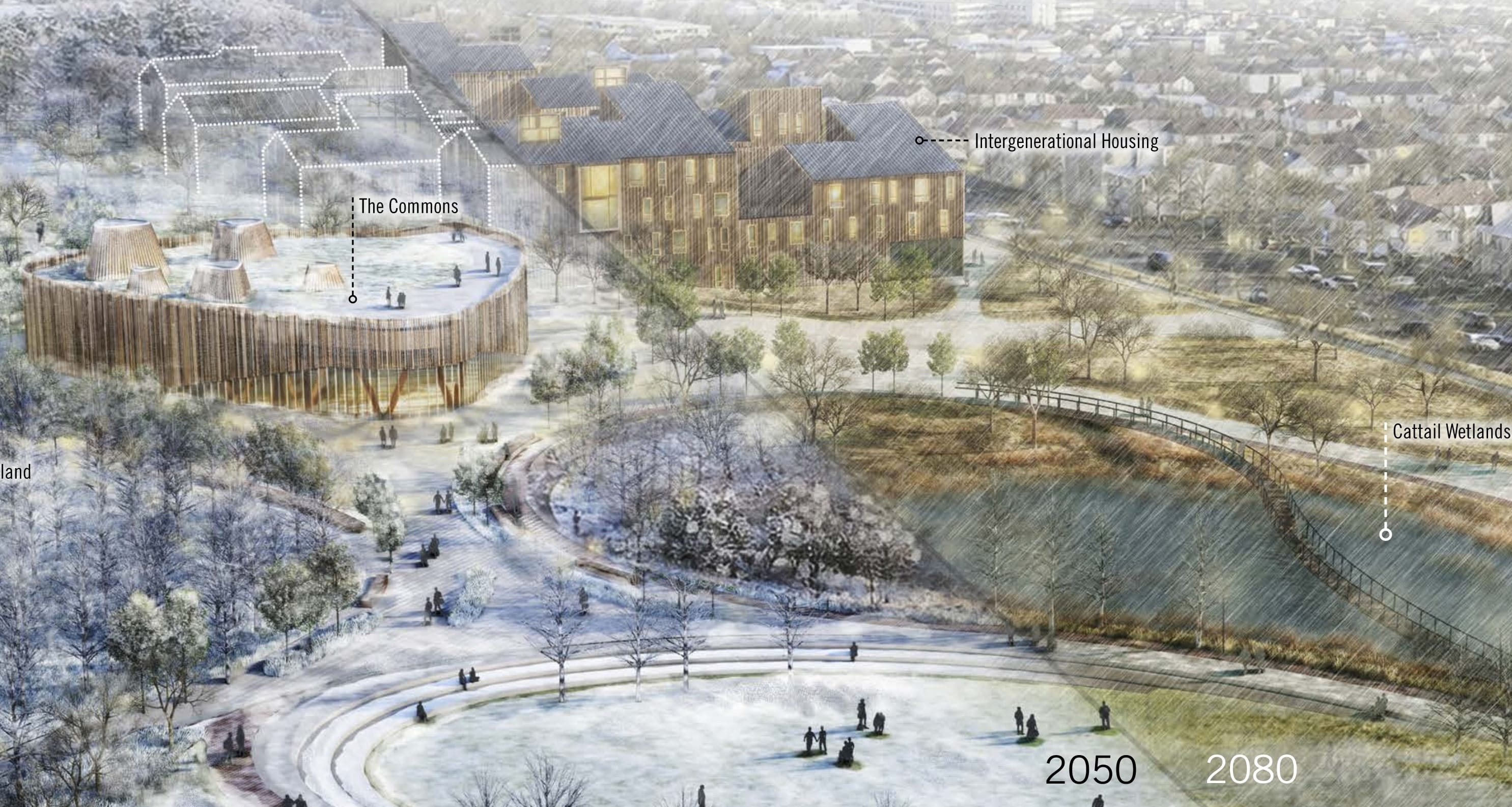
Render from the competition-winning entry by LTL Architects, Nelson Byrd Woltz Landscape Architects, Derive Engineers, faculty liaisons Kristine Stiphany and Nick Bruscia, and student assistants Berkan Sari, Gennaro Rovello, Allison Lavis, and Shruti Kunadia. Image courtesy of the University at Buffalo
Over the past six months, the University at Buffalo’s School of Architecture and Planning turned its own South Campus into a testbed for resilience. For The Resilient Campus competition, international design teams were challenged to reimagine the site at two future horizons, 2050 and 2080, proposing resilient design strategies for the campus and its buildings. With the winners just announced, Archinect spoke with Dean Julia Czerniak of the School of Architecture and Planning, who oversaw the competition, to learn more about how the contest originated, the ideas that were uncovered, and what a resilient built environment means in the 21st century.
The campus as a testbed
Since the founding of Harvard College in the 1630s, the college campus has become a staple of American urbanism. Like all typologies, it faces a challenging future, tasked with maintaining resilience against changing climate conditions, economics, and cultural needs. Perhaps unique to the college campus, however, is its capacity to reimagine its own future. Sometimes described as ‘cities within cities,’ the college campus supports a diverse population of students and academics, researchers and practitioners, drawn both locally and globally from a wide variety of disciplines with shared goals of preparing for the future, whatever it looks and feels like.
At the University at Buffalo’s School of Architecture and Planning, students, faculty, and practitioners recently came together in such an exercise. Led by its dean, Julia Czerniak, the school recently launched an international ideas competition that used the university’s own campus as a testbed for how college campuses across the United States can increase their resilience in the face of uncertain futures. “It was really to leverage the expertise we have here in our school and understand the diverse ways other designers conceptualized resilience and translated that into design approaches,” Czerniak told me in a recent conversation.
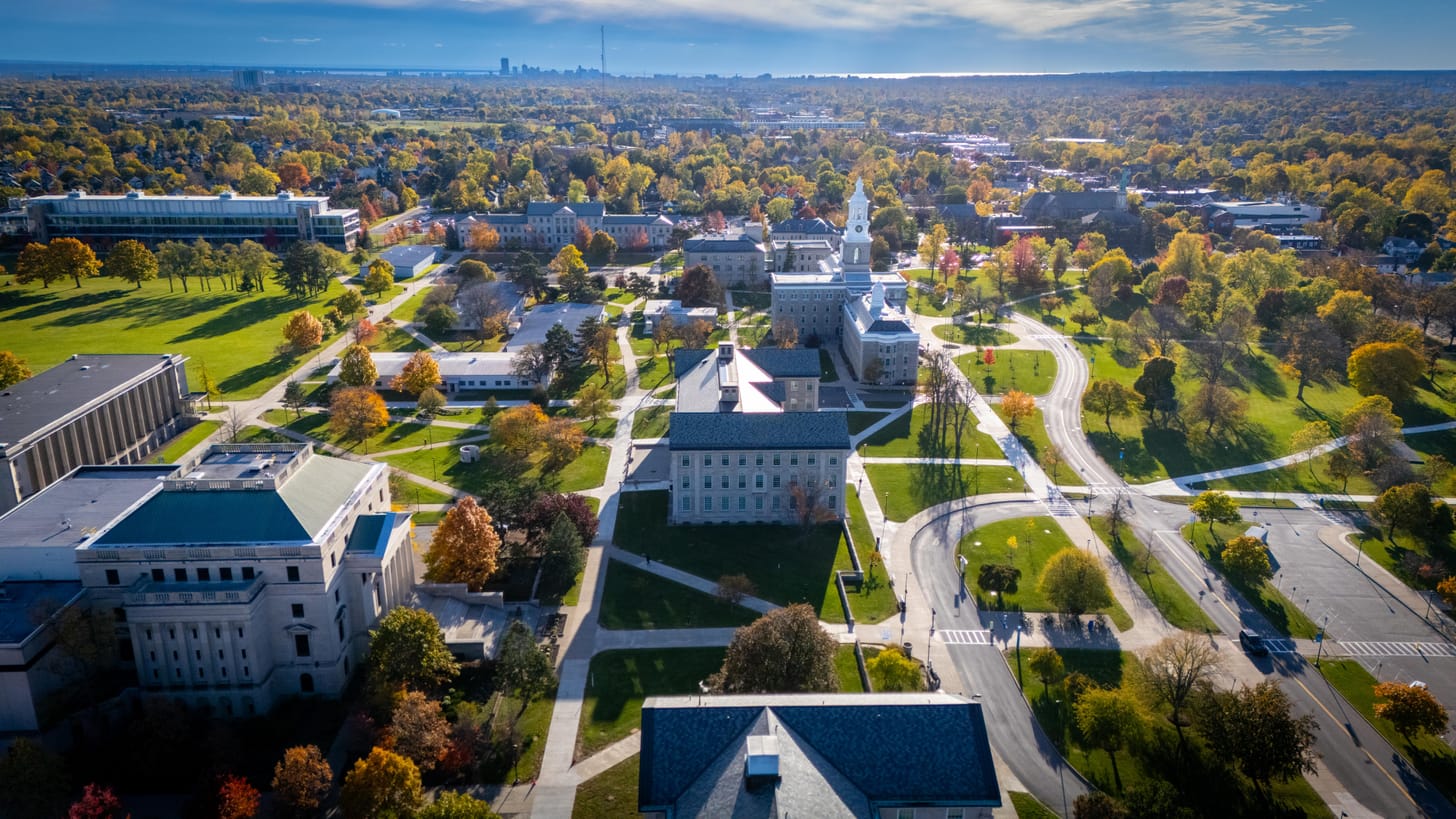 University at Buffalo, South Campus. Image credit: Douglas Levere
For the competition’s site, Czerniak and her team chose the University at Buffalo’s South Campus, which sits five miles northeast of downtown Buffalo. Like many campuses, the South Campus is in need of constant evolution, shaped by changes in teaching and research needs — all while navigating historical architectural layers. While the campus is fortunate enough not to be vulnerable to extreme weather events such as flooding, drought, and fire, it is nonetheless emblematic of the typical American college campus, offering opportunities for ideas to emerge that travel far beyond Buffalo.
“It is characteristic of many college campuses in the United States,” Czerniak said about the existing campus. “There are buildings surrounding a quad, a lot of parking lots, a lot of mowed lawn, and maintenance issues. So it was pretty prototypical of a place to ask about resilience.”
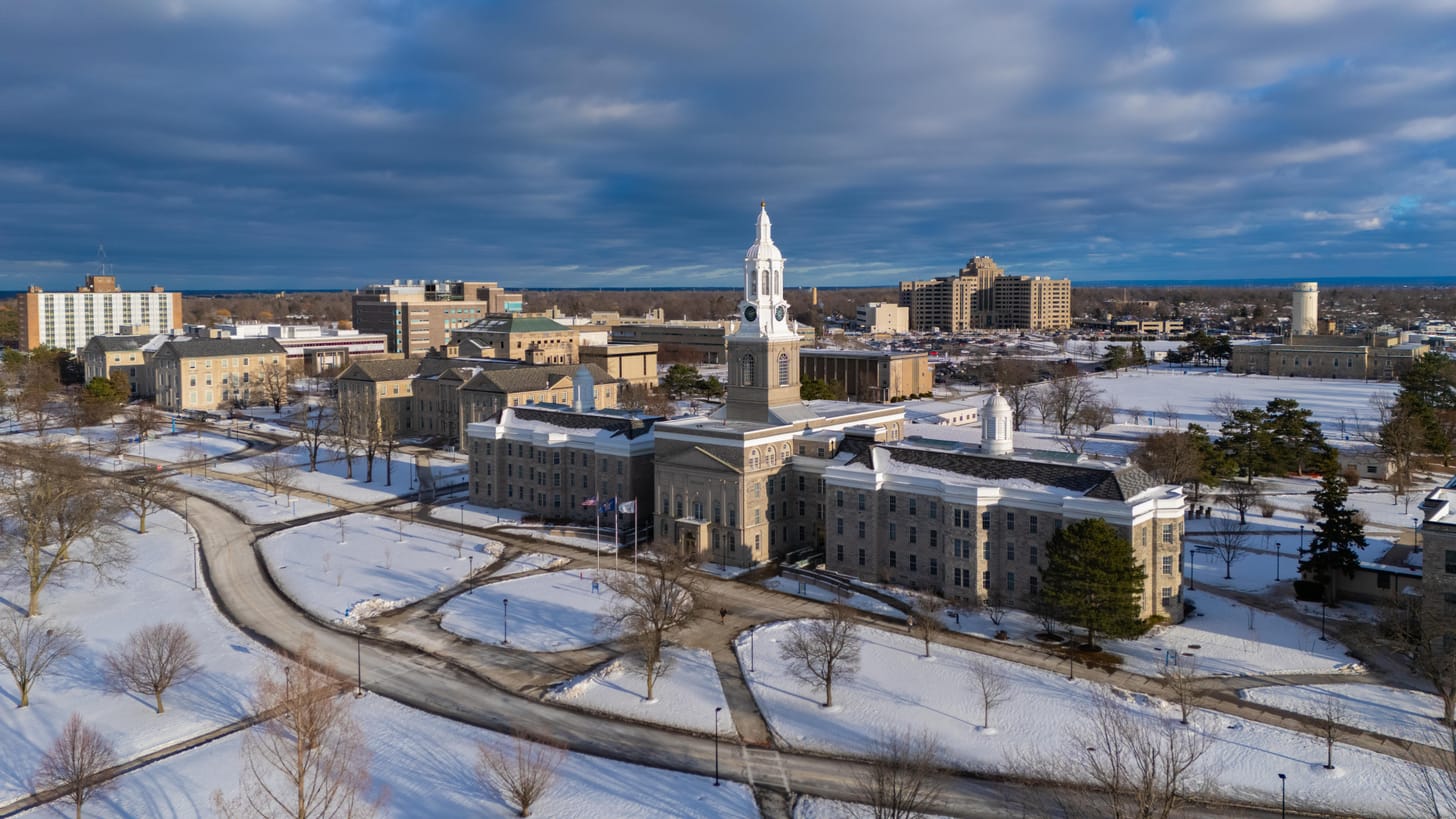 University at Buffalo, South Campus. Image credit: Douglas LevereThe Resilient Campus competition
In August 2025, the school launched The Resilient Campus competition, challenging participants with reimagining the South Campus as a “socio-ecologically integrated landscape” that engaged with the “pressing and intertwined challenges of climate change.” Seven teams participated in the competition, comprising two pre-selected for their proven expertise in resilience and five selected from an RFQ.
The brief called on participants to address two scales. First, at the Campus Scale, teams would develop and apply strategies for an ecologically resilient landscape for the South Campus. At the Building Scale, meanwhile, teams would develop an adaptive strategy for a portion of the campus’s existing underused Health Science Building through deconstruction, modification, and new construction, while also proposing a new University-Assisted Public School on the campus.
To test the proposals’ resilience for the future, the competition called on participants to address the two time horizons of 2050 and 2080, factoring in climatic and other sociological conditions that scientific data suggests the built environment will face in both eras. “We’re not doing master plans,” Czerniak explained. “It was about scenarios. Teams should answer: If these are our assumptions for 2050, then this would be our design response. Likewise, for 2080, which is a long time horizon, and much more difficult to design for.”
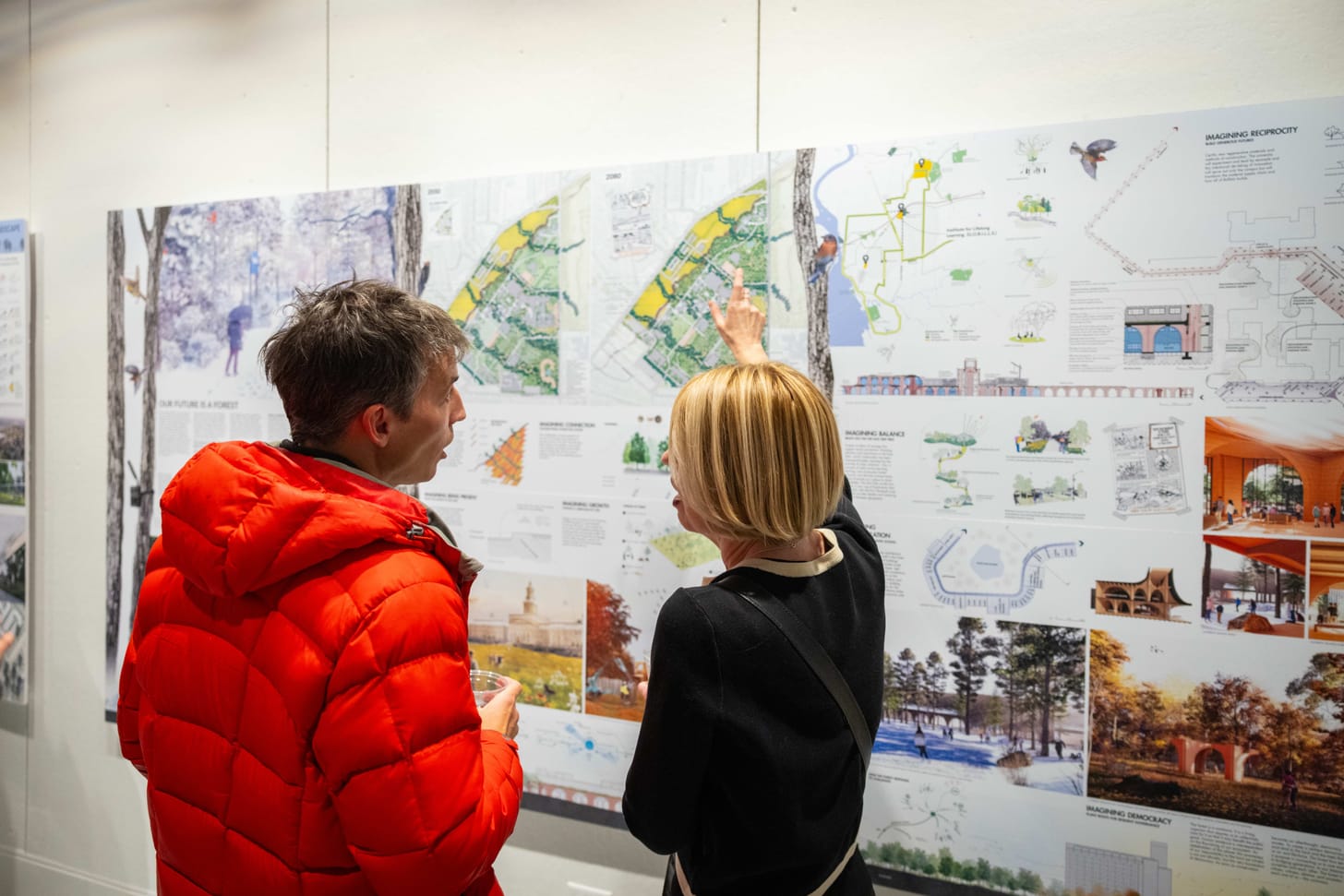 The Resilient Campus exhibition of competition entries. Image credit: Douglas Levere
While the words ‘resiliency’ and ‘sustainability’ are sometimes used interchangeably, Czerniak was keen to stress the distinction between the two and the requirement for teams to center their proposals on resiliency. “Resilience refers to complex socioecological systems’ ability to withstand, adapt to, recover from, and maybe even transform in the wake of shocks and disturbances,” Czerniak explained. “We can think about those as heat waves, winter storms, wind throw events, and even crises such as COVID. What disturbances are happening both socially and environmentally in our world, and how do we design to adapt to them?”
“Sustainability is focused on meeting present needs without compromising the ability for future generations to meet theirs,” Czerniak added. “Sustainability asks how we live in a way that does not deplete our resources, whereas resilience refers to a complex socio-ecological system’s ability to withstand, adapt to, and recover from — and, if necessary, transform in the wake of — shocks and disturbances. How do we as designers work differently? What tools should we use? How do we do it? Those are not easy questions.”
Sustainability asks how we live in a way that does not deplete our resources, whereas resilience refers to how a system withstands, adapts to, or recovers from disturbances. — Julia Czerniak
While the competition was created in part to capitalize on the embodied knowledge and expertise within the University at Buffalo, Czerniak and her team saw heavy value in inviting international teams, with participants spanning Europe, Australia, the Americas, and more. To ensure that international designers were familiar with the unique conditions of the South Campus, teams were paired with groups of undergraduate and graduate architecture students from the University at Buffalo who could provide local knowledge and perspectives. In return, Czerniak notes, the students gained valuable insights into how the competition process worked, how presentation boards were prepared, and how jury presentations were conducted.
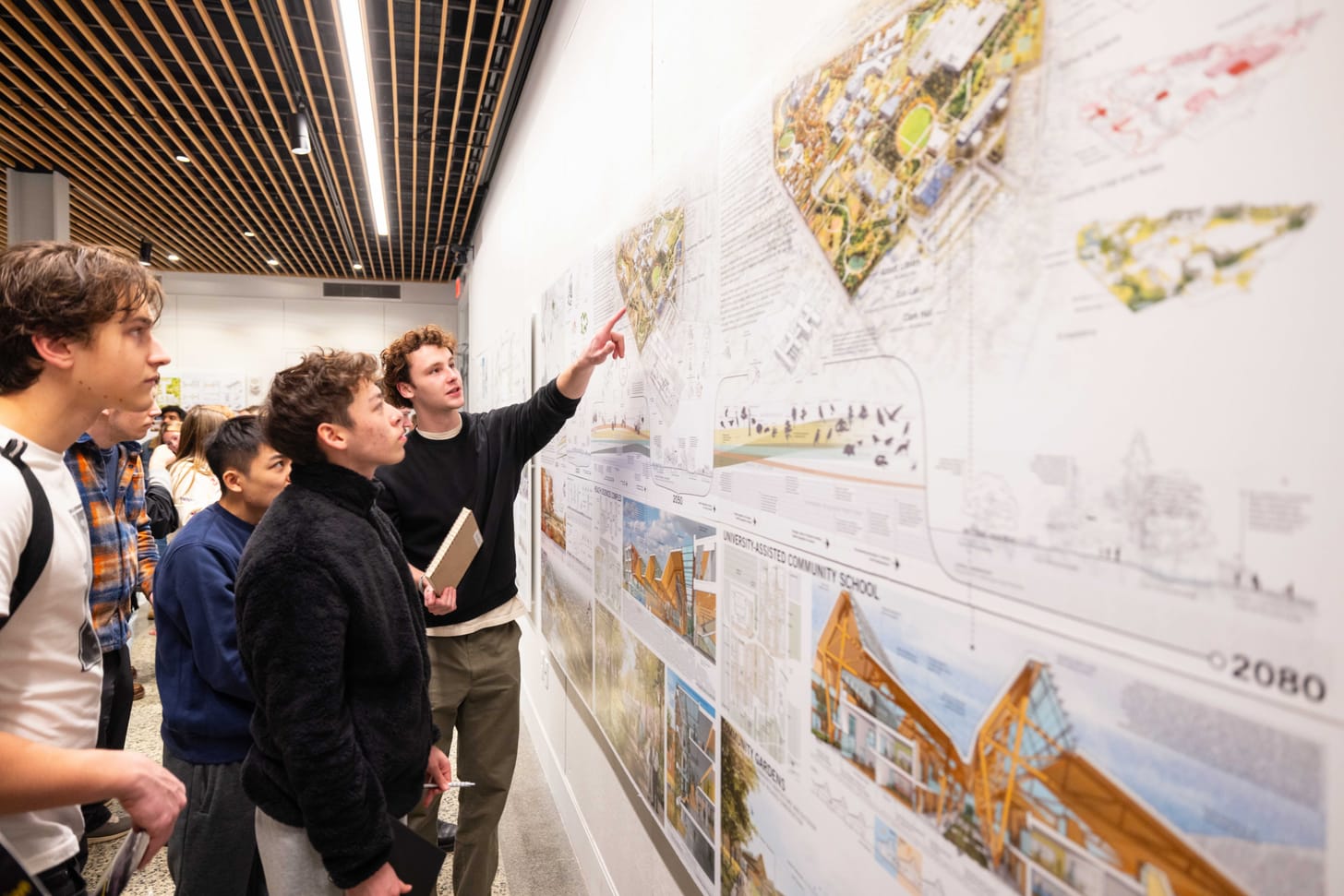 The Resilient Campus exhibition of competition entries. Image credit: Douglas LevereResilient visions
The unique challenge set out in the brief, of imagining a proposed scheme in 2050 and 2080, was met with unique approaches by participating teams. In the resulting submissions, teams used presentation boards to set out their presumptions for both time horizons, as well as the outcomes of their proposed design strategies. Ultimately, many participants approached the challenge using timelines, tool kits, living frameworks, and other visualizations in which they charted their assumptions about campus and city growth and economies, and where both environments could shrink and expand. Climatic assumptions, such as heat events, were detailed, as were predictions on what society would want from our cities and campuses in decades to come.
Alongside each assumption, teams offered design responses, themselves the product of a variety of design strategies and approaches. What prevailed, however, was an approach that looked at architecture and landscape not as a product or a static object but as a system or process capable of adapting to changing circumstances. Rather than depicting the same design solution weathered through time across the decades, the winning teams displayed an ability to ask what major events could confront the built environment in the coming decades and how architecture and landscape can transform in response. For Czerniak, the winners’ successful avenues through this challenging task rested on the clear communication of the details of their scenarios as well as the innovative use of building materials and close attention to biodiversity.
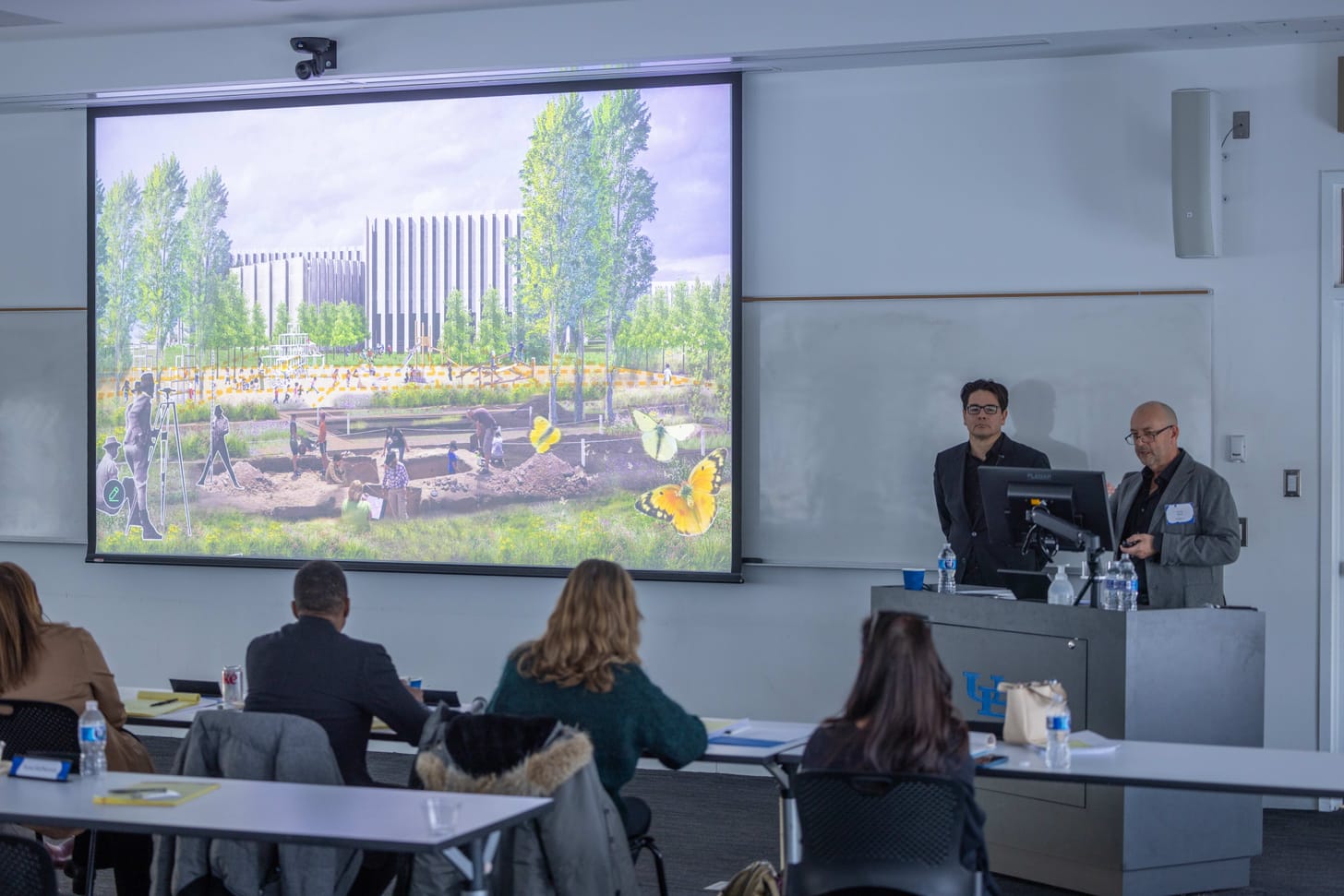 The Resilient Campus competition team presentations. Image credit: Douglas Levere
“The entries represent remarkable use of new building materials, strategies for carbon reduction, prioritization of biodiversity, use of innovative visualizations, and even the development of new tools,” Czerniak noted, referring in part to the creation by one team of an AI tool that proposed to use feedback loops and digital twins to create design solutions based on what design principles and requirements the user inputted. “These were the kind of ideas I was hoping to see the germs of when launching the competition,” Czerniak added. “We as designers cannot continue to design the way we have in the past. We have to develop new tools to be able to engage with this kind of work.”
We as designers cannot continue to design the way we have in the past. — Julia Czerniak
Following a jury summons in January 2026, the organizers announced earlier this month that the first prize was awarded to a team comprising LTL Architects, Nelson Byrd Woltz Landscape Architects, Derive Engineers, faculty liaisons Kristine Stiphany and Nick Bruscia, and student assistants Berkan Sari, Gennaro Rovello, Allison Lavis, and Shruti Kunadia. The winning scheme, titled ‘Field Studies: Growing a Biogenic Campus,’ reimagined the campus as a productive landscape employing the use of geothermal wells, productive forests, and building materials grown from biogenic materials. “Their proposal conceives of campus resilience through circular economies of plant materials and their infrastructures shaping a robust public forest landscape,” jury chair and Harvard GSD professor Charles Waldheim noted.
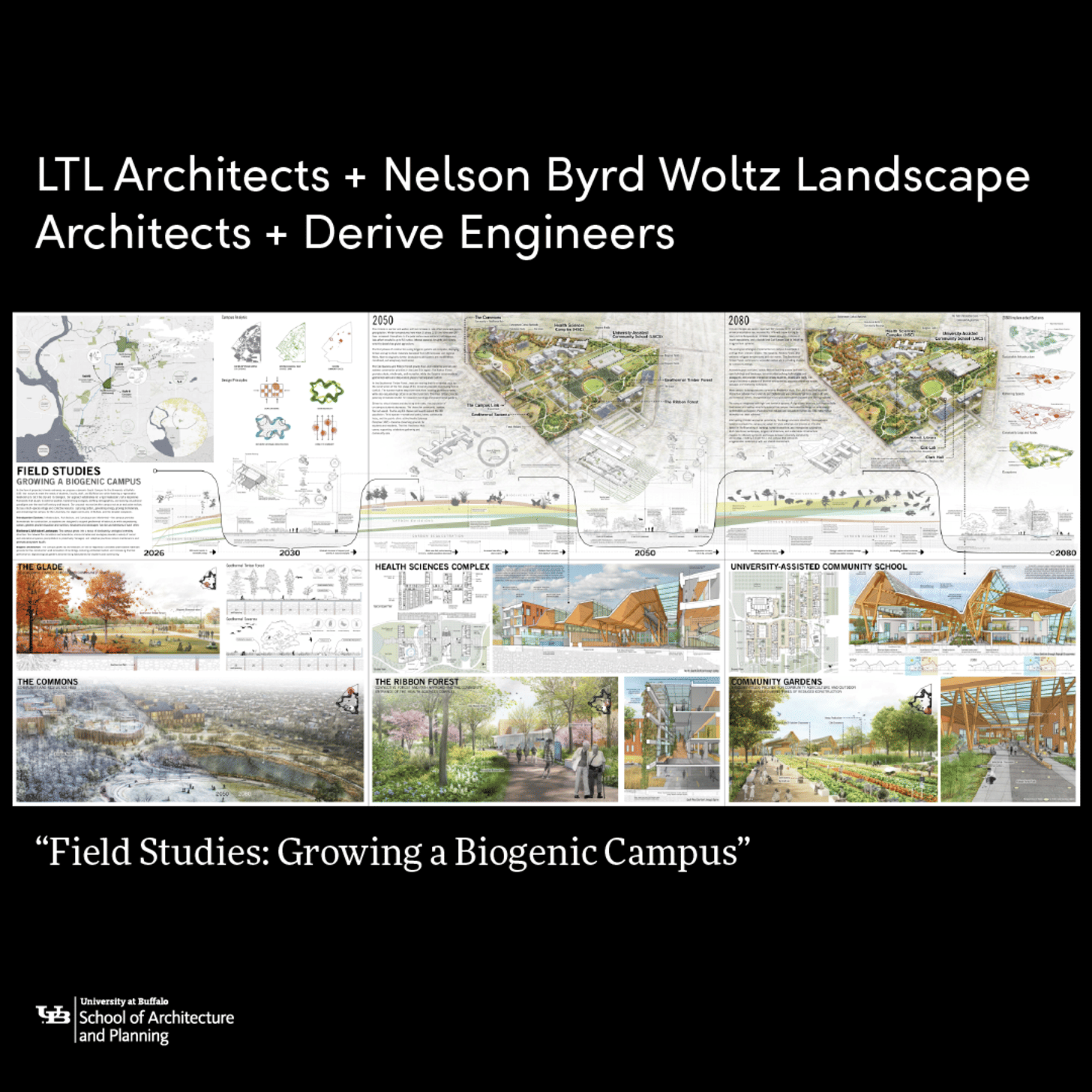
First prize: ‘Field Studies: Growing a Biogenic Campus’ by LTL Architects, Nelson Byrd Woltz Landscape Architects, Derive Engineers, faculty liaisons Kristine Stiphany and Nick Bruscia, and student assistants Berkan Sari, Gennaro Rovello, Allison Lavis, and Shruti Kunadia. Image courtesy of the University at Buffalo
Second prize was awarded to Stoss Landscape Urbanism, Höweler + Yoon, faculty liaison Maia Peck, and student assistants Janice Ng, Edwin Sanchez Rodriguez, and Ethan Ikegami for ‘Campus Entanglements: Protocols for Learning,’ which presented landscape and architectural protocols to guide the campus’s development for 2050 and 2080.
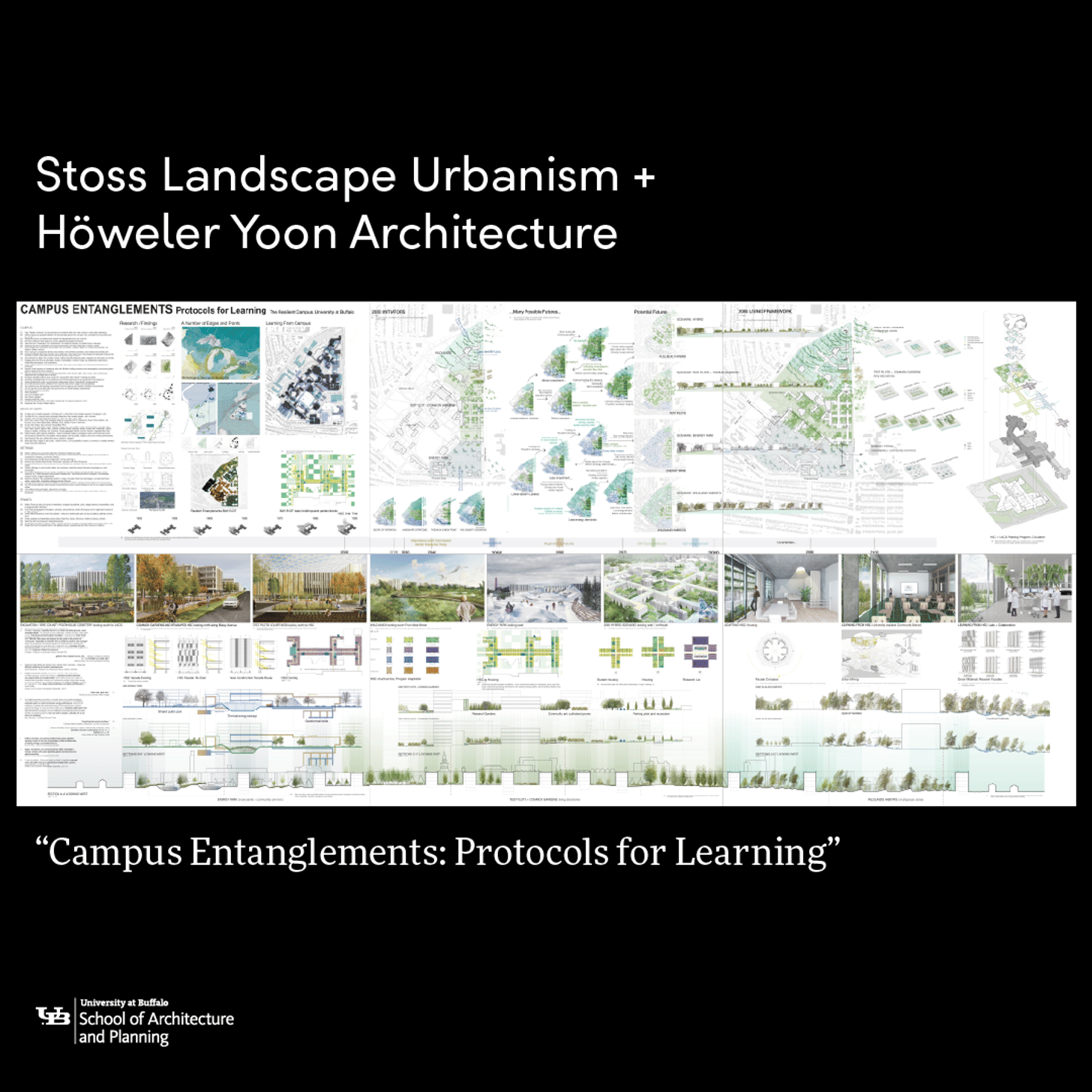 Second prize: ‘Campus Entanglements: Protocols for Learning’ by Stoss Landscape Urbanism, Höweler + Yoon, faculty liaison Maia Peck, and student assistants Janice Ng, Edwin Sanchez Rodriguez, and Ethan Ikegami. Image courtesy of the University at Buffalo
A team comprising MASS, EinwillerKuehl, SITELAB Urban Studio, Second Nature Ecology and Design, faculty liaisons Joyce Hwang and Hiro Hata, and student assistants Ryan Mellen, Ashley Johnson, and Will Sundell was awarded third place for ‘Our Future is a Forest,’ which saw a renewed forest landscape used as both a piece of ecological infrastructure and an active educational resource.
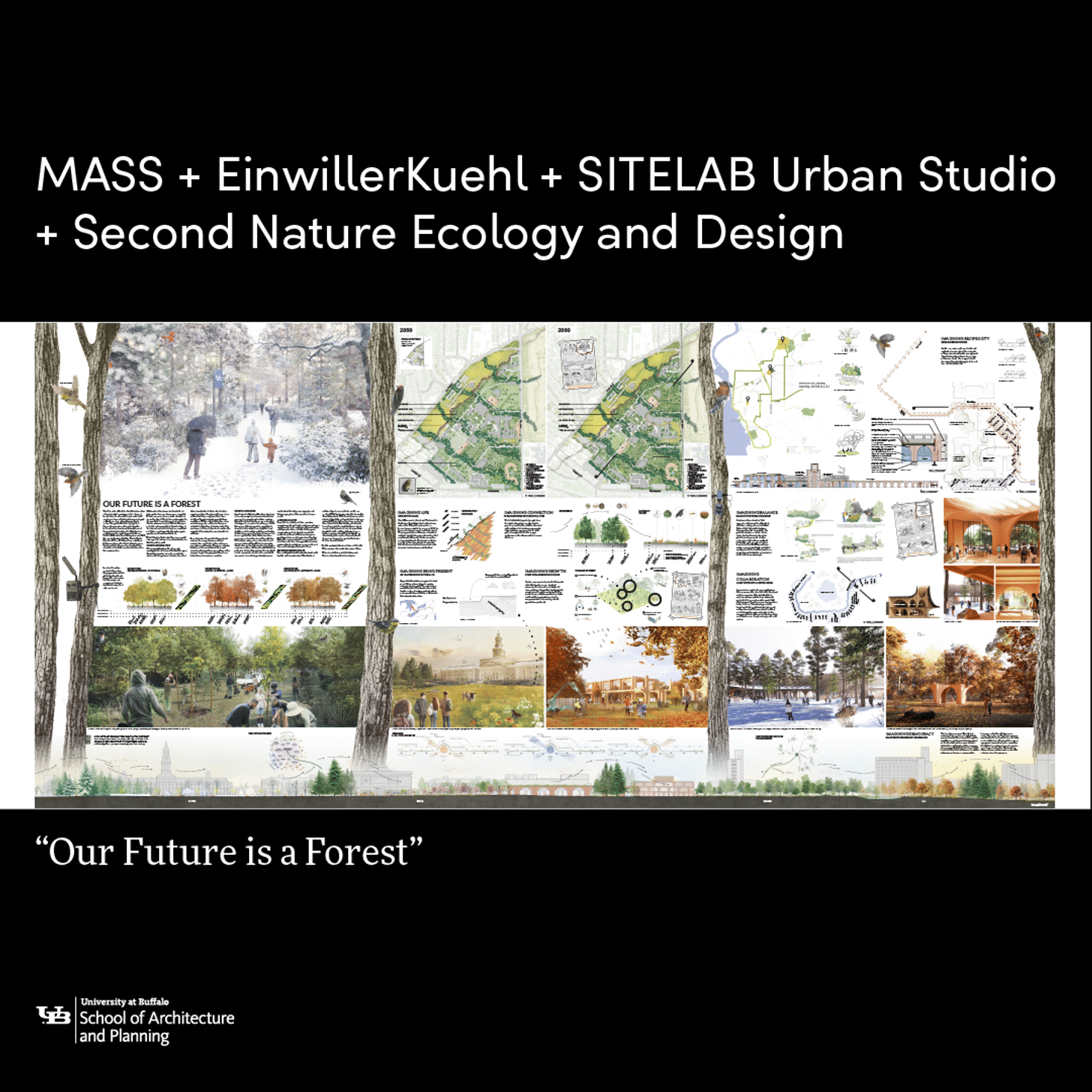
Third prize: ‘Our Future is a Forest’ by MASS, EinwillerKuehl, SITELAB Urban Studio, Second Nature Ecology and Design, faculty liaisons Joyce Hwang and Hiro Hata, and student assistants Ryan Mellen, Ashley Johnson, and Will Sundell. Image courtesy of the University at Buffalo
MVRDV and RIOS, in collaboration with faculty liaison Randy Fernando and student assistants Lydia Diboun, Kaya Jost, and Gianni Rinaudo, received an honorable mention for their team’s experimental visualizations.
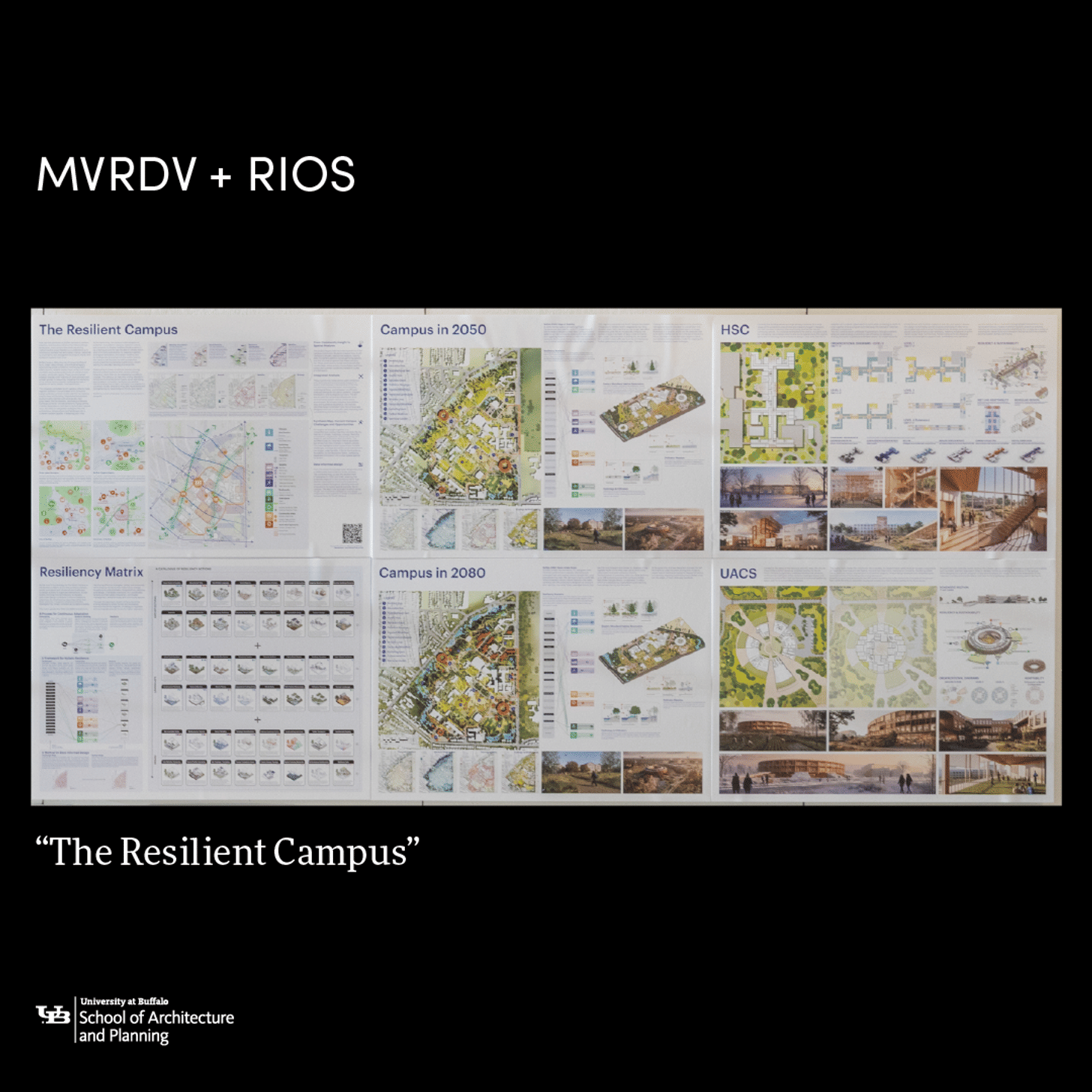 Honorable mention: ‘The Resilient Campus’ by MVRDV and RIOS, faculty liaison Randy Fernando, and student assistants Lydia Diboun, Kaya Jost, and Gianni Rinaudo. Image courtesy of the University at Buffalo
Also participating were three teams comprising OBRA Architects, LOLA Landscape Architects, faculty liaison Jon Spielman, and student assistants Ryan Bingham and Ben Jellinick; ASPECT Studios, Woods Bagot Architecture, Dr. Jillian Walliss, faculty liaison Elaine Chow, and student assistants Alec Pitillo, Ester Rafailova, and Daniel Syperski; as well as Barkow Leibinger, TOPOTEK1, Transsolar KlimaEngineering, Guy Nordenson and Associates, faculty liaisons Martha Bohm and Mohamed Aly Etman, and student assistants Danny Escandon, Jamie Jiang, and Sukriti Sharma.
Beyond the competition
Though the unveiling of winners often signals the end of a competition’s lifecycle, the journey for The Resilient Campus project is still just beginning. While the final team submissions are currently on display on the University at Buffalo’s South Campus, March will see an exhibition of the work travel to the Aedes Forum in Berlin, followed by other international venues. Meanwhile, in Fall 2026, the University at Buffalo will host a symposium to critique the work through various disciplinary lenses, considering factors such as climate change, biodiversity loss, and human vulnerability. The symposium will also ask how the design strategies developed during the competition can be replicated across all scales of the built environment.
One of the most important things that is going to emerge from this will be the ways in which we work as design professionals, including the tools and visualizations that we use. — Julia Czerniak
“Knowledge is never just passed on — it evolves,” said Czerniak, who is also planning a book on the initiative. “One of the most important things that is going to emerge from this will be the ways in which we work as design professionals, including the tools and visualizations that we use. The ideas from the competition are nascent; they are the beginning of what could be. The purpose of this upcoming long process of iterative venues and deliverables is to give the subject matter time to mature.”
Meanwhile, although the competition, exhibition, and symposium imagine the South Campus as a testbed for new ideas that can be scaled and repurposed nationally, Czerniak nonetheless sees the contest as a valuable provocation to envision real changes in Buffalo.
“My hope is that it begins to open minds at universities,” Czerniak told me. “In our own, the Director of Campus Facilities and the Director of the Office of Sustainability were part of the jury, and they were thrilled by the work. If the competition can begin to shift the way people think, that is product enough.”