
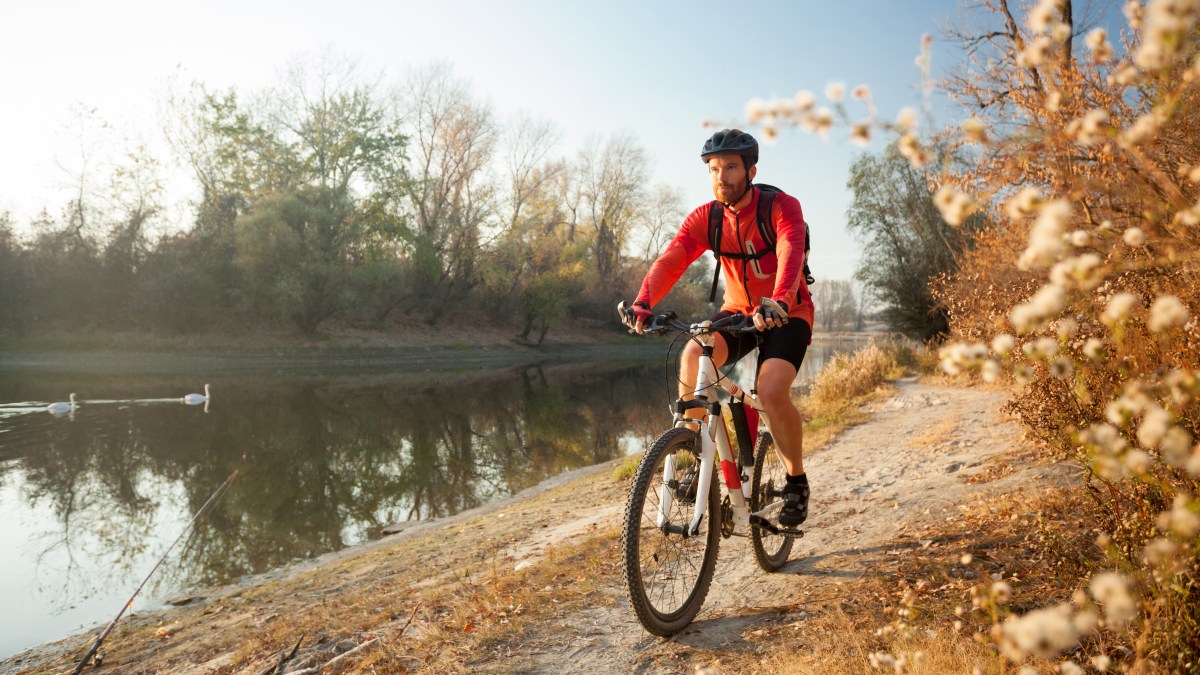
When it comes to health and longevity, those middle-aged men who spend every moment they can on their bikes are definitely onto something. Not only is cycling particularly kind to ageing joints — with physiotherapists recommending the activity for supporting knees, hips and ankles that have been damaged by years of twisting and turning in sports such as football, rugby or tennis. But it is also one of the best ways to preserve muscle health and delay at least some key aspects of ageing.
A study published in BMC Musculoskeletal Disorders compared a group of 28 enthusiastic recreational male cyclists with 28 sedentary male midlifers. Professor Alister Hart, consultant orthopaedic hip surgeon at the Royal National Orthopaedic Hospital, who led the study, found that not only did the cyclists have much larger and stronger leg and buttock muscles, but the muscles were much healthier and more youthful than the non-exercisers.
High levels of intramuscular fat — which is stored within muscle fibres — becomes more common as we age and our activity levels slide. Over time, the accumulation of this type of fat can accelerate age-related muscle loss or sarcopenia, raising the risk of falls. It has also been associated with conditions such as type 2 diabetes, obesity and heart disease. But the middle-aged men in Hart’s study displayed much lower levels of harmful fat between the muscle fibres of the gluteus maximus and gluteus medius. “It’s clear evidence that cycling helps to maintain muscles and prevent them from being weakened by fat infiltration, delaying some of the effects of ageing,” he says.
• Read more expert advice on healthy living, fitness and wellbeing
Cycling has other anti-ageing benefits too. At the University of Birmingham’s Institute of Inflammation and Ageing, Professor Janet Lord reported in Ageing Cell that older cyclists had lower body fat and cholesterol levels than non-exercisers. In addition, older male cyclists had higher than average levels of testosterone, a hormone important for libido, muscle mass and mood that typically dips with age. The cyclists also had a more youthful immune system, their bodies producing as many protective T-cells as young people.
Being on a bike is good for the middle-aged mind too. People who cycle to work are 15 per cent less likely to need a prescription for anxiety or depression than those who get there by other modes of transport, according to scientists at the University of Edinburgh. Another study at the University of East London looked at the effects of recreational road cycling on a group of men aged between their mid-thirties and early fifties, who spent a minimum of an hour a week on so-called green-cycling through green spaces and the countryside. None was motivated by competition or cycling particularly fast — instead, they were spurred on by the benefits to their stress levels — a result, they said, of “getting away from it all” on their bikes.
• New to cycling? How to get fit fast on your commute
No exercise can do everything, and what cycling won’t do is boost bone health or upper-body strength. For these reasons you will need to include some weight-bearing exercise — jumping and skipping are ideal — and upper-body resistance work as well. Many men are also concerned that time in the saddle can affect sexual and prostate health. Long bike rides may result in pressure that decreases blood flow to the penis and causes microtrauma to the perineum, which results in temporary erectile dysfunction and genital numbness for some men. But there is no evidence of long-term risks. In fact, a report in the Journal of Urology found little difference in the sexual and urinary health of 2,774 male cyclists, 539 swimmers and 789 runners.
Standing out of the saddle more than 20 per cent of the time while cycling significantly reduces the odds of numbness. “A mix of standing and sitting is a superior technique that can relieve nerve compression,” says Phil Cavell, an expert in bike biomechanics at the Cyclefit clinic in London and the author of The Midlife Cyclist (Bloomsbury). He recommends investing in padded cycling shorts and getting fitted for a comfortable saddle as the incidence of saddle soreness rises in men after the age of 50, especially among those who are carrying extra pounds when they start.
“A saddle that is too wide or too narrow for your pelvic architecture can cause numbness or problems for knees and back, so you shouldn’t buy one on looks alone and should go through a proper diagnostic procedure at a specialist shop,” he says. “You shouldn’t have to break in a new saddle ― it either works for you from the outset or it does not.”