
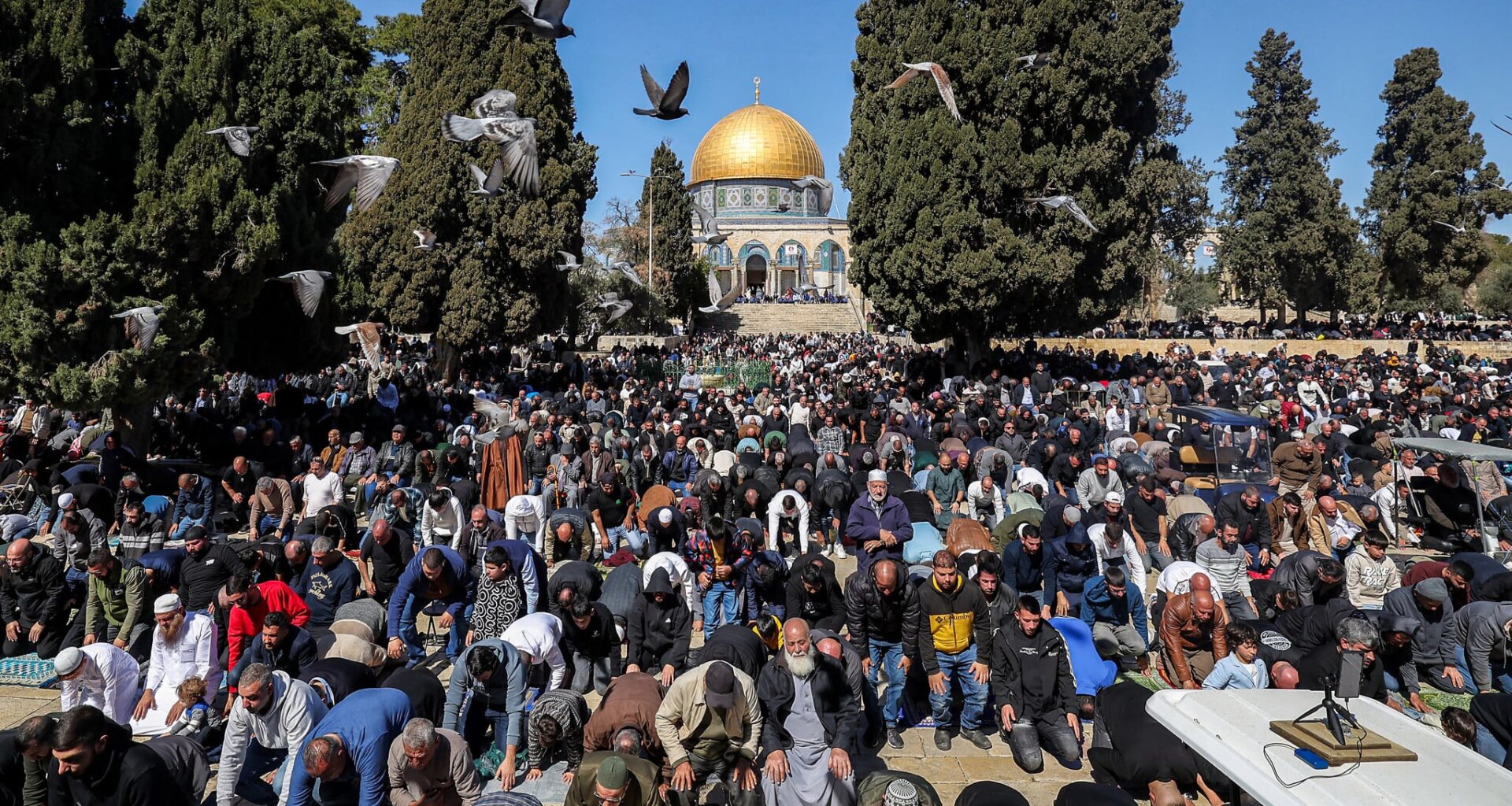
Some 80,000 thousand Muslim worshipers — including several thousand Palestinians from the West Bank — gathered at Al-Aqsa Mosque on the Temple Mount in Jerusalem for the first Friday noon prayer of Ramadan, which passed peacefully, under heavy security.
Each year, the Islamic holy month, which began Wednesday this week, sees Muslims from Israel and the West Bank throng the narrow streets of Jerusalem’s Old City, where thousands of police officers were deployed amid fears of unrest at the holy site that has frequently been a flashpoint for violence.
Far-right National Security Minister Itamar Ben Gvir toured the site ahead of prayers, warning that any who tried to disturb the peace would be “thrashed.”
Jerusalem’s Islamic Waqf, the Jordanian authority that administers the site, said 80,000 were in attendance. Last year, 90,000 people attended first Friday prayers; however, before the war that erupted in 2023, worshipers numbered in the hundreds of thousands.
Israeli authorities said some 8,500 West Bank Palestinians with permits to pray at Al-Aqsa crossed checkpoints into Jerusalem. Like last year, Israel capped the number of Palestinian worshipers from the West Bank attending the weekly Friday prayers at 10,000.
Get The Times of Israel’s Daily Edition
by email and never miss our top stories
By signing up, you agree to the terms
Only males aged 55 and up, women 50 and up, and children 12 and below when accompanied by a first-degree relative were permitted to attend prayers at Al‑Aqsa. The restrictions only apply to the West Bank Palestinians.
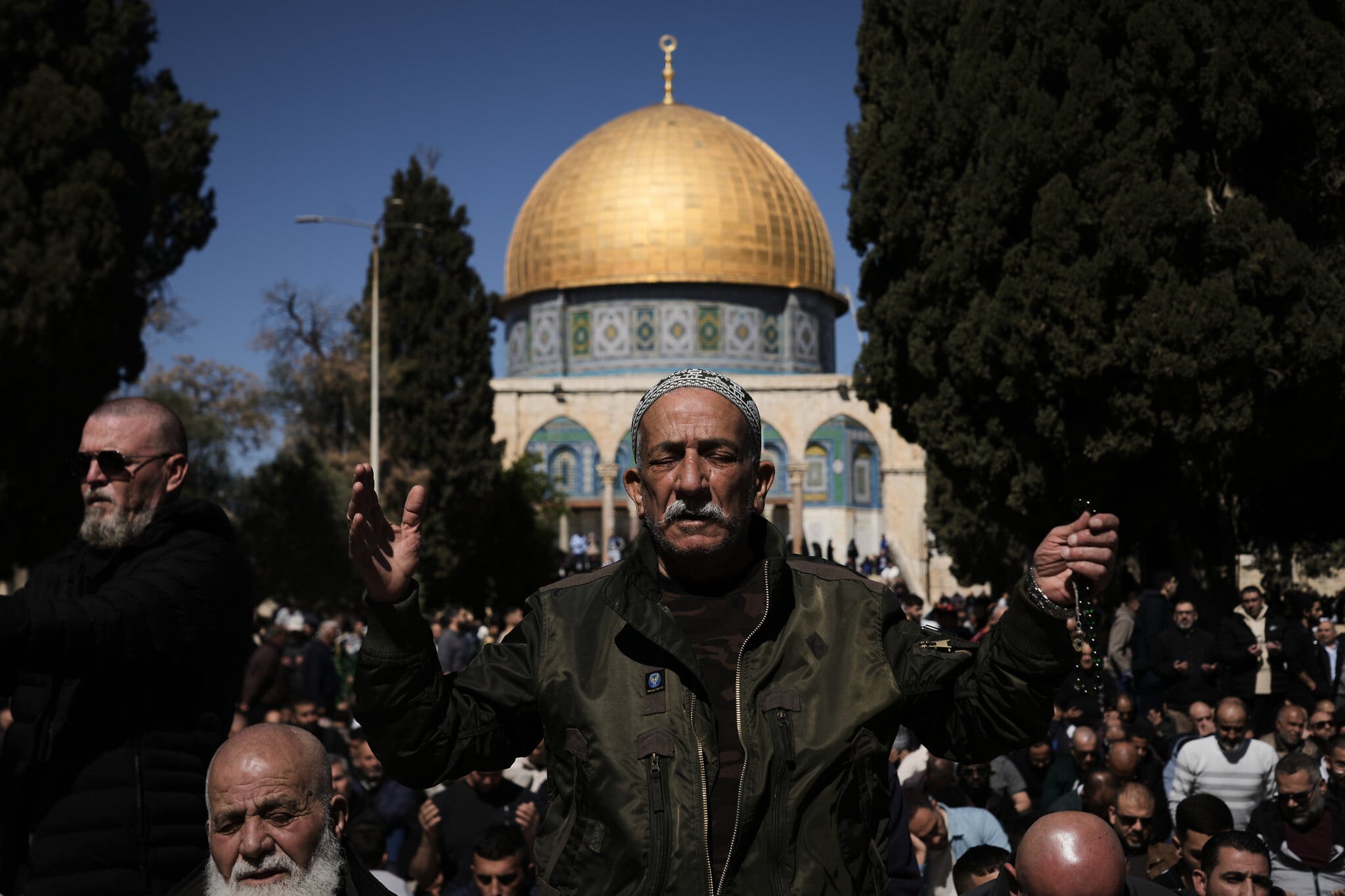
Muslim worshipers offer prayer on the first Friday of the holy month of Ramadan at the Al-Aqsa Mosque compound, on the Temple Mount, in Jerusalem’s Old City, on February 20, 2026. (AP Photo/Mahmoud Illean)
Worshipers trickled into the Old City throughout the morning, many carrying prayer mats and beads as shopkeepers sold children’s toys, bread and sweets to passersby. Once prayers ended, the crowd that had gathered in the Al-Aqsa Mosque compound flowed out.
Extensive roadblocks manned by Border Police officers were placed throughout the area after prayers ended, leading many of those exiting to leave through Lion’s Gate, the easternmost entrance to the Old City.
Ezaldeen Mustafah, a Palestinian from the West Bank, was among those lamenting the restrictions.
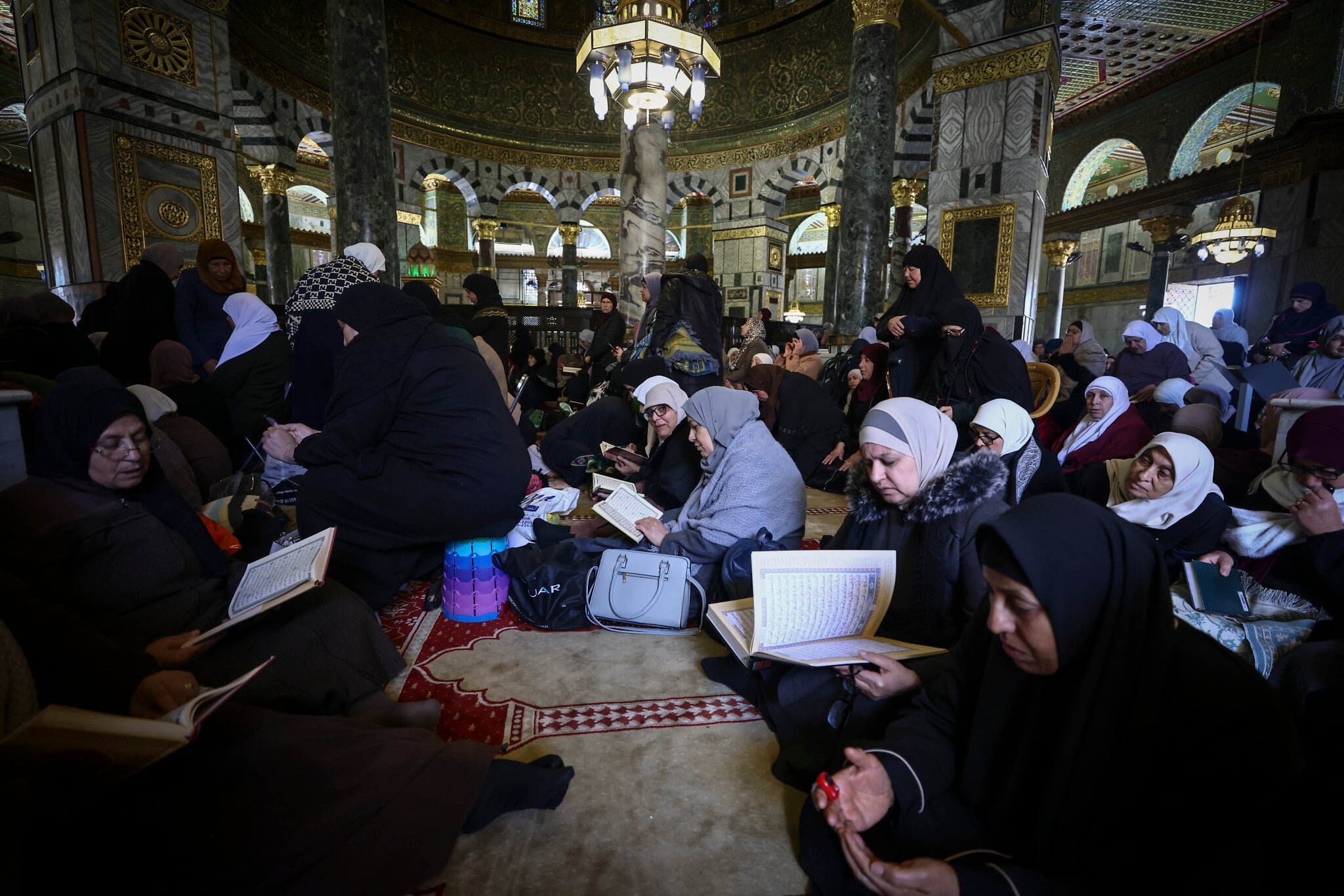
Muslim worshippers pray on the first Friday of the holy month of Ramadan, at the Al-Aqsa atop the Temple Mount compound in Jerusalem’s Old City on February 20, 2026. (Jamal Awad/Flash90)
“We need more people than this,” Mustafah said.
Some Palestinians from the West Bank on Friday said they were turned away from crossing into Jerusalem even though they had permits.
Jihad Bisharat said he was told his permit had been canceled and was sent back.
Israel’s army didn’t immediately respond to a request for comment.
Thousands of officers in the Jerusalem District police and Border Police were deployed throughout the Old City and its environs. Police said Ben Gvir, who oversees law enforcement in his ministerial role, conducted a “situational assessment” earlier in the morning at the site.
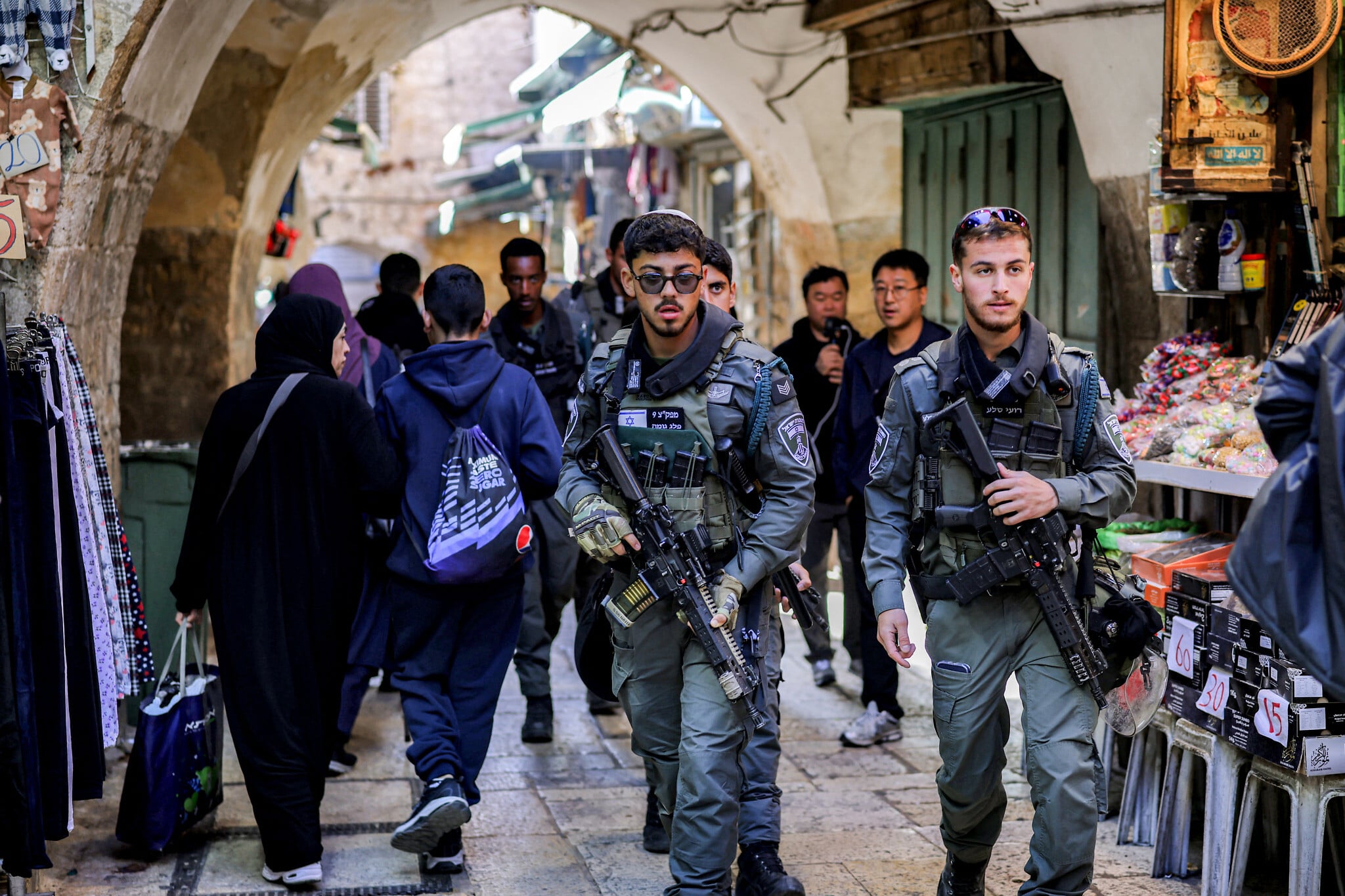
Israelisecurity forces along an alley in the Old City of Jerusalem on the first Friday of the Muslim holy month of Ramadan on February 20, 2026. (Photo by Ilia YEFIMOVICH / AFP)
“Of course, there is freedom to worship, whoever wants to pray, ahlan wa’sahlan. Whoever comes to disturb the peace, we will thrash him,” the far-right minister said in a post announcing his visit, using a term that means “welcome” in Arabic.
“Through deterrence, we are achieving governance,” he wrote. “With deterrence, people don’t mess around, and that is how it should be and should continue.”
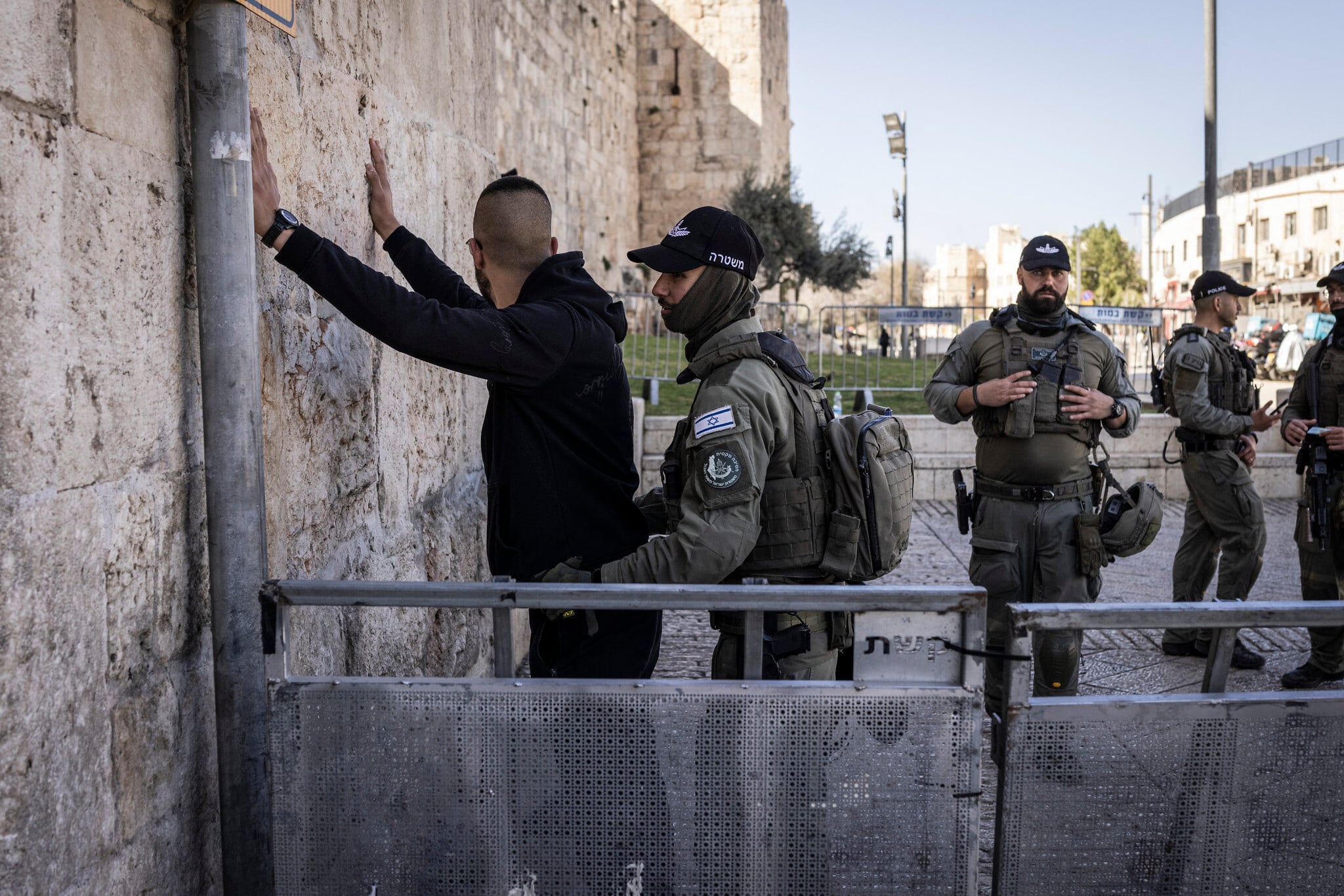
An Israeli Border Police officer searches a Palestinian man before the first Friday noon prayers of the holy month of Ramadan in the Old City of Jerusalem on February 20, 2026. (Photo by JOHN WESSELS / AFP)
The Temple Mount is the holiest site in Judaism and was home to the ancient biblical temples. Muslims call the site the Noble Sanctuary. Today, it is home to Al-Aqsa Mosque, the third-holiest site in Islam, and the iconic Dome of the Rock shrine.
The site has seen violence, particularly with large crowds gathering during Ramadan, and has seen clashes between Palestinians and Israeli security forces over the years, with Hamas using its religious symbolism as a means of rallying support.
Agencies contributed to this report
Is accurate Israel coverage important to you?
If so, we have a request.
Every day during the past two years of war and rising global anti-Zionism and antisemitism, our journalists kept you abreast of the most important developments that merit your attention. Millions of people rely on ToI for fact-based coverage of Israel and the Jewish world.
We care about Israel – and we know you do too. So we have an ask for this new year of 2026: express your values by joining The Times of Israel Community, an exclusive group for readers like you who appreciate and financially support our work.
Already a member? Sign in to stop seeing this
You appreciate our journalism

You clearly find our careful reporting valuable, in a time when facts are often distorted and news coverage often lacks context.
Your support is essential to continue our work. We want to continue delivering the professional journalism you value, even as the demands on our newsroom have grown dramatically since October 7.
So today, please consider joining our reader support group, The Times of Israel Community. For as little as $6 a month you’ll become our partners while enjoying The Times of Israel AD-FREE, as well as accessing exclusive content available only to Times of Israel Community members.
Thank you,
David Horovitz, Founding Editor of The Times of Israel