
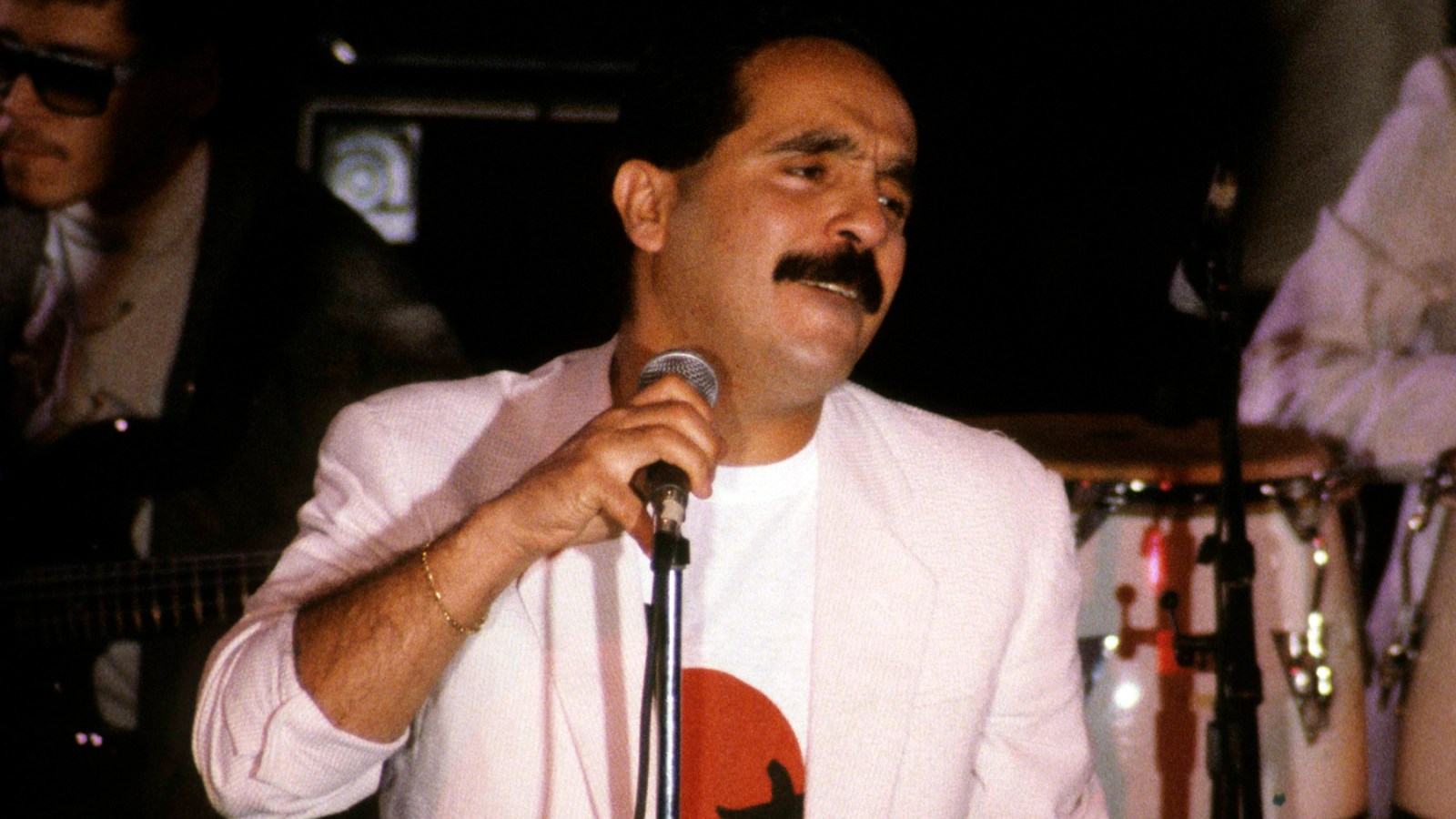
The music titan, who made more than 40 albums, died on Saturday. These recordings show how he shaped the genre
Salsa has known more than its share of star vocalists and virtuoso instrumentalists. But among the artists who defined the rich, layered specificity of its sound was Willie Colón, who died on Feb. 21. He was 75.
Colon emerged from New York City, like Eddie Palmieri, who died in August of last year. Both were fascinated by their Latin roots and Afro-Caribbean music. They realized early enough that they could help expand the parameters of salsa to incorporate any and all styles, from funky dissonance to symphonic splendor — it could be progressive, rebellious and alert. Colón was the youngest of the two, and he shocked the city’s tropical establishment in the late Sixties when he showed up in the clubs with a combo featuring his exuberant trombone riffs and a mercurial Puerto Rican sonero by the name of Héctor Lavoe. Nothing was ever the same.
Colón’s contribution to the salsa explosion of the Seventies was essential. He recorded seminal albums with Lavoe, and later with Panamanian poet and singer-songwriter Rubén Blades. He produced records by Celia Cruz, Mon Rivera, and Ismael Miranda, and kept his most refined musical concepts for a fertile solo career that managed the feat of being both artistically ambitious and commercially viable. He was also astute enough to survive the collapse of salsa dura, and its transition into the silky salsa romántica aesthetic. Colón continued touring until the end, recording more than 40 albums, and leaving a canon of classics.
Here are 10 tracks that serve as an introduction to his genius, including his greatest solo hits and a few gems with Blades and Lavoe.
‘Che Che Colé’

Image Credit: Bill Tompkins/Getty Images
The precise moment in time when Colón begins to take salsa into uncharted territory: he adapts a children’s song from Ghana into an urban mega-hit. Funky, rambunctious, deliciously rough, it offers the perfect setting for Héctor Lavoe’s throaty vocals to shine. No wonder the older generation felt threatened by this young pair of musical outlaws.
‘La Murga’
Image Credit: Brigitte Engl/Redferns/Getty Images
For Asalto Navideño, the most transcendent Latin Christmas album of all time, Colón and Lavoe enlisted the authentic touch of boricua folk master Yomo Toro on the cuatro. A celebration of Panamanian folk, “La Murga” became legendary for the ragged propulsion of its trombone riffs.
‘Cua Cua Ra, Cua Cua’
Image Credit: Brigitte Engl/Redferns/Getty Images
Colón and Lavoe toured and recorded incessantly during the first half of the Seventies, and their music became increasingly cosmopolitan, always searching for a bigger scope. By the time he recorded The Good, The Bad, The Ugly with Lavoe, Rubén Blades and Yomo Toro, Colón’s tropical blend included rock, funk and the sounds of Brazil. He sings lead on this lovely Baden Powell cover, his casual interpretation evoking mischief and longing.
‘Periódico de Ayer’
Image Credit: GV Cruz/WireImage
Colón was instrumental in cementing the progressive salsa sound of the late Seventies, and his production work on Lavoe’s initial solo outings gave him the chance to dream big. He reportedly hired a string section out of his own pocket for this Tite Curet Alonso gem, generating a soulful interplay between strings and brass. It may have emerged from the barrios of New York City — but at this juncture, salsa sounded as imperial as a classical symphony.
‘Pedro Navaja’
Image Credit: Bettmann Archive/Getty Images
The appearance of Panamanian prodigy Rubén Blades on the New York salsa scene gave Colón the opportunity to collaborate with a songwriter of unparalleled poetic reach. An ideological manifesto, Siembra also signified the aesthetic peak of the salsa revolution — with “Pedro Navaja” its undisputed anthem. Colón’s sweet trombone layers frame the brainy references to Kafka and Bertolt Brecht, plus Blades’ irresistible existential sarcasm.
‘Oh Qué Será?’
Image Credit: Michael Ochs Archives/Getty Images
The devastating breakup of Colón’s partnership with Lavoe allowed him to develop an exquisite new sound as a solo artist: having rewritten the salsa rulebook with sterling commercial results, he was now emboldened to walk closer to the edge. This grand cover of the 1976 hit by Brazilian master Chico Buarque is laced with lush female choruses and an epic string section. This is where the salsa romántica sound begins.
‘Gitana’
Image Credit: Brendan Hoffman/Getty Images
Colón never hid his natural proclivity for melodrama — in fact, he showed it off wrapped up in a luxurious wall-of-sound. A cover of a Spanish song by singer/guitarist Manzanita, “Gitana” places him on the brink of Latin pop affectation, with theatrical accents on the flute and violin. To his credit, the clave remains rock solid throughout.
‘El Gran Varón’
Image Credit: Johnny Louis/Getty Images
While most of the salsa giants experienced some form of creative exhaustion during the late Nineties, Colón continued to push the envelope. His last album for the Fania label, Top Secrets included this thoughtful Omar Alfanno composition that touches on transphobia, the AIDS epidemic and the patriarchal venom that destroyed many a life in 20th century Latin America. The elaborate salsa sinfónica backdrop adds an extra layer of poignancy.
‘Idilio’
Image Credit: Gladys Vega/Getty Images
Every icon deserves a late-career smash, and Colón got his when he decided to record this beauty of a salsa scorcher as a duet with Puerto Rican crooner Andy Montañez. A summation of his musical persona, “Idilio” boasts fiery trombone moñas and Willie’s vocals in rare form. It may follow the sugary salsa romántica vein, but it grooves like crazy.
‘Talento de Televisión’
Image Credit: Gonzalez Castillo/LatinContent/Getty Images
A misguided attempt at reigniting the sacred Blades/Colón partnership, Tras La Tormenta found both legends recording their parts in separate studios. Still, the album included this joyous salsa romp — a giddy, goofy character study. Ignore the older-Latino-gentleman-in-the-room humor by composer Amílcar Boscán, and surrender instead to Colón’s hilarious interpretation, and the sharp, staccato grooves.