
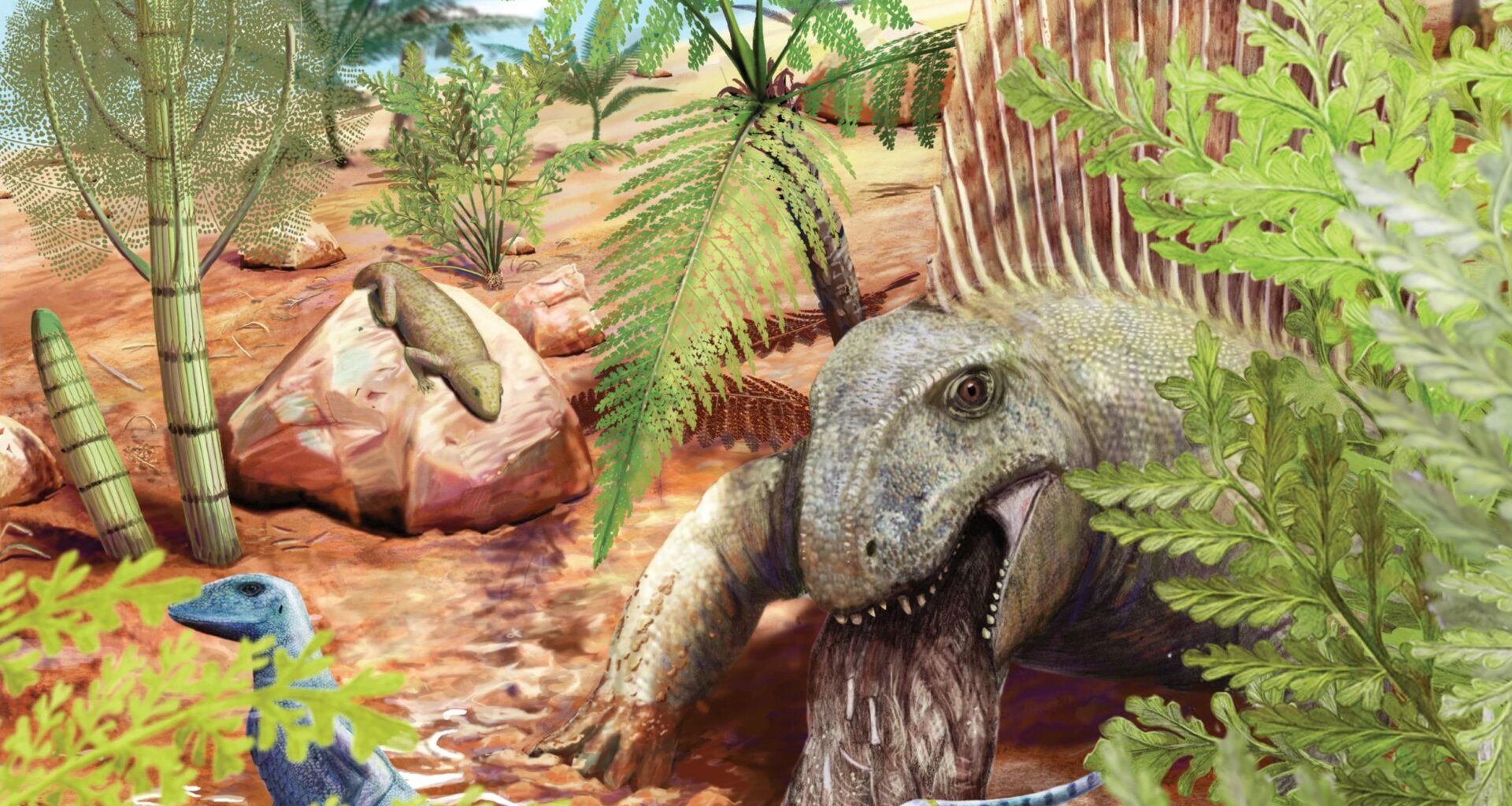
A lump of fossilized vomit has turned out to be the oldest known from any land animal, about 290 million years old.
Inside, 41 bone fragments freeze a single meal from long before dinosaurs, letting researchers redraw an early land food web.

Buried in the Bromacker sandstone in central Germany, a walnut-sized lump held tiny bones packed together instead of scattered across the rock.
On that slab, Arnaud Rebillard, a paleontologist at the Museum fur Naturkunde Berlin (MfN) treated the lump as a clue.
Later, Rebillard and colleagues released a detailed study that mapped the lump’s bones and argued they came from regurgitated stomach contents.
That conclusion turned the clump into a direct record of eating, which fossils usually hide behind broken skeletons.
How vomit fossilizes
Researchers call fossilized vomit a regurgitalite, hardened stomach leftovers expelled from the mouth before digestion finishes.
During the heave, sticky mucus and digestive juices can glue sharp bones into a tight mass.
Fast burial then seals the packet, because sun, scavengers, and flowing water can pull loose fragments apart.
On land, those chances are slim, so each preserved regurgitalite can reveal behavior that skeletons alone miss.
Sorting bones digitally
To avoid cracking the specimen open, the team used micro-CT scanning, a high-resolution X-ray scan for tiny fossils.
X-rays passed through bone differently than sandstone, and software separated the denser pieces into a clean digital model.
After that separation, researchers rotated each bone and matched shapes against better-preserved Bromacker skeletons held in MfN cabinets.
Nothing left the rock during scanning, which mattered because some bones measured less than an inch and could crumble easily.
Three prey species
Matches to the site’s fossil collection showed the vomit contained remains from three animals, not one unlucky victim.
One set fit Thuringothyris mahlendorffae, about 3.5 inches long, and another matched Eudibamus cursoris, about 4 inches long.
A third prey animal came from an unidentified diadectid related to Diadectes, which reached roughly 2 feet in length.
No teeth marks or skull fragments from the eater survived, so the bones could not name the predator yet.
Clues from chemistry
Chemistry helped separate vomit from poop by tracking phosphorus, which often concentrates in coprolite, fossilized feces hardened into rock.
In the vomit cluster, the sediment right next to the bones held little phosphorus, unlike typical fecal fossils.
Bones still carried their own phosphorus, but the nearby cement looked more like floodplain mud than digested waste.
That chemical pattern backed the idea that the animal expelled a compact pellet early, before the gut processed it fully.
A messy eater
Mixing different prey in one mouthful pointed to opportunistic feeding. A predator could grab a small reptile, snap up another nearby, and swallow both before acids softened bones.
Aligned long bones inside the mass suggested it left the body as one piece, not as loose scraps. Such direct predator-prey evidence stays scarce in early land rocks, where most fossils show bodies after death, not meals.
Tracking the predator
Only two large carnivores from Bromacker matched the size of the bone cluster and the animals living there.
Both Dimetrodon teutonis and Tambacarnifex unguifalcatus were synapsids, a branch of vertebrates that later produced mammals.
Neither predator left a tooth in the lump, so the authors treated the producer as a best-fit suspect.
Pinning it to a short list still matters, because it narrows how scientists rebuild the top of that food chain.
Why Bromacker stands out
Unlike many fossil quarries, Bromacker has yielded complete land skeletons along with trackways, letting scientists match bodies to behavior.
Repeated digs exposed thin layers of sandstone and mud that trapped animals quickly, limiting how far bones could drift.
In 1974, Thomas Martens first pulled bones from the quarry, and later teams returned for years to widen the record.
That long-running effort put MfN on a rare footing, where a single regurgitated lump can be compared to many known animals.
A moment locked in
Temporary streams once cut through the Bromacker valley, and conifer trees lined banks where flood mud could bury remains.
Because the clump recorded one regurgitation, it captured who ate whom without needing bite marks on a fossilized skeleton.
“It’s like a photograph of the past, taken at a specific moment,” said Rebillard, describing how rare such direct records are on land.
Finding more regurgitalites would test whether those predators hunted selectively, yet this one already anchors a real food web connection.
Where this leads
By linking scattered bones into one event, the fossil vomit let scientists see a predator-prey network that bodies alone hide.
Future finds from Bromacker and similar sites could reveal how early land predators fed, and how often they coughed meals back up.
The study is published in Scientific Reports.
—–
Like what you read? Subscribe to our newsletter for engaging articles, exclusive content, and the latest updates.
Check us out on EarthSnap, a free app brought to you by Eric Ralls and Earth.com.
—–