
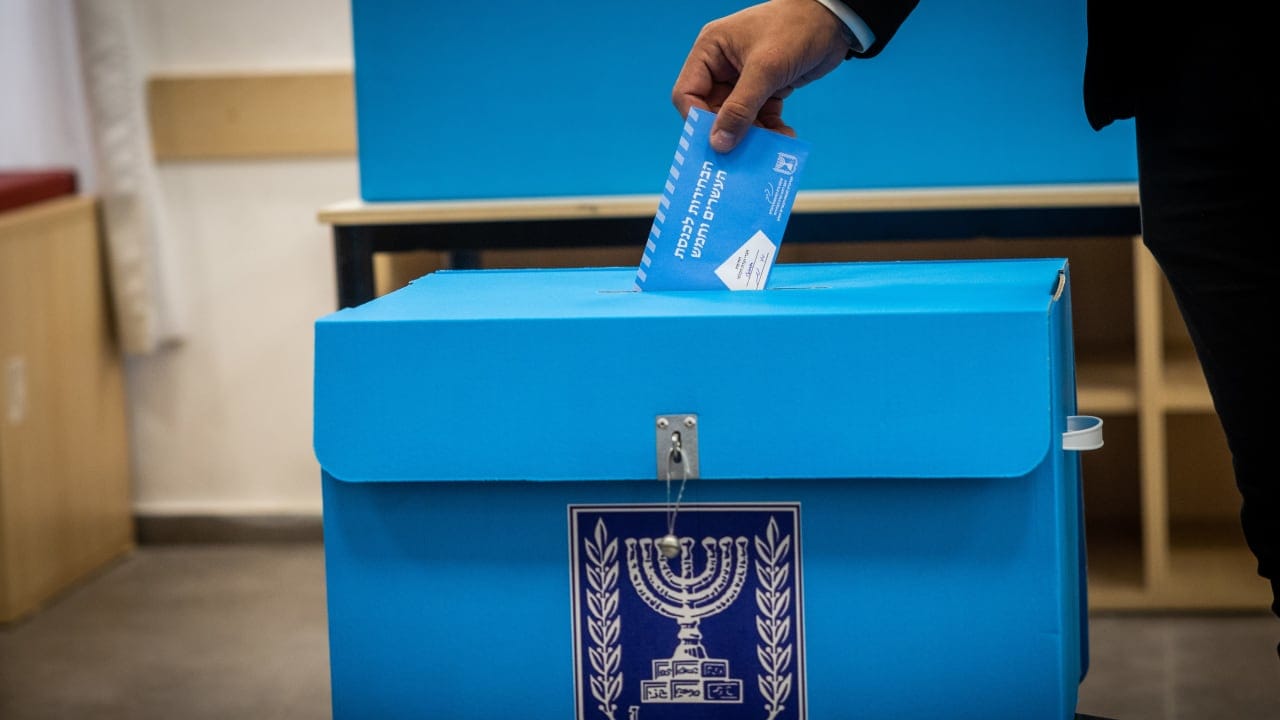
Start with a number that should unsettle the Israeli left: 75.
That’s the percentage of first-time Israeli voters who identify as right-wing, according to a Channel 12 poll conducted by the Midgam Research Institute and aired Saturday night. Among veteran voters, the figure is 68. Seven points may not sound like a revolution. In a country where fractions decide elections and demography shapes destiny, this figure is closer to a verdict.
The Israeli left has spent years telling itself that the next generation would rescue it. That the young, educated, connected cohort coming of age in a globalized country would eventually drift toward the liberal center, as young people in other democracies supposedly do. Midgam’s data says the opposite is happening. The drift is going the other direction, and it’s accelerating.
Worth sitting with before reaching for an explanation.
The same poll showed 59% of new voters aligned with the right bloc overall, against 41% for the opposition. But the more telling figures were cultural.
 33% Belief in God or a higher power
Forty-three percent of new voters say they kiss mezuzot. Among veteran voters, 33%. Belief in God or a higher power: 80% among new voters, 75% among veterans. Belief in the coming of the Messiah: 56% among new voters, 51% among veterans.
Israel’s secular Ashkenazi establishment, the founding elite that still largely controls the country’s media, judiciary, and cultural institutions, has long operated on an implicit assumption: modernity moves in one direction. Education, urbanization, and prosperity gradually dissolve tradition. The grandchildren of religious immigrants become secular professionals, and the grandchildren of secular professionals become liberal cosmopolitans.
The Midgam data suggests that the arc has bent back on itself in Israel. The youngest cohort entering the electorate is more traditionally Jewish in everyday practice than the cohort it’s replacing. More likely to feel the weight of a mezuzah, to hold open a theological possibility their parents quietly closed.
One data point complicates the picture. Forty-six percent of veteran voters say they avoid lashon hara, negative speech, and slander, compared with 41% of new voters. More traditional in some ways, less so in others. The portrait isn’t simple, which is precisely what makes it worth examining carefully.
The most explosive finding has nothing to do with Netanyahu
On politics proper, the picture sharpens fast, and the most explosive finding has nothing to do with Netanyahu.
Around 60% of veteran voters say they wouldn’t vote for a party that supports the current haredi draft exemption law. Among new voters, the figure is comparable. This number is the most politically combustible data point in the entire segment. For a generation shaped by October 7 as a lived catastrophe, with friends killed, friends wounded, months of reserve duty, funerals attended, and plans suspended indefinitely, the question of who serves and who doesn’t isn’t a coalition management problem. It’s a question about what citizenship actually means.
Israeli politicians have treated the haredi exemption as an equation to be balanced, a deal to be cut and recut in exchange for governing majorities. The generation now entering the electorate is done with that. They’re measuring the social contract in deployment orders and body bags. Even among veteran Likud voters, only 33% say they’d vote for a party backing the exemption, 31% say they wouldn’t, and 36% remain undecided. That’s a coalition waiting to fracture.
Then there’s the harder finding: Forty-six percent of new voters say there was “betrayal from within” on October 7. Among veteran voters, the figure is 37%. Among veteran opposition voters, it falls to 21%. Among the youngest cohort, this is a plurality view.
Trauma at the scale Israel experienced produces suspicion alongside courage. It creates a hunger for explanations that assign clear guilt and a readiness to believe that institutions failed by design rather than incompetence. Social media, which this generation inhabits more completely than any before it, supplies and amplifies exactly those explanations around the clock.
The Netanyahu question fits the same pattern. Among new voters, 49% accept the prime minister’s claim that the cases against him are politically fabricated, compared to 36% who don’t. Among veteran voters, it’s essentially reversed: 35% believe him, 46% don’t. A generation skeptical of establishment institutions turns out to be skeptical of establishment prosecutions, too. Whether that skepticism is warranted is a separate question. Its political weight isn’t.
Support for a state commission of inquiry for October 7 tracks the same way. Sixty-four percent of veteran voters support one. Among new voters, 55%. Among new voters in the coalition specifically, 47% are in favor, 25% are opposed, 25% are undecided, and 3% say no investigation is needed at all.
Now look at where this generation’s votes are actually going. Among new voters who sat out the last election, Likud leads at 20%. United Torah Judaism, the party most identified with the draft exemption position that 60% of voters call disqualifying, comes in second at 11%. Bennett’s movement is at 10%, Ben-Gvir at 7%, the Democrats at 5%, Shas at 4.5%, Yisrael Beytenu at 4%, Yesh Atid and Blue and White at 3.5% each, Eisenkot’s movement and the Reservists party at 3% apiece, Religious Zionism at 2.5%. Sixteen percent haven’t decided.
A cohort that says the draft exemption is a dealbreaker is still parking real support with the party that champions it. That’s the behavior of a generation whose partisan loyalties haven’t yet caught up with its convictions. The mood is settled. The political home isn’t.
Israel’s youngest voters came of age under rocket fire, buried their friends, watched October 7 unfold on their phones, and emerged more traditional, more hawkish, more suspicious of institutions, and angrier about who was exempted from all of it. Their party loyalties are still scattered. Their direction isn’t.
You’d better start paying attention.