
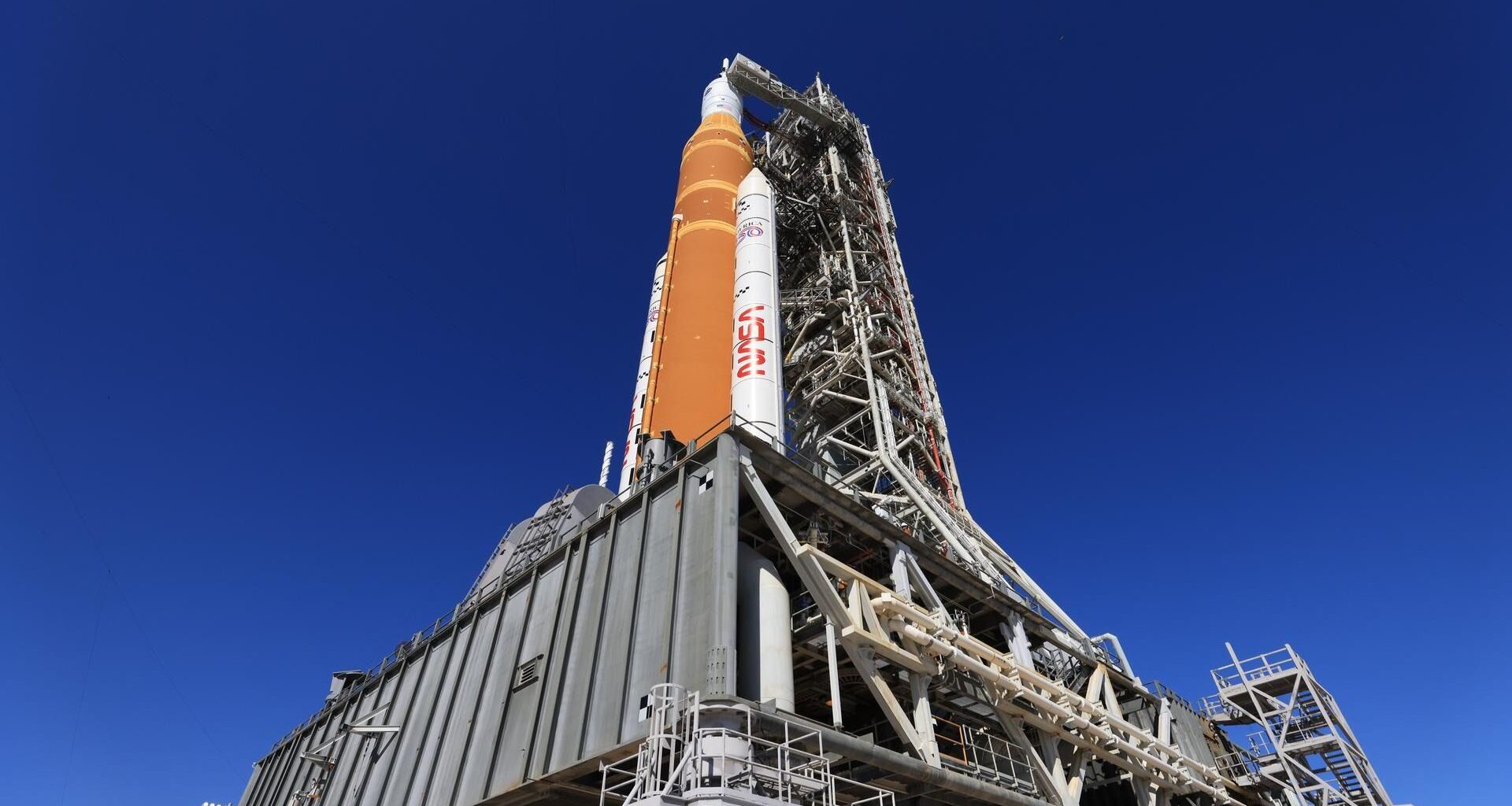
Last week NASA’s Artemis 2 moon mission was just a few weeks from launching four astronauts on a historic lunar flight. Today, it’s facing a monthlong delay or more.
The decision was not a surprise. NASA chief Jared Isaacman telegraphed that the move might be necessary on Saturday after finding blockage in the flow of helium into the rocket’s upper station.
You may like
“This will almost assuredly impact the March launch window,” Isaacman said on X at the time.
Today, NASA confirmed a launch delay to April at the earliest as it prepares to roll the 322-foot-tall Artemis 2 rocket back into its hangar, the cavernous Vehicle Assembly Building, for repairs.
“Weather pending, NASA will roll the SLS (Space Launch System) rocket and Orion spacecraft for Artemis II off the launch pad at the agency’s Kennedy Space Center in Florida as soon as Tuesday, Feb. 24,” NASA wrote in an update on Sunday.
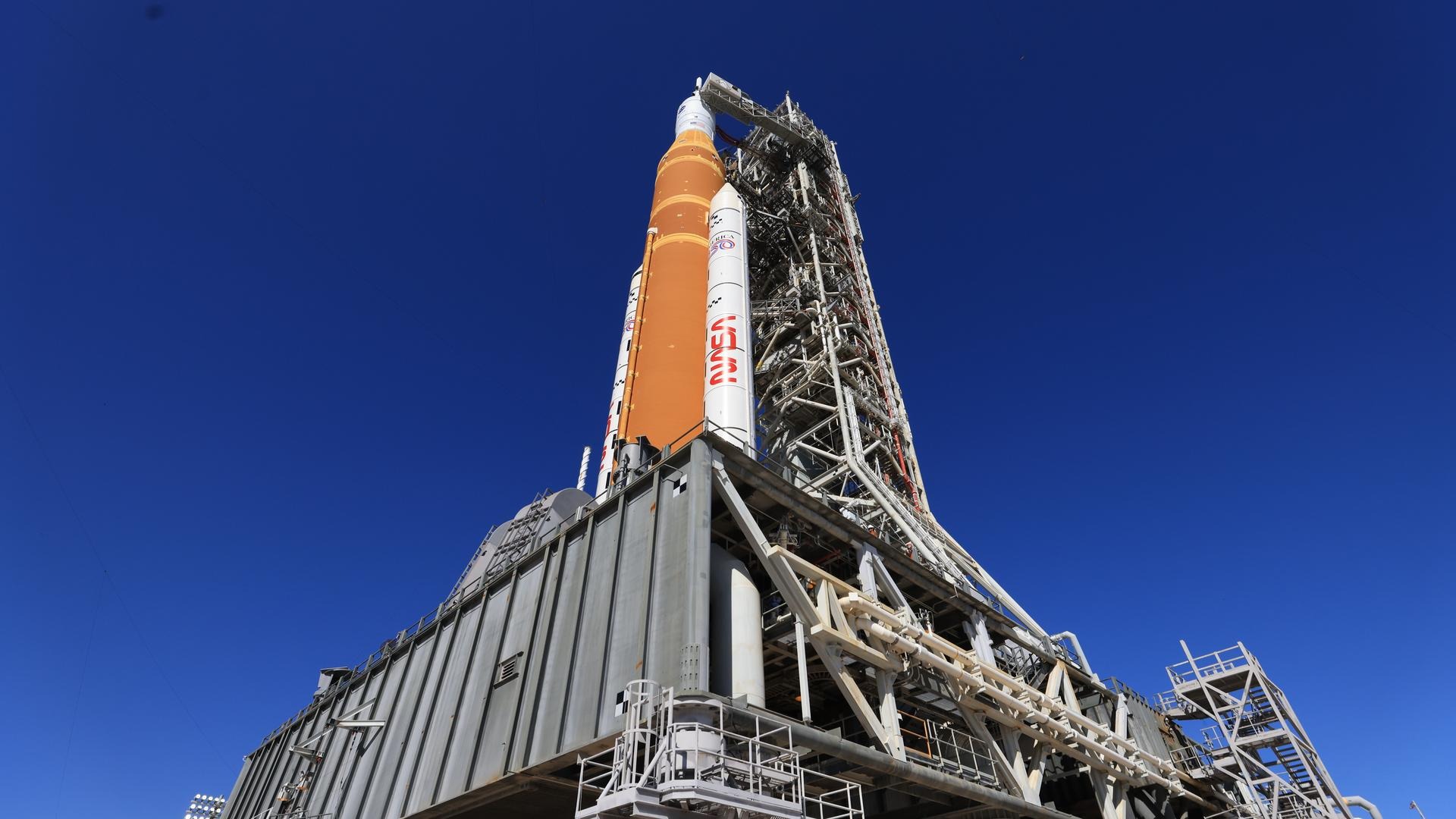
NASA is troubleshooting a glitch with the upper stage of Artemis 2’s Space Launch System rocket that will likely delay the launch of the moon mission. (Image credit: NASA/Ben Smegelsky)
After overnight data showed an interruption in helium flow in the SLS interim cryogenic propulsion stage, teams are troubleshooting and preparing for a likely rollback of Artemis II to the VAB at @NASAKennedy. This will almost assuredly impact the March launch window. @NASA will…February 21, 2026
NASA’s launch window for March was relatively short. It ran from March 6 through March 9, with another opportunity on March 11. If Artemis 2 was unable to hit any of those dates, NASA would have to wait at least three additional weeks.
The next window features target launch dates of April 1, April 3-6 and April 30.
“A rollback would mean NASA will not launch Artemis 2 in the March launch window,” NASA officials wrote in a blog post on Saturday. “However, the quick preparations enable NASA to potentially preserve the April launch window if a rollback is required, pending the outcome of data findings, repair efforts, and how the schedule comes to fruition in the coming days and weeks.”
The news of a problem on the Artemis 2 rocket on Saturday was something of a surprise. It came just a day after NASA announced that it was targeting March 6 for the launch of Artemis 2, the first crewed mission beyond low Earth orbit since the end of the Apollo era. Artemis 2 will send three NASA astronauts and one Canadian on a roughly 10-day trip around the moon and back to Earth in a Orion capsule.
You may like
The agency made the March 6 call after reviewing data from Artemis 2’s second wet dress rehearsal (WDR), a two-day-long practice run of the major operations leading up to launch.
The WDR wrapped up on Thursday (Feb. 19) with a successful fueling of both SLS stages. This was a big milestone for the Artemis 2 team, which had to terminate the mission’s first WDR early on Feb. 2 due to a leak of liquid hydrogen (LH2) propellant.
LH2 leaks plagued Artemis 1, delaying the launch of that ultimately successful uncrewed moon mission multiple times back in 2022. But NASA seems to now have the issue under control.
During a press conference on Friday, Artemis 2 team members said there were just a couple of big boxes left to check before giving the mission a green light to launch.
One was the completion of the flight readiness review, which was expected to take place late this coming week. The other was the installation of two “contingency pad access” trusses on the SLS’ mobile launch tower, which will allow teams to check Artemis 2’s flight termination system on the pad.
Those trusses were installed on Friday, NASA officials wrote in Saturday’s blog post. But they’ll probably be removed soon.
“Teams are actively reviewing data, and taking steps to enable rollback positions for NASA to address the issue as soon as possible while engineers determine the best path forward,” officials wrote in the update.
By Sunday, it was official. The “best path forward” would be a rollback of the Artemis 2 rocket for repairs and weeks of downtime. NASA officials said the early work to prepare for such a turn of events should help keep the Artemis 2 mission on track for April.
“The quick work to begin preparations for rolling the rocket and spacecraft back to the VAB potentially preserves the April launch window, pending the outcome of data findings, repair efforts, and how the schedule comes to fruition in the coming days and weeks,” NASA wropte in the Sunday update.
Proper helium flow is vital to the proper functioning of the SLS upper stage; it pressurizes the LH2 and liquid oxygen propellant tanks and helps maintain “the proper environmental conditions” for engine operation, according to the blog post. The flow issue was not seen during the WDR.
Editor’s note: This story, originally published on Saturday, Feb. 21, was updated at 3:16 p.m. ET on Feb. 22 with confirmation of the Artemis 2 rollback from NASA’s new blog post.