
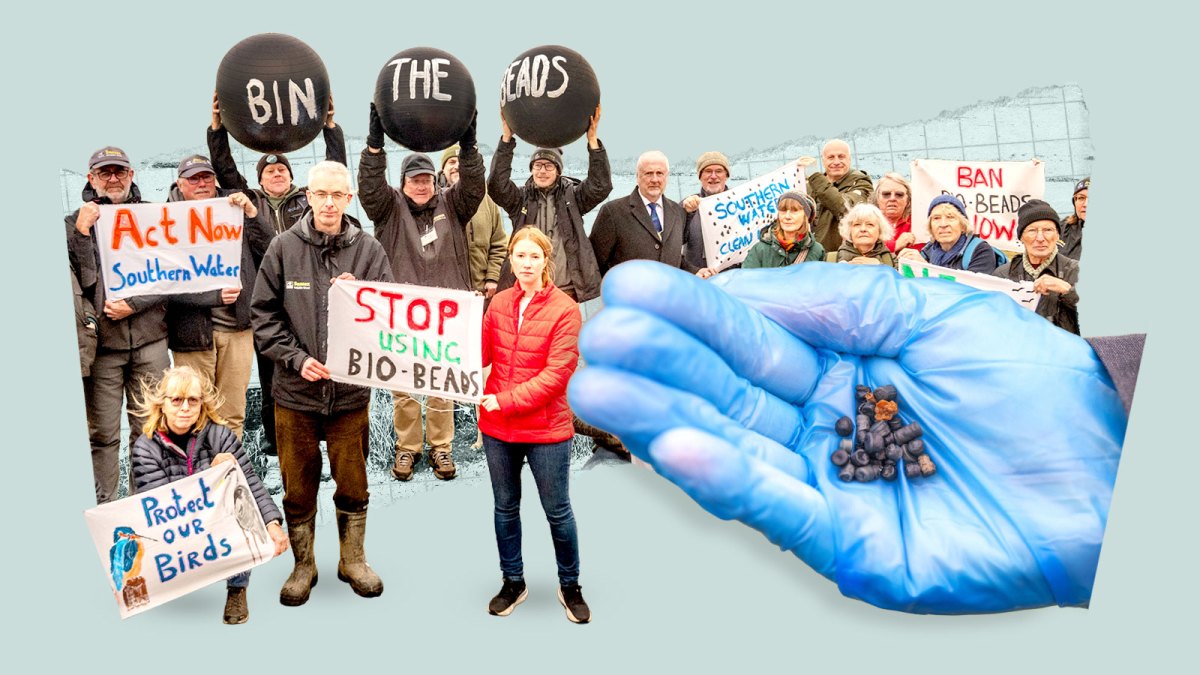
Senior executives at Southern Water knew their company had inadvertently released millions of pieces of plastic into the sea a day before they admitted the incident to the public, The Times can reveal.
A fault at the company’s Eastbourne wastewater treatment works on October 28 caused almost 100 million “biobeads” to wash up at rare salt marsh habitat and beaches, including Camber Sands. About 5mm in diameter and used to treat sewage, the biobeads have been found to be contaminated with lead and other metals.
For months, Southern Water had refused to explain the timeline of what leaders, including the chief executive, Lawrence Gosden, knew, or when they knew it, despite repeated requests by The Times under transparency law.
Now, the company has revealed that its executive team was informed of the incident on November 6. It was not until four days later that the firm released a public statement admitting to the release.
By the time executives knew of the crisis, locals said biobeads had already been washing up at Hastings beach and Camber Sands for days, with no official explanation.
The disclosure by Southern Water came days after the Information Commissioner’s Office, the data watchdog, said it was considering a complaint by The Times about withheld information.
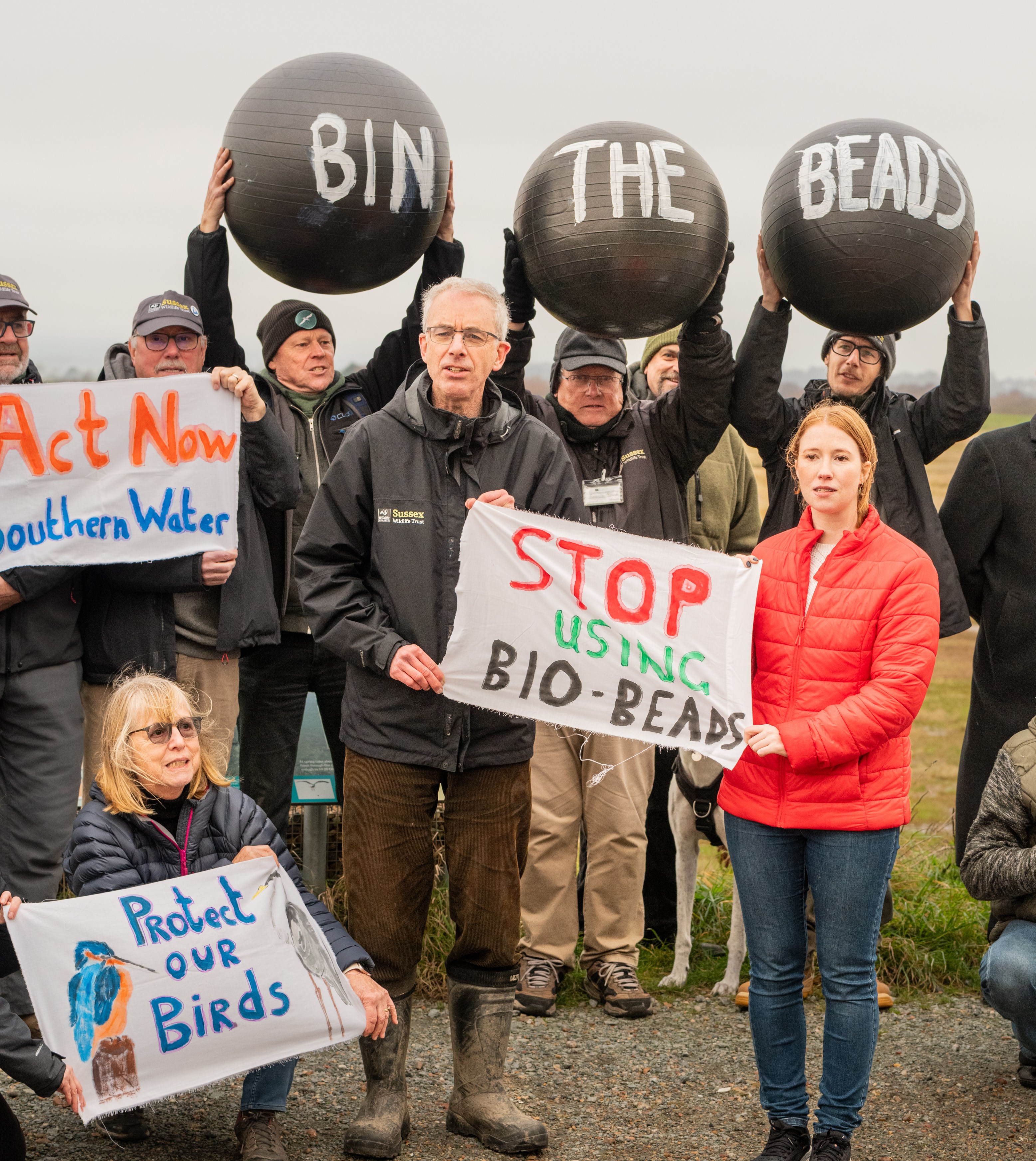
Helena Dollimore, right, with advocates for Rye Harbour Nature Reserve
JON SANTA CRUZ FOR THE TIMES
The pellets are considered a potential risk to dogs and godwits, curlews and other birds that visit that stretch of coast.
Southern Water estimates that 4.6 tonnes of biobeads, equivalent to 96 million pieces of plastic, were released. That is roughly half its initial estimate.
Dinsdale said he was aware of beads still washing onto beaches. Conservationists have warned that a local salt marsh, a rare habitat in England, will take years to clean up.
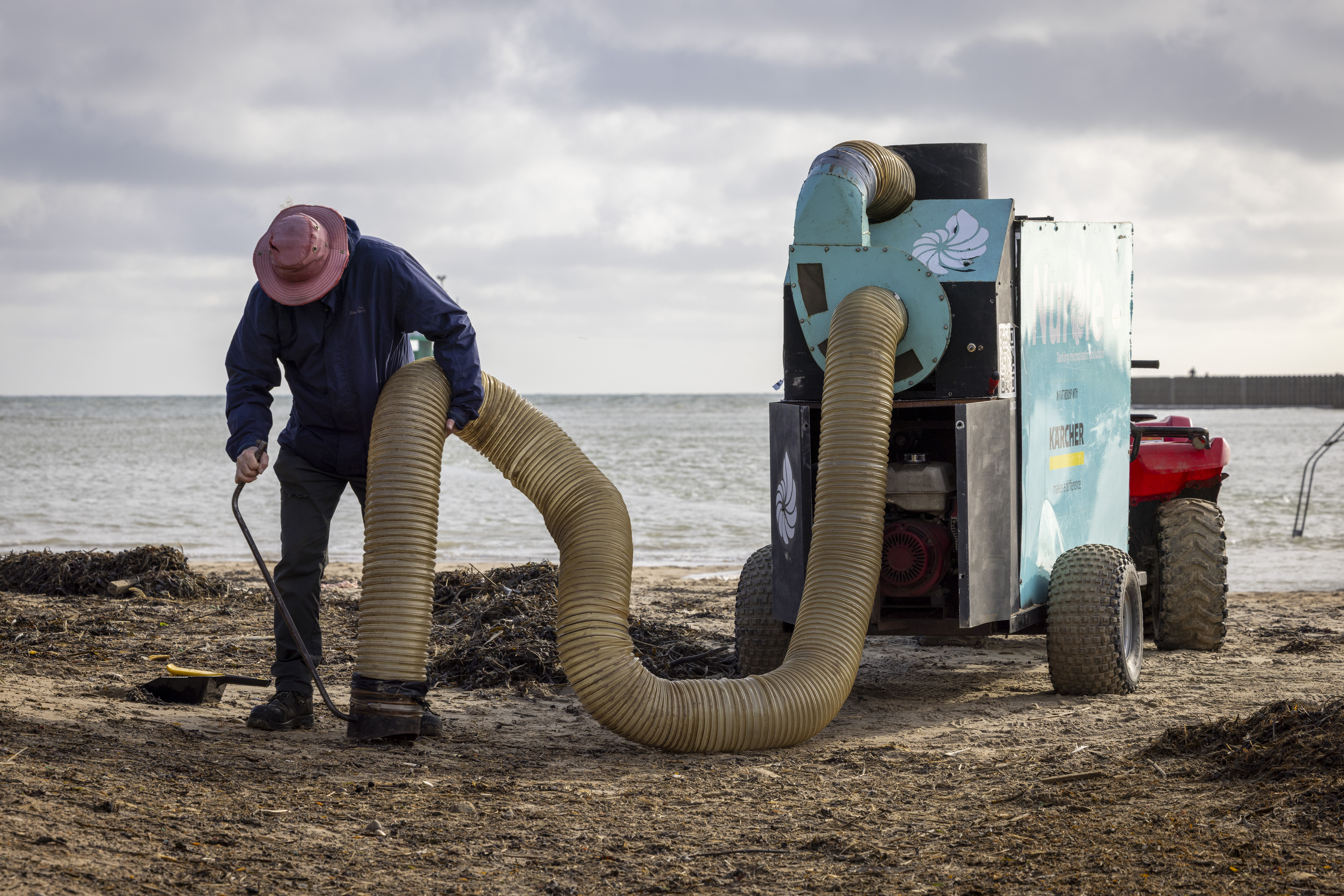
Nurdle Coast clean up the plastic bio-beads at Camber Sands near Rye, East Sussex
ANDREW AITCHISON/IN PICTURES/GETTY
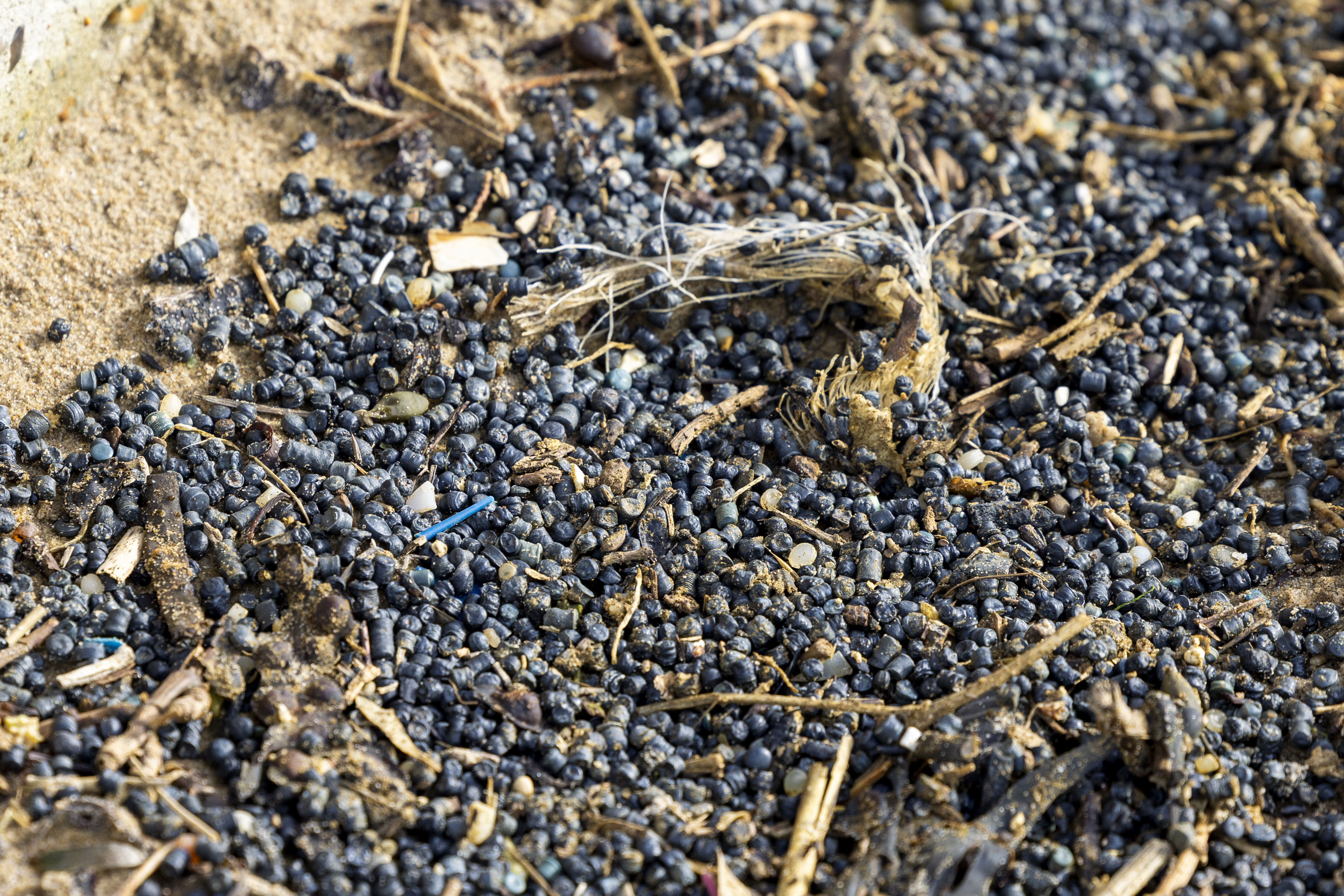
Biobeads litter the beach
ANDREW AITCHISON/IN PICTURES/GETTY
Southern said about 80 people were working on the incident, but it was still unable to release emails and the contents of video meetings about the fallout, for fear of prejudicing investigations by regulators.
The Environment Agency, which is investigating, has previously accused Southern Water of not fully co-operating with its inquiries after having to repeatedly summon employees to a meeting. The company has said it was fully complying with the investigation.
The plastic discharge was upgraded to a “category one” pollution incident last month by the Environment Agency. This is the most serious classification and suggests major environmental impact. It means Southern faces potentially greater fines and the risk of Gosden having his bonus banned under a new law.
There are at least 14 other older wastewater treatment works known to still be using biobeads, operated by Southern, South West and Wessex Waters. Almost 10,000 people have signed a petition calling for a ban on the use of the tiny pieces of plastic in sewage works.
Emma Hardy, the water minister, said: “I was deeply shocked and angered by the appalling pollution incident at Camber Sands last year, and I know the local community will want to see Southern Water held to account for this unacceptable spill.”
A Southern Water spokesman said: “Once a fault was identified in a tank at Eastbourne on October 28, the tank was taken offline immediately, and we began an investigation. At that point, there was no indication any beads had left the site: it would be wrong to conflate the detection of a fault with the release of beads.
“It took time to investigate the wastewater site safely, as it’s entirely underground and toxic hydrogen sulphide gas builds up in the confined space.
“Beads were later reported on Camber Sands, from November 6. Initial guidance from third parties was that historical plastic pollution incidents indicated the beads washing up there could be from a variety of sources including shipping, but that all possibilities needed to be investigated. As a precaution, we declared an internal incident.
“Our volunteers supported the beach clean‑up being led by Rother district council. Late on November 9 we concluded that it was likely the beads had originated from our Eastbourne site, and we issued a statement the next morning.”
Southern Water spilled raw sewage in rivers and seas nearly 30,000 times in 2024, a figure largely unchanged on the year before. The Environment Agency last year rated the firm two out of four stars for its environmental performance, putting it in the middle of the pack for water companies. It was raising water bills by more than other company. There was a 53 per cent increase by 2030 compared with 2025 levels.
The Times’ Clean it Up campaign is calling for stronger regulation and rapid investment to curb such pollution incidents.