
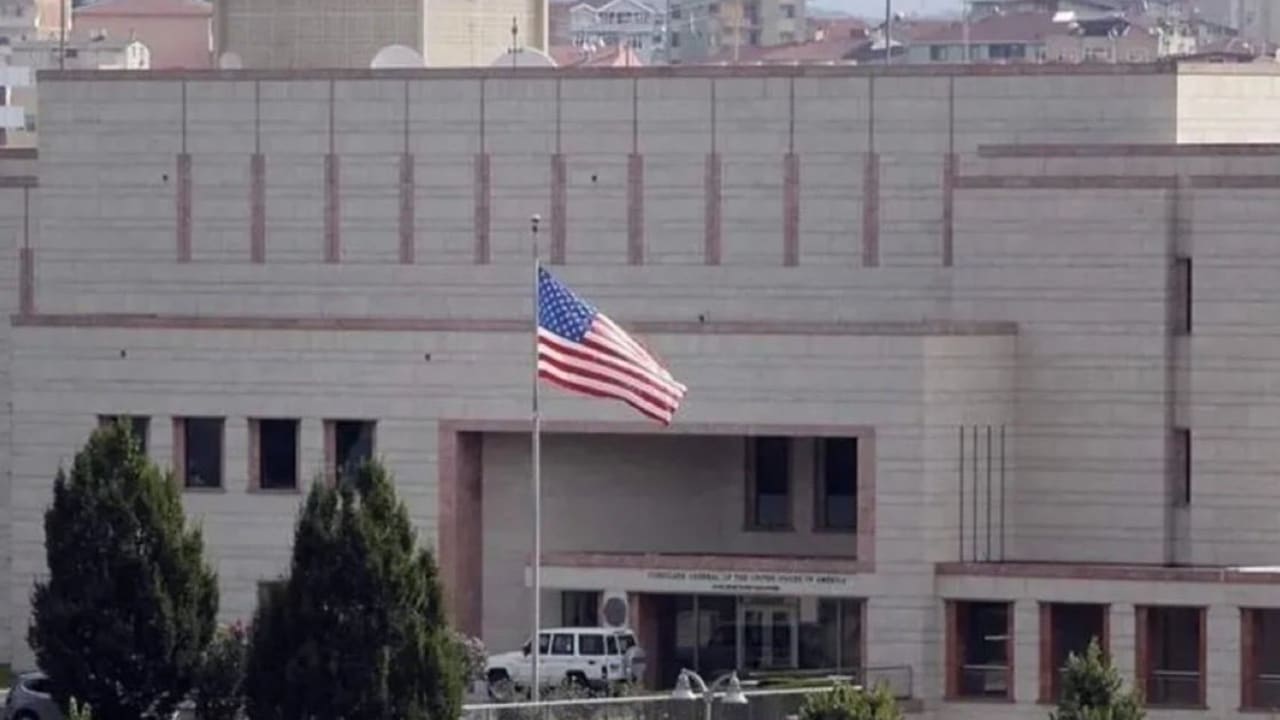
The US Embassy in Beirut, Lebanon, evacuated dozens of non-essential personnel via Beirut–Rafic Hariri International Airport, Lebanese broadcaster LBCI reported on Monday.
This was “a precautionary measure due to anticipated regional developments,” according to the outlet.
The US State Department and US Embassy in Lebanon have not yet issued an official statement on the matter, and the websites have not yet issued an evacuation warning.
This comes as the US has gathered a dozen military ships in Middle Eastern waters and may be preparing for a bloody, extended confrontation with the Iranian regime.
The current US arsenal in the area includes two destroyers in the Mediterranean Sea, one in the Red Sea, four in the Persian Gulf, and an aircraft carrier, the USS Abraham Lincoln, accompanied by four destroyers in the Arabian Sea. Another carrier, the USS Gerald R. Ford, also arrived in the Mediterranean Sea on Friday, accompanied by warships.
The United States military has moved over 50 fighter jets to the Middle East in the last 24 hours as part of its buildup of air and naval assets near Iran, Axios reported on Tuesday, citing a US official.
A host of F-16, F-22, and F-35 jets were observed heading to the Middle East by independent flight trackers.
Additionally, Iran may order its proxies to retaliate against American targets worldwide should US President Donald Trump order “large-scale attacks” against the regime, the New York Times reported on Sunday evening, citing US and Western officials.
Speaking on the condition of anonymity, the officials told the NYT that, while they haven’t learned of any specific plots, “heightened ‘chatter'” in intercepted terrorist communications “indicates some level of attack planning and coordination.”
“Iran can work through proxies to conduct terrorist attacks that will raise costs for any US military campaign,” Executive Director of the Soufan Center in New York, Colin P. Clarke, shared with NYT, explaining that should Supreme Leader Ayatollah Ali Khamenei and the IRGC feel threatened by the US’s attack, it may lead to them “order[ing] terror attacks abroad, including in Europe.”
The larger attack would come should Iran refuse to “give in to his [Trump’s] demands” regarding its nuclear program, according to the NYT.
Miriam Sela-Eitam, Tzvi Jasper, and Jerusalem Post Staff contributed to this report.