
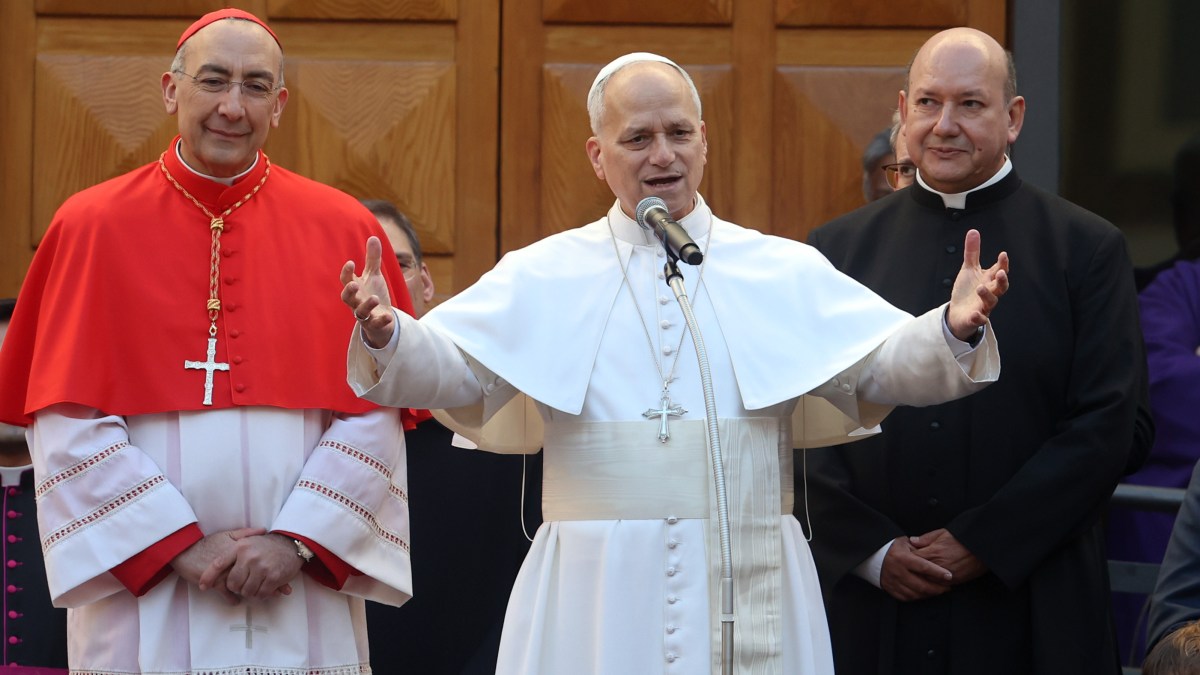
Pope Leo has a reputation of being fond of technology. Late at night, when he struggles to sleep, he plays the online game Words with Friends or improves his German on the language-learning app Duolingo. In the evenings, he competes with his brother on Wordle. But even for the tech-savvy American Pope, the use of artificial intelligence has gone too far.
“I urge you to resist the temptation to prepare homilies with artificial intelligence,” Leo told a gathering of priests in Rome last week. The Pope, who recently had a gym installed at the Apostolic Palace, added: “Like all muscles in the body, if we do not use them, if we do not move them, they die. The brain needs to be used, and your intelligence needs to be exercised.”
The Vatican has warned that AI could destabilise the foundations of modern society and urged world leaders to rein it in.
Pope Francis, Leo’s predecessor who died in April and who was depicted in a puffer jacket in an AI-generated deepfake image in 2023, told world leaders at the G7 summit in 2024 that AI amounted to a “cognitive-industrial revolution” that could undermine human dignity.
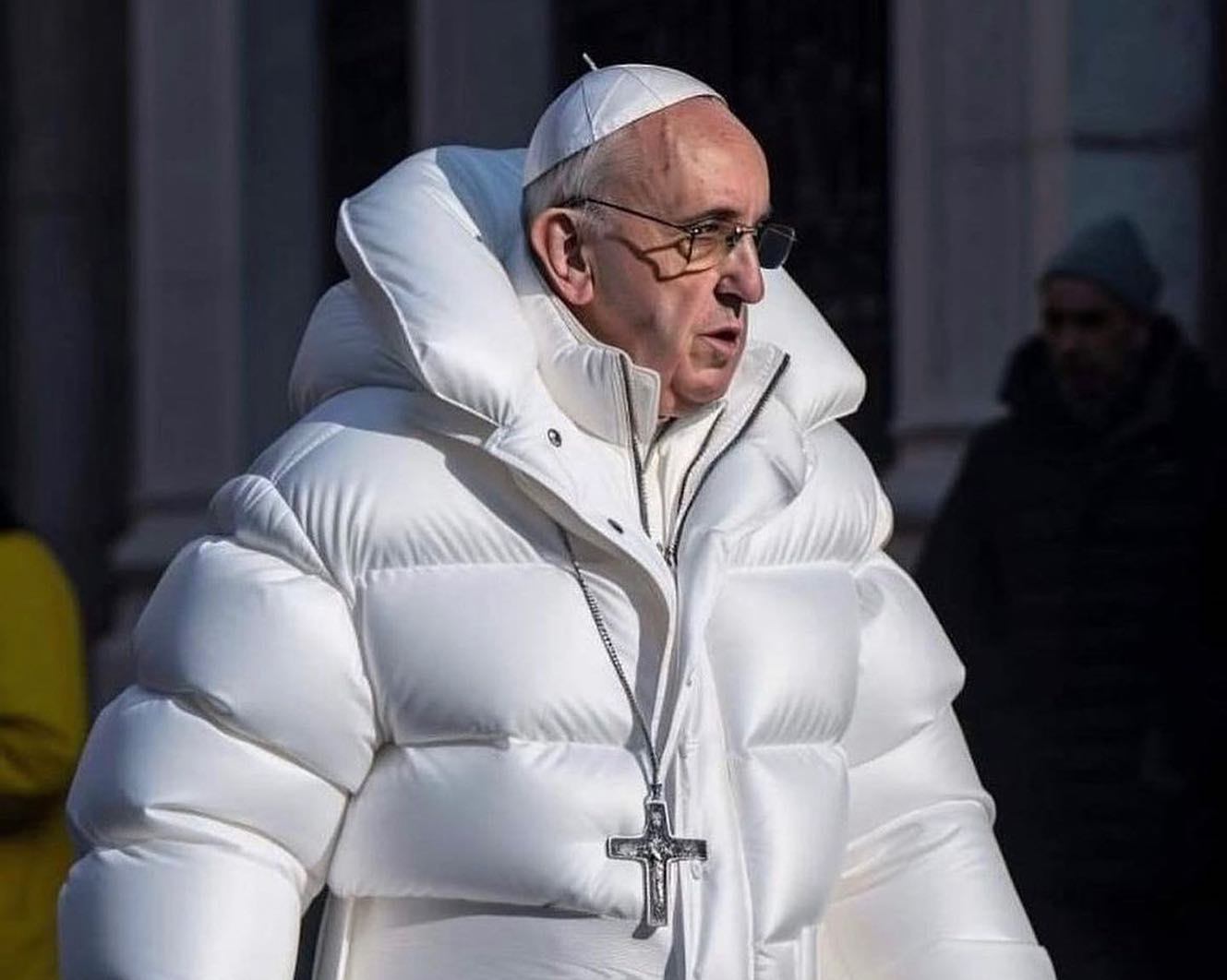
The deepfake image of Pope Francis
Antiqua et nova (Ancient and New), a 13,000-word document written by two Vatican departments and published last year, suggested AI could stunt children’s development and “enslave” workers by limiting them to “repetitive tasks”. It said the technology contains “the shadow of evil”.
Leo has also appeared cautious. Last month, he warned against forming overly emotional bonds with “excessively affectionate” AI companions that can become “hidden architects of our emotional states”.
• Louisa Clarence Smith: Pope Leo challenges the gods of Silicon Valley over rise of AI
Don Cosimo Schena, a parish priest in the southern town of Brindisi and a social media star, said he would never use AI to write a homily. “It depersonalises faith — the one you have inside of you,” he said. “Homilies need to be tailor-made to the context, to the community you have before you.”
However, Leo, whose papal name recalls Pope Leo XIII — who guided the church through the industrial revolution in the 19th century — has also recognised the technology’s potential, urging a forum of AI builders at Rome’s pontifical university last November to use the technology for evangelisation.
“Technological innovation can be a form of participation in the divine act of creation,” said the pontiff, who was included on Time magazine’s list of “the most influential people in artificial intelligence” last year. “The task laid before us is not to stop digital innovation, but rather to guide it,” Leo added.
Last week, the Vatican announced that congregations at St Peter’s Basilica would be able to follow services in up to 60 languages from this spring, via an AI-powered app generating text on smartphones.
Paolo Benanti, a Franciscan friar and AI expert who advised Francis, said Vatican representatives were looking into AI’s pastoral potential, for example for rewriting flyers in youthful language for younger believers. He said cardinals were receiving training on how to use AI.
The Augustinian pope’s concern for preserving intellectual capacities is unsurprising, he said. “All the emphasis that Augustine makes on the importance of the intellect, as the place where one finds God, makes the question even more important for a Pope who is touched by this spirituality.”

Leo speaking in the Church of Saint Anselm before a holy mass for Ash Wednesday last week
ALBERTO PIZZOLI/AFP/GETTY IMAGES
In his address to Rome priests, Leo also warned against addictive use of social media, adding that popular posts were not evidence of effective pastoralism.
“This is often a deception on the internet, on TikTok,” said the pope, who addressed “digital missionaries” and influencers at St Peter’s Basilica last year. “If we’re not transmitting the message of Jesus Christ, perhaps we’re wrong.”
Schena, who has more than 500,000 Instagram followers, said that social media could act like an “amplified parish” if used to spread God’s word. However, others are beginning to limit its use.
Last week, Don Matteo Ferrari, the prior of the monastic order in Camaldoli in the Tuscan mountains urged the nine monks living there to “absolutely avoid” addictive streaming and social media platforms such as Netflix, Instagram and TikTok “for a question of poverty and sobriety”.
Italian media noted that Ferrari had posted the letter on Facebook.