
SURPLUS FORECASTING
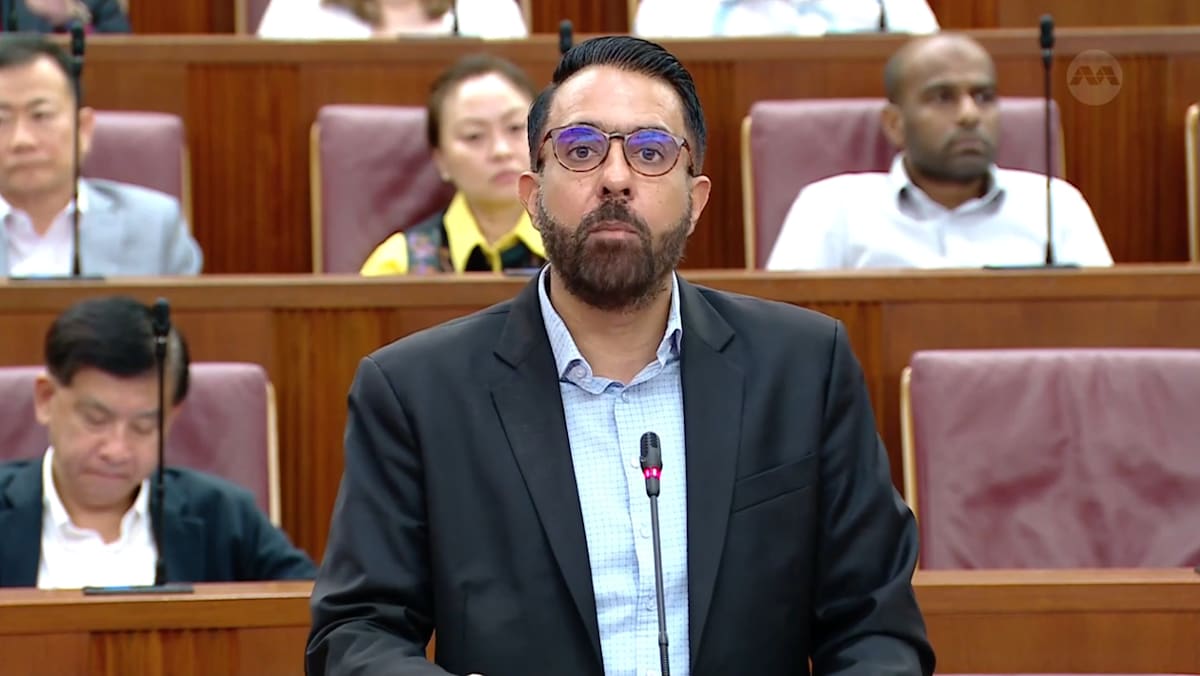
MP Gerald Giam (WP-Aljunied) pressed further on the government’s fiscal projections, and what he described as a “recurring pattern of overly conservative” forecasts.
The revised FY2025 surplus of S$15.1 billion is more than double the original estimate of S$6.8 billion – a discrepancy Mr Giam said was not an isolated incident but part of a consistent trend in which “projected deficits regularly transform into healthy surpluses”.
“While the government points to the volatility of tax revenue, this consistent underestimation raises fundamental questions of … whether the government is unnecessarily hoarding funds,” he said.
“We need more accurate forecasting that ensures our nation’s abundance benefits current generations as much as future generations.”
Mr Giam also questioned the necessity of the GST hike, which was supposed to fund increased healthcare costs, since surpluses had exceeded S$1 billion in all but one of the last five years, with a total of S$22 billion.
He pointed out that the Ministry of Health’s revised operating expenditure for FY2025 came in S$305 million lower than estimated, due to lower-than-projected funding needs for public healthcare institutions, and asked whether the government would revise its projections for future healthcare expenditure growth.
He also flagged a sharp rise in revenue from licences and permits, which surged by 29 per cent to reach S$9.23 billion in revised FY2025 figures, and sought clarification on what drove the increase.
“True prudence is not just about amassing vast fiscal buffers. It’s about balancing future security with the current needs of our people,” he said.
“Unnecessary taxation drains liquidity from households up front, creating a dependency on government handouts rather than fostering genuine financial independence.”
MINISTERIAL BONUSES AND GDP GROWTH
Mr Singh raised questions about whether the formula used to determine ministers’ bonuses remains appropriate, in light of Deputy Prime Minister Gan Kim Yong’s earlier remarks that GDP growth may no longer translate into jobs for Singaporeans.
During a mid-term update for the Economic Strategy Review last month, Mr Gan said that economic growth may not automatically lead to job creation given technological advancements, and Singapore needs to be “deliberate” about its policies and strategies.
Mr Singh said those remarks placed “every job-related policy, initiative and scheme” announced by the government into “sharper perspective than ever before”.
“For each – more so than before – Singaporeans deserve a well-publicised and detailed report card, one that distinguishes rhetoric about promises kept with measurable outcomes subject to parliamentary and public scrutiny,” he said.
He also questioned whether GDP growth should continue to factor into the national bonus for ministers. “If GDP growth will no longer reliably create good jobs for Singaporeans, should it remain in the ministerial bonus formula at all?” he asked.
He proposed anchoring the national bonus to a single objective outcome: “good jobs for Singaporeans in the age of artificial intelligence”.
COST-OF-LIVING MEASURES
On Community Development Council (CDC) vouchers, Mr Singh noted the scheme’s growth since its introduction at S$100 per household, but argued the current flat distribution model is inequitable.
“A household of two individuals receives the same as a household of five,” he said.
He proposed retaining the S$500 base for households of three or fewer, but providing an additional S$150 per person for larger owner-occupied households.
“This is a modest and practical refinement, one that better reflects the actual cost-of-living burden larger families carry,” he said.
He also welcomed the increase in the monthly household income threshold for student care subsidies to S$6,500, but urged a broader review of the subsidy calculation framework.