
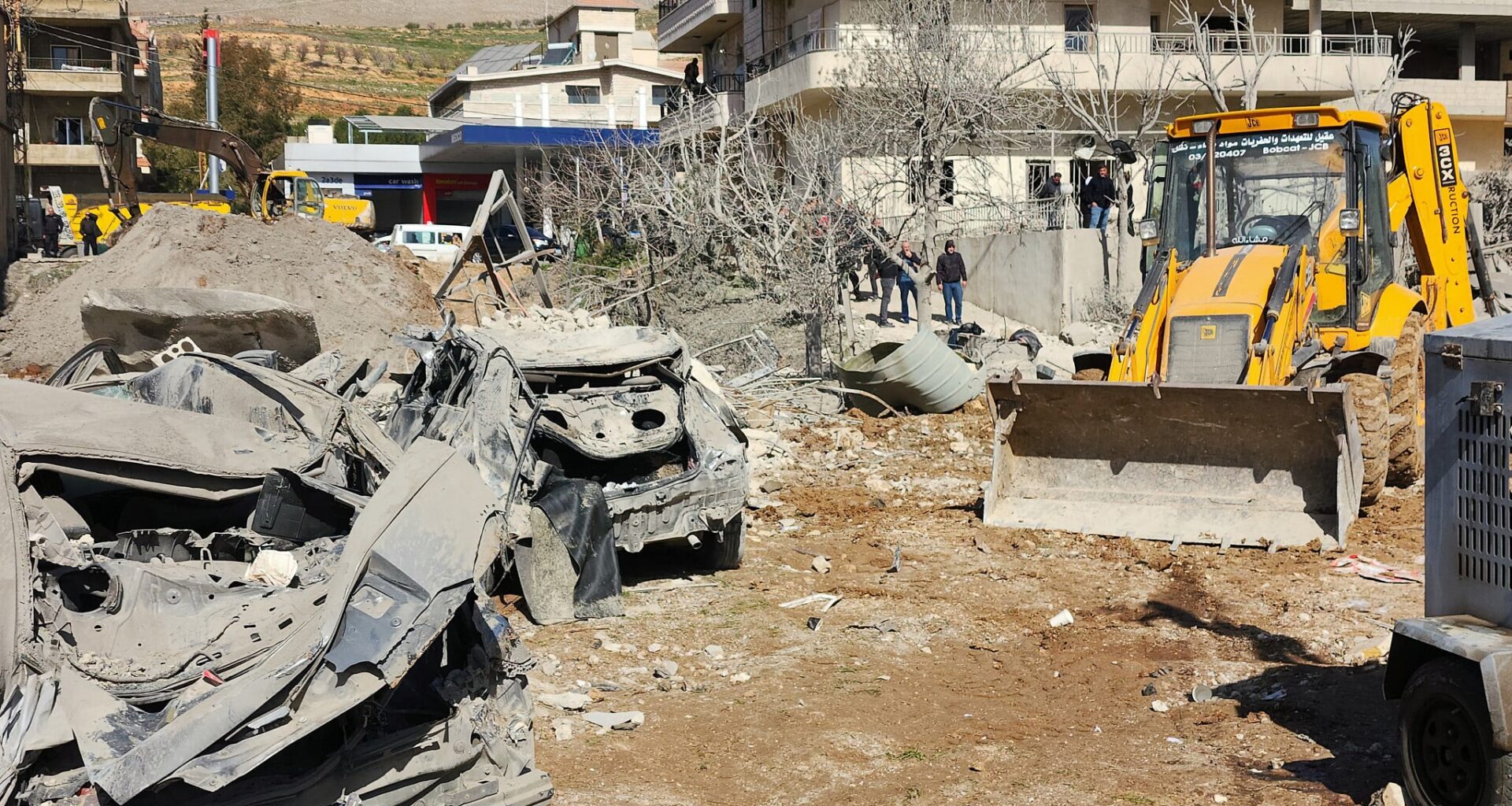
Israel sent an indirect message to Lebanon that it would strike the country hard, targeting civilian infrastructure, including the airport, in the event that Hezbollah gets involved in any US-Iran war, two senior Lebanese officials said Tuesday.
The office of Prime Minister Benjamin Netanyahu and the Lebanese presidency did not immediately respond to requests for comment. But Lebanon’s Foreign Minister Youssef Raggi confirmed Beirut’s fears of its infrastructure being targeted by Israel in the event of escalation.
“There are signs that the Israelis could strike very hard in the event of an escalation, potentially including strategic infrastructure such as the airport,” Raggi told reporters in Geneva.
“We are currently conducting diplomatic efforts to request that, even in the event of retaliation, Lebanese civilian infrastructure not be targeted,” he said.
Rajji said Lebanese authorities had appealed to Hezbollah not to respond in any way that could trigger “bad situations” for Lebanese civilians.
Get The Times of Israel’s Daily Edition
by email and never miss our top stories
By signing up, you agree to the terms
He stressed that his country’s leadership had been very clear: “This war does not concern us.”
Lebanese Prime Minister Nawaf Salam, whose government has sought the disarmament of Iran-backed Hezbollah since taking office a year ago, urged the terror group not to drag the country into a new conflict, speaking in a newspaper interview published on Tuesday: “The Gaza adventure imposed a big cost on Lebanon. We hope that we will not be dragged into another adventure.”
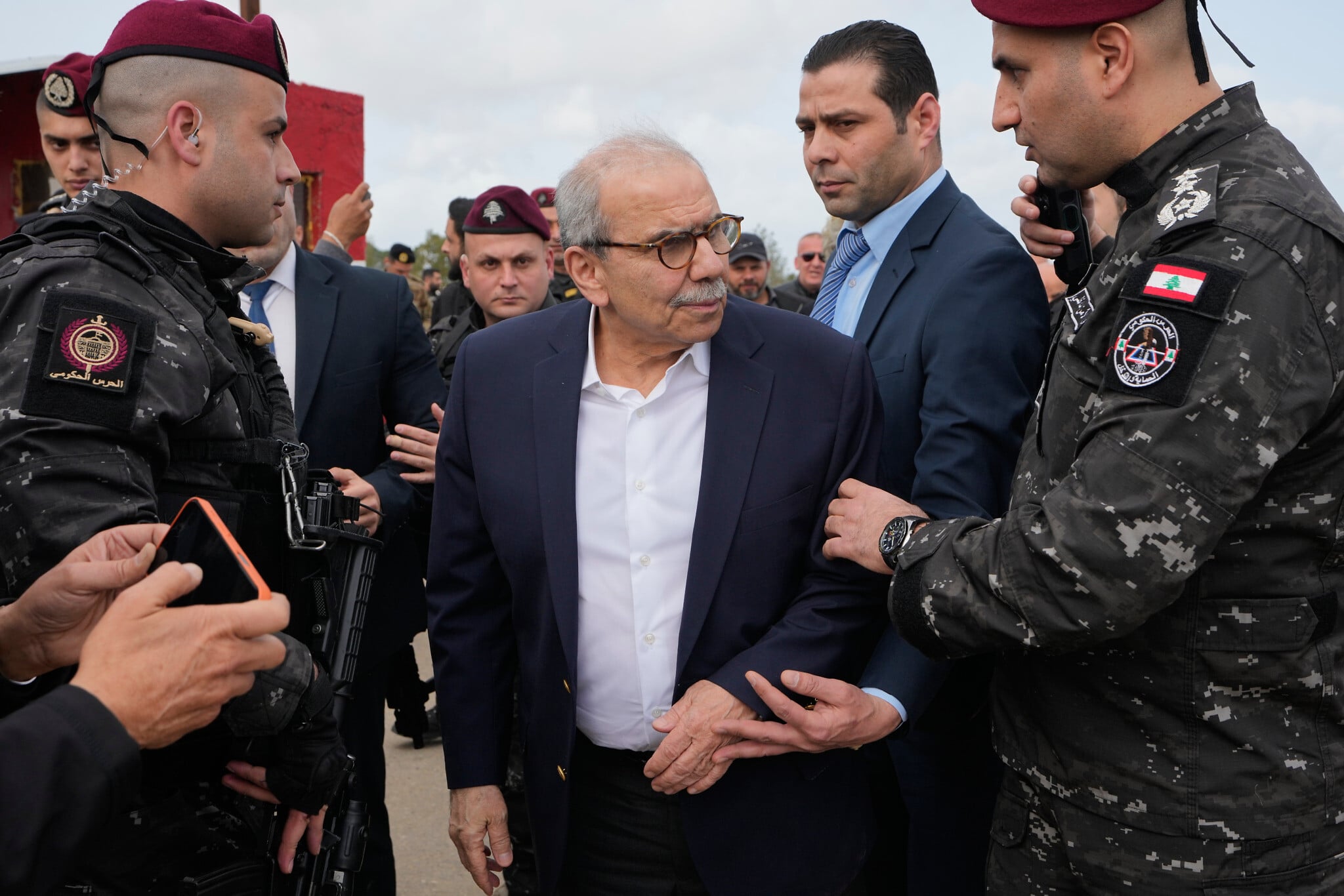
Lebanese Prime Minister Nawaf Salam, center, tours areas in southern Lebanon along the border with Israel in the village of Tayr Harfa, February 7, 2026. (AP Photo/Mohammed Zaatari)
Hezbollah leader Naim Qassem said in a televised address last month that the group was “not neutral” in the standoff between Washington and Tehran, and that it was “targeted by the potential aggression.”
“We are determined to defend ourselves. We will choose in due course how to act, whether to intervene or not,” Qassem said.
According to a Saturday report, Iran’s Islamic Revolutionary Guard Corps has effectively taken charge of Hezbollah in anticipation of a war with the US and Israel, with officers, some of whom recently arrived in Lebanon from Iran, being tasked with rebuilding the Shiite group’s capabilities.
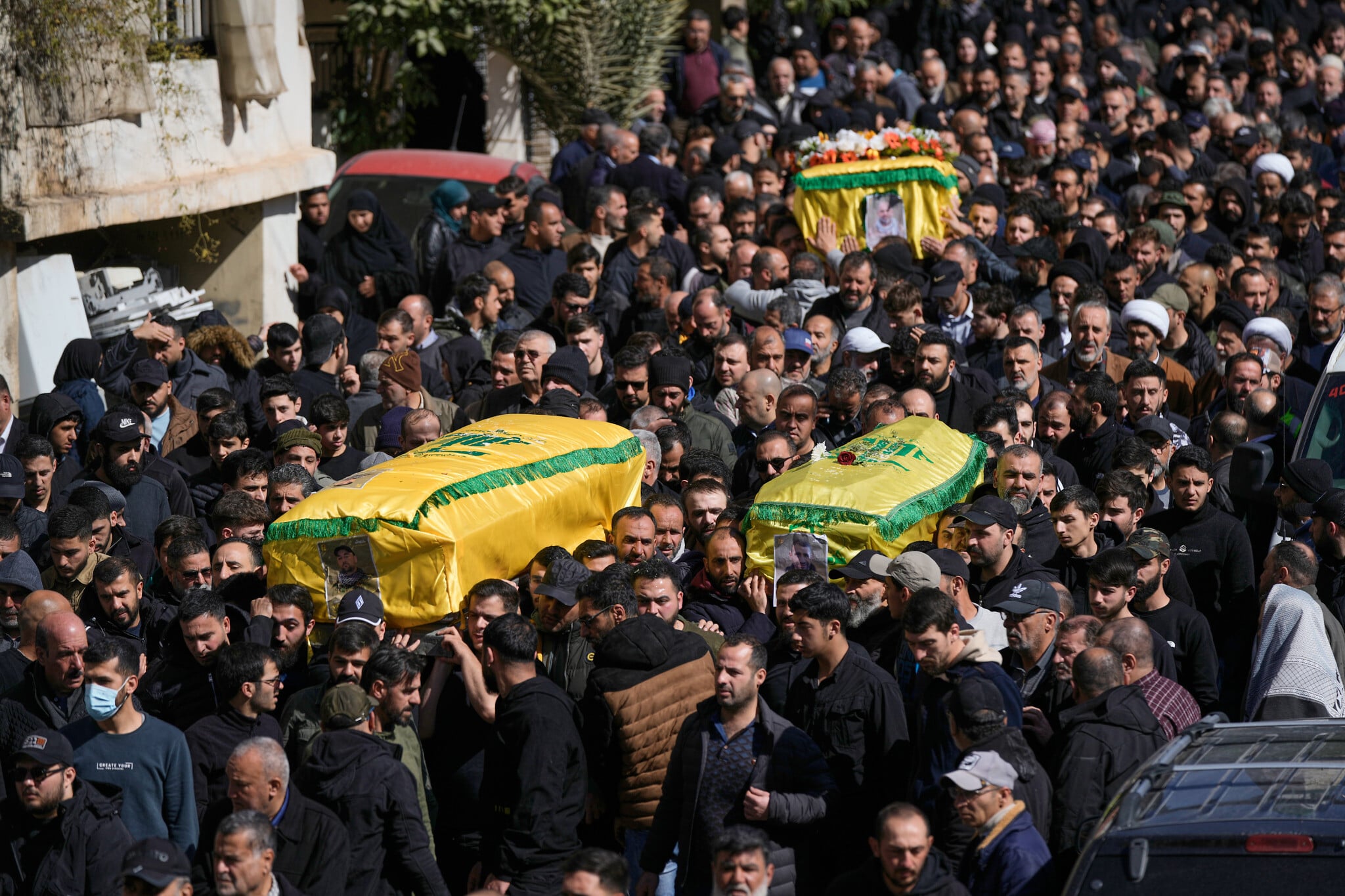
Mourners carry the coffins of three Hezbollah terror operatives killed in Israeli strikes during their funeral procession in the village of Nabi Sheet in eastern Lebanon, February 21, 2026. (AP Photo/Bilal Hussein)
Lebanese army says IDF fired near troops
Meanwhile, Lebanon’s army on Tuesday accused the Israeli military of firing near a position it was setting up in the country’s south, saying it had instructed troops to return fire.
In a statement, the Lebanese army said it was “establishing a new observation post on the southern border” when “the area surrounding the post was subjected to gunfire from the Israeli side.”
“The army command issued orders to reinforce the post, remain there, and return fire.”
There was no immediate comment from the IDF.
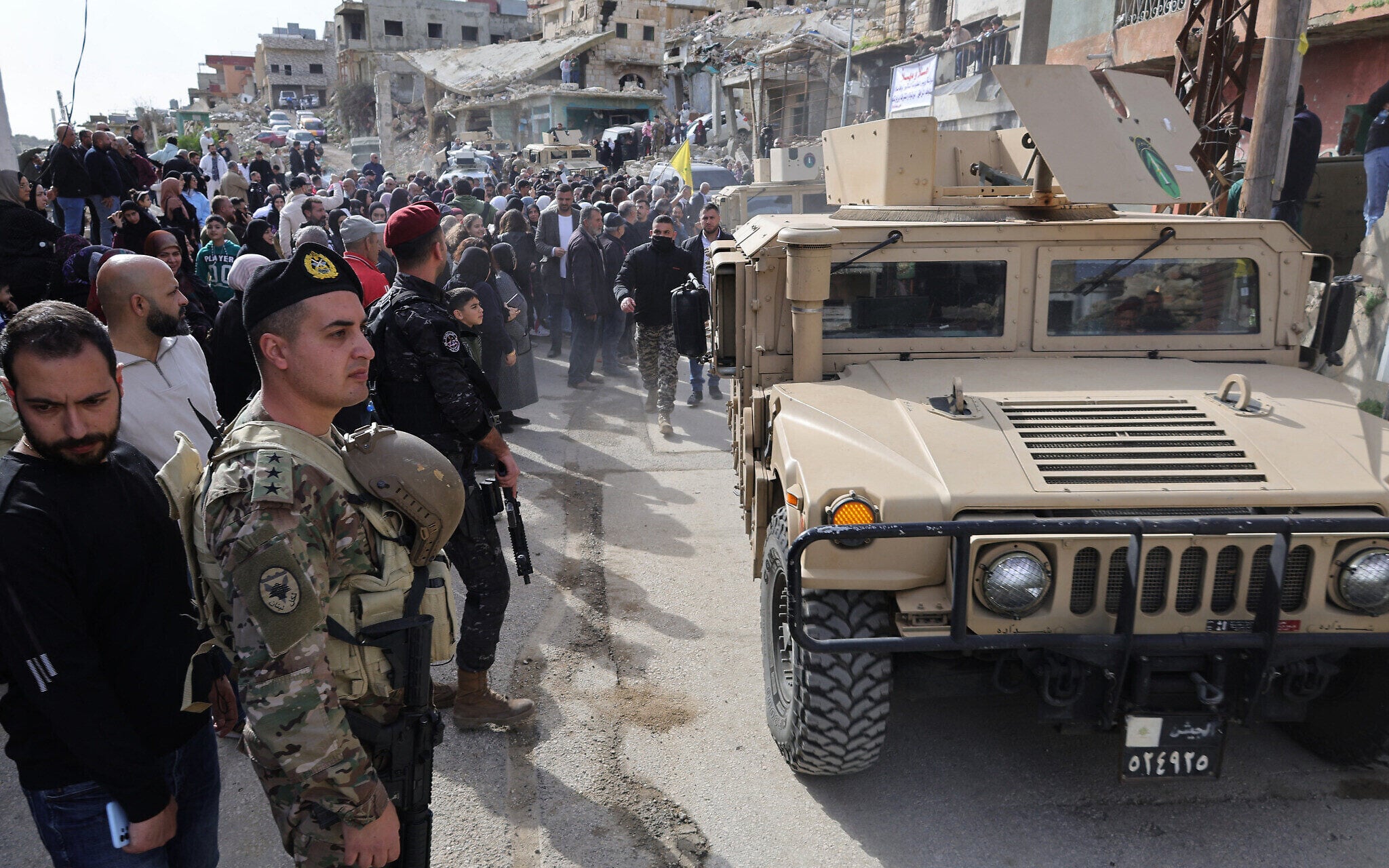
Lebanese army vehicles secure the street as residents gather during a visit by Lebanon’s prime minister to the heavily damaged southern village of Kafr Kila, near the border with Israel on February 8, 2026. (Rabih DAHER / AFP)
Israel has consistently targeted what it says are Hezbollah attempts to rebuild its force following the November 2024 ceasefire that ended a year of conflict between Israel and the Iran-backed terror group.
Under the agreement, Hezbollah was required to withdraw and disarm south of the Litani River, but Israel alleges that the terror group remains entrenched in the area, leading the IDF to conduct near-daily strikes.
Lebanon’s government has committed to disarming Hezbollah, and the army last month said it had completed the first phase of its plan to do so, covering the area between the Litani River and the Israeli border about 30 kilometers (20 miles) further south.
The Israel-Hezbollah war started when the terror group began firing missiles across the border on October 8, 2023 — a day after the Hamas-led attack on southern Israel.
The November 2024 ceasefire between Hezbollah and Israel followed an Israeli ground invasion and concurrent air assault that severely degraded the group and killed much of its leadership.
Is accurate Israel coverage important to you?
If so, we have a request.
Every day during the past two years of war and rising global anti-Zionism and antisemitism, our journalists kept you abreast of the most important developments that merit your attention. Millions of people rely on ToI for fact-based coverage of Israel and the Jewish world.
We care about Israel – and we know you do too. So we have an ask for this new year of 2026: express your values by joining The Times of Israel Community, an exclusive group for readers like you who appreciate and financially support our work.
Already a member? Sign in to stop seeing this
You appreciate our journalism

You clearly find our careful reporting valuable, in a time when facts are often distorted and news coverage often lacks context.
Your support is essential to continue our work. We want to continue delivering the professional journalism you value, even as the demands on our newsroom have grown dramatically since October 7.
So today, please consider joining our reader support group, The Times of Israel Community. For as little as $6 a month you’ll become our partners while enjoying The Times of Israel AD-FREE, as well as accessing exclusive content available only to Times of Israel Community members.
Thank you,
David Horovitz, Founding Editor of The Times of Israel