
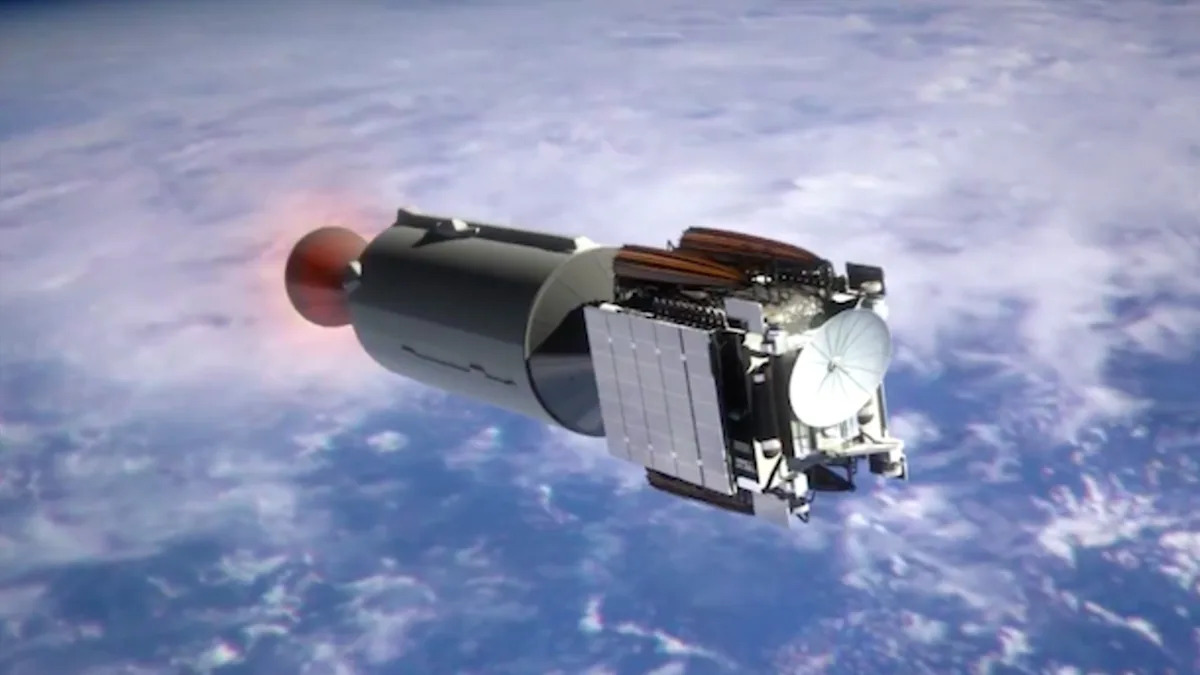
A new study of Earth’s upper atmosphere has discovered spikes in lithium ion levels following the return of a Falcon 9 rocket upper stage, which broke up on reentry. With SpaceX planning to rapidly increase its number of orbiting satellites by boosting its rocket launch cadence, scientists are warning that rocket debris poses a significant threat to our upper atmosphere.
For a long time, the major concern with space debris has primarily been leaving it in orbit. Orbital debris, otherwise known as “space junk,” has the potential to cause collisions between orbiting craft, space stations, or transiting satellites. But deorbiting may not be the answer either, the new study suggests: As rockets and satellites break up on reentry, they deposit harmful materials in the upper atmosphere.
On Feb. 20, a team headed by Robin Wing from Germany’s Leibniz Institute of Atmospheric Physics discovered a spike in lithium ions in the mesosphere. Using trajectory modeling, the team traced this trail of lithium ions to the reentry path of a Falcon 9 rocket stage as it burned up in the atmosphere. This represented a 10-fold increase in lithium atoms in that section of the atmosphere, and they remained there for over 20 hours after the rocket burned up.
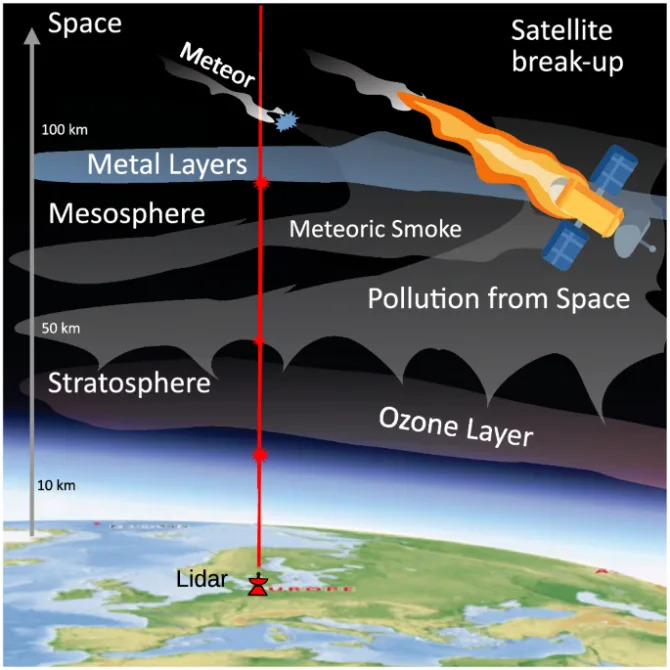
Infographic showing measurement of pollution from space
Credit: Wing et al, Nature/DOI 10.1038/s43247-025-03154-8
Published in Nature, the study highlights two key points: that upper-atmosphere pollutants are trackable and will need to be monitored in the future, and that modern rocketry poses a serious risk to changing the delicate balance of this region of our local space.
With plans to launch tens of thousands of satellites in the coming years, there’s a real concern that by 2030, we could see literal tons of material burning up in the upper atmosphere every day.
“Satellites and rocket stages introduce engineered materials such as aluminium alloys, composite structures, and rare earth elements from onboard electronics, substances rarely found in natural extra-terrestrial matter,” the paper explained. “The consequences of increasing pollution from re-entering space debris on radiative transfer, ozone chemistry, and aerosol microphysics remain largely unknown…This finding supports growing concerns that space traffic may pollute the upper atmosphere in ways not yet fully understood.”
This combustion of materials in the upper atmosphere is something astrophysicists have been warning about for a while. EarthSky reported last October that Starlink satellites were falling back into the atmosphere every day, raising concerns for astronomy and the ozone layer.