
It’s more than a year into Donald J. Trump’s second term, and business leaders have no more certainty about the administration’s foreign trade policy than when it started. That became clear on Friday, when the US Supreme Court ruled that Trump had no legal authority to impose tariffs the way he did—and then the president turned around and announced the imposition of tariffs by another route.
The tariffs themselves are mostly a nonevent for the chemical industry. As C&EN senior correspondent Alex Tullo reported yesterday, the new tariffs largely exempt chemical products, just as the old tariffs did.
Yet the economic turmoil the tariffs have created across the globe definitely do affect the chemical industry. Chemical company executives and the trade associations that represent them are loathe to publicly criticize Trump and his administration. And some companies are no doubt happy to see tariffs on competing imports. But, after Trump’s announcement of the new tariffs, the pleas for predictability and certainty in trade policy were telling.
Top stories from C&EN
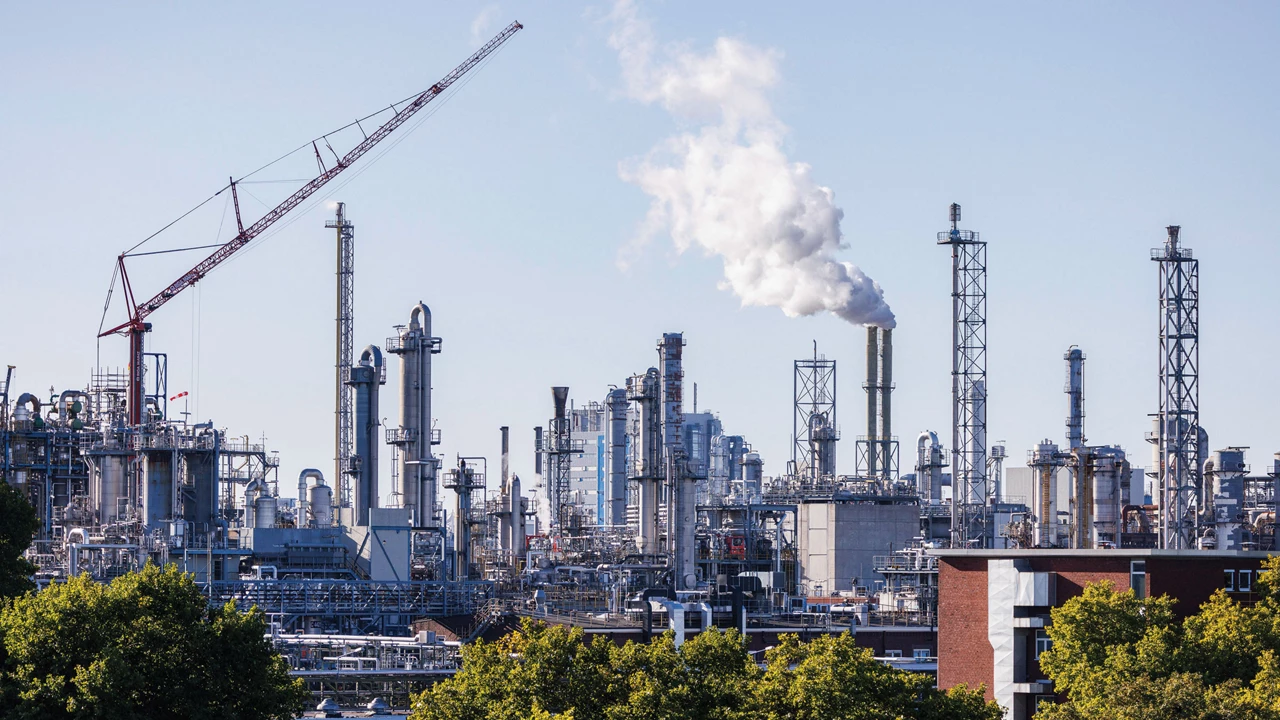
A large chemical plant with multiple buildings and metallic towers stands against a blue sky with trees in the foreground.
BASF plans to expand production of 1,4-butanediol at this site in Ludwigshafen, Germany, after the European Commission’s decision to apply antidumping duties on imports of the chemical.
Credit:
Lando Hass/dpa Picture-Alliance/AP Images
After years of seeming to ignore the problems of Europe’s chemical industry, the region’s politicians are starting to promise assistance to combat high energy costs and growing import competition.The Make America Healthy Again movement has set its sights on aluminum-based salts and other adjuvants added to vaccines to boost their efficacy. Vaccine scientists are alarmed.The US Environmental Protection Agency has proposed modifying an industrial safety regulation covering 11,000 chemical-related manufacturing and storage facilities.Project Omega has launched with $12 million in seed funding to develop batteries that run on strontium-90 decay. One potential market is microprocessors that could operate for years on end.
Business in brief
Cash-strapped chemical makers get relief
Two chemical firms that are struggling under the weight of debt and unfavorable market conditions have been thrown lifelines from lenders. The polymer maker Trinseo has taken advantage of a grace period to delay a $10 million interest payment due in February. In a filing with the US Securities and Exchange Commission (PDF), Trinseo disclosed that it “is engaged in ongoing discussions with its financial stakeholders regarding its capital structure,” a sign that it might give up some equity in exchange for debt relief. In November, S&P Global downgraded Trinseo’s credit rating because of weak demand in the key markets of automotive and durable goods, as well as strong competition and low prices for polymers in Europe. Vibrantz Technologies, which makes pigments, specialty coatings, and additives, has reached an exchange transaction with 90% of its creditors. The agreement includes new financing and extended debt maturities. S&P downgraded Vibrantz’s credit in September. The company was formed in 2022 through the purchase of Ferro by Prince International, which is itself owned by the private equity firm American Securities. In December, the specialty chemical maker SI Group came to a similar agreement with lenders.
—Alex Tullo
Ineos gets government help to modernize French site
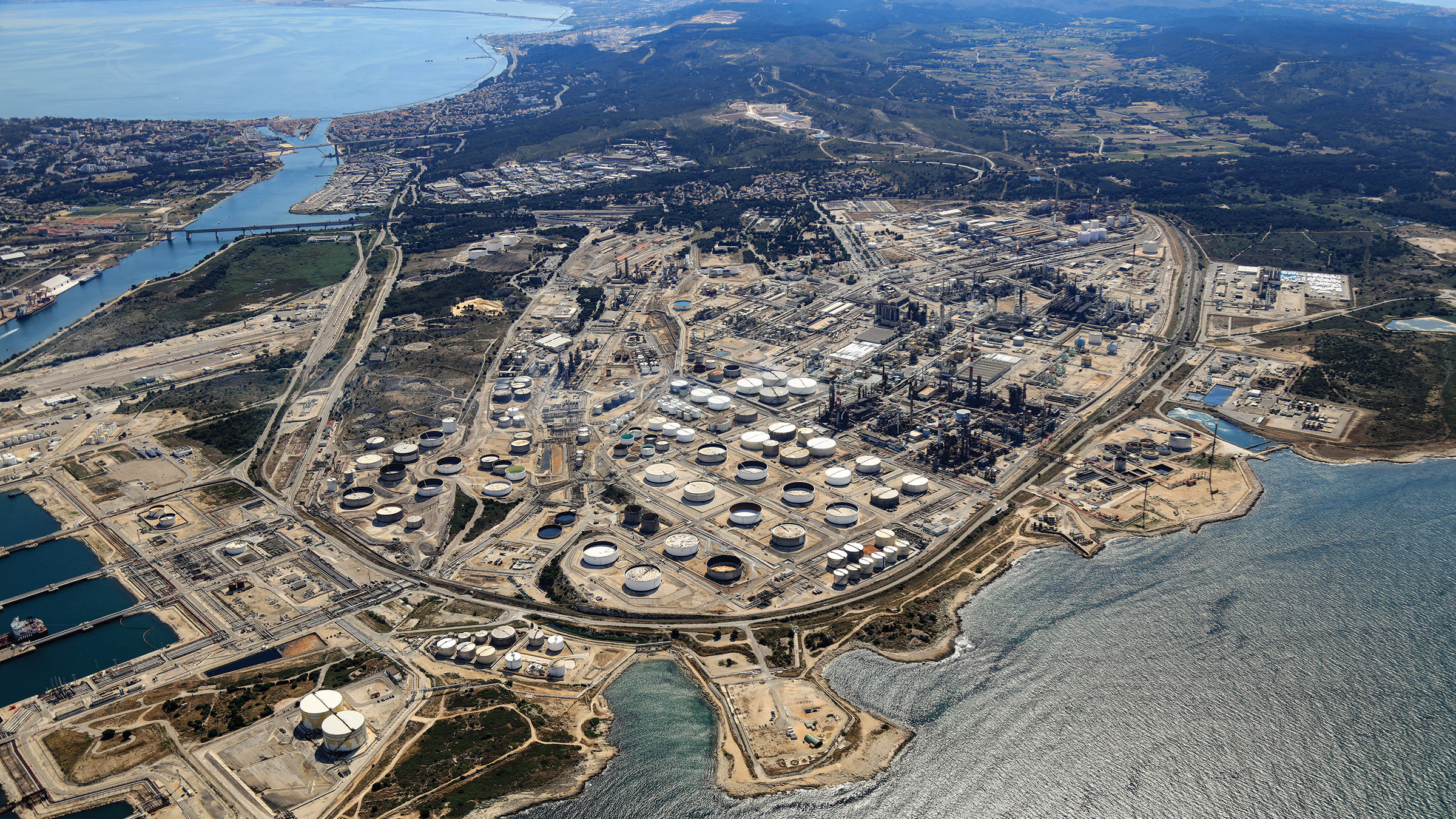
An aerial view of a petrochemical plant on a body of water.
The French government has provided Ineos with a $354 million grant to update this facility in Lavera, France.
Credit:
Ineos
The petrochemical maker Ineos says the French government has awarded it a €300 million ($354 million) grant to rejuvenate its site in Lavera, France, with energy-efficient technology intended to cut carbon dioxide emissions by 331,000 metric tons a year. The investment will enable the Lavera cracker to process feedstocks made from recycled plastics and biosourced materials, replacing fossil-based inputs, Ineos says. The facility, which employs more than 2,000 people, is one of the largest petrochemical sites in Europe. Ineos chairman Jim Ratcliffe, who has been vocal about the need for government support of Europe’s chemical industry, lauds the French action. “We are investing because France understands that a strong industrial base matters,” he says in a press release. “Securing essential materials at home, rather than importing them from China or the United States, is simply common sense.” Ineos announced a separate, €250 million investment in the Lavera facility in November.
—Michael McCoy
Blue Circle furthers methanol-to-olefins plant
Blue Circle Olefins, a start-up launched by two former DSM executives, has selected a terminal in the Port of Rotterdam operated by the logistics firm Chane as the site for a planned facility that will make olefins from green methanol. Blue Circle wants to convert methanol derived from waste plastics and forestry and agricultural residues into 200,000 metric tons per year of ethylene and propylene for sale to producers of derivatives such as polyethylene and propylene. Vioneo, a start-up backed by the shipping company A.P. Moller-Maersk, recently backed off plans to build a similar project in Antwerp, Belgium. Instead, Vioneo is opting to build its first methanol-to-olefins plant in China—closer to green methanol supply, it says.
—Alex Tullo
Syngenta and Botanical Solution expand Chilean biofungicide work
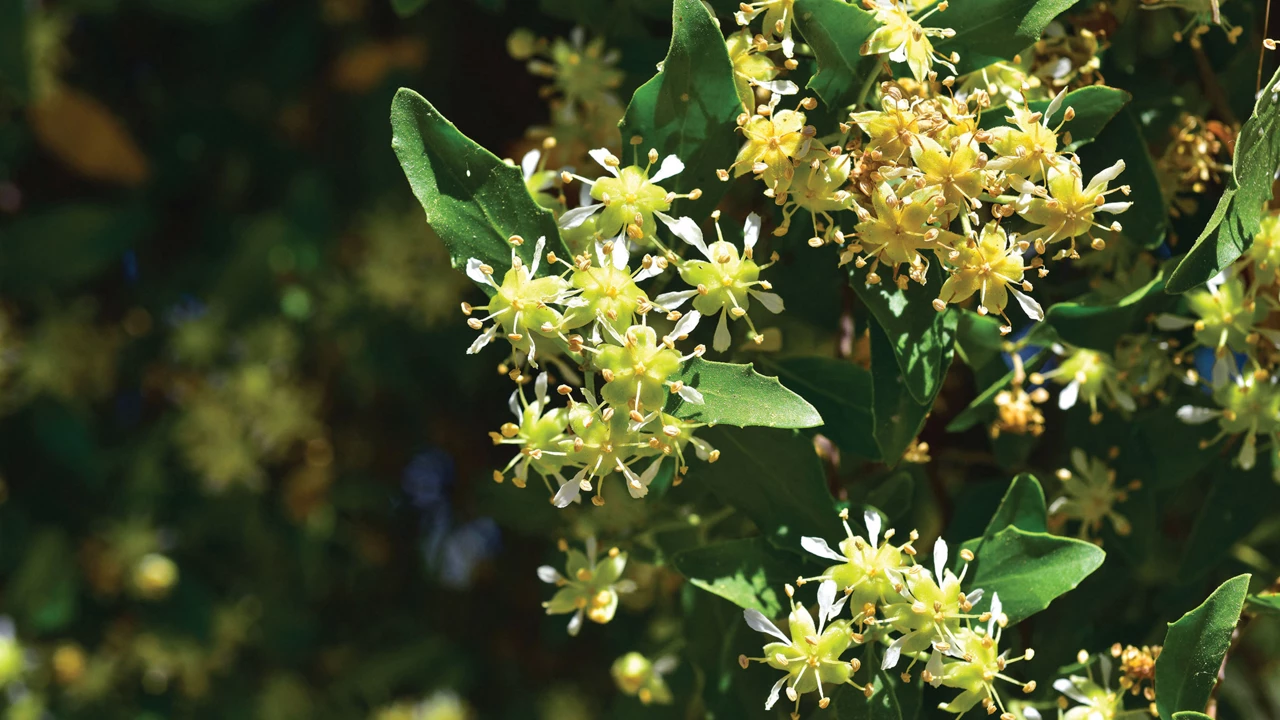
A closeup of blossoms on a flowering tree.
The soap bark tree is the source of a biofungicide that is effective against botrytis, sour rot, and powdery mildew.
Credit:
Alamy
The agricultural chemical maker Syngenta and the plant-derived ingredient specialist Botanical Solution are taking their biofungicide partnership to the next level. The two firms have been selling an extract of the soap bark tree (Quillaja saponaria) as a fungicide in Chile and Peru since 2021 and will now offer the crop protection product in Mexico, the US, and Canada. The firms say the fungicide, which they will market as Quillibrium, is effective against botrytis, sour rot, powdery mildew, and Alternaria alternata infections on crops including tomatoes, cherries, grapes, and berries. Botanical Solution makes the extract using plant tissue culture methods that it says allow it to scale rapidly and ethically exploit a protected tree species native to Chile.
—Craig Bettenhausen
Bolt Projects to delist from Nasdaq stock exchange
The biomaterials start-up Bolt Projects, formerly known as Bolt Threads, has filed paperwork to remove itself from the Nasdaq. The stock exchange suspended trading in the firm’s stock on Jan. 5 because its share price had fallen below the exchange’s minimum price of $1.00. Bolt has traded for less than $0.17 since the start of February. The firm, one of C&EN’s 10 Start-Ups to Watch in 2015, launched in 2010 looking to make textile-grade spider silk using genetically modified yeast. It went public in 2023 via a special purpose acquisition company merger that valued Bolt at about $350 million. That year it also shifted from vegan alternatives to leather as its lead product to shorter silk protein strands aimed at the personal care market.
—Craig Bettenhausen
Sun Chemical to put $10 million into quinacridone plant
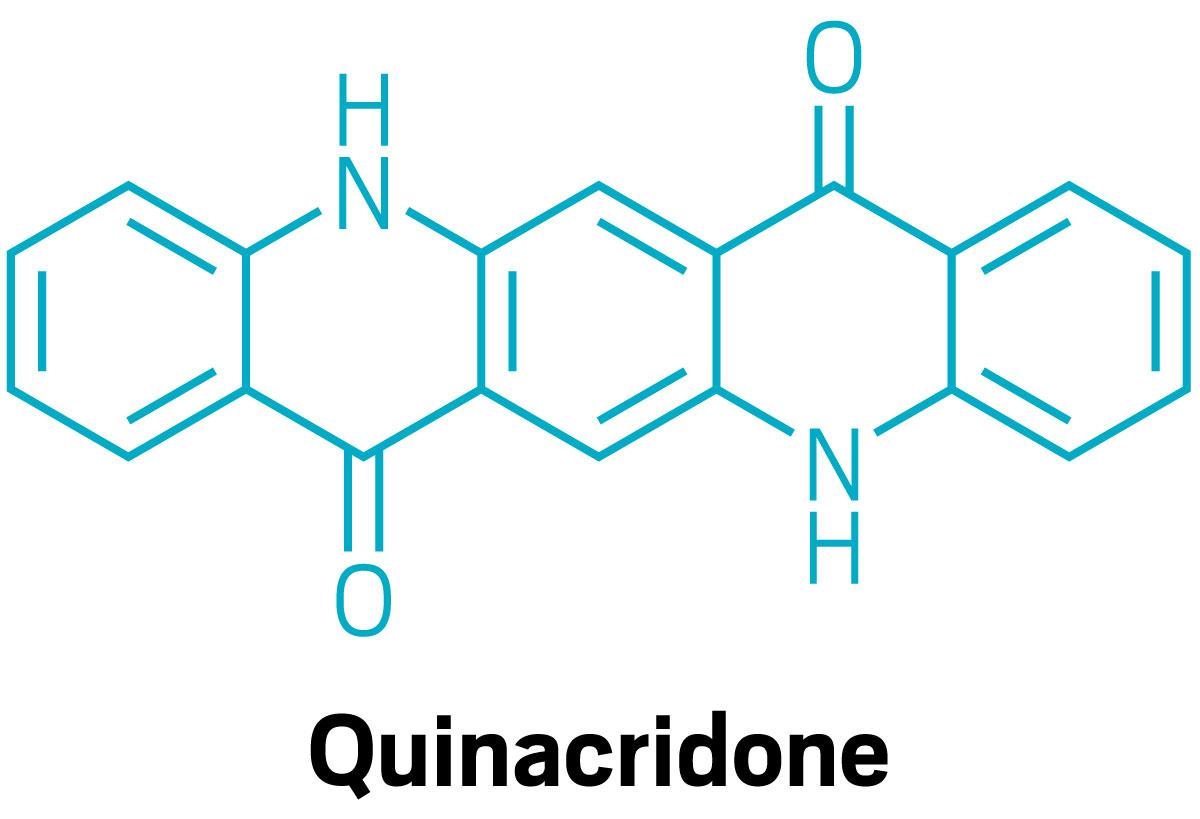
The structure of quinacridone.
Sun Chemical, part of the Japanese chemical maker DIC, says it will invest about $10 million in its plant in Newport, Delaware, to expand quinacridone pigment capacity. The firm says it employs a “unique manufacturing process” at the site to make the pigments, which are used to create hues from deep red to violet. Quinacridones are used in auto and industrial coatings, inkjet printer inks, and watercolor paints. Separately, DIC has established a $62 million fund to invest in businesses in what it calls the physical artificial intelligence domain. It will work in part with the Swiss venture capital firm Emerald Technology Ventures.
—Michael McCoy
Immaterial closes $20 million funding round for MOFs
The carbon capture materials firm Immaterial has closed a series A2 funding round worth $20 million. The round includes additional investment from the Japanese utility Jera and adds the chemical maker Ube as an investor. UK-based Immaterial is one of several firms commercializing metal-organic frameworks (MOFs) as a sorbent capable of removing carbon dioxide from flue gases or the ambient air. The Nobel committee cited the concept of carbon capture in awarding the 2025 Chemistry prize to Susumu Kitagawa, Richard Robson, and Omar M. Yaghi for their work developing MOFs. Immaterial says it stands out from the field because of its ability to produce macroscopic MOF crystals that retain the chemical activity and material stability of powdered MOFs without the clogging or pelletization problems powders can bring.
—Craig Bettenhausen
Quote of the week
“Elevating glyphosate to a national security priority is the exact opposite of what MAHA voters were promised.”
Ken Cook, president, Environmental Working Group, responding to an executive order from the Trump administration calling for greater US production of the herbicide
Manus bags $15 million from the US to make Tamiflu raw material
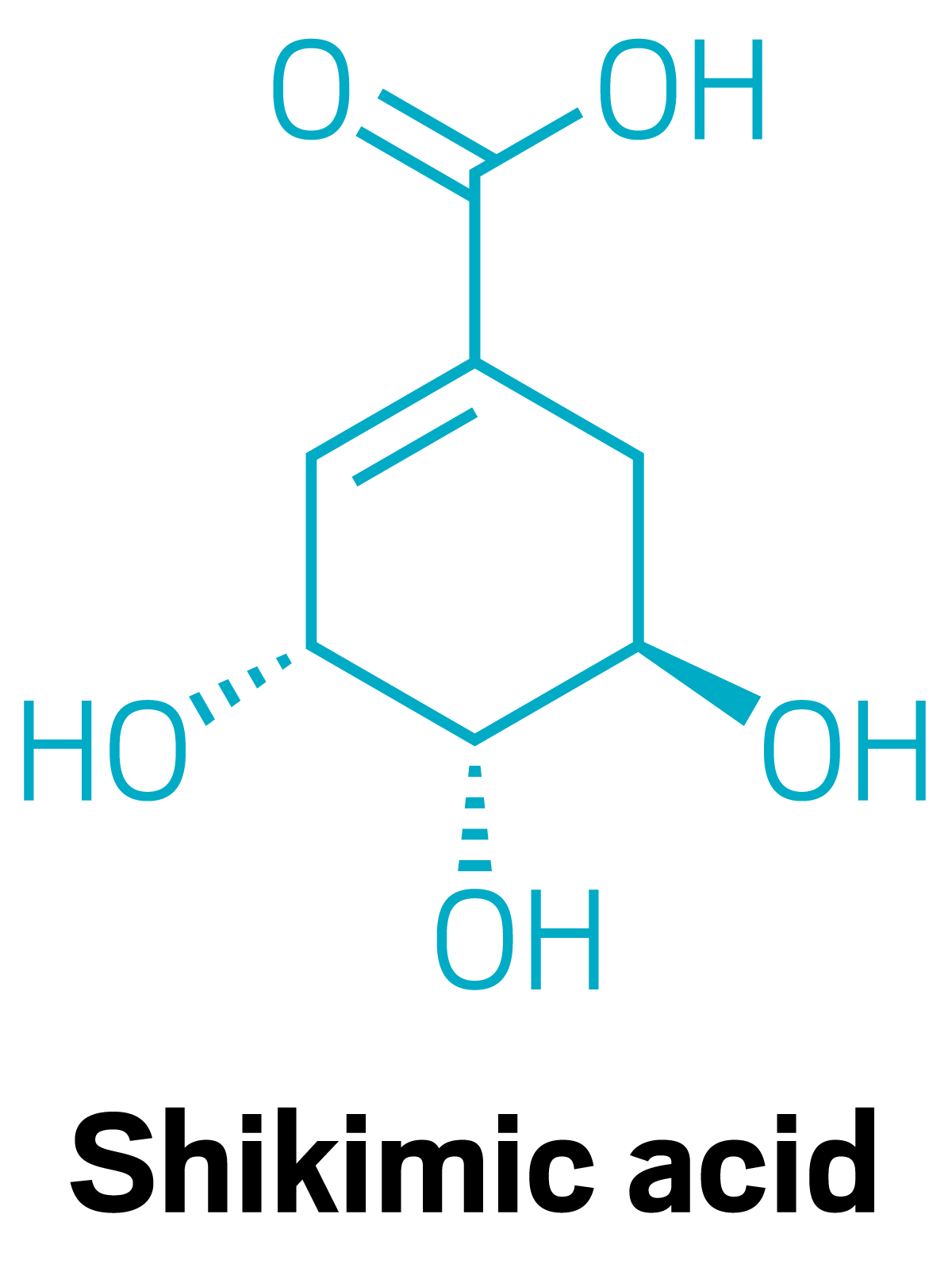
The structure of shikimic acid.
The biomanufacturing start-up Manus Bio has secured $15 million from the US government to manufacture shikimic acid, a key starting material for oseltamivir, the active ingredient in the flu drug Tamiflu. The funding comes from a Department of Health and Human Services (HHS) program intended to help US industrial capabilities that are critical to responding to public health emergencies. The new funds will go toward installing a large-scale fermentation line at the company’s facility in Augusta, Georgia, Manus says in a press release. In 2024, the HHS awarded Manus $32 million to support US production of essential medicines. At the time, the firm had partnered with ArtemiFlow to access the latter’s continuous flow chemistry platform. The Manus competitor Antheia, which also has a biosynthesis platform and several projects with the US government, recently raised $24 million in a series C financing round.
—Aayushi Pratap
Recipharm sells Israeli pharmaceutical chemical production site
Recipharm, a Swedish drug services firm, plans to sell its drug ingredient manufacturing facility in Yavne, Israel, to a local company, Scinai Immunotherapeutics. The site is equipped for early chemistry development and small-scale active pharmaceutical ingredient (API) manufacturing. The sale accompanies a partnership in which Scinai will develop molecules for Recipharm clients. Scinai will be the “preferred early-stage development partner” for Recipharm, the latter says in a press release. The sale continues Recipharm’s strategy of deemphasizing API manufacturing to focus on finished drug products. In 2024, it sold an API plant and several other sites to the private equity firm Blue Wolf Capital Partners.
—Aayushi Pratap
Gilead to acquire cell therapy firm Arcellx for $7.8 billion
Gilead Sciences will acquire the cell therapy developer Arcellx in a deal that values Arcellx at $7.8 billion. Arcellx’s lead candidate, anito-cel, is a chimeric antigen receptor (CAR) T-cell therapy intended to treat multiple myeloma. Gilead already has an anito-cel development partnership with Arcellx through Kite Pharma, which Gilead acquired in 2017. The developmental therapy targets BCMA (B-cell maturation antigen), a B-lymphocyte protein that is gaining traction as a protein of interest in oncology. Anito-cel would be a fourth-line option for patients with relapsed or refractory multiple myeloma. Gilead says the US Food and Drug Administration has accepted its approval application for anito-cel and is expected to respond by Dec. 23.
—Sarah Braner
Peptide maker Unnatural Products scores another pharma partner
Unnatural Products, a start-up developing macrocyclic peptides, has signed a licensing agreement with Novartis worth up to $1.8 billion. Novartis has agreed to pay Unnatural Products as much as $100 million up front and up to $1.7 billion in milestone payments to develop macrocyclic peptides for an undisclosed indication. The deal is the latest in a string of partnerships for Unnatural Products. In July, the California-based company entered a $1.5 billion agreement with Argenx to develop oral peptides for immunological and inflammatory diseases; in January 2024, it signed a $220 million deal with Merck & Co. to make peptides for cancer. Unnatural Products also has had a partnership with BridgeBio since 2021.
—Rowan Walrath
Neurodegeneration start-up launches with $175 million
A biotech start-up developing monoclonal antibodies for neurodegenerative diseases has emerged from stealth with $175 million in venture backing. Korsana Biosciences’ lead drug candidate targets β-amyloid with the goal of treating Alzheimer’s disease. What differentiates the antibody from existing amyloid therapies is a transferrin receptor shuttle that should, in theory, bring it across the blood-brain barrier. Korsana expects to have human data by mid-2027. The firm was founded in 2024 with $25 million in seed funding. In September 2025, it closed a $150 million series A round co-led by Wellington Management and TCGX.
—Rowan Walrath
What we’re reading
A controversial vaccine study took an unusual path to approval by the CDC: Rolling StoneInvestors are taking a hard look at financially overextended companies, and chemical makers are at the top of the list: Ion AnalyticsA lawsuit filed by the Texas attorney general accuses Dow of “habitual non-compliance” with wastewater rules: Inside Climate NewsAn editorial calls for a deadline for eliminating 6PPD, a tire additive that is killing coho salmon: The Everett Herald