
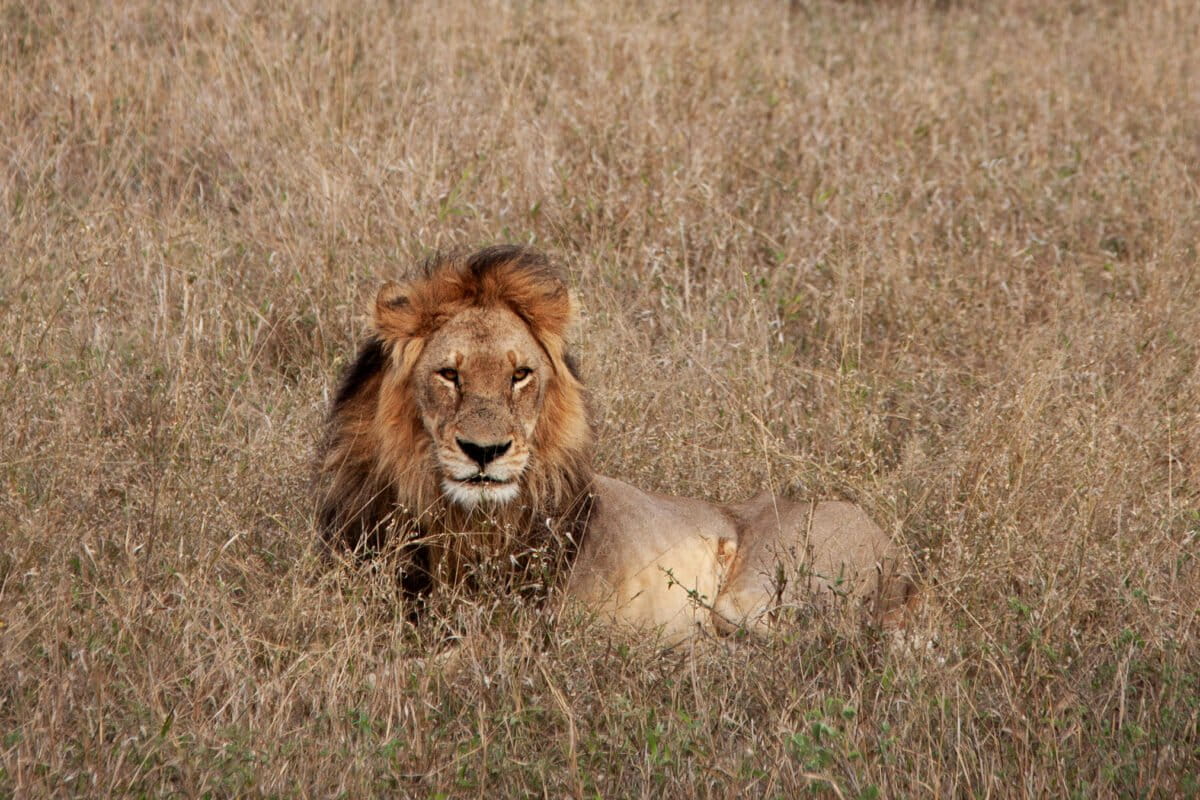
Restoring traditional herding practices in northern Botswana has led to a huge decrease in cattle predation and retaliatory lion poisonings in the Okavango Delta region.More lion cubs are now surviving, with the lion population in northern Botswana up 50% over the past four years.Experts say bringing back traditional herding practices is the key to restoring migration routes for wildebeest, zebra and many other species.If herding expands, government officials may consider removing some veterinary cordon fences that have blocked wildlife corridors for decades.
See All Key Ideas
The lions that roamed the plains of northern Botswana were dying. One by one, the big cats were succumbing to poisoned bait planted by exasperated villagers. The lions had been chipping away at their livelihood, feasting on the cattle that they left to graze along the Okavango Delta. By the end of 2013, around 30 lions — more than half of the northern Okavango population — had been killed in just one year.
More than a decade later, the situation is radically different. The lion population has rebounded. Cub survival rate is up. And cattle losses are dramatically down. It’s the result of years of hard work: restoring traditional herding practices, collaring and tracking lions, and, most recently, establishing a market for ‘wildlife-friendly beef.’ This serves as a model, wildlife advocates say, for other parts of southern Africa where modern grazing practices have collided with big cats’ appetites.
“It can be adapted to just about anywhere,” said Andrew Stein, the founder of Communities Living Sustainably Among Wildlife (CLAWS) Conservancy, which is based in Botswana.
In the last 25 years, more than half the lions have vanished from the plains of Africa, largely due to conflicts with communities. As human populations have expanded, the animal’s range has shrunk, leaving remnant isolated groups. Today, there are fewer than 25,000 lions left across the continent. But in southern Africa, one large continuous population still roams the Kavango-Zambezi Transfrontier Conservation Area (KAZA TFCA), the world’s largest transnational land-based protected area, which runs across Angola, Botswana, Namibia, Zambia and Zimbabwe.
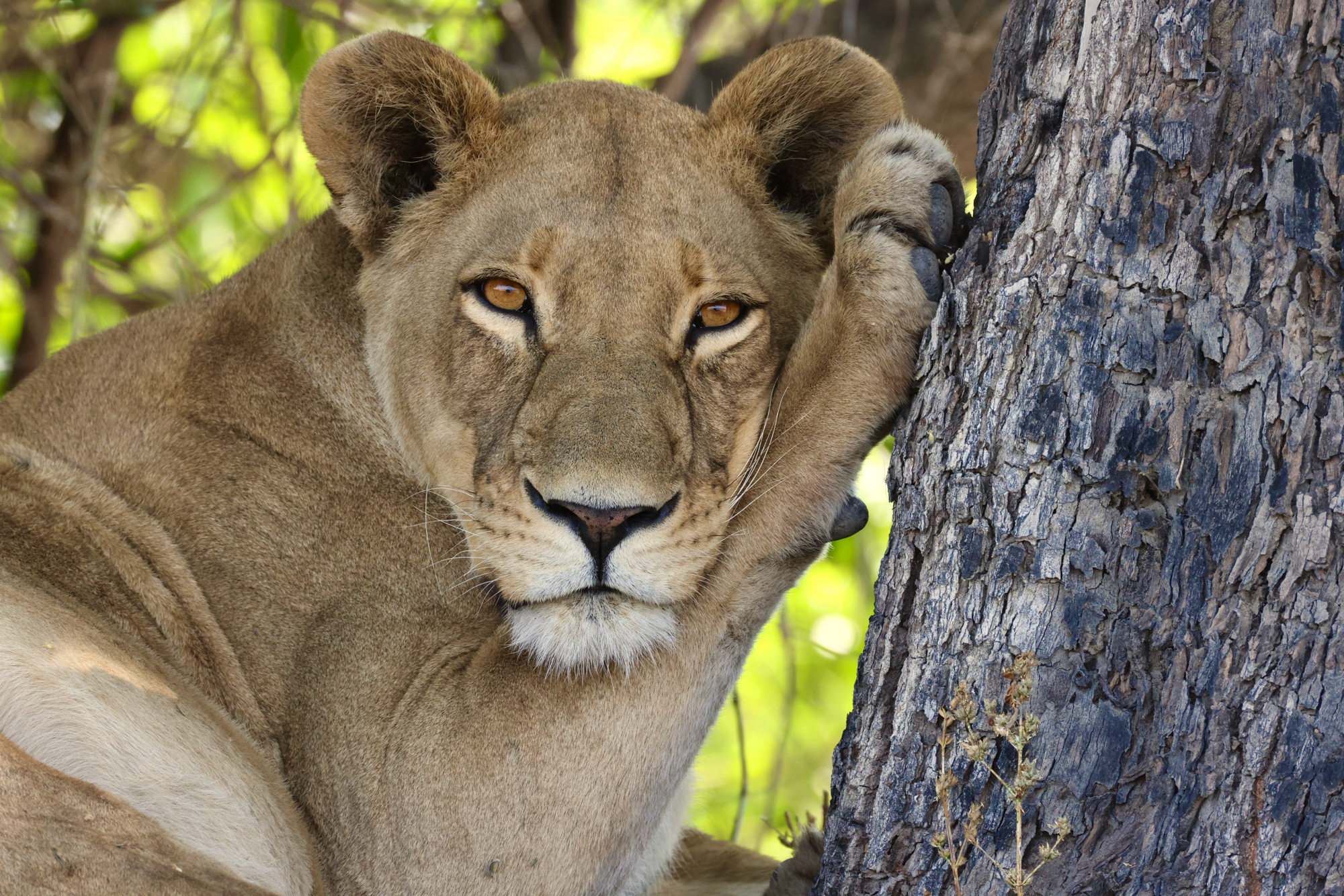 An African lioness. Image by Sam Calle.
“When we started working there in 2014, as we spoke to people, we realized they felt that all lions are the same. They are all out there just killing cattle,” Stein said. “We thought if we could show that each individual has a different approach — a different behavior or personality — we might be able to trigger individualized management with non-lethal approaches.”
Desperate to curb the conflict, Stein and his colleagues introduced the first-of-its-kind lion early warning program known as the Lion Alert System. By outfitting lions with GPS collars and tracking their movements, the group sends automated alerts to local community members’ mobile phones when a lion is detected lurking near a human settlement or livestock area. This allows farmers to act before an attack occurs, bringing their animals together in an enclosure or adjusting their herding practices.
CLAWS also encouraged locals to name the lions in their Indigenous languages in hopes of fostering a stronger connection. “That’s important because they are the ones that are going to decide whether these animals live or die at the end of the day,” Stein said.
Some of the names, he reminisced, were admirable: like Mayenga, meaning the ‘one who is decorated by the Gods.’ “As conflict persisted, some people gave them rough names like Kufakuduze, which means, ‘If you come for my cattle, I will find you.’ But then there were others like Shedipatera, which means ‘the one who belongs to us.’”
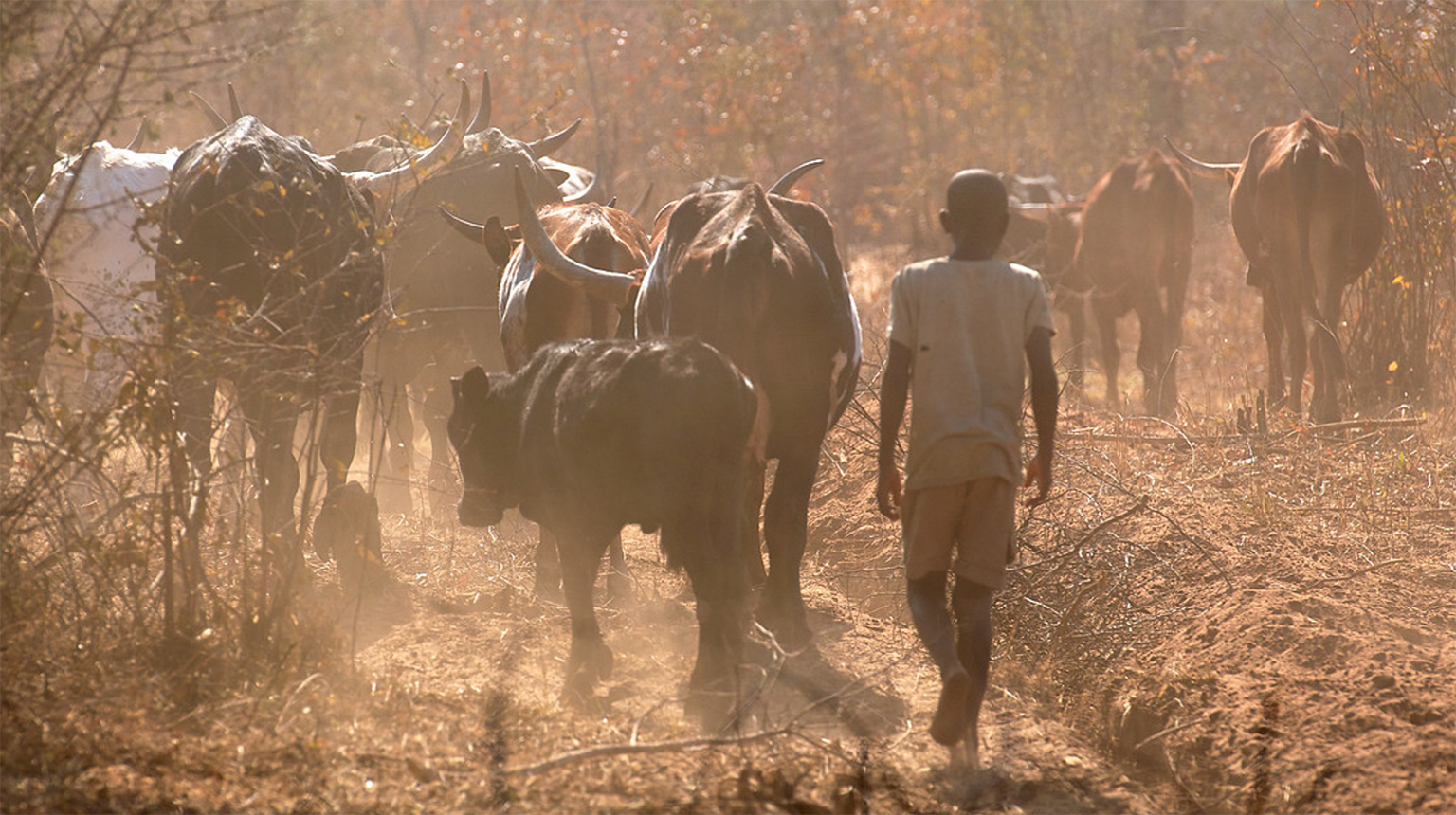
One of the reasons for heightened conflict, the conservancy realized, was that traditional hands-on herding practices had fallen away. In decades past, young boys were often responsible for carefully moving cattle herds to graze. But as more children began to go to school, an unintended consequence was that there were fewer people left to watch over the herds and keep lions away.
“Of course, we want people to get educated, but it left a gap. And the adult men of the village did not want to be perceived to do the low-status job of a child,” Stein said.
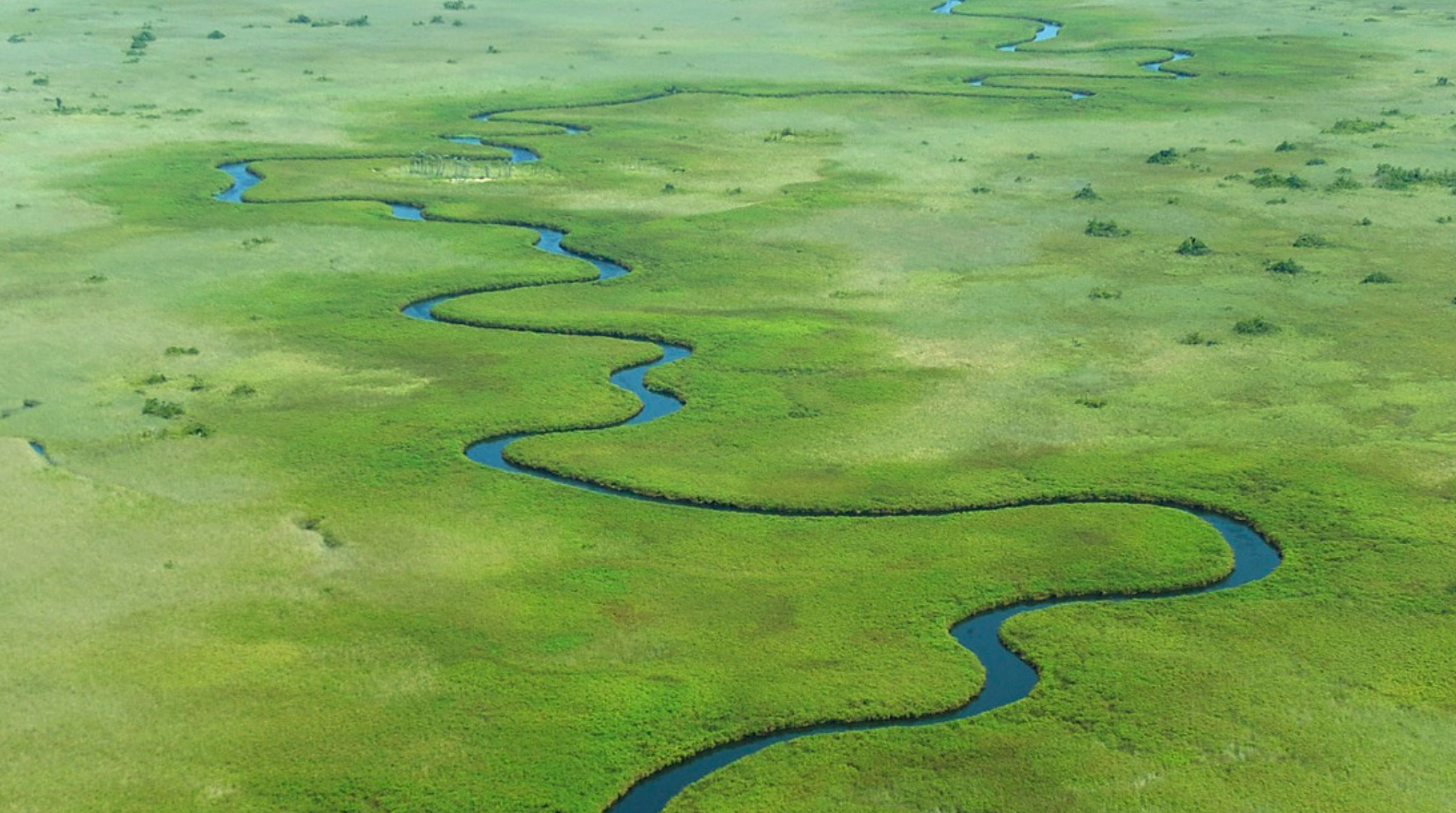 An aerial view of the Okavango Delta, Botswana. Image courtesy of M. Atkinson, AHEAD.
Communal herding protects livestock and lions
Jack Ramsden grew up in northern Botswana, in the village of Maun on the edge of the Okavango Delta. “During my dad’s days, it was active herding 24/7 with the cattle,” he said. “When I was growing up in the 1980s, the permanent herding of cattle in Botswana had already somewhat changed … the herders were now more likely to release the cattle in the morning and then in the afternoon go look for them and bring them back. It has just gradually eroded.”
At the time, Maun also had a much larger lion population. That has gone. Struggling farmers have steadily shot and poisoned the prides. “Now if a lion comes there, it’s like a comet flying through the skies. It’s something that some generations never see,” Ramsden said.
Today, he works as the herding program coordinator for CLAWS, reintroducing traditional and lion-resilient methods. This includes consolidating cattle into communal herds managed under trained herders who stay with the animals throughout day and night. Ramsden also teaches the herders — roughly 24 are currently enrolled in the program full-time across three villages — about rangeland ecology and rotational grazing, as well as basic veterinary care.
At night, the group deploys mobile canvas bomas — circular stockades — to keep the cattle safe from predators. “When the cattle are behind the canvas sheet, the lions will approach. They’ll walk along the outside. They can hear the cattle. They can smell the cattle. But if they don’t see them, they don’t actually jump in and attack,” Stein said.
 After grazing during the day, cattle are returned to their kraal (or boma) in the Zambezi Region, Namibia. Kraaling cattle overnight reduces predation risk. Image courtesy of M. Atkinson, AHEAD.
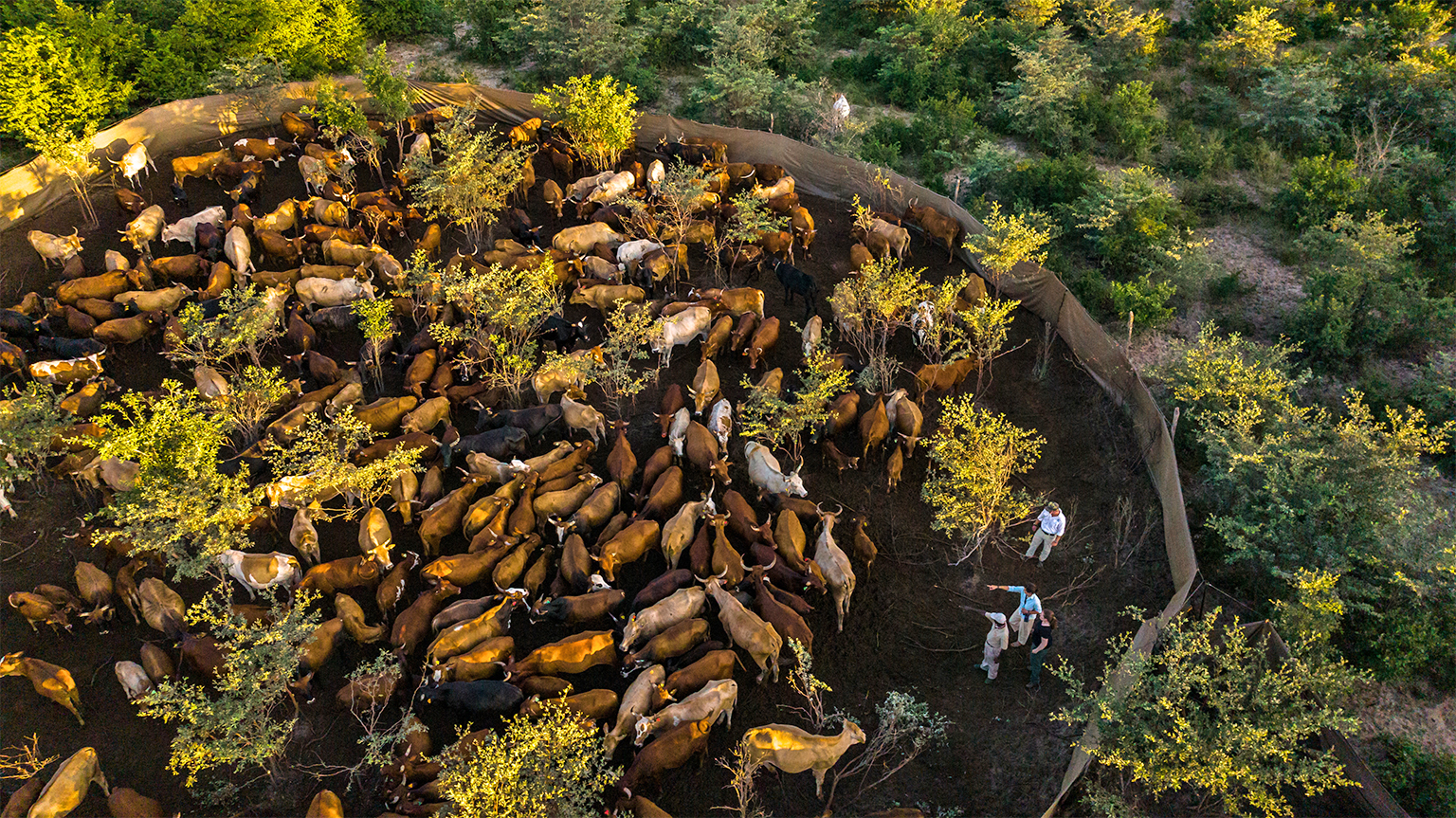 Cattle inside a collapsable boma in Botswana. Image courtesy of Helicopter Horizons / CLAWS.
CLAWS is working in five villages in northern Botswana, which host around 5,000 cattle. Of those, about 700 are currently in CLAWS’ herding program. “In the past five years or so, we’ve probably only lost a maximum of 10 cattle,” Ramsden said, which marks a dramatic decline from the dozens and sometimes hundreds that were lost each year prior to CLAWS’ interventions.
One of the program’s greatest achievements is not only that fewer cattle and lions are dying, but that cub survivorship is stronger. From 2014 to 2017, only about a third of the cubs in the area reached adulthood, primarily due to infanticide. As villagers poisoned or shot alpha male lions, new lions would move into the area and purge the cubs in hopes of establishing their own genetic line within the pride. Now that fewer males are being killed, 70% of cubs are pulling through. In turn, the northern Okavango’s lion population has increased by 50% over the past four years.
CLAWS’ work is funded through various conservation grants. But Stein’s long-term goal is to make the program self-sustaining. To do that, he and his colleagues are working to integrate the program into the regional market, building economic incentives for farmers to continue traditional herding practices in their eventual absence.
In May, CLAWS held the first sale of 14 cattle as certified Wildlife-Friendly Beef. That means they were raised using herding practices that avoid overgrazing and that herds have pledged not to kill lions. The beef sells at a 10% premium above typical rural market rates, bought by wilderness safari lodges in the Okavango.
“It is giving them greater market access where their cattle are actually worth something,” Stein said. “Then they are going to be more likely to look after them.” CLAWS said it hopes to have quarterly sales this year of around 15 animals to supply Vumbura Plains Camp, a luxury safari lodge in the delta, with plans to later expand to other ecotourism ventures.
The hope is that the majority of the region’s cattle will eventually be covered by the program. “Then you can actually go back to rotational grazing, the way it was done in the ‘50s and ‘60s,” Ramsden said. “You can get better rangelands. And better rangelands will lead to healthier and more productive cattle.”
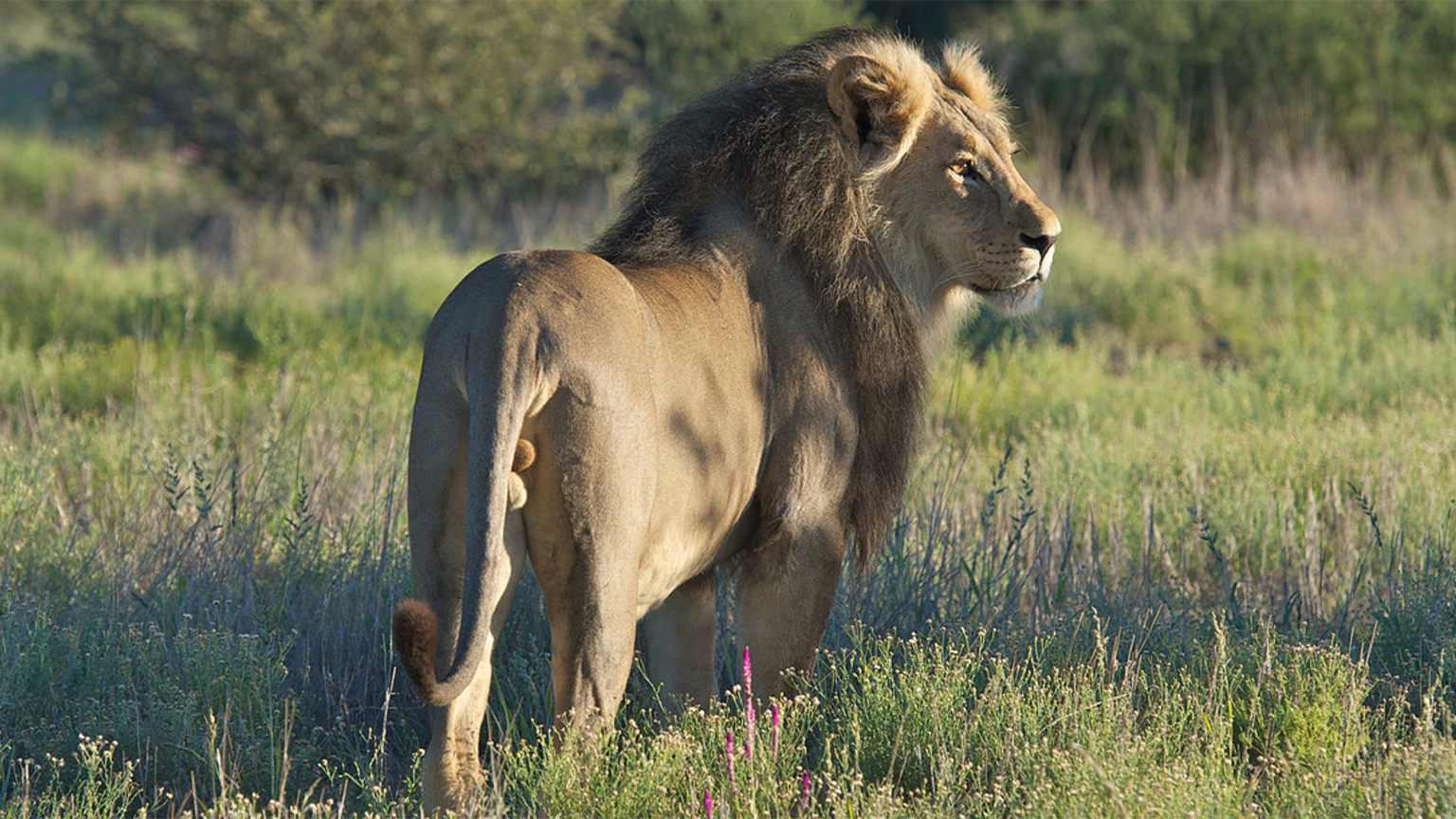 A lion in Botswana. Image courtesy of M. Atkinson, AHEAD.
Breaking down barriers
Efforts to improve cattle health and bolster hands-on management in KAZA live alongside a greater push to take down some of the veterinary cordon fences that bisect the Okavango Delta and have stymied animal migration for decades.
In the 1950s, governments in southern Africa began installing fences stretching thousands of kilometers to keep wild ungulates and domestic livestock apart. The hope was that the fences would block the transmission of diseases like foot-and-mouth and bovine pleuropneumonia, thereby opening up European markets. Before importing beef, countries require proof that the product comes from healthy animals and therefore cannot spread diseases, based on strict standards regulated by the World Organisation for Animal Health (WOAH). In Botswana, Namibia and Zimbabwe, fences became a key ‘sanitary’ tool.
While the fences have been successful at reducing the spread of disease — when properly maintained — they have taken a bloody toll on native wildlife. Hundreds of thousands of wild herbivores, if not millions, have perished due to these fences. In some cases, their bodies are caught in a tangled snare of steel cables. Sometimes, lions chase them into the fences as a hunting strategy. Wildebeest, zebras, giraffes, buffaloes, antelope and hartebeest have all met with fatal encounters along the fence line.
For conservationists, the legacy of harm extends far beyond direct fatalities. The vet fences have prevented free-flowing movement through the region. Whole herds have been cut off from seasonal movements to water and grazing areas, dying of thirst and starvation.
Adult elephants, for example, can easily step over or crush the fences. But if calves can’t make it through, the whole herd will stay put. In some parts of northern Botswana, fences have bottled up elephant populations to the point where matriarchal herds can’t cross into Namibia, worsening conflict with local villages.
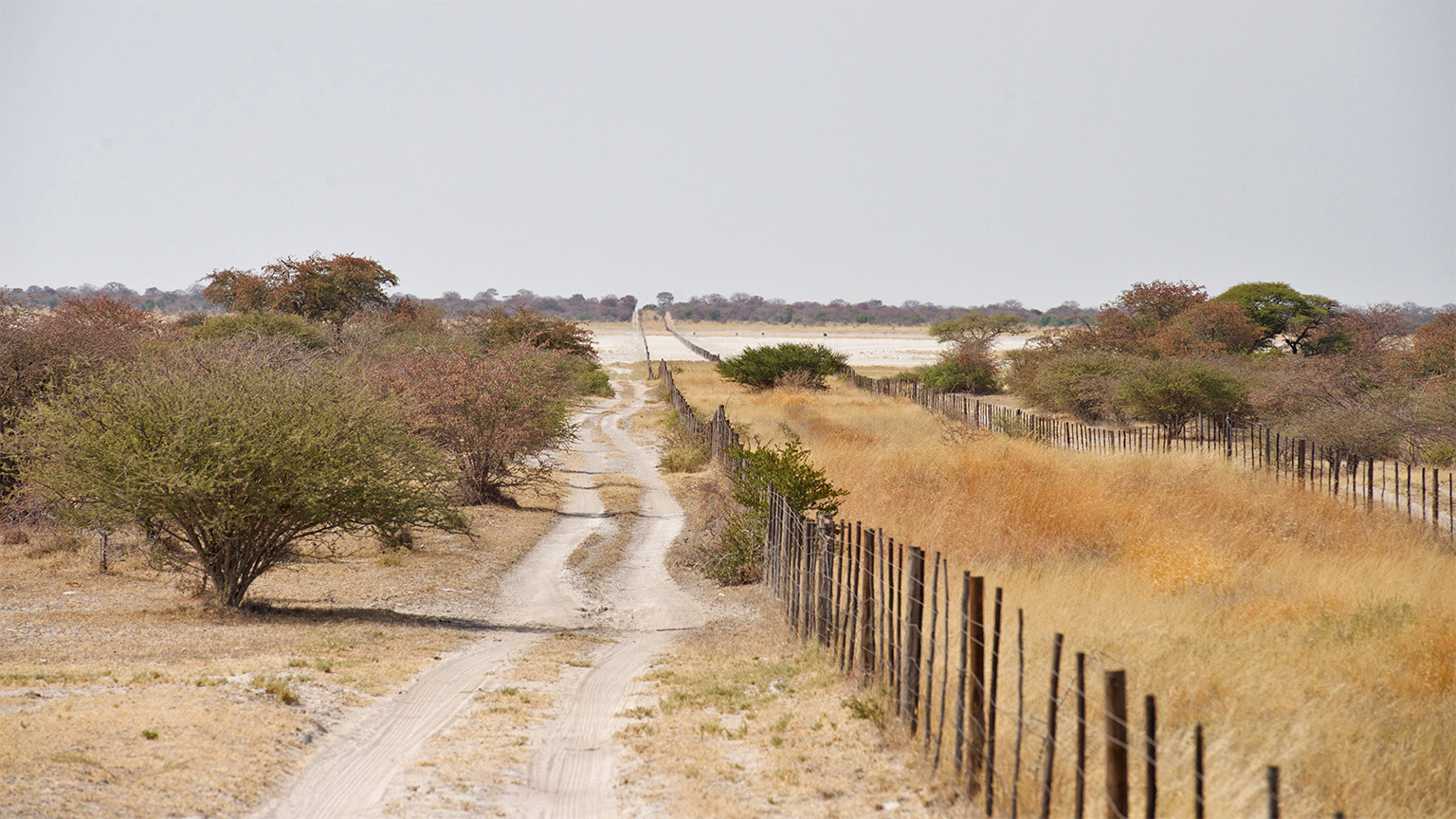 A typical veterinary cordon fence in the region. Makgadikgadi Pans, Botswana. Image courtesy of M. Atkinson, AHEAD.
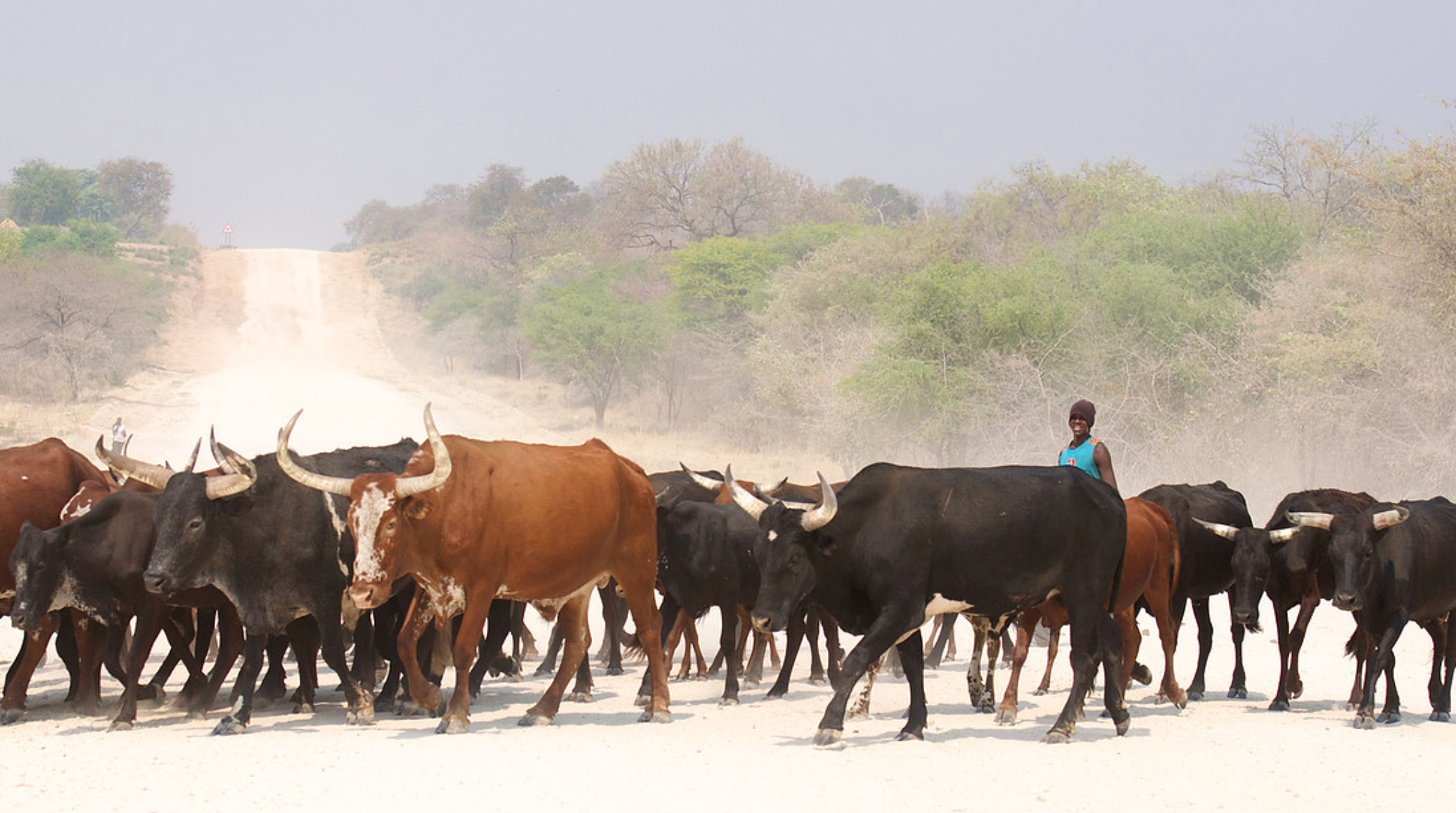 A farmer herding his cattle in the Zambezi Region, Namibia. Image courtesy of M. Atkinson, AHEAD.
For millennia, elephants in northern Botswana and northeastern Namibia moved freely as one single population across the region’s floodplains. Migrations were shaped by the wet and dry seasons. But fences have cut off those traditional routes. Namibia’s Caprivi elephants are now more isolated, and Botswana elephants concentrate around permanent water.
Steven Osofsky served as the first wildlife veterinary officer for Botswana’s Department of Wildlife and National Parks (DWNP) in the early 1990s. Since then, he has made it his mission to roll back some of the fences that have cut up the fertile landscape.
“At the time, wildlife was not considered a valued resource,” said Osofsky, who now works as a professor of wildlife health and health policy at Cornell University in Ithaca, New York. “And what followed over the ensuing decades could be described as a slow-motion environmental trainwreck.” Osofsky bore witness to the ripple effects of the fences during his time in Botswana: animals cut off from grazing, freshwater, minerals and breeding opportunities.
But as wildlife ecotourism has ascended as a key economic driver in the region — often surpassing the income that can be gleaned from cattle herding, cutting off wildlife corridors no longer makes sense. Agriculture — which includes livestock production — now contributes between 2% and 4% to Botswana’s gross domestic product. Tourism, on the other hand, accounts for between 5% and 12% of the nation’s GDP, so the economy depends on robust wildlife populations. In turn, governments are rethinking the prevailing paradigm of management.
“One of the key questions for decades has been: ‘Is there a better way to manage this disease risk issue than fences?’ And we think we came up with [the answer],” Osofsky said.
Restoring herding, scientists have found, is a game changer. Herding keeps livestock away from wild herbivores and farmers know where their animals are so they can tag and identify them. And it’s easier to vaccinate the herd with the animals close by.
“It’s almost crazily magical,” Osofsky said. “If we can restore herding, we can get all these co-benefits. Because this is good for wildlife, the government [of Botswana] has agreed to at least consider taking down key sections of fences.”
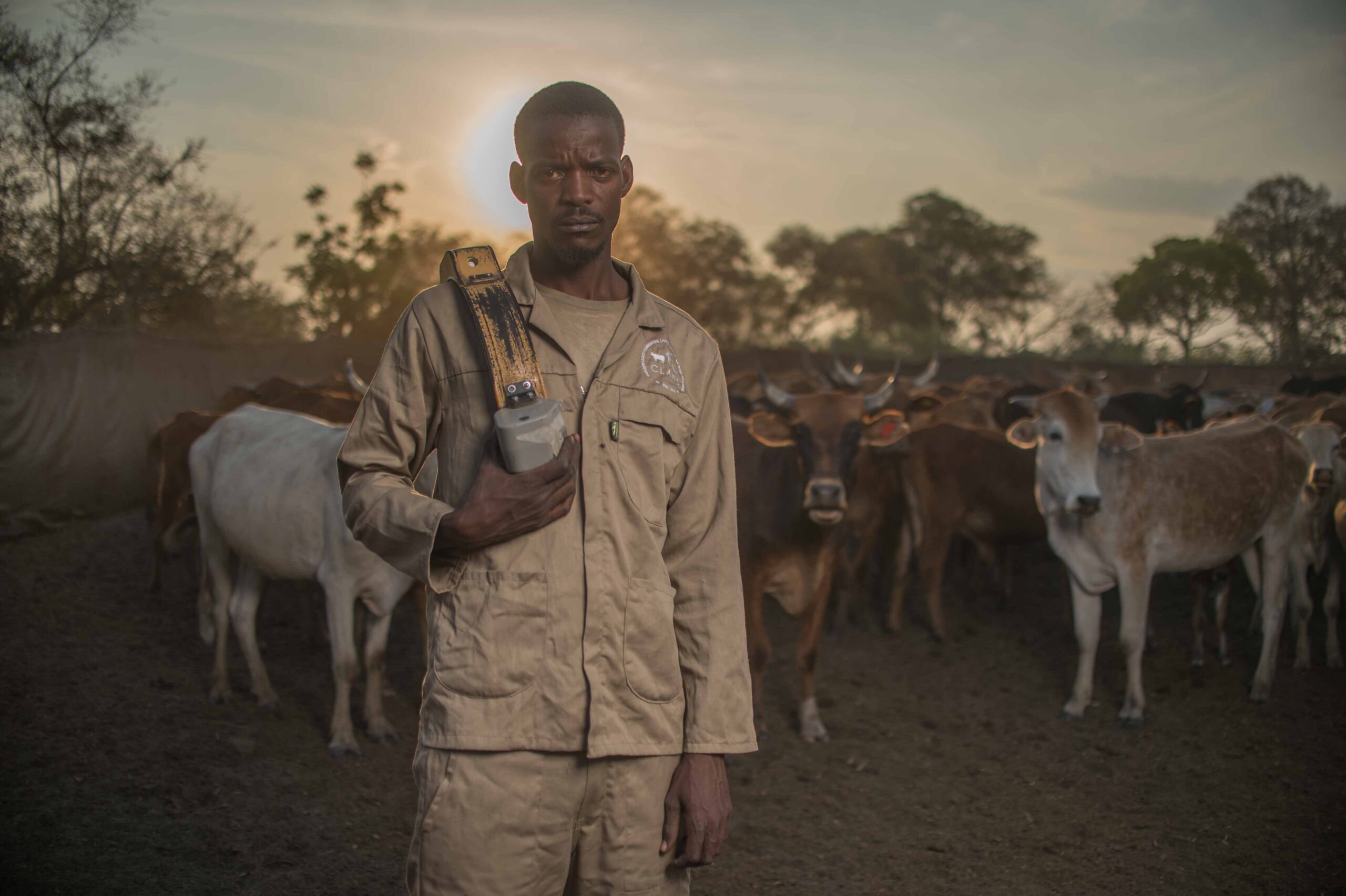 Oscar Mbathera, herder in Botswana who was trained and is outfitted and paid by CLAWS, poses with a GPS collar that will be fitted on a lion to track its movements. Image by Andy Maano, CLAWS.
Osofsky is working with CLAWS to raise $11 million, in part, to expand the herding program to the 14 main communities in Botswana’s Eastern Panhandle over the next five years. He said this would be a prerequisite for the government to consider removing some fences.
Among the first fences that could theoretically come down is the top 62 kilometers (39 miles) of the Northern Buffalo Fence, which runs for about 129 km (80 mi) and cuts off a key corridor area between the Okavango Delta and the Zambezi-Chobe floodplain.
The eastern 35-km (22-mi) portion of the Zambezi fence is also ripe for removal, according to a January 2026 study by Osofsky and colleagues. Conducting a qualitative risk assessment, they found that removal of these fences did not increase the risk of disease and that, when combined with other measures such as herding, the overall risk of disease transmission would be lower compared to the status quo. “We literally have the data to say, you can take this down and it wouldn’t change anything,” Osofsky said.
Under a best-case scenario, he added, the first fences would come down within the next five years. “But we have to prove to the government that communities are willing and able to adopt strategic herding.”
Banner image: A lion in Africa. Image by Esteban Andrés via Unsplash (Public domain).
Learning to live with lions: Interview with Claw Conservancy’s Andrew Stein
Citations:
Osofsky, S. A., Cleaveland, S., Karesh, W. B., Kock, M. D. … Yang, A. (2005). Conservation and development interventions at the wildlife/livestock interface: Implications for wildlife, livestock and human health. The IUCN Species Survival Commission, Occasional Paper, 30. Retrieved from: https://wildlife.cornell.edu/sites/default/files/2018-09/wildlife.AHEADbook6.5MB.pdf
Rosen, L. E., Amuthenu, N. S., Atkinson, S. J., Babayani, N. D., … Osofsky, S. A. (2024). Veterinary fences in the KAZA TFCA: Assessment of livestock disease risks of potential removal of specific fence sections, with an emphasis on the Botswana-Namibia. AHEAD Programme, Cornell University on behalf of the KAZA Animal Health Sub Working Group, 300pp. Retrieved from: https://wcs-ahead.org/documents/livestock-dz-risk-assess_lo_res_final_20240917.pdf
Rosen, L. E., Atkinson, S. J., Babayani, N. D., Mokopasetso, M., … Osofsky, S. A. (2026). Using qualitative risk assessment to re-evaluate the veterinary fence paradigm within the Kavango Zambezi Transfrontier Conservation Area. Frontiers in Veterinary Science, 12, Article 1702631. doi:10.3389/fvets.2025.1702631
FEEDBACK: Use this form to send a message to the editor of this post. If you want to post a public comment, you can do that at the bottom of the page.
