
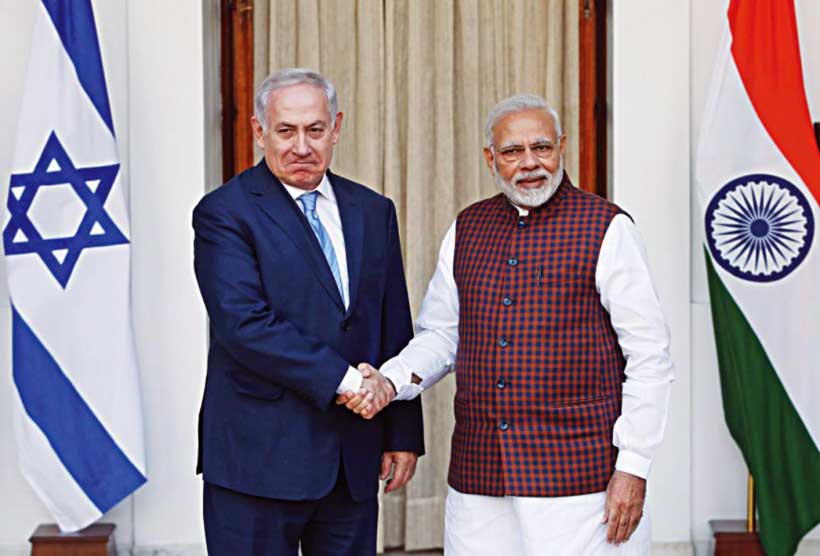
Indian Prime Minister Narendra Modi arrives in Israel for a two day visit aimed at deepening bilateral ties, even as regional tensions escalate over the standoff between the United States and Iran.
Modi, the first Indian prime minister to visit Israel in 2017, is returning nearly nine years later to meet Prime Minister Benjamin Netanyahu. The two leaders, who have described one another as friends, are expected to discuss cooperation in artificial intelligence, defence, and technology.
Israeli officials have framed the visit as a step toward expanding partnerships across multiple sectors. Modi is also scheduled to address the Knesset and lay a wreath at Yad Vashem, Israel’s official Holocaust memorial, underscoring the symbolic weight of the trip.
Strategic Timing Amid Regional Uncertainty
The visit comes at a delicate moment. The United States has increased its naval presence near Iran amid deadlocked negotiations over Tehran’s nuclear programme. President Donald Trump has maintained pressure on Iran, and the Pentagon has reportedly positioned military assets in the region.
Any potential US strike on Iran could trigger retaliation that affects Israel directly, as well as US facilities in Gulf countries where millions of Indian nationals live and work. Remittances from the Gulf are a significant component of India’s economy, adding another layer of concern for New Delhi.
Indian foreign policy analysts suggest that India is keen to avoid further destabilisation in the Middle East. At the same time, Israel is looking to expand defence exports and sees India as a key strategic partner.
Balancing Partnerships and Non Alignment
Netanyahu recently described India as part of a future grouping of like minded nations confronting what he called radical forces in the region. However, India’s long standing tradition of strategic autonomy makes it unlikely to formally align with any bloc.
New Delhi has steadily strengthened defence and technology cooperation with Israel over the past decade. Yet it continues to balance relationships with a wide range of regional actors, including Gulf states and Iran.
Personal Analysis
Modi’s visit highlights India’s evolving global posture. It reflects growing confidence in engaging openly with Israel while maintaining ties across the Middle East. The timing suggests that while economic and technological cooperation is central, quiet diplomatic messaging about regional stability is also likely.
India has significant stakes in preventing escalation between Washington and Tehran. Its approach will likely remain pragmatic, expanding defence and innovation partnerships with Israel while carefully avoiding entanglement in broader regional confrontations.
The trip underscores how Middle East tensions increasingly intersect with the strategic interests of major Asian powers, making regional stability a global concern.
With information from Reuters.