
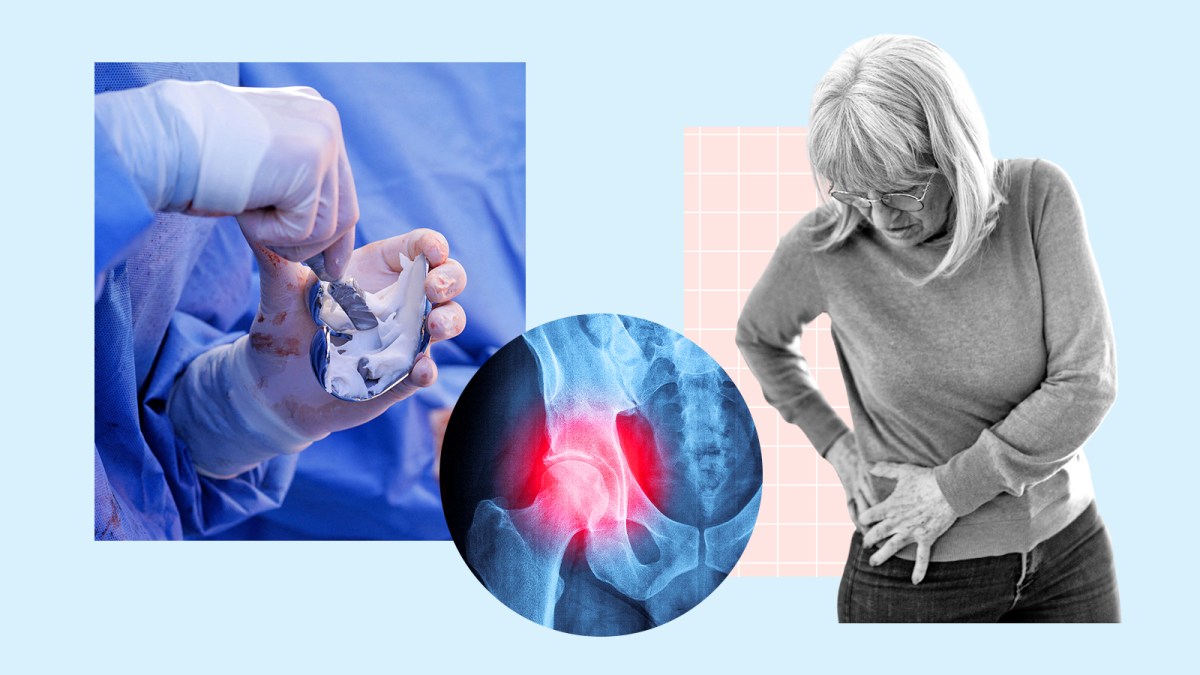
The NHS has secured a “rescue package” of bone cement to ensure thousands of hip and knee replacements can go ahead.
Global supply problems have affected the NHS’s main provider of the cement, used to anchor artificial joints and fill the space between the new joint and the bone.
There were fears that operations could be delayed for two months after Heraeus Medical, the NHS’s main supplier based in Germany, reported a packaging fault and temporarily halted production at its main site.
However, the NHS said it has “worked around the clock to procure around 35,000 units of an alternative cement product” from Zimmer Biomet, a Dutch manufacturer, the equivalent of about ten to 12 weeks’ supply.
The first stock arrived in the UK from the Netherlands on Tuesday, and NHS England has held briefings with orthopaedic specialists across the NHS to give an overview of the product and how it differs from the Heraeus Medical version.
Tim Briggs, the national director for clinical improvement and elective recovery at NHS England, said: “This shortage has been extremely concerning for patients and surgeons and we are delighted the NHS has now been able to secure this ‘rescue package’ of alternative bone cement to ensure trauma and elective care can continue across the country.
“These alternative products have been assured and endorsed by leading orthopaedic experts and will be available for local hospitals to order from tomorrow, ensuring thousands of operations can still go ahead. We’d encourage all patients to please continue to come forward for appointments unless contacted otherwise.
“While NHS teams have worked quickly to secure this vital replacement supply, some planned operations for patients have already had to be cancelled this week to help protect life-saving trauma care and we will be in touch with those patients to reschedule as soon as possible.”
• Thousands of operations cancelled to save NHS money
The Zimmer Biomet product has been made available for NHS trusts to order.
Fergal Monsell, a consultant paediatric orthopaedic surgeon and president of The British Orthopaedic Association, said: “The British Orthopaedic Association has been working closely with NHS England and an alternative bone cement has been identified with immediate delivery.
“What was initially predicted to be a two-month loss of activity has now been significantly reduced. We are however mindful that any additional delay will cause distress to patients awaiting major surgery.
“The alternative bone cement has been widely used since 2008 and has been assessed by surgical experts who confirm that it has the same chemical components and material properties. Patients can therefore be reassured that this will not affect the outcome of their surgery.”