
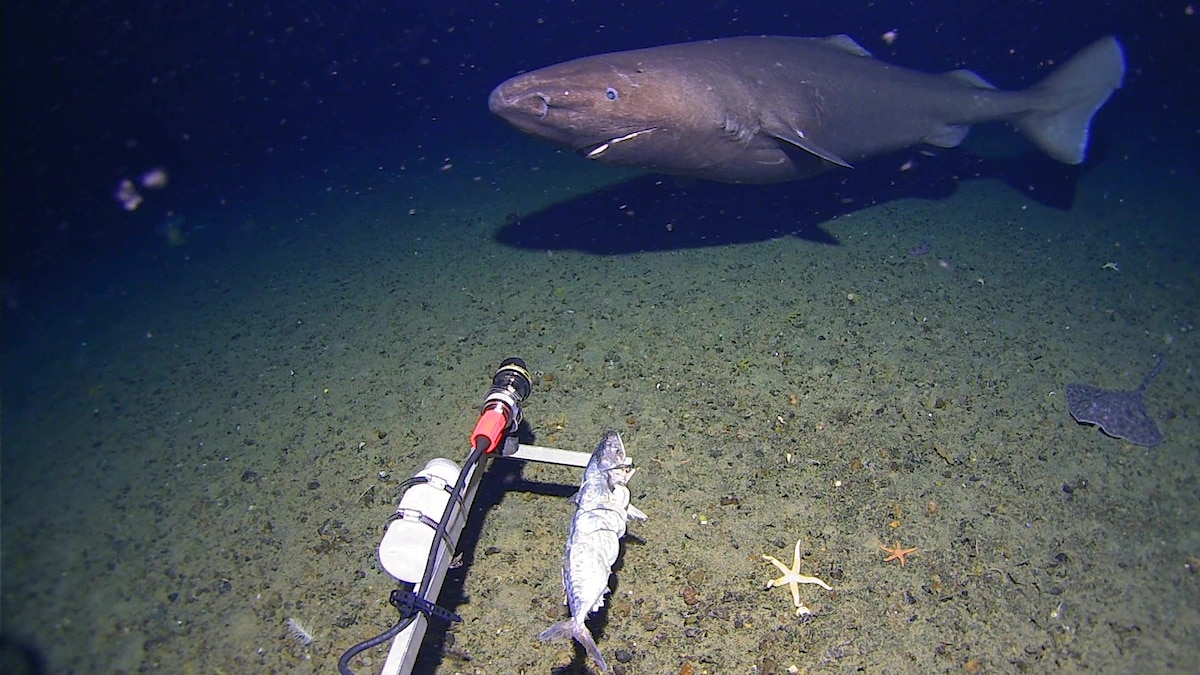
According to Jamieson, this shark is the first of its kind to be found in Antarctic waters. The sleeper shark was seen swimming near the South Shetland Islands at a depth of 1,640 feet (around 500 meters) in near-freezing waters.
If you’re wondering how this shark was able to survive in the coldest waters on earth, you must first consider that this wasn’t any shark; as it turns out, sleeper sharks are built different.
(Everything to know about the elusive Greenland shark)
These massive sleeper sharks have evolved to live life in the slow lane.
Video: Inkfish, UWA, Kelpie Geosciences
The secrets of a shark’s slow life
Sleeper sharks, a group that includes the iconic Greenland shark, are big-bodied, slow-moving sharks found in cold, deep waters, especially in the Arctic and North Pacific. Rarely seen, these sharks have a super-sluggish metabolism that forces them to live life in the slow lane. Greenland sharks, for example, have a top speed of less than two miles per hour and grow less than one centimeter per year. This leisurely lifestyle allows sleeper sharks to conserve energy, which is needed to stay warm in cold water. It also allows them to live extraordinarily long lives, with some estimates suggesting they can endure for over 400 years. (A recent study of their genome found duplicates of genes related to DNA repair, immune function, and protection against oxidative stress, all of which reduce the physical toll of time.)
Another cold-water survival trick of sleeper sharks: their tissues are loaded with urea and trimethylamine N-oxide (TMAO). Urea, a common compound also found in our urine, helps sharks maintain osmotic balance with the surrounding seawater, but it also destabilizes their proteins. TMAO solves this problem by reinforcing the shark’s proteins, so much so that they can function at near-freezing temperatures. While all sharks have TMAO in their bodies, sleeper sharks have far more than most.