
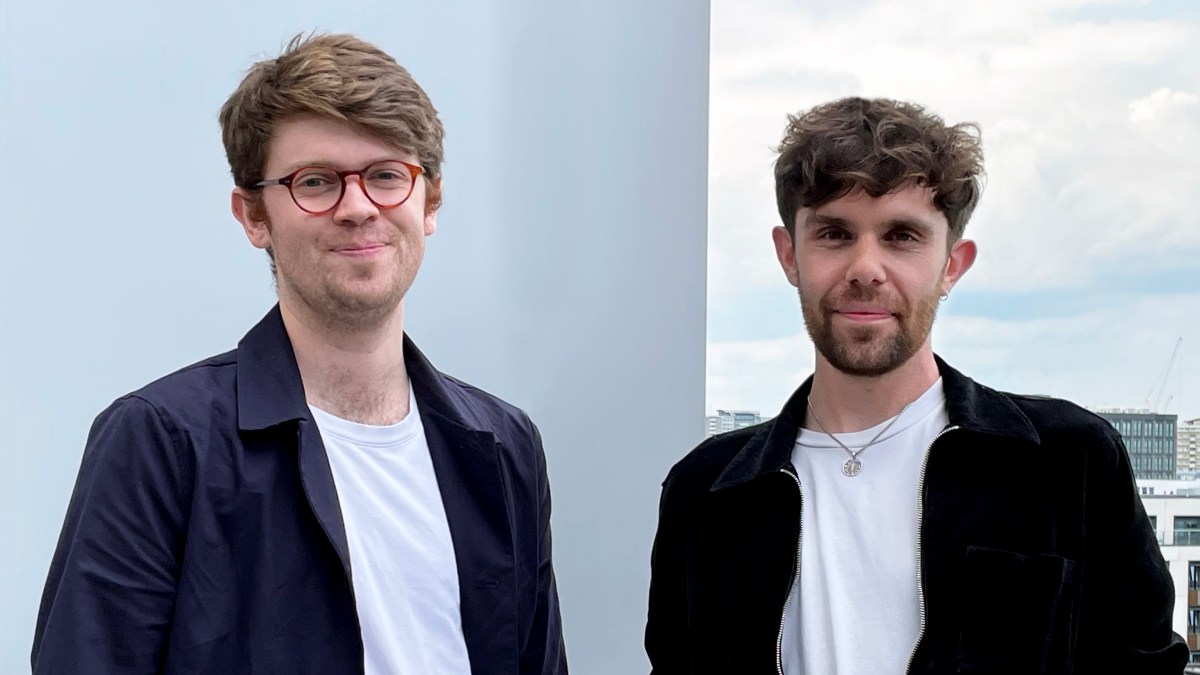
Nick Baines, 33, is chief executive and co-founder of Nara Communications, a public relations agency he set up in 2021. The company has worked with startups such as Peppy Health and Zencargo, innovation agencies such as Germany’s Federal Agency for Breakthrough Innovation (Sprind) and venture capital funds such as Antler and Northzone. It has 25 staff and offices in London and New York. In 2024 the firm’s co-founder and chief operating officer, Drew Skinner-Shah, died in a traffic accident. Since then, Baines has led the business through a period of grief and rebuilding.
He was my best friend
I left university with a philosophy degree and got an internship at a PR agency. There was a guy who had started the week before me called Drew. He was always cooler than I was. He would wear huge Doc Martens boots and an earring to work, and listen to trendy electronic music while bashing out press releases.
We had a similar commute. At the beginning of every day we would wait for each other on the platform to do the last 15-minute walk to the office. The friendship was pretty quick.
Most people set up a business because they have a lightbulb moment where they want to change the world. We set up a business because we really liked spending time together and we were good at what we did. If you have the opportunity to build companies or work with people that you love, it will make it ten times better. For example, my sister, Alicia Baines, was our first hire, now Head of Client Services.
Then disaster struck
Our friend Ben Bunyard was just about to start as our head of media, in February 2024. Then Drew was in a traffic accident, while training for a marathon.
I lost my best friend, which is terrible, and then I also lost my chief operating officer with no notice.
I had to get my entire team on a call and tell them what happened. Breaking the news to everyone was the worst call I’ve ever done and hopefully ever will do.
When you’re grieving, you are tired and you just want to crawl into a ball. I couldn’t do that and my team couldn’t do that.
I remember going into the office to see everyone for the first time since it happened. I didn’t plan this but I hugged everyone, one by one. It took ages and was probably quite socially awkward. That captured what was going to happen: we were all going to be in this together and get through it.
I wanted to grieve and remember the goods but not memorialise him
I got a framed picture of the two of us and plonked it on my desk. There were so many times where I would look at that photo and be motivated to keep going.
[In contrast] Ben’s first job at the company was to clear out Drew’s desk. I got some advice that we didn’t want to erase his memory, but simultaneously we didn’t want to memorialise him. We stayed in that office for about a year, which felt right. If we left earlier it would have been abrupt.
We moved the desks around. We didn’t want an empty chair.
Balancing showing how I felt with being stoic
The advice I was given was I needed to show vulnerability, but people were worried about their job security. The temptation would have been to be too vulnerable, whereas people needed a bit of stoicism because our world was collapsing around us.
Vulnerability is an incredibly empowering thing to bring into the workplace as long as it never crosses into overly emotional or unprofessional or is detrimental to people’s actual careers.
Diamonds are made under pressure
We had to tell every single client one by one. We wanted to reassure each one that the business would carry on going and everything would be fine. I’m very grateful to the majority of my clients because they were incredibly sensitive and patient while we got back on our feet.
A client said to me soon after [Drew] died, “diamonds are made under pressure”. At the time I wanted to shout at him, it felt tone deaf to my situation. Now I really get it, I’m glad he said it. I have a team of people who shouldn’t have been in this situation and didn’t necessarily have the experience to cope, but who all raised their game to save Drew’s business.
Drew hired nearly all of them. He hired people who upped their game and really worked hard. They also had the emotional intelligence to deal with each other and grieve together. It is the most beautiful thing I’ve observed in my life.
I feel gutted that they had to go through that. And I’m so proud of them. More importantly, [Drew] would be so proud of them. The beautiful thing is that our business is thriving after such an ordeal and that is such an honour to his memory.
I am now living for two people
It has really crystallised the commitment of the business to working with “meaningful companies”. Our clients sit on the intersection of innovation and personal impact. What is the point of working in sectors that aren’t going to have a positive impact on the world? Maybe that sounds a bit “hippie” but we strongly believe it.
I am now living for two people. I feel I have a real spiritual duty to live for him, make the most of everything and continue his business.
Nick Baines was talking to Niamh Curran, reporter at the Times Entrepreneurs Network. Nara is launching a journalism prize in Drew’s name