
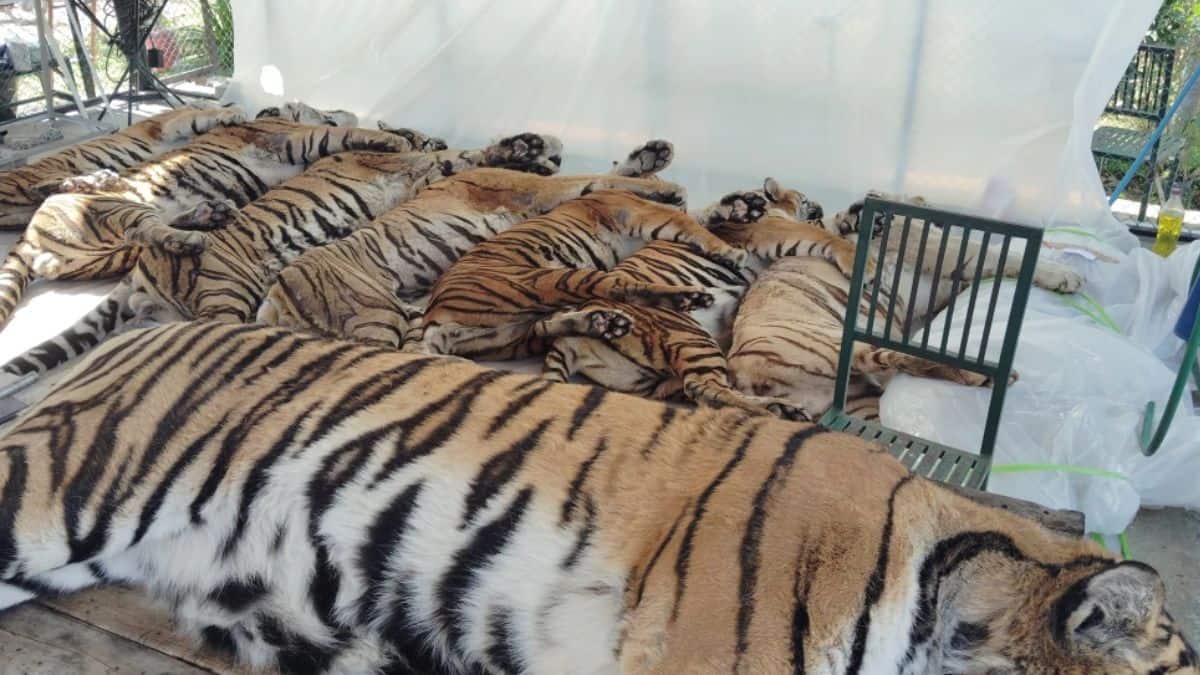
The death of at least 72 tigers has rocked Thailand. The fatalities occurred in the span of less than two weeks this month across two facilities of Tiger Kingdom Chiang Mai, a popular tourist attraction in northern Thailand, where visitors can touch and interact with big cats. Chiang Mai authorities have launched an investigation into the matter.
Preliminary tests indicate the presence of canine distemper virus (CDV), a highly infectious disease that affects the respiratory, digestive, and nervous systems, BBC reported, citing the local livestock department. It’s a virus carried by dogs that is often fatal to big cats, according to MyNews report.
STORY CONTINUES BELOW THIS AD
However, officials have not yet confirmed how the outbreak started.
We take a look.
What happened to those 72 tigers?
The two facilities of Tiger Kingdom Chiang Mai witnessed the deaths of 72 tigers due to what was at first reported as a mysterious illness. The fatalities, accounting for nearly 30 per cent of the park’s total
tiger population, occurred between February 8 and 19 this year.
The park’s two facilities house more than 240 tigers, with most of the deaths recorded at Tiger Kingdom Mae Taeng and Tiger Kingdom Mae Rim, both privately run animal parks, according to The Independent. On Monday (February 23), the remains of 72 tigers that died at Tiger Kingdom Chiang Mai were buried to ensure that their parts cannot be taken, sold, or used illegally in wildlife trafficking.
How is the probe unfolding?
As the investigation progresses, the public health minister, Pattana Promphat, said at a news conference at Government House in Bangkok, “There has not been an animal-to-human infection case,” reported Associated Press (AP).
On Friday (February 20), the Chiang Mai regional livestock office issued a statement announcing that autopsies revealed canine distemper virus (CDV) genetic material and signs of bacterial infection; however, there is no evidence of avian influenza type A, also known as bird flu.
“If we detect any sick persons, we will prepare for a nationwide monitoring measure. This will include contact tracing and treatment as necessary,” said Monthien Khanasawat, director-general of the Public Health Ministry’s Disease Control Department.
Senior veterinarians have suggested that contaminated food, rather than a virus, may have caused the Tigers’ deaths. Image courtesy: @JasADRxquisites/X
However, Veterinarian Visit Arsaithamkul, who participated in the tiger autopsy, said the exact source of the infection remains unknown and requires further investigation. In a Facebook post, he suggested that since the two parks are only about 30 kilometres apart, the cause of infection might have spread through contaminated food supplied to both facilities.
Earlier, the provincial livestock office said initial tests indicated the tigers were infected with feline parvovirus. Some local officials also suspected the outbreak may have been caused by contaminated raw chicken fed to the tigers, BBC reported, citing Bangkok Post.
Contaminated raw chicken was also suspected to be behind a major bird flu outbreak at a tiger zoo in Chonburi province, Thailand, in 2004. During that case, nearly 150 tigers were reportedly either died or were euthanised to stop the disease from spreading.
STORY CONTINUES BELOW THIS ADHow deaths put the tiger industry under the scanner
The tiger deaths have sparked criticism of an industry that, according to critics, involves tourists in the mistreatment of wild animals.
Jason Baker, Asia president of animal welfare group PETA, in a statement, said, “Tigers spend their lives confined and chained, only to be dragged out to pose for photos … these tigers died the way they lived – in misery, confinement and fear.”
“This tragedy highlights the extreme vulnerability of captive wildlife facilities to infectious disease,” said the Wildlife Friends Foundation Thailand in a statement.
Several senior veterinarians have suggested that contaminated food, rather than a virus, may have caused the deaths, citing the distance between the two locations and the rapidity of the fatalities.
According to a 2016 Mongabay report, an investigation by World Animal Protection (WAP) exposed widespread cruelty in Thailand’s tiger tourism industry.
The report noted that back then, approximately 830 tigers were estimated to be in captivity at Thailand’s tiger entertainment venues. The report also observed that many venues encourage tourists to get close to tigers and take selfies, including very young cubs. These cubs were then presented to tourists and were “mishandled hundreds of times a day,” the report claimed.
A report by World Animal Protection (WAP) found that many venues in Thailand promote close interactions between tourists and tigers, including with very young cubs. Image courtesy: X
Tigers at tourist entertainment venues were often kept in extremely poor conditions. They were deprived of proper care and subjected to harsh training methods. The tigers were also allegedly “starved” when they made a “mistake”, the investigation revealed.
STORY CONTINUES BELOW THIS AD
WAP had urged authorities to probe these venues and shut them down. It also called on travel companies, including TripAdvisor, to stop promoting these wildlife entertainment outlets.
With inputs from agencies
HomeExplainersHow did 72 tigers die in 2 weeks in a Thai tourist park?End of Article