
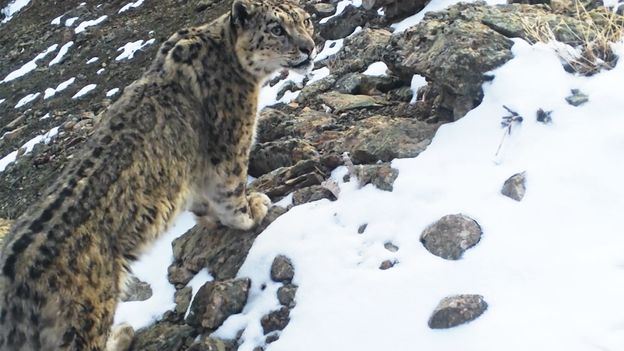
Today, newer protected areas in Uzbekistan attempt a different balance, combining strictly protected core zones with areas for sustainable use. “We are still far from the ideal,” Bykova says, “but there is growing understanding that biodiversity must be preserved not through isolation, but through careful management and cooperation with people.”
Conservation isn’t simple though. Bykova says the ongoing threats in Gissar include “overhunting and poaching of prey species, direct poaching, habitat degradation, the impacts of infrastructure development and climate change”.
The challenges are compounded by geography. “Since a third of the world’s snow leopards are distributed within 100km (62 miles) from international borders, a snow leopard protected in one country is at a risk in another,” Sharma says. That, he says, is why harmonising laws, standardising research methods and sharing best practice on community engagement are essential, the kind of coordination the Global Snow Leopard and Ecosystem Protection Program is designed to support.
Cooperation is strengthening. In Gissar, that effort is visible in the work of rangers struggling in difficult conditions, scientists sharing data across borders and communities adjusting how they live alongside wildlife.
We didn’t see a snow leopard in the wild, but the data shows they are here. And that, ultimately, is what conservation is about, building the knowledge needed to protect these wild landscapes that still feel vast, silent and relatively untouched, something which is sadly becoming increasingly rare.