
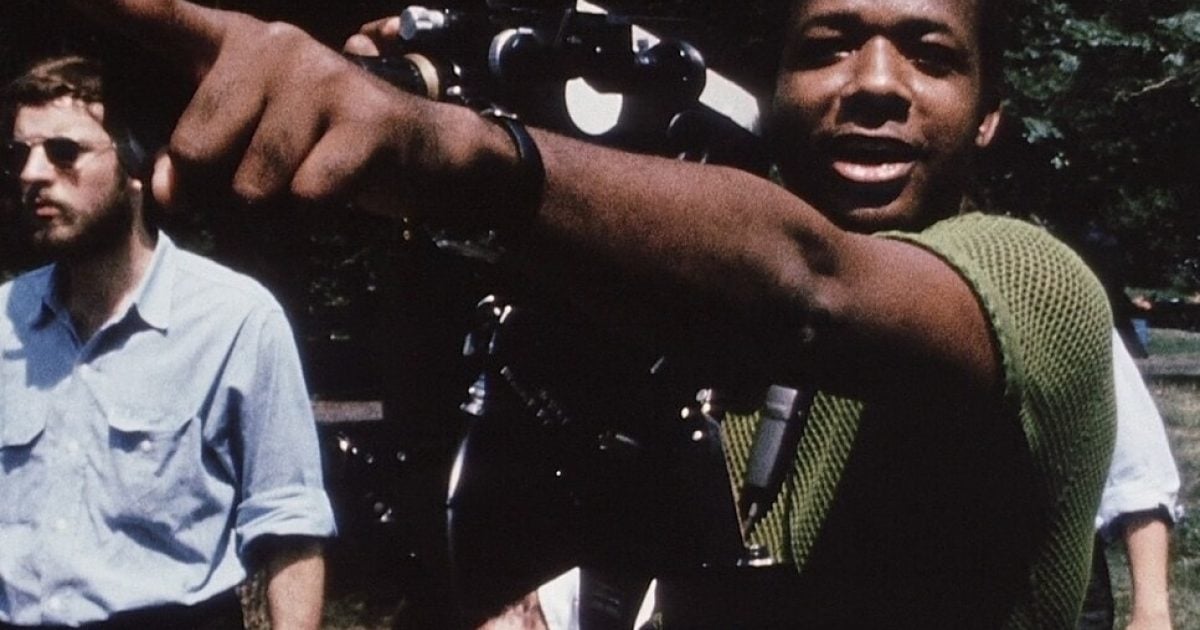
“Oh, it’s a movie. So, who’s moving whom?”
While Symbiopsychotaxiplasm: Take One may not resemble Greaves’s other work from a structural standpoint, its themes and ideas about collective action and social revolution — particularly from a Black American perspective — are key motifs in all of his films.
“It’s an attempt on my part to play around with the various concepts that are floating around the world of philosophy, mysticism, theatrical filmmaking,” Greaves says in the 2006 documentary film Discovering William Greaves. In developing the project, he also incorporated what he learned from his time studying under Lee Strasberg at the Actors Studio, as well as German physicist Werner Heisenberg’s “uncertainty principle” which states that certain pairs of physical properties — such as velocity and position — can’t be simultaneously recorded, because capturing one influences the condition of the other.
In Take One, Greaves tries to capture several fast-moving targets: the controversial issues — for the time — of homosexuality and reproductive rights in the script are meant to provoke the actors, the crew, and the audience. As Greaves further reveals, pressure was the point of the film. “I thought it would help to achieve what I was looking for, which was conflict,” he muses.
A “symbiotaxiplasm” is a term for any social unit of people and everything they touch. With the addition of the term “psycho”, Greaves factors the unit’s mind — its ideas and beliefs — into the equation.
As a film about filmmaking, Symbiopsychotaxiplasm: Take One makes a comment on the rigid professional hierarchy of “Hollywood” filmmaking, and how even the most free-thinking crewmember might bristle at violating convention, yet remain silent out of respect for the hierarchy, even when those at the top have not earned the respect and trust their position entails.
Greaves wanted to answer the question, “When does a revolt against authority take place?” This actually happened at Black Journal, with its all-white staff of executive producers before Greaves — who was already a director for the show — was promoted. Amidst all the drama, he found himself wondering if he could make an interesting movie out of it.
Collective action was an important element of the civil rights movement, which had its share of triumphs and tragedies throughout the 1950s and 60s, but historically ended in April 1968 with the assassination of Martin Luther King, Jr.. It was a time of widespread social unrest, where a large portion of the American population — not just Black America — felt anxiety, angst, and anger at the inscrutable nature of authority. Greaves had always felt that “you could negotiate yourself to a better world.” It worked before. Could it work again?
Symbiopsychotaxiplasm: Take One was filmed that summer.
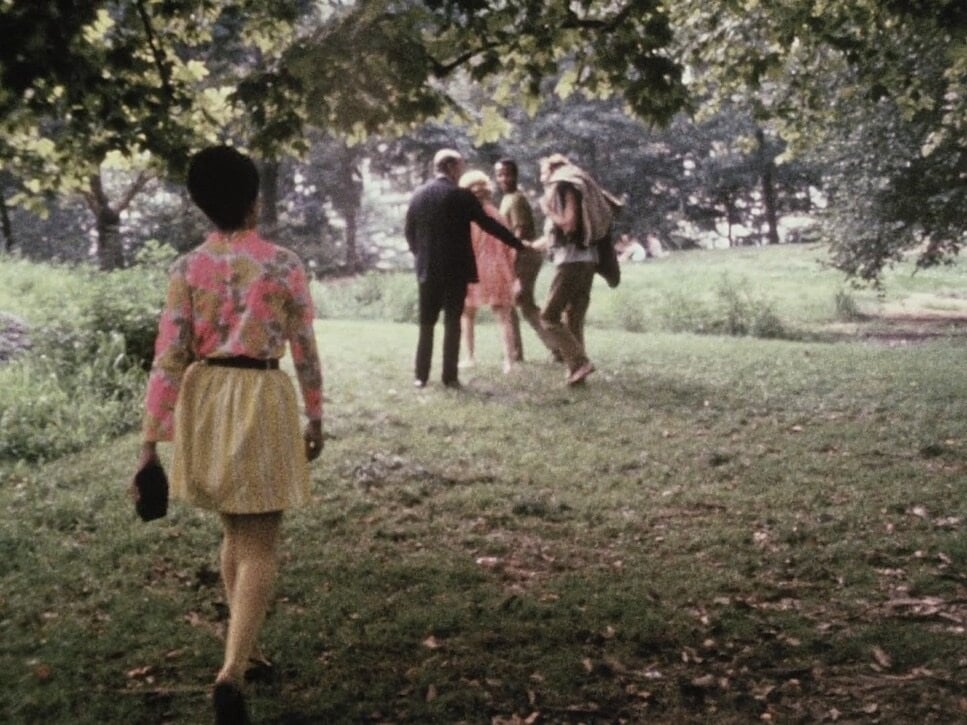
Still images courtesy of ShotDeck. The film is currently available to stream on The Criterion Channel.